

Executive Overview
LONDON — Six weeks into a transformative tenure that has already redefined the contours of British governance, Prime Minister Andy Burnham stands on the precipice of his most rigorous political trial yet. On Tuesday, the newly minted British leader will step into the House of Commons to face lawmakers for the first time since ascending to office on July 20, 2026. This high-stakes parliamentary return follows Parliament’s summer recess and marks the official end of Burnham’s initial honeymoon period—a phase defined by populist domestic outreach, a nationwide listening tour, and an explicit promise to inject renewed national optimism after the austere, downbeat two-year tenure of his predecessor, Keir Starmer.
Yet, the optimism Burnham sought to cultivate is colliding head-on with a punishing fiscal and geopolitical reality. As he prepares to address the chamber, the prime minister is squeezed between domestic demands for cost-of-living relief and mounting international security pressures. Protracted wars in Europe and a volatile, escalating conflict in the Middle East—specifically the ongoing confrontation involving Iran—have sent shockwaves through global energy markets, threatening Britain’s fragile economic recovery. Domestically, Burnham’s administration is forced to navigate severe infrastructural deficits, an overcrowded and volatile prison system, contentious energy policy decisions, and mounting pressure to dramatically inflate military expenditure to meet stringent NATO targets.
Tuesday’s session is more than a routine legislative check-in; it is a profound political crucible. Conservative leader Kemi Badenoch, who strategically revamped her shadow cabinet on Monday by installing fresh, aggressive spokespeople for the economy and foreign affairs, is poised to lead a concerted parliamentary assault. Neither the opposition benches nor restless factions within Burnham’s own Labour Party have yet had the opportunity to rigorously interrogate the prime minister on the viability, funding, and execution of his sweeping manifesto pledges. As Burnham prepares to lay out his radical vision for a more active, less centralized state, Westminster is bracing for a parliamentary showdown that will set the tone for the remainder of the decade.
Detailed Chronology: The First Six Weeks of the Burnham Administration
July 20, 2026: A New Dawn in Downing Street
The political landscape of the United Kingdom shifted dramatically when Andy Burnham assumed the office of prime minister. Returning to Parliament in June after nearly a decade away serving as the high-profile mayor of Greater Manchester, Burnham’s return to national politics was widely viewed as a calculated coup by the Labour Party to reconnect with northern working-class voters disillusioned by traditional Westminster politics. Stepping into Number 10 following the ouster of Keir Starmer, Burnham immediately signaled a departure from his predecessor’s technocratic style. In his inaugural address, he pledged to dismantle the prevailing sense of national malaise, promising a government characterized by direct action, regional empowerment, and tangible economic relief for working families.
Late July to August 2026: The Nationwide Listening Tour
True to his populist roots, Burnham spent the initial weeks of his premiership traveling extensively across the British Isles. From industrial heartlands in the north to agricultural communities in the southwest, the prime minister engaged directly with citizens, local business owners, and municipal leaders.
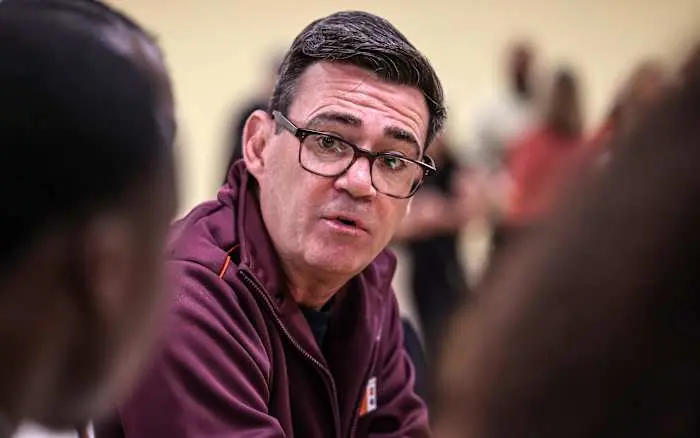
Among these engagements was a widely publicized visit to a London supermarket on Wednesday, August 26, where he walked the aisles alongside staff and shoppers. Photographed interacting with workers, Burnham used the visit to underscore his administration’s foundational commitment to collaborating directly with private enterprise. The initiative aimed specifically at helping young people gain vital workplace experience, build personal confidence, and prepare for modern employment. Concurrently, Burnham rolled out a series of modest, targeted money-saving measures designed to grant citizens and small businesses "breathing space." These interventions included a temporary tax cut on domestic energy bills and the lowering of regulatory levies on hospitality staples such as pubs and nightclubs—venues that have long served as the social glue of British communities.
Mid-August 2026: Foreign Policy Realities and the Kyiv Visit
While domestic retail politics dominated his public schedule, geopolitical imperatives quickly demanded the prime minister’s attention. In his very first foreign trip as U.K. leader, Burnham traveled to Kyiv in late August to offer an unyielding demonstration of British solidarity with Ukraine. The visit was designed to send an unmistakable signal to both European allies and hostile actors in Moscow that London’s commitment to European security remains absolute, regardless of shifts in domestic leadership or international diplomatic currents. However, the trip underscored a harsher truth: Britain’s defense posture is currently stretched to its absolute limits, caught between Russian aggression in the East and an increasingly isolationist or transactional approach from the United States under the Trump administration.
Monday, September 7, 2026: Pre-Battle Maneuvers
The political atmosphere in Westminster reached a fever pitch on the eve of Parliament’s return. Conservative leader Kemi Badenoch executed a major reshuffle of her top opposition team, appointing sharp new economy and foreign affairs spokespeople tasked with dissecting every facet of Burnham’s policy platform. Simultaneously, Downing Street finalized the details of the prime minister’s upcoming House of Commons statement, ensuring that the stage was set for a fierce ideological clash over the future of the British state.
Supporting Context & Metrics: The Economic and Geopolitical Landscape
The Cost-of-Living Crisis and Energy Pressures
Burnham’s core political mandate rests on his ability to alleviate the punishing cost-of-living crisis that has gripped British households for years. However, external economic shocks threaten to nullify his domestic interventions. The ongoing conflict involving Iran and the broader instability in the Middle East have severely disrupted global energy supply chains, pushing oil and gas prices upward.
While Burnham’s administration has implemented targeted tax cuts on domestic energy bills, economists warn these measures are mere stopgaps against persistent inflationary pressures. Compounding this challenge is a deeply contentious policy crossroads regarding domestic fossil fuel extraction. U.S. President Donald Trump and pro-business factions have strongly urged London to greenlight expanded oil and gas production in the North Sea to bolster Western energy independence. Conversely, environmental advocates and the left wing of the Labour Party fiercely oppose any expansion, arguing that new fossil fuel projects fatally undermine Britain’s legal commitments to clean energy and net-zero targets.
Defense Spending and the NATO Mandate
The intersection of foreign policy and domestic budgeting presents arguably the most perilous hurdle for the Burnham government. Following his trip to Kyiv and facing an increasingly assertive Russia, Britain is locked into international agreements requiring a massive scaling-up of military capabilities.
- The 3.5% Target: Under current projections, the U.K. must dramatically increase defense spending to reach NATO’s ambitious target of 3.5% of Gross Domestic Product (GDP) by the year 2035.
- The Funding Void: Financial analysts note that reaching this benchmark will require tens of billions of pounds in sustained annual investment. In the coming weeks, Burnham’s Chancellor and Treasury officials will be forced to present a credible roadmap for where these funds will be sourced—a task that will inevitably require either deep cuts to public services or politically perilous tax hikes.
The Prison Overcrowding Dilemma
Domestically, the government’s grip on law and order has faced severe stress tests. Britain’s prison system remains critically overcrowded, operating perilously close to maximum capacity. Burnham initially inherited plans to alleviate this crisis through the early release of non-violent offenders. However, the policy suffered a severe political setback following a high-profile public campaign led by the widow of a police officer who tragically died in a hit-and-run incident. The resulting public outcry forced the government to water down its early-release scheme, leaving the administration with few viable options to manage the penal crisis without triggering further structural collapse or public backlash.
Official Statements and Policy Visions
As he prepares to address the House of Commons, Prime Minister Burnham is expected to outline a sweeping philosophical shift in how the British state operates. According to previews released by Number 10, the prime minister will present "a clear plan for how we turn things round," anchored in the concept of an active, decentralized state.
Reining in Privatization: Water, Energy, and Transportation
At the heart of Burnham’s economic vision is the premise that greater public oversight—and in some cases, direct control—over critical national infrastructure can drive sustainable economic growth and lift financial burdens off struggling households. The prime minister’s office indicated that Burnham will advocate for enhanced public stewardship over key pillars of the economy, specifically targeting water utilities, energy grids, and public transportation networks.
While aides have refrained from calling for wholesale nationalization reminiscent of the post-war era, the rhetoric marks a sharp pivot away from decades of unbridled privatization. Critics, however, are demanding precise definitions. Financial markets and industry leaders are anxious to learn the exact legal and financial mechanisms Burnham intends to employ, questioning whether asset buybacks or heavy regulatory interventions will deter vital foreign investment.
The Controversy of "No. 10 North"
A central pillar of Burnham’s decentralization agenda is the physical expansion of executive power outside the capital. The creation of No. 10 North, a fully functioning secondary prime ministerial office based in Manchester, has become a lightning rod for political debate.
- The Government’s Stance: Burnham argues that establishing an executive outpost in the north is essential for breaking the "Westminster bubble," ensuring that regional leaders are directly integrated into national policymaking, and successfully spreading economic prosperity beyond London and the Southeast.
- The Opposition’s View: Conservative critics have dismissed No. 10 North as an expensive, performative gimmick—a vanity project for a former mayor attempting to run national governance from his historic regional stronghold.
Future Outlook: The Road Ahead for Westminster
Tuesday’s parliamentary confrontation marks the true baptism of fire for Prime Minister Andy Burnham. The political capital he accumulated during his summer listening tour and his populist retail interventions will now be subjected to the merciless, adversarial mechanics of the House of Commons.
The immediate trajectory of his premiership hinges on his ability to perform a delicate balancing act. On the domestic front, he must convince skeptical lawmakers and an anxious public that his hybrid model of state intervention, regional empowerment, and localized economic stewardship can deliver tangible improvements faster than his predecessor’s technocratic approach. Simultaneously, he must convince international allies and military chiefs that his administration possesses the fiscal discipline and strategic resolve to honor Britain’s NATO commitments and navigate complex geopolitical flashpoints in Europe and the Middle East.
If Burnham stumbles in answering these fundamental questions, Conservative leader Kemi Badenoch and her newly restructured shadow cabinet stand ready to capitalize, framing the prime minister’s vision as an unaffordable, chaotic experiment. If he succeeds, however, Burnham will have proven that his brand of muscular, decentralized populism is not merely a regional phenomenon, but a viable blueprint for the future of the United Kingdom.

0 Comments