

Executive Overview
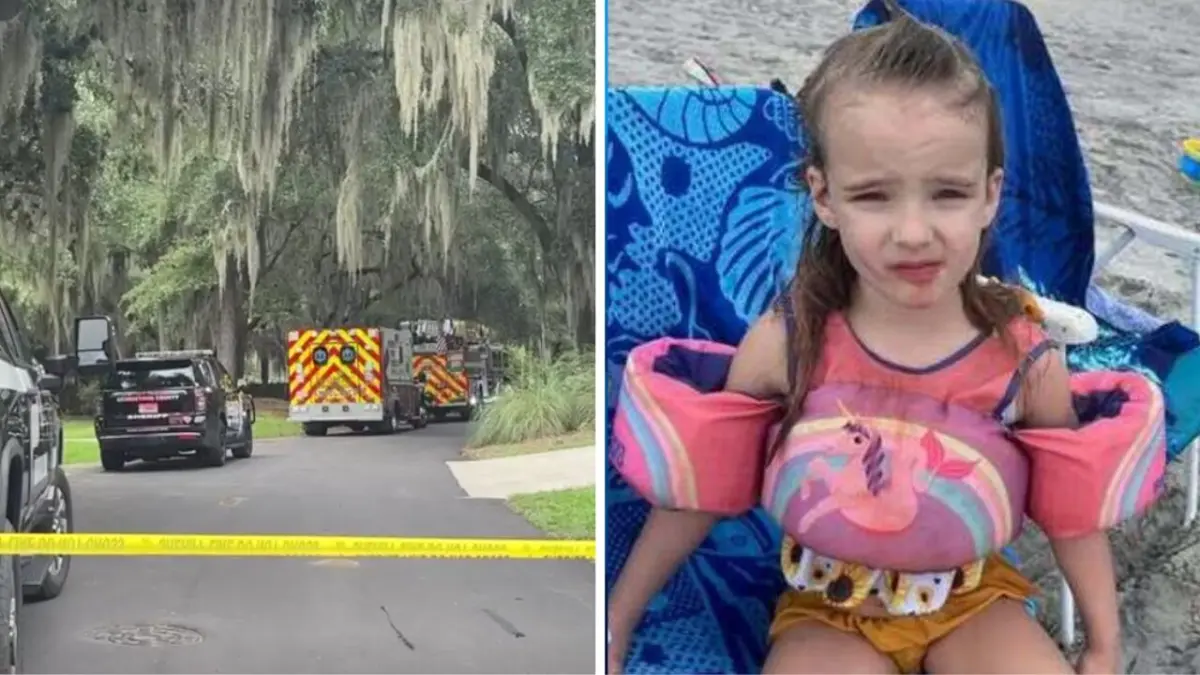
The tragic death of five-year-old Saylor Hayes near the resort community of Pawleys Island, South Carolina, has evolved from a heartbreaking accidental drowning into a complex criminal investigation. Saylor, a severely nonverbal and autistic child who possessed a known history of wandering and an affinity for water, slipped away from a family rental home along Old Waccamaw Drive on a Sunday afternoon. Her disappearance sparked a massive, multi-agency search that mobilized state helicopters, underwater drones, canine units, and hundreds of local volunteers.
However, what initially appeared to be a tragic accident quickly transformed into a criminal probe when investigators uncovered a web of deception. Georgetown County authorities allege that the child’s parents, John Hayes III and Geordyn Hayes, deliberately misled search and rescue personnel from the outset. Despite knowing that their daughter was not wearing her mandatory tracking device—which was later discovered locked inside a vehicle back at their primary residence in Virginia—the couple actively encouraged deputies to utilize tracking technology tailored to the missing girl. Furthermore, investigators state the parents actively attempted to divert search efforts away from nearby bodies of water, even though they were acutely aware of her attraction to water and her vulnerability.
Following an intensive multi-state investigation, the parents were apprehended in Carter County, Tennessee, and charged with unlawfully placing a child at risk and willfully abandoning a child. As the community mourns the loss of a vibrant young life, the incident has ignited a national conversation regarding caregiver accountability, the strict protocols surrounding specialized tracking programs like Project Lifesaver, and the devastating consequences that arise when safety measures are bypassed or neglected.
Detailed Chronology
The Disappearance and Initial Response
The sequence of events began over the weekend when the Hayes family traveled from Washington County, Virginia, to vacation in the scenic Hagley community near Pawleys Island, South Carolina. According to arrest warrants filed by law enforcement, five-year-old Saylor Hayes was left unsupervised near a hazardous body of water. Given her profound autism and severe nonverbal status, Saylor was classified as a high-risk wanderer—a child prone to bolting without an awareness of physical danger.
At some point on Sunday, August 31, Saylor wandered away from the family’s rental property along Old Waccamaw Drive. When her absence was realized, local authorities were notified, launching what would become a grueling, multi-day rescue operation.
The Multi-Agency Search Operation
Upon receiving the distress call, the Georgetown County Sheriff’s Office (GCSO) immediately initiated a comprehensive ground and water search. As night fell and hours ticked away without a breakthrough, the operation scaled up significantly. The rescue grid ultimately encompassed local law enforcement, emergency medical services, and specialized units from across the region.
The South Carolina Law Enforcement Division (SLED) deployed specialized aviation units and advanced underwater drones. Simultaneously, the Charleston County Sheriff’s Office contributed a helicopter fitted with specialized radio tracking capabilities designed to home in on Project Lifesaver transmitters. The U.S. Coast Guard dispatched a vessel to sweep adjacent waterways, while K-9 units and dive teams scoured the local terrain.
Beyond official responders, the community response was overwhelming. Hundreds of residents in the Pawleys Island area mobilized independently, combing through private properties, securing neighborhood docks, and assisting search teams through the night.
The Discovery and Medical Examiner’s Findings
Despite the exhaustive efforts of hundreds of personnel, the physical search concluded in tragedy the following morning. At approximately 9:45 a.m. on Monday, September 1, agents with the South Carolina Department of Natural Resources (SNDR) recovered Saylor’s lifeless body from the water close to the location where she was last seen.
Georgetown County Coroner Chase Ridgeway reported that an initial examination of the child’s body revealed no obvious external signs of trauma. To determine the precise cause and manner of death, an official forensic autopsy was scheduled at the Medical University of South Carolina (MUSC) in Charleston. As legal and investigative proceedings progress, authorities have emphasized that the final determination regarding the cause of death remains pending toxicological and pathological reviews.
The Investigation and Arrests
As search operations wound down, investigators began piecing together the timeline and circumstances surrounding the child’s final hours. Discrepancies quickly emerged regarding the electronic tracking equipment intended to safeguard the autistic child.
Law enforcement officials in Washington County, Virginia, coordinated with South Carolina investigators to execute searches tied to the family. Deputies in Virginia inspected the family’s primary residence and discovered Saylor’s Project Lifesaver transmitter locked inside a vehicle parked on the property—proving conclusively that the child was completely unprotected by the device when she vanished.
Investigators determined that John Hayes III and Geordyn Hayes had actively urged deputies in South Carolina to deploy Project Lifesaver equipment to locate the missing girl, despite knowing she did not possess the transmitter. Furthermore, affidavits allege that the parents intentionally misdirected search teams, attempting to steer resources away from the water hazards that ultimately claimed their daughter’s life.
Acting on these findings, warrants were issued for the couple’s arrest. On Tuesday night, September 2, John and Geordyn Hayes were taken into custody by local authorities in Carter County, Tennessee. They face serious felony-level charges including unlawfully placing a child at risk and willfully abandoning a child. Extradition proceedings were immediately initiated to return the couple to Georgetown County to face prosecution.
Supporting Context & Metrics
Understanding Project Lifesaver
The focal point of the criminal investigation centers around the misuse and absence of Project Lifesaver, an internationally recognized, community-based public safety program designed specifically to protect individuals prone to wandering—such as children with autism and adults with Alzheimer’s or related cognitive disorders.
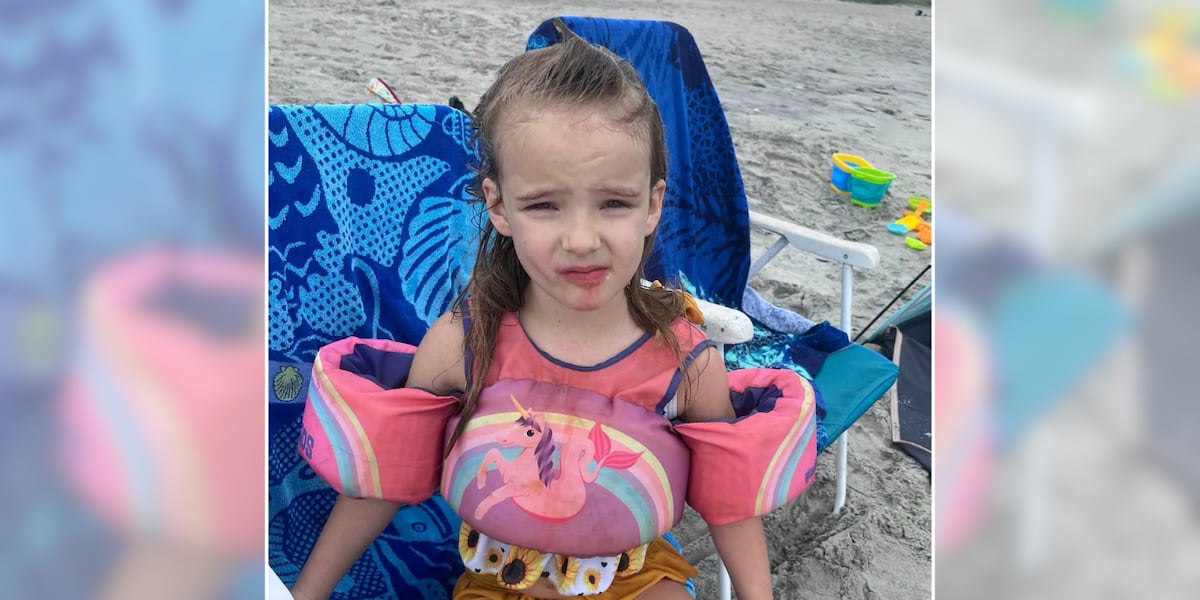
Enrolled since June 2024 through the Washington County Sheriff’s Office, Saylor Hayes was theoretically equipped with a critical safety net. The core mechanics of the program involve:
- The Transmitter: Clients wear a small, lightweight radio frequency (RF) transmitter on their wrist or ankle.
- Continuous Signal: The device continuously emits a personalized, traceable radio frequency signal 24 hours a day, 365 days a year.
- Specialized Tracking Equipment: Law enforcement agencies utilize specialized directional antenna receivers and aircraft-mounted tracking units to pinpoint the unique frequency emitted by the device.
Protocol and Maintenance Standards
Project Lifesaver International and local law enforcement agencies maintain exceptionally rigid guidelines regarding the deployment and maintenance of these tracking bands. Because cognitive wanderers often attempt to remove foreign objects from their bodies, the hardware is engineered to resist casual tampering.
- Physical Removal Requirements: The transmitter bands are secured using a specialized, tamper-resistant clasp system. They cannot simply be unclasped, slipped off, or removed by the client. To detach the band, it must be physically cut off using specialized tools.
- Continuous Wear Policy: Program founders and administrators strongly advise against ever removing the device, noting that it is fully waterproof and engineered to be worn during bathing, swimming, and sleeping. Removing the band effectively neutralizes the entire safety infrastructure, rendering rapid-response search protocols useless.
Statistics compiled by public safety advocates underscore the vital importance of such programs. Nationwide, missing persons with cognitive impairments who are located within the first 24 hours have a exponentially higher survival rate. However, the efficacy of these programs relies entirely on active caregiver compliance—a responsibility that prosecutors allege was completely disregarded in this case.
Official Statements
The gravity of the allegations and the tragic outcome have prompted strong, emotionally charged statements from law enforcement leadership across multiple jurisdictions.
Georgetown County Sheriff Carter Weaver emphasized the fundamental legal and moral duties incumbent upon parents and caregivers:
"Parents and caregivers have a fundamental responsibility to protect children who cannot protect themselves. When the evidence establishes probable cause to believe that a child has been unlawfully placed in circumstances that endanger that child’s safety, law enforcement has a responsibility to act."
Washington County Sheriff Blake Andis expressed profound sorrow over the loss of a child enrolled in his agency’s protective program, while clarifying the strict operational parameters of Project Lifesaver:
"It is important to understand that Project Lifesaver is a voluntary program. A parent, guardian or caregiver is responsible for ensuring the transmitter remains properly secured to the client. The transmitter is attached using a specialized band designed for continuous wear. It cannot simply be unclasped or removed by the client; the band must be physically cut in order to remove the transmitter."
Sheriff Andis further asserted his belief that the tragic outcome could have been entirely prevented had the equipment been utilized as intended:
"Project Lifesaver works, and I firmly believe that if Saylor had been wearing her transmitter, deputies could have found her much sooner."
Gene Saunders, founder and CEO of Project Lifesaver International, reinforced the organization’s zero-tolerance stance on removing tracking bands:
"It can be used in bathing and in swimming. If they take it off, you’re gonna have the same situation that occurred in this particular search where you don’t have a means of locating them rapidly."
Georgetown County Coroner Chase Ridgeway provided an update regarding the ongoing medical evaluations:
"The cause and manner of death remain undetermined pending the completion of the autopsy and any necessary additional testing."
Future Outlook
As this high-profile case moves forward, several critical legal and administrative milestones loom on the horizon:
- Extradition and Arraignment: John Hayes III and Geordyn Hayes are currently awaiting extradition from Carter County, Tennessee, back to South Carolina. Once transferred to the Georgetown County Detention Center, they will face formal arraignment proceedings where bond arguments and initial court dates will be established.
- Forensic Pathology Results: The Medical University of South Carolina is expected to finalize its autopsy report and toxicology findings. These medical conclusions will provide definitive scientific evidence regarding the precise physiological cause of Saylor Hayes’ death, potentially shaping additional or amended criminal charges filed by prosecutors.
- Legal Proceedings and Trial Preparation: The Ninth Circuit Solicitor’s Office will review the extensive investigative files compiled by the Georgetown County Sheriff’s Office, the South Carolina Department of Natural Resources, and the Washington County Sheriff’s Office to build a comprehensive prosecution strategy against the parents.
- Broader Advocacy and Policy Impact: Child welfare advocates and autism support organizations anticipate that this case will catalyze renewed legislative and community focus on caregiver accountability. Discussions are already emerging regarding how to strengthen safety checks for vulnerable children enrolled in public safety assistance programs, ensuring that life-saving technology is not only provided to families but actively monitored and maintained to prevent future tragedies.

0 Comments