

Executive Overview
The rugged terrain of the Alaskan wilderness is as unforgiving as it is breathtaking, a dual reality that 27-year-old Jadon Nicoara and his cousin discovered in the most visceral way possible. What began as a standard multi-day caribou hunting expedition approximately 100 miles outside of Deadhorse quickly deteriorated into a fight for survival. On the fourth day of their trek, Nicoara, a father of two, was brutally ambushed by a massive brown bear on a steep canyon ridge.
The ensuing encounter was a harrowing, split-second struggle against apex-predator fury. Suffering severe facial trauma, deep lacerations to his arms and legs, and listening to the horrifying sound of his own facial bones shattering under the animal’s jaws, Nicoara miraculously survived. Thanks to quick thinking, a coordinated defense with his cousin, and a desperate evacuation procedure, Nicoara is now recovering at home with his young family.
This incident underscores the inherent risks of backcountry exploration in North America’s most remote regions. As Nicoara prepares for extensive facial reconstructive surgery, his story has captured national attention, serving as both a harrowing testament to human resilience and a sobering reminder of the raw, unpredictable danger posed by wildlife encounters in the Last Frontier.
Detailed Chronology: The Anatomy of an Attack
To fully understand the harrowing nature of the incident, one must examine the precise sequence of events that unfolded on that steep canyon hill 100 miles south of Deadhorse.
Days 1 to 3: The Quiet Wilderness
Nicoara and his cousin had spent the first three days of their hunting trip deeply immersed in the remote Alaskan landscape. Weather conditions had been favorable, and the primary objective of the trip—securing a caribou harvest—was well underway. The pair had spotted a distant herd hours earlier and were systematically tracking their movement across the undulating tundra and foothills.
Day 4: The Ambush on the Ridge
On the fourth afternoon, the hunt reached a critical juncture. The cousins were navigating a steep incline, climbing along the edge of a canyon to gain a better vantage point of the caribou herd they had been monitoring. As they pushed through thick brush lining the slope, Nicoara noticed unexpected movement in the vegetation just above them.
"I don’t know if I said it or thought it, but I was like, ‘Caribou,’" Nicoara recalled.
Instead of a grazing herbivore, however, a massive brown bear exploded from the underbrush. Charging downhill at a distance of just 15 to 20 feet, the animal closed the gap instantly, snarling with its mouth wide open at full speed.
The Physical Struggle
Caught entirely off guard, Nicoara had no time to bring his firearm to bear. The sheer momentum of the charging animal threw him backward. As he tumbled down the steep hill, the bear pursued him, pinning him and instantly initiating a predatory assault.
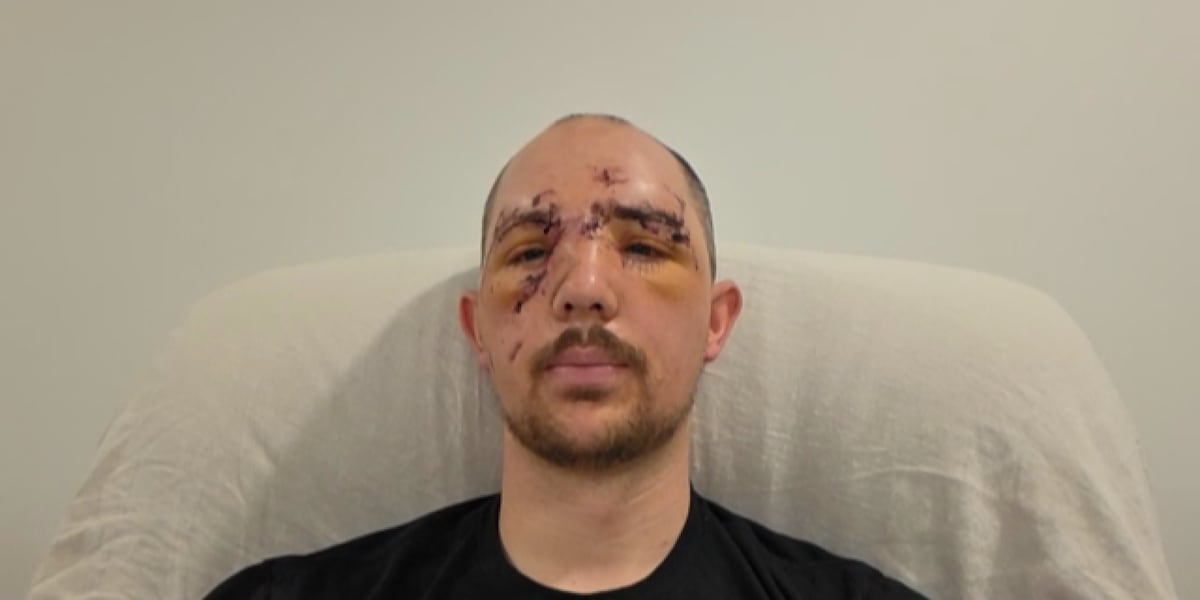
"I just felt it bite my arm, and it was very surreal because everything happens so fast," Nicoara said. "Then, it finally ended up on top of me, and it was very surreal because everything happens so fast… It bit my face. It was just biting again and again, and I could hear all the bones crunching in my nose. I saw stars, and I was like, ‘OK, this is kind of where it ends.’ I thought I was going to be dead."
The bear shifted its attack downward, clamping onto Nicoara’s hands and foot in a methodical display of destructive force.
The Counter-Attack
Recognizing that his cousin was being systematically mauled, Nicoara’s cousin unholstered his handgun and began firing rounds toward the bear to deter it.
"I was screaming at him not to hit me because I was all tangled up with the bear, and I didn’t want more damage," Nicoara explained.
His cousin emptied his entire magazine into the chaos. The diversion worked momentarily, causing the bear to temporarily shift its aggression away from Nicoara and toward the cousin. Capitalizing on this split-second distraction, Nicoara managed to draw his own revolver. Firing at close range, he struck the animal, which finally broke off its attack and fled back into the dense brush.
Supporting Context & Metrics: Bear Safety and Remote Rescues in Alaska
The Reality of Alaskan Wildlife Encounters
Alaska is home to an estimated 30,000 brown bears (Ursus arctos), alongside approximately 100,000 black bears. While human-bear conflicts are statistically rare relative to the millions of visitors and residents who recreate in the wilderness each year, remote backcountry areas—such as the North Slope and regions surrounding Deadhorse—place humans deep inside established ursine territory.
Wildlife experts emphasize that surprise encounters are the most common catalyst for brown bear attacks. Unlike predatory stalking, defensive attacks typically occur when a bear is startled at close range, feels its personal space has been violated, or is protecting a food source or cubs. In Nicoara’s case, the thick brush on the steep canyon edge severely restricted visibility, neutralizing the early-warning margin that typically allows hunters and hikers to spot wildlife before a confrontation becomes inevitable.
The Logistics of Remote Medical Evacuation
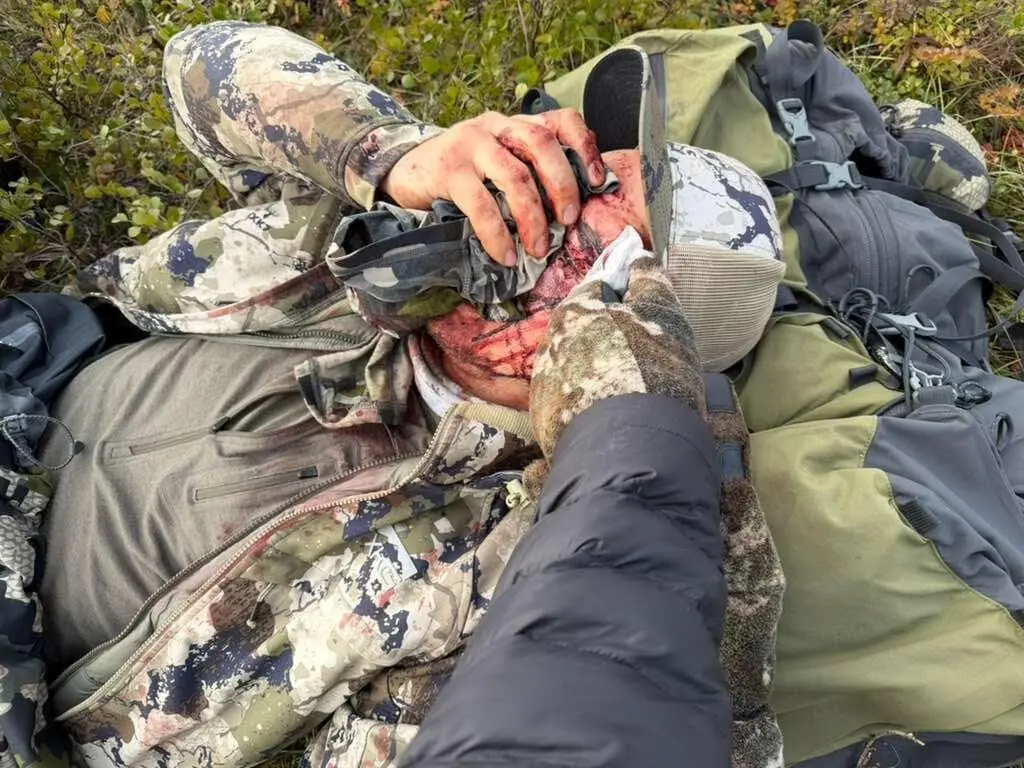
Once the bear retreated, Nicoara and his cousin faced a secondary crisis: medical triage and evacuation from a location devoid of traditional infrastructure. Deadhorse, primarily known as an industrial hub supporting the Prudhoe Bay oil fields, is situated on the North Slope of Alaska. The surrounding terrain is vast, marshy, and notoriously difficult to navigate.
- Communication Barriers: Relying on satellite communication, the hunters had to pinpoint their coordinates and relay the severity of Nicoara’s wounds to emergency dispatchers.
- Relocation Tactics: Recognizing that the initial extraction point was sub-optimal for a helicopter landing, the bleeding and traumatized men summoned the strength to relocate to a safer, more visible staging area.
- The Waiting Period: They were informed that an air rescue would take approximately two hours to reach their position.
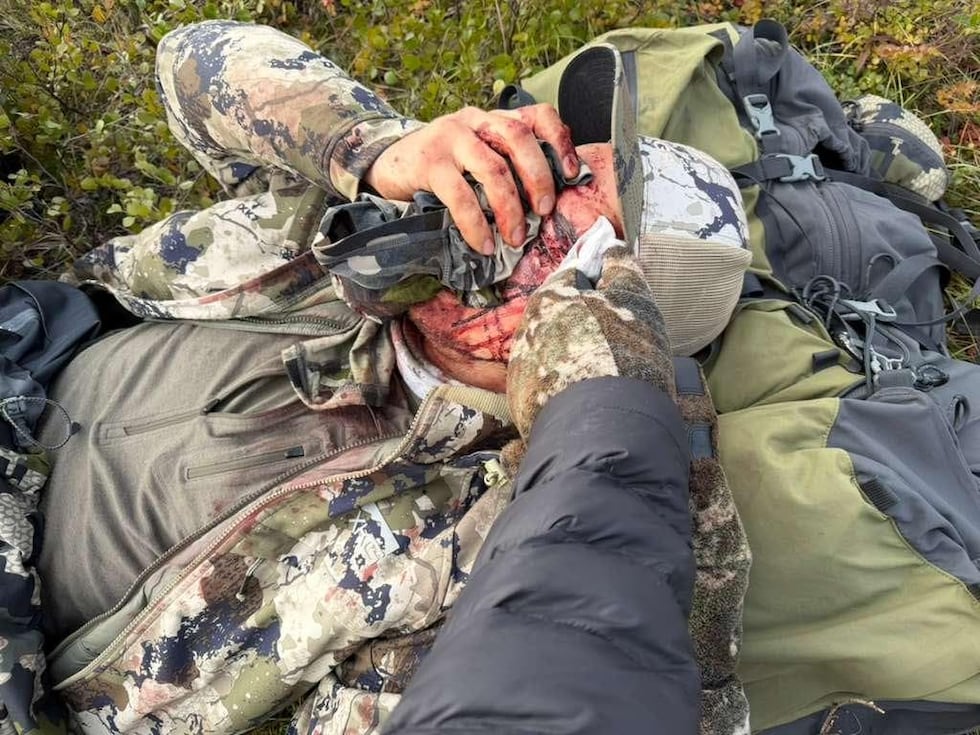
"I was like, ‘Oh my goodness, I don’t know if I’m going to make it because I’m bleeding pretty good,’" Nicoara remembered thinking as he watched the clock tick down while applying field first-aid. "We were praying, and I was thinking about my girls. I was like, ‘I need to make it home.’ I just remember at one point looking around, and it was a gorgeous day. I’m like, ‘How did this even happen? It’s so surreal.’"
Official Statements and Personal Reflection
Jadon Nicoara’s survival has reverberated through his local community and online networks, transforming a private tragedy into a public narrative of gratitude and spiritual endurance. In statements following his discharge from medical care, Nicoara has repeatedly emphasized his profound sense of thankfulness.
"I’m very thankful to be alive," Nicoara stated. "Glad to have my eyesight and the use of all my limbs. God is very good."
Confined to his home and surrounded by his wife and two young daughters—a 3-year-old and a 7-month-old—Nicoara has turned to his faith to process the psychological and physical trauma of the event. He shared that scriptural passages have provided immense comfort during his convalescence.
"Even though I walk through the valley of the shadow of death, I will fear no evil, for you are with me." — Psalm 23:4
While no official wildlife agency report has yet cataloged the precise tracking data or final status of the bear involved, local authorities continue to use such incidents to reiterate standard backcountry safety protocols, including the mandatory carrying of EPA-approved bear spray, large-caliber firearms, and reliable satellite communication devices when hunting in remote Alaskan sectors.
Future Outlook: The Road to Recovery
The physical toll of a brown bear attack is rarely resolved upon discharge from initial emergency care. For Nicoara, the journey toward normalcy is just beginning.
Medical Prognosis
- Soft Tissue Recovery: Nicoara sustained extensive lacerations and deep puncture wounds across his arms and legs, requiring rigorous wound care to prevent severe secondary infections common in wild animal bites.
- Surgical Interventions: The most critical hurdle remaining is his facial trauma. The auditory experience of hearing his facial bones crunch under the bear’s bite translated into severe fractures. Nicoara is currently scheduled to undergo complex facial reconstruction surgery. Medical specialists will work to repair structural damage to his nose and surrounding facial architecture.
- Ophthalmological Success: Despite the proximity of the bites to his eyes and upper face, doctors have confirmed that his vision remains fully intact—a detail Nicoara frequently highlights as nothing short of miraculous.
Psychological Healing
Beyond physical rehabilitation, survivors of predatory wildlife attacks frequently navigate post-traumatic stress. The suddenness of the ambush, combined with the sensory memory of the attack, requires robust psychological support. Nicoara’s strong family support system, anchored by his wife and young daughters, serves as his primary motivation.
As he prepares for the operating room next week, Nicoara’s story stands as a permanent testament to the fine line between civilization and the wild. For hunters and outdoor enthusiasts across Alaska, his survival is a reminder of the respect commanded by the state’s apex predators, and the unbreakable will to return home to those we love.

0 Comments