
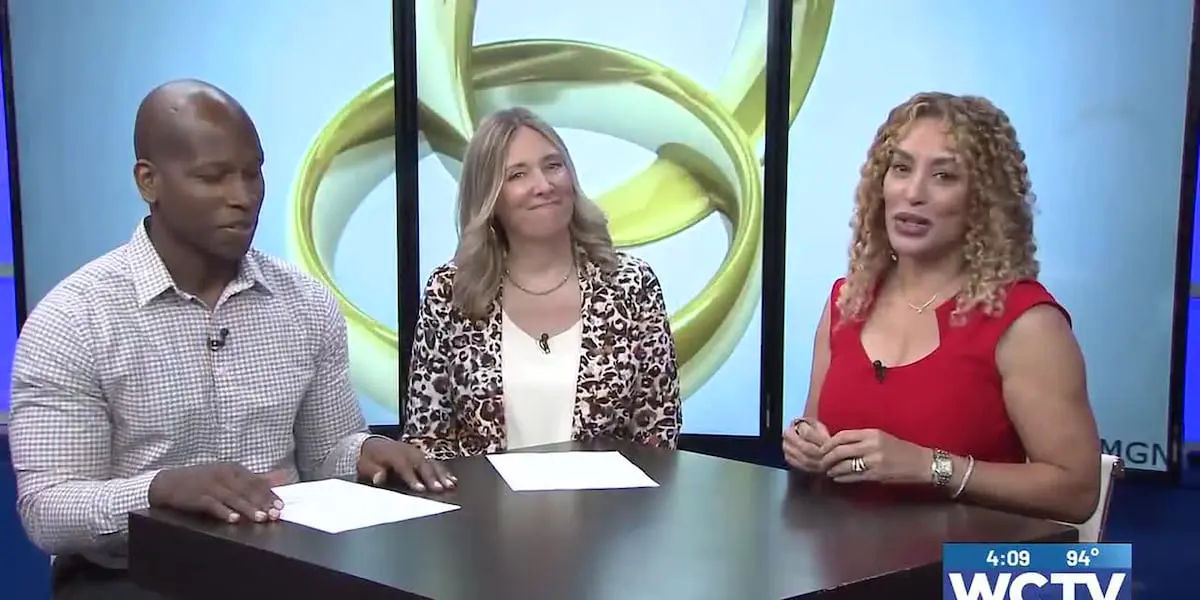

TALLAHASSEE, Fla. — Long before divorce papers are drawn or bitter words are exchanged in a courtroom, a marriage often undergoes a quiet, insidious erosion. While society tends to focus on high-stakes marital crises—such as infidelity, severe financial betrayal, or explosive verbal abuse—relationship experts point out that the most destructive forces are frequently the least dramatic.
In a recent, deeply revealing episode of WCTV’s State of the Union, host Ava Van Valen sat down with renowned certified marriage coaches Tank and Sarah Ackerman to examine the hidden fractures that form behind closed doors. According to the Ackermans, many couples mistake normalized, everyday frustrations for harmless quirks, completely unaware that these behaviors act as silent killers steadily dismantling the foundation of their partnership.
This investigative report examines the psychological mechanisms behind these subtle relationship saboteurs, explores the broader context of modern marital distress, and provides actionable insights from top-tier relationship professionals on how couples can course-correct before it is too late.
Executive Overview
The modern landscape of marriage is fraught with unique pressures. From the blurred lines between work and home life brought on by hyper-connectivity to the economic stressors weighing on households, couples today navigate a complex matrix of responsibilities. Against this backdrop, relationship drift rarely happens overnight. Instead, it accumulates through micro-habits—small, seemingly insignificant behavioral shifts that gradually replace intimacy with emotional distance.
During their appearance on State of the Union, Tank and Sarah Ackerman drew upon decades of combined coaching experience to isolate two primary "silent killers" that regularly fly under the radar:
- The Creeping Culture of Emotional Withdrawal (Micro-Disconnection): The subtle, progressive habit of withholding vulnerable communication, replacing deep engagement with superficial administrative chatter about household chores and logistics.
- Normalized Contempt Disguised as Humor: The insidious drift toward sarcastic commentary, eye-rolling, and minor public or private belittling that slowly chips away at fundamental mutual respect.
This report unpacks these two phenomena, reviews the systemic pressures facing modern unions, and lays out a strategic roadmap for couples seeking to fortify their commitments against invisible decay.
Detailed Chronology: How Subtle Behaviors Morph Into Major Crises
To understand how marriages quietly deteriorate, relationship scientists and coaches emphasize the importance of viewing marital health as a dynamic, continuous process rather than a static state. The descent from a thriving partnership to emotional estrangement typically follows a distinct, albeit invisible, chronological trajectory.
Phase 1: The Transition from Intention to Autopilot
In the honeymoon phase and early years of a marriage, partners invest high levels of intentionality into understanding each other’s inner worlds. Communication is exploratory, affectionate, and patient. However, as life introduces children, career advancements, mortgages, and domestic routines, couples frequently slip into operational autopilot.
The Ackermans note that the first warning sign often manifests as a subtle shift in conversation. Dialogue ceases to be about discovery and becomes purely transactional. Conversations are reduced to logistics: "Did you pick up the dry cleaning?", "Who is driving soccer practice?", or "We need to talk about the electric bill." While these discussions are necessary for daily functioning, they completely crowd out emotional nourishment. Over months and years, this functional partnership replaces the romantic alliance, leaving both individuals feeling like roommates rather than spouses.
Phase 2: The Onset of Micro-Disconnection
As transactional communication becomes the baseline, partners begin to experience what the Ackermans describe as micro-disconnection. This occurs when one or both individuals experience a subtle bid for emotional connection—a sigh, a remark about a difficult day at work, or an invitation to look at something meaningful—and that bid is ignored, minimized, or met with distraction.
Often, this distraction is driven by technology. The omnipresence of smartphones has introduced "phubbing" (phone snubbing) into the domestic sphere. A partner looks up to share a thought, only to find their spouse’s gaze locked onto a glowing screen. Individually, these moments feel too minor to address. No one files for divorce over a single ignored glance. Yet, cumulatively, thousands of missed bids create an invisible wall of resentment and loneliness.
Phase 3: The Normalization of Defensive Retrenchment
When emotional bids are consistently missed, the vulnerable partner typically reacts in one of two ways: they either escalate their demands (often manifesting as nagging or criticism) or they withdraw entirely to protect themselves from further rejection.
This is where the second silent killer—normalized contempt—takes root. When individuals feel emotionally unsafe or unvalued, the brain’s defense mechanisms activate. Sarcasm becomes a shield. Passive-aggressive comments replace direct requests. Eye-rolling during a disagreement becomes a conditioned reflex. Because these behaviors are rarely punished immediately by catastrophic blowups, couples assume they are harmless "personality quirks" or just normal marital friction. In reality, renowned relationship researcher Dr. John Gottman has repeatedly identified contempt as the single greatest predictor of divorce.
Phase 4: The Parallel Lives Phenomenon
In the final phase of unaddressed silent killers, couples reach a state of emotional divorce while physically remaining under the same roof. They lead parallel lives. They sleep in the same bed, eat meals together, and manage family obligations as a team, but the emotional heartbeat of the relationship has flatlined. When an external shock occurs—such as an empty nest, a mid-life crisis, or a sudden trauma—the fragile structure collapses because there is no underlying resilience left to sustain it.
Supporting Context & Metrics: The State of Modern Marriage
To fully grasp why these silent killers are so pervasive today, one must examine the broader socioeconomic and psychological data shaping contemporary relationships.
Societal Shifts and Relational Stressors
According to demographic data from the U.S. Census Bureau and the Centers for Disease Control and Prevention (CDC), the overall divorce rate in the United States has stabilized or slightly declined over the last two decades, largely because fewer people are marrying young, and cohabitation has become widespread. However, the quality of enduring marriages is under unprecedented strain.
Modern adults are expected to extract unprecedented levels of emotional fulfillment from a single partner. Historically, marriage was an economic and social alliance focused on survival, child-rearing, and resource pooling. Today, individuals look to their spouses to act as their best friend, romantic confidant, co-parent, intellectual peer, and emotional therapist. When a relationship is tasked with carrying this immense psychological weight, minor communication breakdowns carry catastrophic consequences.
The Psychological Toll of Digital Distraction
A 2023 study published in the Journal of Social and Personal Relationships highlighted the corrosive effects of "technoference"—the everyday interruptions caused by digital devices in interpersonal interactions. The study found that individuals who reported high levels of technoference in their relationships experienced significantly lower levels of relationship satisfaction, higher rates of depressive symptoms, and increased conflict over device usage.
Tank and Sarah Ackerman frequently address this dynamic in their coaching practice. Couples often sit across from each other at dinner, physically present yet psychologically miles away. This persistent divided attention trains the brain to view the partner as secondary to whatever digital stimulus is capturing focus, eroding the sense of being "chosen" and cherished.
Economic Pressures and Domestic Labor Disparities
Compounding the emotional and digital distractions are relentless economic pressures. Inflation, housing affordability crises, and the demands of the modern gig economy mean that both partners are frequently exhausted by the time they reunite at home.
This exhaustion breeds the "demand-withdraw" pattern, where one partner demands emotional engagement or help with domestic labor, and the other withdraws to conserve dwindling energy reserves. Without intentional intervention, this cycle hardens into entrenched resentment.
Official Insights: Perspectives from Tank and Sarah Ackerman
During their interview on State of the Union with Ava Van Valen, certified marriage coaches Tank and Sarah Ackerman provided profound clarity on how couples can identify and dismantle these invisible threats before they cause irreversible damage.
Exposing the First Killer: The Danger of "Fine"
When asked about the most insidious habits they encounter in their practice, the Ackermans pointed directly to the slow erosion of deep, intentional dialogue, often masked by the word "fine."
"The most dangerous word in any marriage is ‘fine,’" Sarah Ackerman explained during the broadcast. "When you ask your spouse how their day was, and they say ‘fine,’ and you accept that at face value because you’re too tired to dig deeper, you are walking past an open door. That single word acts as a velvet rope keeping you out of each other’s inner worlds. Over time, those locked doors multiply until you’re living with a stranger."
Tank Ackerman emphasized that combating this requires moving past passive observation into active, courageous curiosity.
"We teach couples that love is not a passive emotion; it is an active discipline," Tank noted. "You have to retrain yourself to look for the micro-expressions, the subtle changes in posture, the quiet sighs. When your partner goes silent, that isn’t peace—that is often a retreat. You have to learn how to bridge that gap with gentleness and persistent invitation."
Exposing the Second Killer: The Lethality of Casual Contempt
Addressing the second silent killer, the Ackermans warned against the cultural normalization of marital cynicism, particularly as portrayed in media and pop culture, where nagging wives and checked-out husbands are played for cheap laughs.
"People consume media that normalizes mocking your spouse," Sarah observed. "Then they take that home. They make passive-aggressive jokes at social gatherings at their partner’s expense. They roll their eyes when their spouse speaks, thinking, ‘Oh, they know I’m just joking.’ But the subconscious mind doesn’t take contempt as a joke. It registers as a threat to safety."
The coaches stressed that reversing this trend requires replacing sarcasm with radical directness and kindness. Instead of using humor to deflect frustration, couples must learn to articulate their unmet needs without attacking the character of their partner.
Future Outlook: Rebuilding Resilience and Guarding Your Marriage
Recognizing the silent killers of a marriage is only the first step. The true challenge lies in implementing sustainable, daily practices that rebuild intimacy, foster emotional safety, and future-proof the partnership against unforeseen stressors.
1. Reclaiming Intentional Communication (The Daily Debrief)
To combat the drift toward purely transactional communication, the Ackermans advocate for instituting a daily "unplugged debrief." This is a dedicated 15-to-20-minute window each day—free of phones, television, and logistical talk about bills or children—where partners check in exclusively on emotional well-being. Prompts such as "When did you feel most stressed today?" or "How can I best support you this week?" help maintain the bridge of emotional connection.
2. Protecting the Sacredness of Bids
Couples must cultivate mindfulness regarding each other’s bids for connection. When a partner attempts to share a thought, observation, or feeling, making a conscious choice to turn toward the bid rather than away from it builds a robust emotional savings account. Research shows that thriving couples turn toward each other’s bids up to 86% of the time, compared to just 33% in relationships headed for dissolution.
3. Eradicating Contempt and Cultivating Appreciation
To counteract the poison of contempt, relationship experts recommend consciously practicing active appreciation. For every critical thought or frustration that arises, partners should challenge themselves to identify and voice two specific expressions of gratitude. By actively retraining the brain to focus on respect and admiration rather than annoyance, couples can neutralize cynicism before it takes root.
4. Professional Guidance as Preventative Maintenance
Finally, the cultural stigma surrounding marriage coaching and therapy must continue to evolve. Historically, couples have waited until a crisis—such as an affair or impending separation—occurred before seeking professional help. Much like servicing a car before the engine fails, engaging with certified coaches like Tank and Sarah Ackerman on a preventative basis allows couples to fine-tune their relational mechanics while the partnership is still strong.
Conclusion
As WCTV’s State of the Union highlights, marriages rarely fracture under the weight of sudden catastrophes. Instead, they fray at the edges through the quiet accumulation of unaddressed habits, missed emotional bids, and normalized disrespect. By shining a light on these silent killers, certified coaches Tank and Sarah Ackerman provide a vital blueprint for couples ready to move beyond autopilot and reclaim the deep, enduring connection they originally promised to build.

0 Comments