NEW YORK — The grand stage of the Metropolitan Opera is universally acknowledged as a crucible for elite human talent, where vocal acrobatics, symphonic precision, and dramatic mastery are tested to their absolute limits. Yet, in the rarefied air of Lincoln Center, the performance standards extend far beyond the roster of world-class sopranos and tenors. In a theatrical ritual that bridges the high-art prestige of classical opera with the gritty, neon-soaked legacy of mid-century boardwalk entertainment, even the reptiles must audition.
On a late-August Friday, the hallowed backstage corridors of the Met bore witness to an unusual casting session. The objective: to secure a prime, scale-bound co-star for an upcoming revival of Wolfgang Amadeus Mozart’s 1790 comedic masterpiece, Così fan tutte. The production, which reimagines the classic tale of romantic fidelity against the vividly stylized backdrop of a 1950s Coney Island carnival, requires a live, charismatic serpent to share center stage with the production’s resident snake charmer.
At the helm of this cold-blooded tryout was performance artist Zoe Ziegfeld, a veteran carnival sideshow act turned opera performer. Alongside animal talent coordinator Nancy Novograd of All Tame Animals, Ziegfeld meticulously evaluated a succession of potential reptilian performers. The competition was fierce, the stakes were surprisingly high, and the winner—a striking sun-glow boa constrictor named Princess—now stands poised to captivate audiences under the searing brilliance of the Met’s theatrical lights.
This comprehensive report examines the intersection of high opera and sideshow theatrics, detailing the rigorous audition process, the operational logistics of incorporating exotic fauna into grand-scale productions, and the artistic vision driving one of the most unconventional stagings in modern opera history.
Detailed Chronology: The Anatomy of a Reptilian Audition
The road to the Metropolitan Opera stage is rarely straightforward, but for the serpentine hopefuls of late August 2026, the journey was exceptionally surreal. The casting session, captured by Associated Press photojournalist Andres Kudacki, transformed a standard rehearsal staging area into a cross between a herpetological sanctuary and a Broadway tryout.
The Evaluators and the Process
The casting room operated under strict parameters dictated by theatrical safety, animal welfare, and visual dramaturgy. Zoe Ziegfeld, who reprises their role as the production’s snake charmer for the third time, approached each candidate with a mixture of professional theatrical critique and intuitive animal husbandry.
The evaluation protocol for each snake was methodical:
Initial Presentation: Animal talent expert Nancy Novograd introduced the candidate, assessing basic physiological traits such as scale coloration, physical length, and muscular girth.
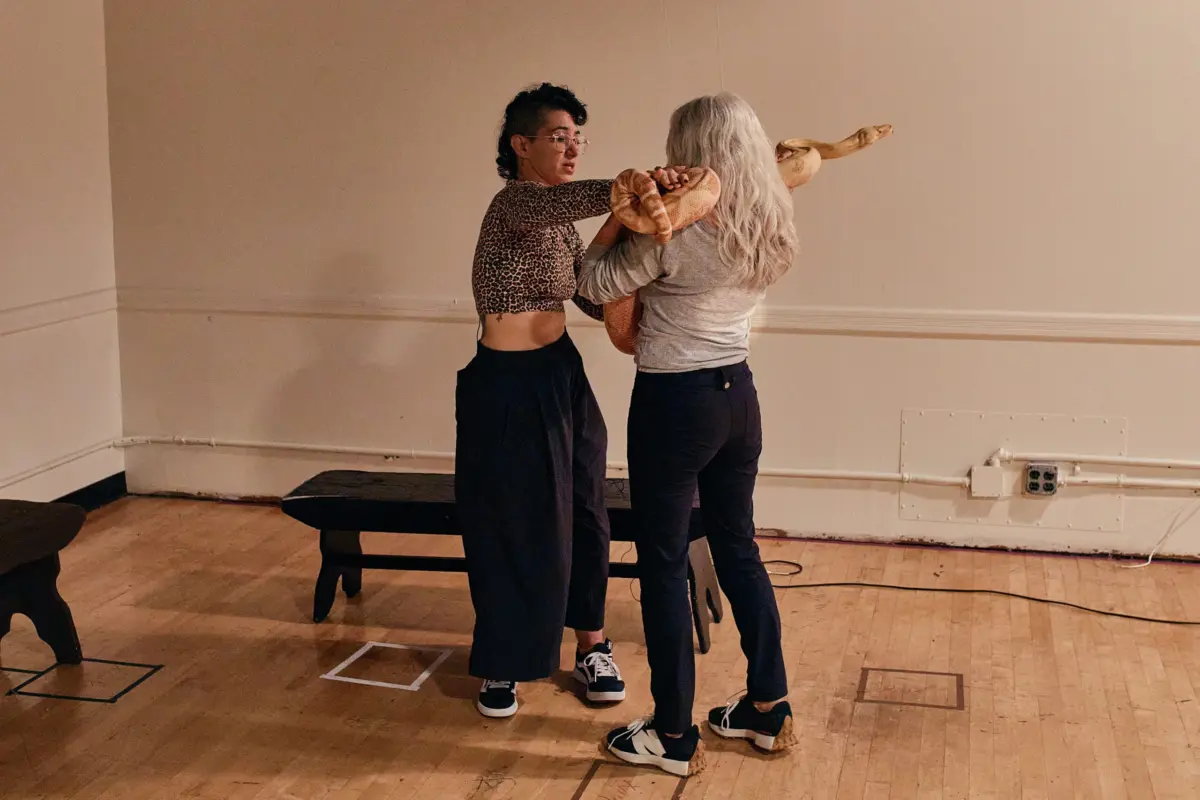
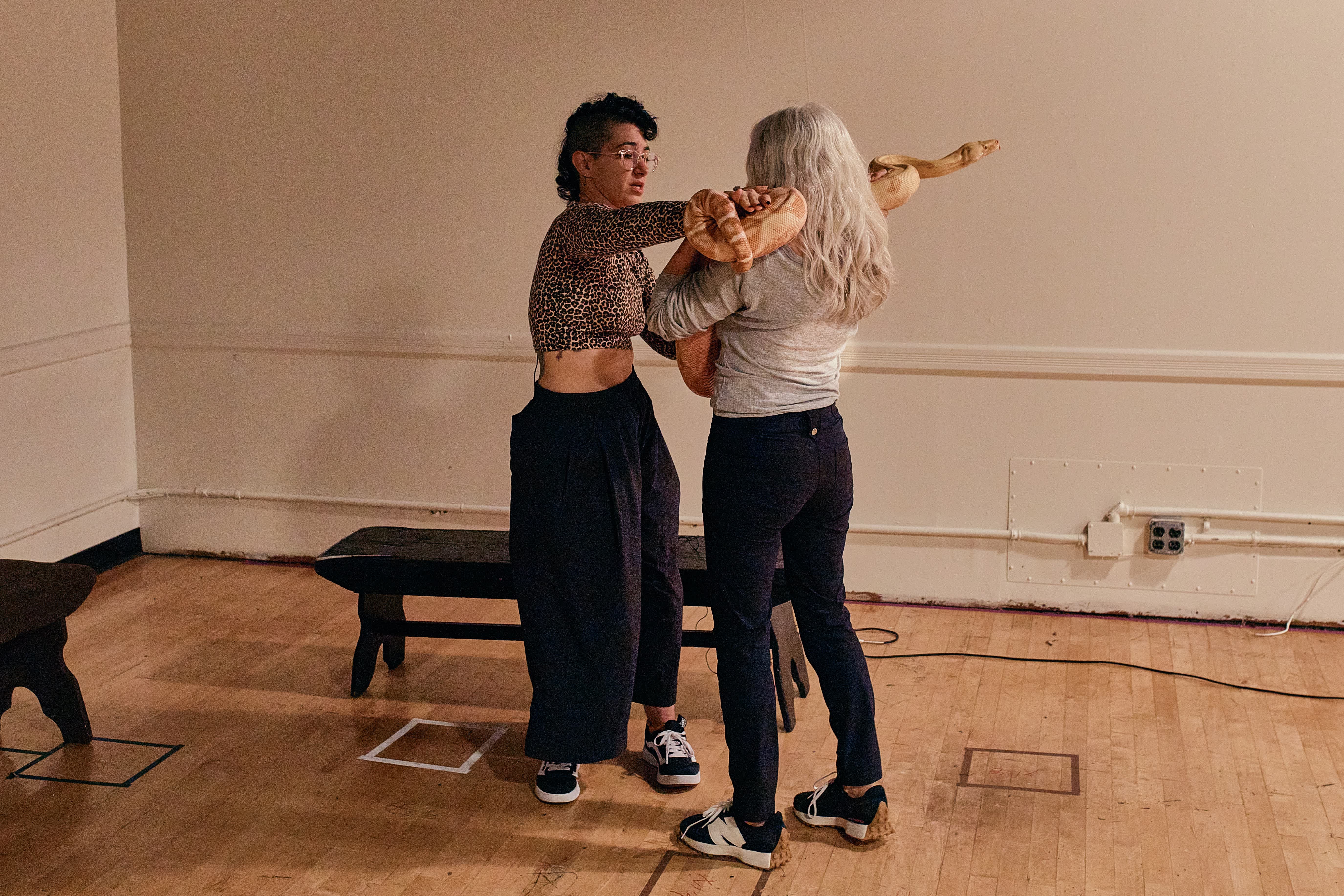
Tactile Interaction: Ziegfeld engaged directly with the animal, allowing the serpent to slither naturally across their arms and torso, testing the creature’s comfort level with human proximity and physical manipulation.
The Overhead Hoist: To simulate stage conditions, Ziegfeld hoisted the heavy animal high overhead, evaluating both the snake’s postural stability and their own physical endurance under load.
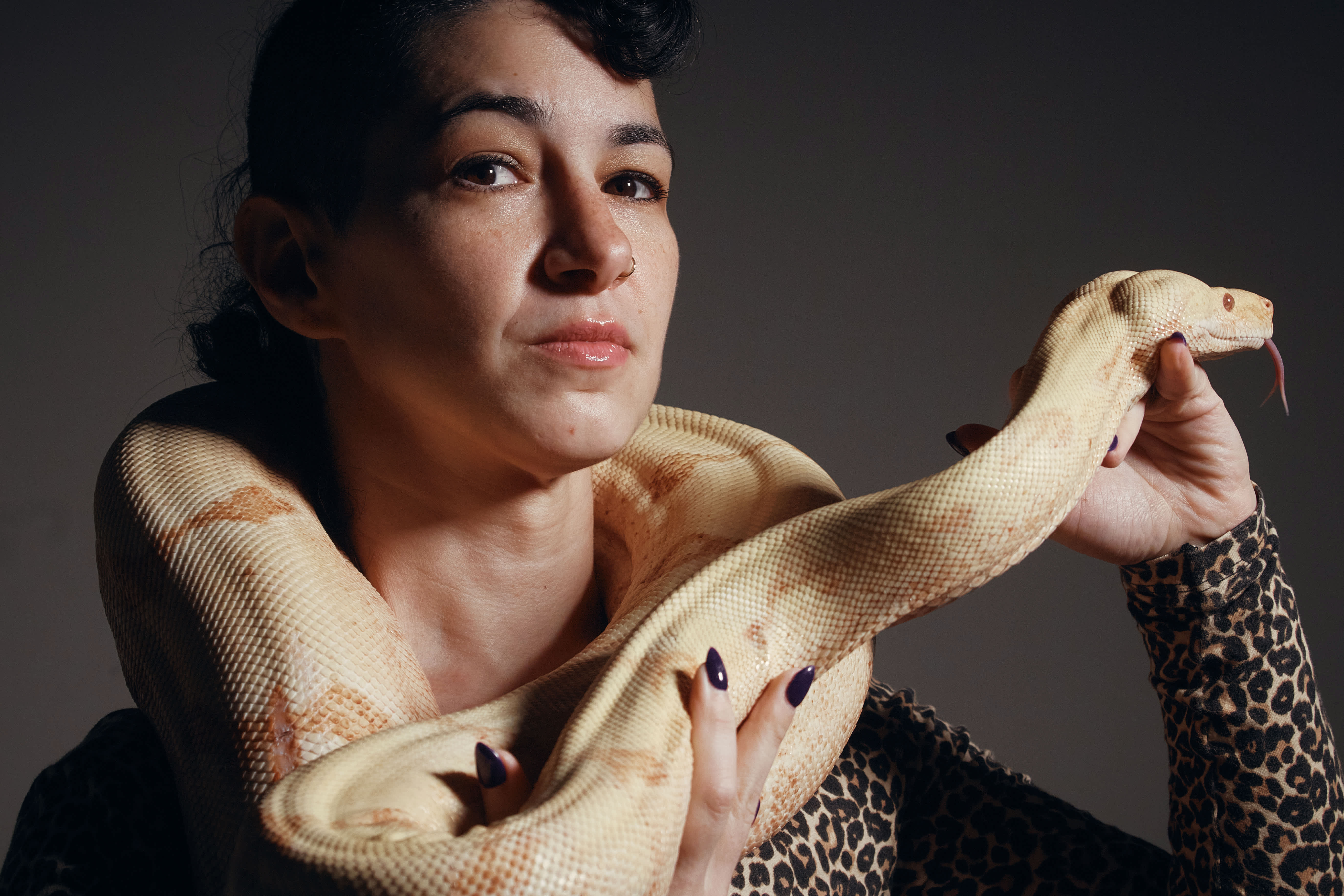
Behavioral Assessment: Ziegfeld maintained close, almost face-to-face eye contact with the animals, gauging their alertness, temperament, and response to environmental stimuli.
"I need to know that the animal is comfortable with people and with what we are doing," Ziegfeld explained during a brief respite in the auditions.
The Contenders and the Winner
The audition pool featured a variety of species and sizes, though early contenders faced immediate disqualification based on visual metrics. The first two snakes to present themselves were deemed too diminutive, at risk of visually clashing with Ziegfeld’s costume design or disappearing entirely against the expansive backdrop of the Met stage.
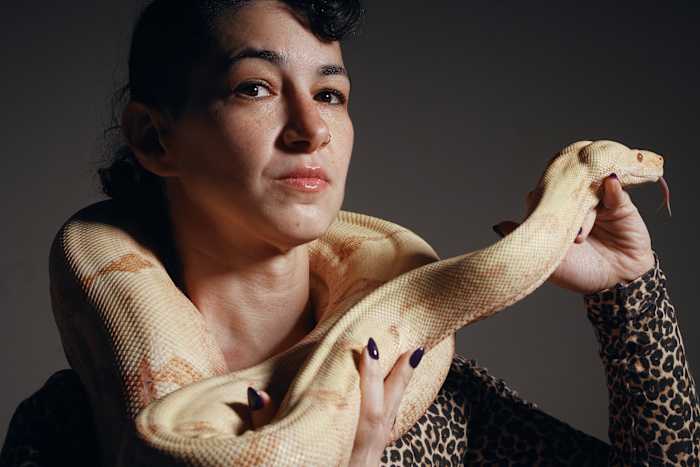
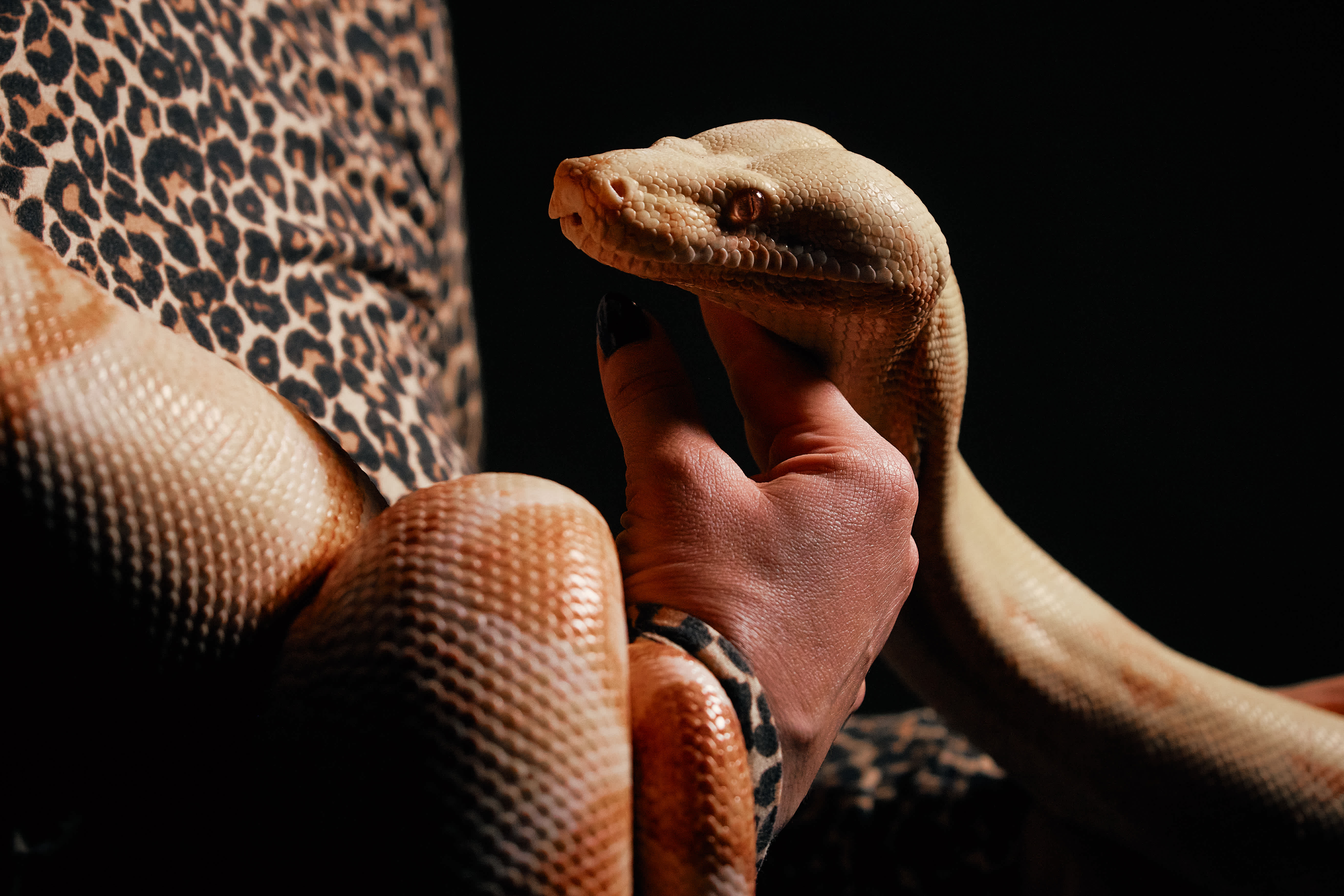
As the afternoon progressed, the pool narrowed to a select few contenders capable of commanding spatial presence. Ultimately, the role was secured by Princess, a magnificent sun-glow boa constrictor exhibiting striking yellow-peach hues that guaranteed high visibility under stage lighting.
Following the auditions, Ziegfeld provided an update on the casting decision:
"We will be moving forward with Princess (the big sun-glow boa constrictor who is yellow-peach) in rehearsals on a trial basis! She is a wonderful snake, and the trial is not about her, but rather about me and my strength."
To safeguard the production against any unforeseen behavioral shifts or physical fatigue during the grueling run of performances, a slightly smaller brown boa constrictor named Nala was selected as Princess’s official understudy, emerging successfully from a secondary audition pool.
Supporting Context & Metrics: From the Boardwalk to Lincoln Center
To fully appreciate the gravity of a snake audition at the Metropolitan Opera, one must examine the unique artistic lineage of the production and the logistical machinery that brings non-human actors to world-class stages.
The Production: Così fan tutte at 1950s Coney Island
Mozart’s Così fan tutte (libretto by Lorenzo Da Ponte) traditionally unfolds in an 18th-century Neapolitan setting, where two cynical noblemen conspire with a philosopher to test the fidelity of their fiancées by disguising themselves as Albanian officers and attempting to woo each other’s partner.
In the Met’s innovative adaptation, directors and designers have transplanted the psychological experiment to the garish, neon-lit boardwalk of 1950s Coney Island. The aristocratic drawing rooms of the original text are replaced with mid-century carnival booths, sideshow tents, and midsummer revelry. Within this environment, the snake charmer transitions from an exoticized theatrical trope into an authentic denizen of the American midway.
Zoe Ziegfeld’s Path to the Met
Ziegfeld’s casting is a masterclass in lived authenticity. Long before gracing the stage of the Metropolitan Opera, Ziegfeld spent multiple seasons embedded in the intense, high-turnover ecosystem of Coney Island, performing up to eight snake-charming shows a day for passing crowds.
When Ziegfeld first auditioned for the Met production several years ago, strict venue safety protocols and union regulations prohibited live snakes within the initial audition spaces. Undeterred, Ziegfeld relied on multimedia evidence, submitting video footage of their boardwalk performances. To definitively cement their sideshow credentials for the skeptical opera panels, Ziegfeld famously executed the "Human Blockhead" act during auditions, driving a nail directly into their own nasal cavity.
The juxtaposition between the high-culture prestige of Lincoln Center and the gritty, visceral traditions of boardwalk entertainment is an irony Ziegfeld embraces wholeheartedly.
"The music’s different. The money is different. It’s a pleasure to entertain," Ziegfeld reflected. "And with snakes, it’s a delight to know that there are people watching who are in awe and people who are terrified. And those things happen at the Met and at Coney—so I would say they are more alike than different, to be honest."
The Logistics of Animal Talent in Opera
The appearance of live reptiles, livestock, and domestic animals on the Metropolitan Opera stage is not an ad-hoc novelty; it is a meticulously coordinated discipline managed by specialized agencies. In this instance, the snakes were sourced and vetted by Nancy Novograd, founder of All Tame Animals, a premier animal talent agency servicing the New York theatrical and film industries.
Novograd’s entry into the specialized world of opera animal coordination began serendipitously when her own horse was cast to appear live on the Met stage in a production of Georges Bizet’s Carmen. Over the decades, Novograd’s portfolio expanded dramatically. Her agency now supplies the institution with a vast menagerie ranging from large mammals, such as elephants, down to specialized invertebrates and insects.
According to Novograd, casting an animal for a theatrical production requires balancing traditional artistic criteria with strict animal welfare considerations:
Physiological Specifications: The animal must possess specific coloration, scale patterns, and physical dimensions to ensure visibility and aesthetic harmony within the scene.
Temperament and Habituation: Unlike human actors who can be directed verbally, animals must demonstrate innate calm and predictability when exposed to extreme sensory stimuli, including blinding stage lights, dense orchestral volume, and the shifting proximity of human performers.
Interpersonal Synergy: As Novograd emphasized, the animal "just has to get along with the talent." In the context of Così fan tutte, the success of the performance hinges entirely on the seamless, non-adversarial physical chemistry between the snake and Ziegfeld.
Official Statements & Industry Perspectives
The convergence of zoological management and high opera has generated considerable discussion within theatrical circles regarding the evolving boundaries of stage realism and animal participation in the performing arts.
The Artist’s Perspective
Zoe Ziegfeld emphasizes that the relationship between charmer and serpent on stage must be rooted in mutual toleration and stress minimization. The probationary rehearsal period allotted to Princess the boa constrictor is designed explicitly to monitor the animal’s physical comfort under performance conditions.
"The trial is not about her, but rather about me and my strength," Ziegfeld reiterated, highlighting the physical demands of supporting a massive constrictor while maintaining vocal projection, dramatic blocking, and theatrical timing.
The Coordinator’s Perspective
Nancy Novograd views animal actors as professional colleagues subjected to the same rigorous scrutiny as their human counterparts.
"Animals have to perform as do human talent," Novograd noted. "Sometimes they have a set type of behaviors that they have to demonstrate. And sometimes they just have to get along with the talent. So in this case, they have to be the right color, size, and Zoe has to like them."
Future Outlook: Opening Night and Beyond
As the Metropolitan Opera ramps up its rehearsal schedule for the upcoming season, all eyes—and scales—are fixed on the progression of Princess and her understudy, Nala.
The integration of live animal actors into grand opera productions requires continuous oversight by animal welfare advocates, production stage managers, and specialized handlers like Novograd. Rehearsals over the coming weeks will test whether Princess can maintain her composure as the full orchestra swells, the stage machinery shifts, and the house fills with thousands of expectant opera-goers.
For Ziegfeld, the return to the Met stage represents a triumphant validation of sideshow arts within classical spaces. By bridging the gap between the boardwalk amusements of 1950s Coney Island and the peerless acoustic chambers of Lincoln Center, the production promises to deliver a visual and auditory spectacle unlike any other in the Met’s contemporary repertoire.
As the curtain rises on opening night, the spotlight will inevitably seek out the drama unfolding at center stage—proving once and for all that in the world of grand opera, theatrical stardom truly knows no species.




0 Comments