

Executive Overview
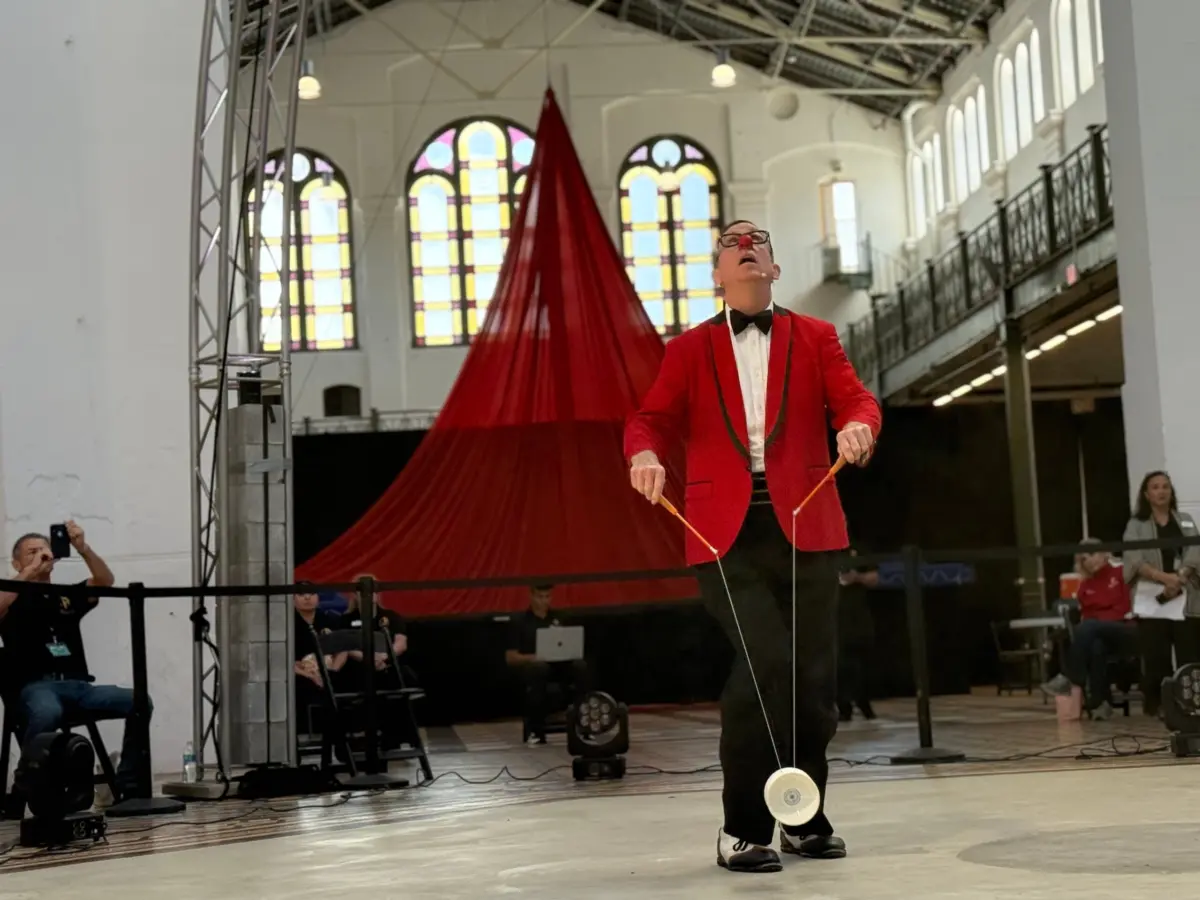
WASHINGTON — Over the vibrant span of the Labor Day weekend, the National Mall played host to a cultural exhibition unlike any other in recent memory. The Smithsonian Center for Folklife and Cultural Heritage, in a landmark partnership with the Sarasota, Florida-based Circus Arts Conservatory, rolled out a three-day celebration titled “Artistry, Education, and Labor of Circus Arts.” Hosted within the historic confines of the Smithsonian Institution’s Arts and Industries Building, the event offered Washingtonians and tourists alike a rare, unfiltered look into the machinery, sweat, tradition, and rigorous craftsmanship that sustain one of America’s most enduring forms of traditional entertainment.
Far from a standard, glossy weekend roadside spectacle, this free public program was conceived as an immersive masterclass in cultural anthropology. More than 55 performers, technicians, riggers, costumers, and administrators traveled from Florida to the nation’s capital to peel back the curtain on an industry frequently romanticized yet deeply misunderstood. By deliberately leaving backstage areas open and within direct view of the audience, the exhibition shifted the paradigm of spectatorship. Attendees were not merely passive consumers of high-wire thrills and slapstick comedy; they were invited to bear witness to the intense physical labor, meticulous safety rituals, and lifelong vocational dedication required to bring the circus to life.
From interactive physics lessons demystifying the mechanics of aerial trapeze to hand-stitched costume displays highlighting artisan textile work, the program established that the circus is a living, breathing archive of American folklife. As cultural institutions increasingly seek to democratize access to the arts and recognize working-class traditions, this collaboration between the Smithsonian and the Circus Arts Conservatory serves as a watershed moment. It bridges the gap between high performance and blue-collar artistry, cementing the circus not just as a relic of childhood nostalgia, but as a sophisticated, complex mosaic of human endeavor, community ritual, and institutional heritage.
Detailed Chronology
Day One: Setting the Stage and Unveiling the Machinery
The exhibition officially commenced on Friday, September 5, drawing curious crowds to the sprawling lawn and cavernous interior of the Arts and Industries Building—often affectionately known as the Smithsonian’s "Palace of Invention." The choice of venue was far from accidental; the building’s nineteenth-century industrial architecture provided a fittingly monumental backdrop for an art form that has continually reinvented itself alongside the march of American industrialization.
From the moment the doors opened, organizers made it clear that the traditional boundary between "front of house" and "backstage" was being dissolved. Visitors entering the main hall were immediately greeted by the visual and auditory symphony of circus preparation. Riggers could be seen double-checking load-bearing cables and tension lines, communicating in the quiet, focused shorthand unique to high-altitude performance safety. Costumers sat at portable sewing stations, mending sequins and reinforcing seams that would endure the punishing torque of acrobatic routines.
Rather than waiting for a scheduled curtain call, visitors engaged in spontaneous, rolling interactions with the working staff. Performers warmed up in plain view, stretching alongside their riggers and stage managers. The educational programming began almost instantaneously: by mid-afternoon, a crowd had gathered around an interactive physics station where children and adults alike used miniature levers, pulleys, and counterweights to explore the exact scientific principles that allow an aerialist to defy gravity with calculated safety.
Day Two: Performances, Pedagogy, and Cultural Exchange
As the holiday weekend hit its stride on Saturday, September 6, the tempo of the exhibition accelerated. The schedule transitioned from baseline demonstrations to full-scale performances of juggling, aerial arts, and displays of supreme human flexibility, interspersed with deep-dive educational seminars led by veteran artists.
The performances were designed to be modular, integrating seamlessly into the architectural and educational flow of the building. As an aerialist descended from a silk routine, she immediately transitioned into an impromptu public Q&A, breaking down the physical toll of her craft—discussing calluses, joint preservation, and the mental fortitude required to trust one’s equipment implicitly.
Concurrently, workshops focused on the less glamorous, yet equally critical, logistical components of touring operations. Master classes on theatrical makeup application, prop maintenance, and the historical evolution of circus transport shed light on the logistical titan that is a traveling performance troupe. The day culminated in a series of roundtable discussions where veteran circus families shared oral histories, recounting how generational knowledge is passed down through bloodlines and adopted communities alike—a foundational pillar of what folklorists define as living heritage.
Day Three: Reflection, Legacy, and Closing Rituals
The final day of the programming on Sunday, September 7, carried a distinct emotional resonance. With tens of thousands of visitors having passed through the exhibits over the three-day window, the atmosphere shifted toward legacy preservation and institutional reflection.
Performers and staff held specialized community forums, discussing the shifting landscape of the circus arts in the twenty-first century. They addressed the decline of traditional tent-pole traveling shows and the rise of contemporary, theater-integrated circus arts—a shift that places even greater emphasis on institutional training grounds like the Circus Arts Conservatory.
As the final afternoon performances concluded, the dismantling process itself became part of the exhibit. Watching the systematic, highly choreographed breakdown of lighting grids, safety nets, and rigging equipment offered a poignant bookend to the weekend. It underscored the central thesis of the entire program: the circus does not end when the spotlight clicks off; it is an unbroken cycle of labor, travel, setup, performance, teardown, and rebirth.
Supporting Context & Metrics
Anatomy of the Exhibition: Scale and Scope
To fully appreciate the gravity of the Smithsonian presentation, one must examine the sheer logistical weight required to transport a living museum piece from Florida to Washington, D.C.
- Delegation Size: Over 55 professional artists, technicians, educators, and administrative leaders made the journey representing the Circus Arts Conservatory.
- Duration: Three intensive days of free public programming, running continuously from September 5 through September 7.
- Venue: The Smithsonian Institution’s historic Arts and Industries Building on the National Mall—the institution’s first original United States National Museum building, rich in architectural and historical symbolism.
- Economic & Cultural Footprint: Tens of thousands of local residents, domestic tourists, and international visitors engaged with the exhibits, making it one of the most heavily attended cultural pop-up events of the Washington late-summer calendar.
The Interdisciplinary Curriculum of Folklife
Folklorists and cultural historians have long studied the ways in which occupational communities develop unique subcultures. The circus, in this regard, represents one of the richest, most insular, and yet universally captivating folklife traditions in human history.
The Smithsonian Center for Folklife and Cultural Heritage structured the weekend around several distinct academic and cultural pillars:
- Vocational Oral History: Capturing the life stories of multi-generational circus families whose lineages stretch back to the golden age of the American big top.
- Material Culture: Showcasing the tangible artifacts of circus labor—hand-crafted costumes, customized rigging hardware, antique balancing props, and traditional makeup kits.
- Kinetic Science and Applied Physics: Merging the humanities with STEM education by utilizing circus acts as living physics demonstrations, proving that art and science are inextricably linked beneath the big top.
- Occupational Safety Rituals: Documenting the unwritten codes of conduct, trust exercises, and mutual reliance protocols that govern backstage and mid-air interactions among crew members and performers.
Official Statements
The collaboration brought forth passionate reflections from the leaders steering both institutions, emphasizing the cultural necessity of recognizing the circus as a legitimate, highly skilled branch of American performing arts and labor history.
Jennifer Mitchell, Chief Executive Officer and President of the Circus Arts Conservatory, articulated the profound emotional significance of bringing Sarasota’s living heritage to the center of American political and cultural life:
"It’s a privilege and an honor to showcase circus here in our Nation’s Capital. We’re showcasing the behind the scenes of the performance, the people who actually present and produce the circus arts, who use it as a craft for their lifetime career. And you get to have a different purview than just being an observer here."
Mitchell’s emphasis on the "lifetime career" aspect directly challenges the dismissive perception that circus performance is merely a transient, youthful lark. By framing circus artistry as a vocational trade akin to classical ballet, carpentry, or orchestral musicianship, the Conservatory sought to validate the physical sacrifices and lifelong dedication of its practitioners.
Echoing these sentiments from the curatorial perspective, Betty Aquino of the Smithsonian Folklife Festival underscored the multi-faceted nature of the discipline, noting that the performance itself is only the tip of an enormous cultural iceberg:
"The circus is not merely just performance. There are so many parts that make up the circus, and we’re here to celebrate every single aspect of that. There are traditions and rituals when it comes to performance, there are traditional traditions and rituals in the way our stagehands behave with one another. So all of that makes up folklife."
Aquino further contextualized the circus within the broader tapestry of American history, pointing out its status as one of the nation’s oldest institutionalized forms of popular entertainment:
"Circus is one of America’s oldest and most celebrated forms of entertainment, steeped in rich history and culture."
Through these statements, the leadership of both the Smithsonian and the Conservatory signaled a unified mission: to elevate the discourse surrounding the circus from simple childhood wonder to serious cultural preservation, ensuring that the invisible labor behind the spectacle receives the historical recognition it is due.
Future Outlook
As the temporary exhibits are dismantled and the artifacts, rigging gear, and costumes are packed back into transit containers bound for Sarasota, the reverberations of this Labor Day weekend collaboration will likely be felt across the cultural preservation community for years to come.
The success of “Artistry, Education, and Labor of Circus Arts” signals a growing appetite among cultural institutions and the general public for transparent, process-oriented programming. In an era dominated by hyper-polished, digital entertainment, the tactile, high-risk, deeply human reality of the circus offers a powerful antidote—reminding audiences of the raw power of physical collaboration, community trust, and bodily dedication.
Implications for Cultural Institutions
- Redefining Folklife Programming: The Smithsonian’s embrace of occupational circus labor sets a precedent for how other specialized, insular working-class traditions—such as carnival workers, theatrical stagehands, and traditional artisans—might be presented in national museums. Future festivals will likely adopt this blueprint of merging performance with transparent behind-the-scenes education.
- Institutional Partnerships: The seamless synergy between the Sarasota-based Circus Arts Conservatory and Washington’s federal museum complex demonstrates the immense value of regional-national cultural partnerships. By decentralizing cultural narratives and bringing localized expertise to the national stage, institutions can enrich public discourse while supporting specialized regional training academies.
- Educational Integration: The success of the interactive physics and engineering stations deployed during the weekend points toward future educational initiatives. Educators are increasingly recognizing the potential of circus arts as a kinetic teaching tool for physics, mathematics, and social-emotional learning, particularly regarding teamwork, risk assessment, and mutual accountability.
Ultimately, the weekend on the National Mall accomplished something far greater than mere holiday entertainment. It re-centered the circus worker—the rigger, the seamstress, the coach, the stagehand, and the lifelong artist—not as a nameless face in the shadows of the big top, but as a vital custodian of American cultural heritage. As these practitioners return to Florida and continue their work in training the next generation, they do so with the official, enduring stamp of the Smithsonian Institution, ensuring that the tireless labor behind the magic will never again go unnoticed.

0 Comments