

Executive Overview
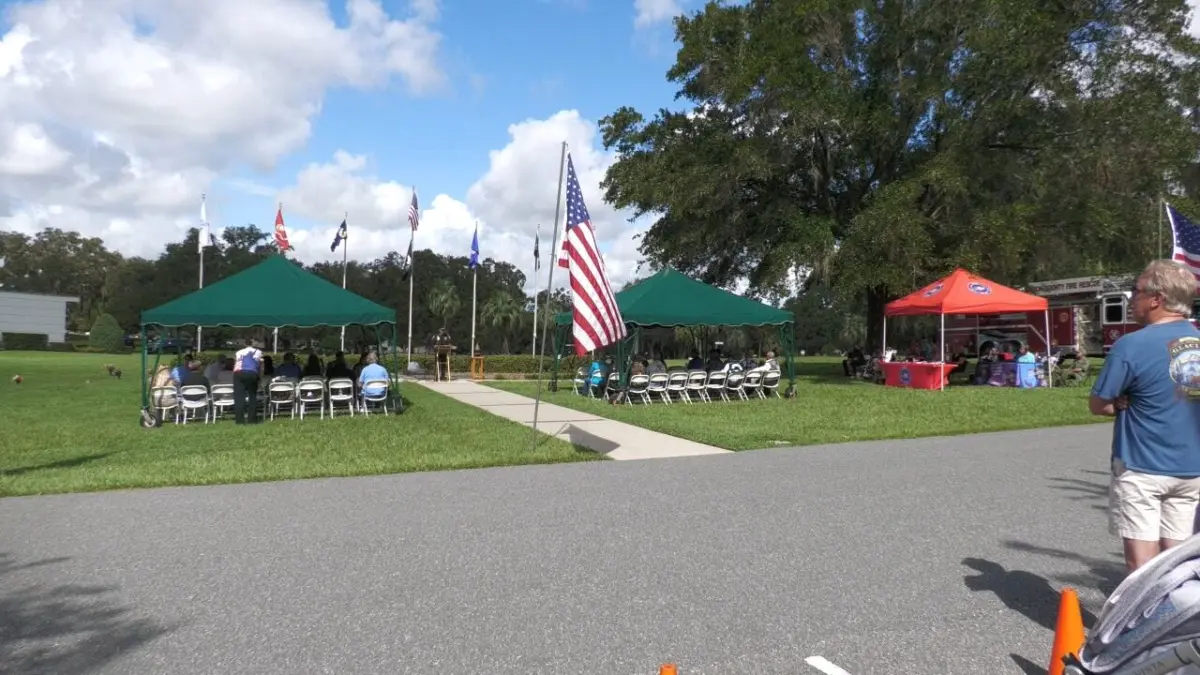
Two and a half decades after the darkest morning in modern American history, the obligation to remember remains as vital as the sorrow that birthed it. At Highland Memorial Park in Ocala, Florida, a solemn gathering of families, veterans, active-duty military, and local first responders assembled to mark the 25th anniversary of the September 11 terrorist attacks.
Against a backdrop of fluttering American flags and the low, resonant rumble of a ceremonial motorcycle procession, the community engaged in an exercise of collective memory. This year’s commemoration carried an added historical weight: it marked an entire generation passing since the tragedy. With millions of living Americans now born after 2001, the observance shifted seamlessly from a ceremony of raw grief to an intentional act of generational stewardship. Through minute-by-minute retellings, emotional testimonies, and unified resolve, Ocala underscored a singular, enduring societal vow: to honor the fallen, support the survivors, and ensure that the lessons of that fateful Tuesday are permanently inscribed upon the American consciousness.
Detailed Chronology of the Day’s Events
The commemorative events at Highland Memorial Park were meticulously structured to mirror the historical progression of September 11, 2001, anchoring the morning in both solemnity and shared community reflection.
Morning Arrival and the Motorcycle Escort
The morning air at Highland Memorial Park was heavy with anticipation as attendees gathered before the primary memorial site. At precisely 9:30 a.m.—echoing the frantic airspace closures and emergency responses of that grim Tuesday twenty-five years prior—a phalanx of motorcycles rolled into the park. The riders, belonging to regional veterans’ groups and first responder motorcycle associations, cut their engines in unison, providing a poignant, mechanical punctuation mark to the morning’s opening moments.
The arrival of the motorcycles served as a visual and auditory tribute to the countless emergency personnel who deployed toward danger on 9/11. The riders, adorned in colors representing police departments, fire rescue units, and military branches, dismounted and joined the assembly, creating an immediate visual testament to the unbreakable bond between civil servants and the public they protect.
The Minute-by-Minute Reading
Perhaps the most harrowing and emotionally resonant segment of the Ocala ceremony was the chronological recounting of the events of September 11, 2001. A succession of speakers—ranging from veteran police officers to young civic leaders—stepped to the podium to read the exact timeline of the attacks.
The recitation traced the morning with unsparing precision:
- 8:46 a.m.: American Airlines Flight 11 strikes the North Tower of the World Trade Center.
- 9:03 a.m.: United Airlines Flight 175 hits the South Tower.
- 9:37 a.m.: American Airlines Flight 77 crashes into the Pentagon.
- 9:59 a.m.: The South Tower collapses.
- 10:03 a.m.: United Flight 93 crashes into a field in Shanksville, Pennsylvania, following a passenger revolt.
- 10:28 a.m.: The North Tower collapses.
As these timestamps were read aloud into the humid Florida air, the decades dissolved. Attendees visibly reacted, with many bowing their heads, clutching miniature flags, or wiping away tears. The exercise transformed abstract historical knowledge into an immediate, visceral experience, gripping the audience in the stark reality of how quickly an ordinary morning can be permanently altered.
Supporting Context & Metrics: The 25-Year Perspective
To fully appreciate the gravity of the Ocala observance, one must examine the broader socio-historical landscape of the United States twenty-five years post-9/11. The passage of a quarter-century brings profound shifts in demographics, public policy, and national security.
The Demographic Threshold
The year 2026 marks a critical demographic milestone: the complete passage of a generation. Every individual under the age of 25 was born after the World Trade Center towers fell, the Pentagon was breached, and the skies over America were abruptly emptied. For this cohort, known generally as Generation Z and Generation Alpha, 9/11 is not a memory retrieved from live television broadcasts or the panic of office corridors; it is a chapter in a history textbook, a digital archive, or a story told by parents and grandparents.
This reality shifts the burden of remembrance from passive recollection to active education. As Todd Belknap, an attendee at the Highland Memorial Park ceremony, articulated during the proceedings, the responsibility now falls squarely on those who witnessed the events to transmit their gravity to the uninitiated. Without deliberate, sustained educational efforts, historical amnesia threatens to dilute the magnitude of the sacrifices made and the systemic vulnerabilities exposed that day.
The Continuing Toll
Beyond the 2,977 direct victims killed during the initial attacks in New York City, Arlington, Virginia, and Shanksville, Pennsylvania, the shadow of 9/11 continues to lengthen. Metrics compiled by federal agencies and healthcare organizations reveal staggering long-term casualties:
- First Responder Illnesses: Over 600,000 individuals were exposed to toxic dust, debris, and carcinogens at the World Trade Center site. Decades later, deaths attributed to 9/11-related illnesses—including various forms of cancer, pulmonary fibrosis, and cardiovascular disease—have surpassed the death toll of the actual attacks.
- Military Casualties: The ensuing Global War on Terror resulted in the deployment of millions of U.S. service members, yielding thousands of combat fatalities and tens of thousands of visible and invisible injuries, including Traumatic Brain Injuries (TBIs) and Post-Traumatic Stress Disorder (PTSD).
- Veterans’ Healthcare Burden: The Department of Veterans Affairs continues to manage a massive influx of disability claims and healthcare needs stemming from post-9/11 conflicts, underscoring that the cost of that single morning is still being paid in clinics, hospitals, and homes across America.
Official Statements and Community Voices
The observance at Highland Memorial Park was characterized by a profound sense of shared vulnerability and civic duty. Local leaders, veterans, and everyday citizens utilized the platform to reflect on the nature of American resilience.
Todd Belknap on Generational Obligation
Among the most frequently quoted voices from the morning was Todd Belknap, whose reflections captured the emotional and intellectual core of the gathering. Reflecting on the minute-by-minute reading, Belknap noted the palpable grief that rippled through the park.
"When we read the timeline, it brings everything back," Belknap observed. "I don’t think you saw a dry eye in a place when that timeline was being read. And it brings it back full circle right back to the day that it happened."
Belknap extended his comments beyond the emotional impact, emphasizing the critical pedagogical duty incumbent upon contemporary society.
"We also are responsible for teaching future generations," he continued. "There are those, if they’re under 25 years old, they were not alive when this took place. So it’s incumbent upon us as a society to educate the younger folks to what took place so we make sure that it doesn’t happen again."
The Voice of First Responders and Veterans
Local emergency personnel underscored the unique camaraderie forged in the crucible of 9/11. Firefighters and police officers stationed throughout Marion County spoke of how the events of that day fundamentally redefined their professions. Protocols changed, inter-agency communication was overhauled, and the culture of public safety was forever altered to prioritize threat assessment, structural survival, and national vigilance.
For the veterans in attendance, the anniversary served as a day of reckoning with decades of foreign policy, personal sacrifice, and the enduring ethos of service above self. Many noted that while political debates surrounding the post-9/11 era remain complex and contested, the purity of the initial response—millions of Americans uniting across political and social divides—remains a beacon of national identity.
Future Outlook: Sustaining the Vow to "Never Forget"
As the ceremony concluded with the playing of "Taps" and the final retiring of the colors, the pressing question for Ocala—and for the nation at large—was how to sustain the promise of "Never Forget" as living memory transitions into institutional history.
The Evolution of Memorialization
The 25th anniversary serves as a bridge between living witnesses and future historians. Moving forward, commemorative practices must evolve. Physical monuments, such as the spaces within Highland Memorial Park, provide tangible anchors, but digital archives, oral history projects, and interactive educational curricula must be integrated into schools and community centers.
Educators face the challenge of teaching 9/11 not merely as a tragedy, but as a complex turning point that reshaped global geopolitics, civil liberties, aviation security, and domestic surveillance. Ensuring that young Americans understand both the heroism of the responders and the geopolitical consequences of the attacks is vital for cultivating informed, resilient citizens.
Resilience and National Unity
In an era often defined by intense political polarization and cultural division, the 25th anniversary of 9/11 offered a rare, unifying moment of national introspection. The gathering in Ocala demonstrated that beneath the surface of contemporary disagreements lies a shared foundation of grief, gratitude, and mutual protection.
By gathering beneath the Florida sun to read timestamps, honor veterans, and comfort one another, the Ocala community proved that the true memorial of September 11 is not constructed of steel, stone, or bronze. Rather, it lives within the collective conscience of a people determined to remember the past, protect the present, and safeguard the future. As the next quarter-century begins, that vow stands unyielding.

0 Comments