

Executive Overview
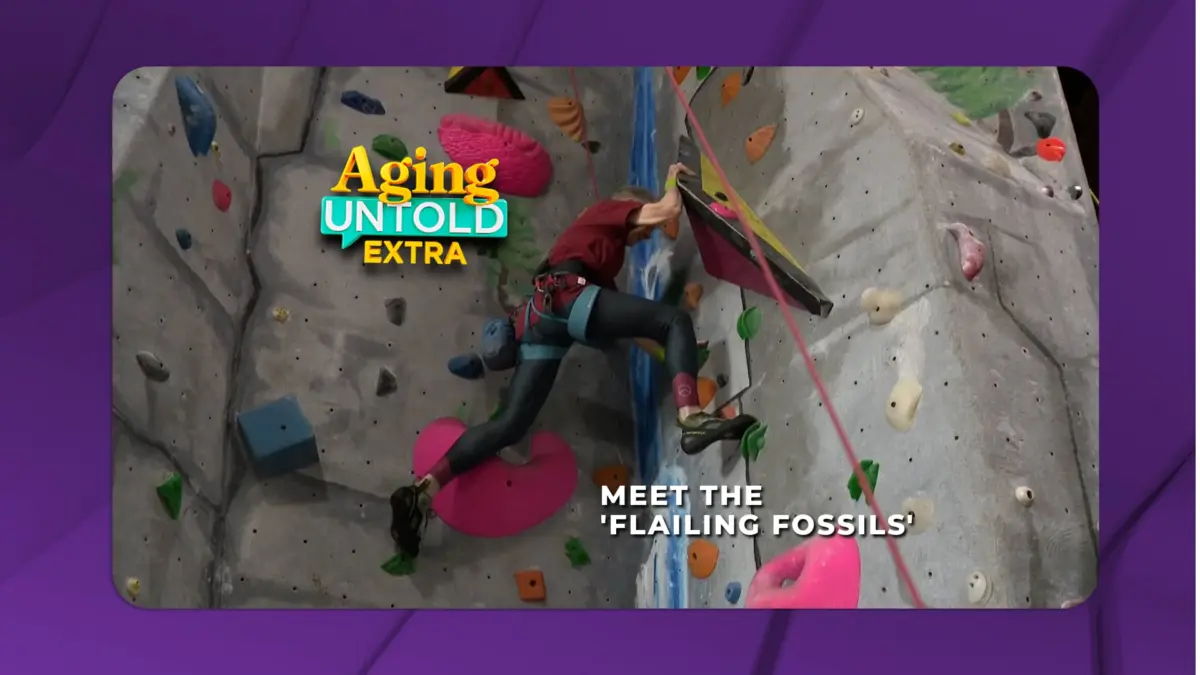
RUTLAND, Vt. — In an industrial corner of Rutland, Vermont, inside the cavernous, chalk-dusted confines of the Green Mountain Climbing Center, a quiet revolution is taking place against the conventional expectations of aging. Here, far away from the stereotypical imagery of rocking chairs, retirement communities, and sedentary lifestyles, a tight-knit collective of older adults is quite literally scaling vertical boundaries. They have affectionately—and with a healthy dose of self-deprecating humor—dubbed themselves the "Flailing Fossils."
This inspiring cohort of seniors challenges the boundaries of traditional fitness programs. They are not merely engaging in light stretching or low-impact water aerobics; they are tackling vertical panels of plywood, fiberglass, and multi-colored handholds, suspended feet above safety mats. For these adventurous participants, indoor rock climbing has become much more than a novel hobby or a way to pass the time. It is a profound vehicle for physical rehabilitation, psychological empowerment, and community building.
However, the phenomenon of the Flailing Fossils transcends local human-interest charm. According to gerontologists, physical therapists, and aging-advocacy groups like Aging Untold, this unconventional workout represents a cutting-edge approach to senior health. Rock climbing uniquely demands the simultaneous engagement of cognitive processing, neuromuscular coordination, core stabilization, and muscular strength. Crucially, sports scientists note that the biomechanical demands of climbing closely mirror the functional movements required to prevent devastating falls—the leading cause of injury and accidental death among older adults globally.
This in-depth report explores the journey of the Flailing Fossils, examining the psychological hurdles they overcome, the physiological science validating their efforts, the broader implications for eldercare and fitness industry adaptations, and what this thriving community portends for the future of aging in America.
Detailed Chronology: From First-Time Fright to Scaling the Summit
The origin story of the Flailing Fossils is less a structured corporate initiative and more an organic convergence of curious minds and adventurous spirits finding one another in a vertical gymnasium.
The Genesis of a Movement
Denise Coriell, a 73-year-old veteran of the climbing wall, remembers when the idea of seniors tackling indoor routes seemed novel, if not entirely eccentric. Having climbed for years, Coriell watched the demographic shifts within the facility over the past decade. What used to be a domain exclusively dominated by teenagers, college students, and rugged outdoor enthusiasts began welcoming silver-haired participants seeking a more engaging alternative to the traditional gym treadmill.
"The Flailing Fossils is what we call ourselves—yeah," Coriell chuckles, adjusting her climbing shoes before addressing a steep overhang. Her sentiment reflects an embrace of vulnerability. The name acknowledges the reality of aging joints, imperfect balance, and the occasional awkward stumble, while simultaneously stripping away the intimidation factor that so often deters older adults from entering high-intensity athletic spaces.
Pat Hunter’s Crucible: Confronting the Vertiginous Void
For newer members, the induction into the group often involves a dramatic psychological hurdle. Pat Hunter, an indoor climber who joined the ranks after witnessing the group’s camaraderie, remembers her inaugural encounter with the climbing wall with vivid clarity.
"The first thing was how frightened I was," Hunter recalls. "I got up that wall about halfway and froze because I looked down and went, ‘Oh my God!’”
In that suspended moment, Hunter experienced a physiological spike familiar to anyone confronting a height-induced panic response: heart rate acceleration, tunnel vision, and a paralyzing doubt in one’s physical capabilities. For many seniors, such a moment of acute vulnerability would serve as an immediate deterrent, reinforcing the internal narrative that their bodies are no longer meant for daring endeavors.
Instead, guided by supportive peers and the gentle encouragement of climbing staff, Hunter paused. She took a deep breath, recalibrated her physical posture, shifted her gaze upward, and methodically resumed her ascent. Reaching the highest point of the route, she performed the group’s signature ritual: tapping the top anchor with her hand.
"And when I got to the top—and we touch our head when we get to the top—the exhilaration was incredible that I had done it," Hunter shares, her voice carrying the unmistakable residual thrill of victory.
That single ascent transformed more than just her afternoon; it rewired her psychological blueprint. "And it made me think if there are other things I’m not trying because I was afraid of failing," Hunter reflects. Today, she climbs with the group multiple times a week, serving as a pillar of encouragement for incoming novices who experience that exact same mid-wall paralysis.
Supporting Context & Metrics: The Science of Longevity and Fall Prevention
While the emotional triumphs of the Flailing Fossils make for compelling narratives, the underlying physiological and neurological benefits of climbing for older adults are heavily supported by contemporary geriatric science.
The Escalating Crisis of Senior Falls
To understand the significance of the Green Mountain Climbing Center initiative, one must examine the broader public health crisis surrounding elderly falls. According to the Centers for Disease Control and Prevention (CDC):
- More than one in four older adults (aged 65 and older) falls each year.
- Falls are the leading cause of fatal and non-fatal injuries among older Americans.
- In the United States alone, medical costs associated with falls total tens of billions of dollars annually, encompassing emergency room visits, long-term rehabilitation, and home-care modifications.
Traditional fall-prevention programs often focus on stationary balance exercises, such as standing on one foot or utilizing resistance bands while seated. While these interventions have proven efficacy, they frequently suffer from high dropout rates due to monotony and a lack of dynamic engagement. Rock climbing introduces an element of play, problem-solving, and environmental interaction that sustains long-term adherence.
Neuromuscular and Cognitive Integration
Climbing is often referred to by physical therapists as "vertical chess." It is not merely a test of brute upper-body strength; in fact, experienced climbers rely heavily on leg drive, core stability, and precise foot placement.
When an older adult navigates a climbing wall, several complex systems operate in real time:
- Proprioception and Balance: Maintaining contact points on an uneven, vertical surface forces the nervous system to constantly recalibrate spatial orientation. This retrains the brain and body to recover quickly from micro-slips.
- Cognitive Problem-Solving: Choosing the next handhold requires executive functioning, visual-spatial processing, and anticipatory planning. The brain must map out a sequence of movements while assessing safety and fatigue levels.
- Eccentric and Concentric Muscle Loading: Unlike linear weight training, climbing involves multi-planar movements that load joints and muscles across unpredictable vectors, enhancing bone mineral density and functional tendon elasticity.
Official Statements and Expert Perspectives
The intersection of extreme sports and geriatric health has drawn attention from specialized researchers and advocates who study the untapped potential of aging populations.
Sam Cradduck on Psychological Resilience
Sam Cradduck, a renowned gerontologist and expert with Aging Untold, emphasizes that the benefits of climbing extend far beyond physical conditioning, reaching deep into emotional and psychological domains.
"Pushing past the things that just absolutely scare you to death is just a huge milestone for anybody," Cradduck explains. "It gives you confidence, it lets you know that it doesn’t matter what you’re faced with, whether it be your own fear or a challenge physically, that you’re going to be able to overcome it."
This psychological armor—often termed "self-efficacy" in psychological literature—plays a critical role in senior health. Fear of falling is, paradoxically, one of the greatest risk factors for falling. When older adults become overly cautious due to fear, they restrict their physical activity, leading to muscle atrophy (sarcopenia), joint stiffness, and a rapid decline in overall functional independence. By confronting fear in a controlled, padded environment like the climbing gym, seniors break this self-fulfilling cycle of decline.
The Holistic Mechanics of Vertical Exercise
Expounding on the mechanical advantages of the sport, Cradduck highlights the multidimensional nature of climbing movements.
"So it’s not just a leg movement or a hand movement," Cradduck notes. "Your brain has to anticipate the next move. Your brain has to anticipate the danger of the fall. The balance that goes along with climbing is paramount to not falling later. So this is fall prevention at its best."
By fusing cognitive demand with functional physical stress, climbing stimulates neuroplasticity—the brain’s ability to reorganize itself by forming new neural connections. This holistic engagement makes climbing a potent prophylactic against both physical frailty and cognitive decline.
Future Outlook: Reshaping Eldercare and Fitness Industries
The success of the Flailing Fossils in Rutland, Vermont, offers a visionary blueprint that has profound implications for the future of fitness facilities, senior living communities, and public health policy.
Rethinking Senior Fitness Architecture
Historically, fitness offerings tailored to older demographics have been sequestered into low-impact, risk-averse categories. Gyms have designed dedicated senior hours featuring modified equipment with heavy padding, minimal weight resistance, and seated configurations.
However, as the massive "Baby Boomer" generation ages into retirement—a demographic characterized by greater longevity, higher disposable incomes, and a cultural appetite for active, adventurous lifestyles—the demand for dynamic, challenging fitness options is skyrocketing.
Industry analysts predict that forward-thinking climbing gyms and adventure centers will increasingly design specialized senior programming. This may include:
- "Master Climber" Clinics: Structured sessions focusing on introductory bouldering, proper falling techniques, and harness safety specifically calibrated for older joints.
- Intergenerational Climbing Leagues: Programs that pair younger climbers with senior mentors, fostering community cohesion and breaking down age-related social segregation.
- Insurance Partnerships: Collaborations between Medicare Advantage plans and alternative fitness centers that recognize high-engagement sports as legitimate, preventative healthcare interventions.
The Cultural Shift: Embracing Productive Discomfort
Ultimately, the most enduring legacy of the Flailing Fossils may be cultural rather than clinical. They challenge society to rethink what bodies in their seventies and eighties are capable of achieving when stripped of societal paternalism and low expectations.
As Denise Coriell, Pat Hunter, and their peers continue to chalk their hands, scale the brightly colored routes, and gently touch the top anchors of the Green Mountain Climbing Center, they send an unmistakable message to the world. Aging is not an inevitable slide into immobility and fear; with the right mindset, a supportive community, and a willingness to confront the vertical unknown, it can be an era of soaring triumph, continuous self-discovery, and reaching new heights.

0 Comments