

Executive Overview
In the high-stakes, hyper-competitive, and often cutthroat realm of major collegiate sports broadcasting, transitions are notoriously fraught with friction. When a generational talent steps down after a legendary, multi-decade tenure, the incoming successor typically faces an uphill battle against fan nostalgia, impossible comparisons, and the immense psychological weight of a storied microphone. Yet, in Tallahassee, Florida, the story of the Florida State University (FSU) Seminole Radio Network has charted a radically different, harmonious course.
When Gene Deckerhoff—affectionately and universally known as the "Voice of the Seminoles"—concluded his nearly 40-year reign during the 2022 spring game with his iconic sign-off, "Voices have a timeline, and my timeline is up. Go ’Noles," he did not merely step away from a chair; he facilitated a seamless bridge to a new era. Enter Jeff Culhane. Now well into his tenure succeeding Deckerhoff, Culhane has systematically built upon the foundation laid by his predecessor while aggressively carving out his own indelible chapter in FSU lore.
Rather than succumbing to the rivalry or insecurity that frequently plagues high-profile media successions, Deckerhoff and Culhane forged an authentic, deeply rooted friendship anchored in mutual respect, professional excellence, and a shared reverence for the Garnet and Gold. This unique mentorship culminated in a heartfelt, long-term passion project spearheaded by Culhane: the official dedication of the ninth-floor radio booth at Doak Campbell Stadium in honor of Gene Deckerhoff.
Kept entirely under wraps until a dramatic summer surprise orchestrated by Culhane and FSU head football coach Mike Norvell, the newly minted Gene Deckerhoff Radio Booth officially debuted on a high-profile Monday night when the Seminoles welcomed SMU to town. This comprehensive retrospective explores the intersection of two iconic broadcasting careers, the mechanics of a frictionless generational transition, the deep bonds uniting the Seminole family, and what this permanent tribute means for the enduring legacy of Florida State athletics.
Detailed Chronology: From Deckerhoff’s Final Call to Culhane’s New Era
To understand the magnitude of the radio booth dedication at Doak Campbell Stadium, one must first examine the timeline of succession that brought these two distinct voices together.
The End of an Era: Spring 2022
For nearly four decades, Gene Deckerhoff was the auditory heartbeat of Florida State athletics. His enthusiastic, rapid-fire play-by-play calls—punctuated by his legendary phrases and unmistakable cadence—scored the soundtrack of FSU’s golden football eras under legendary head coach Bobby Bowden and basketball triumphs under Leonard Hamilton. Generations of Seminole fans grew up knowing no other voice narrating the triumphs and heartbreaks of Saturday afternoons.
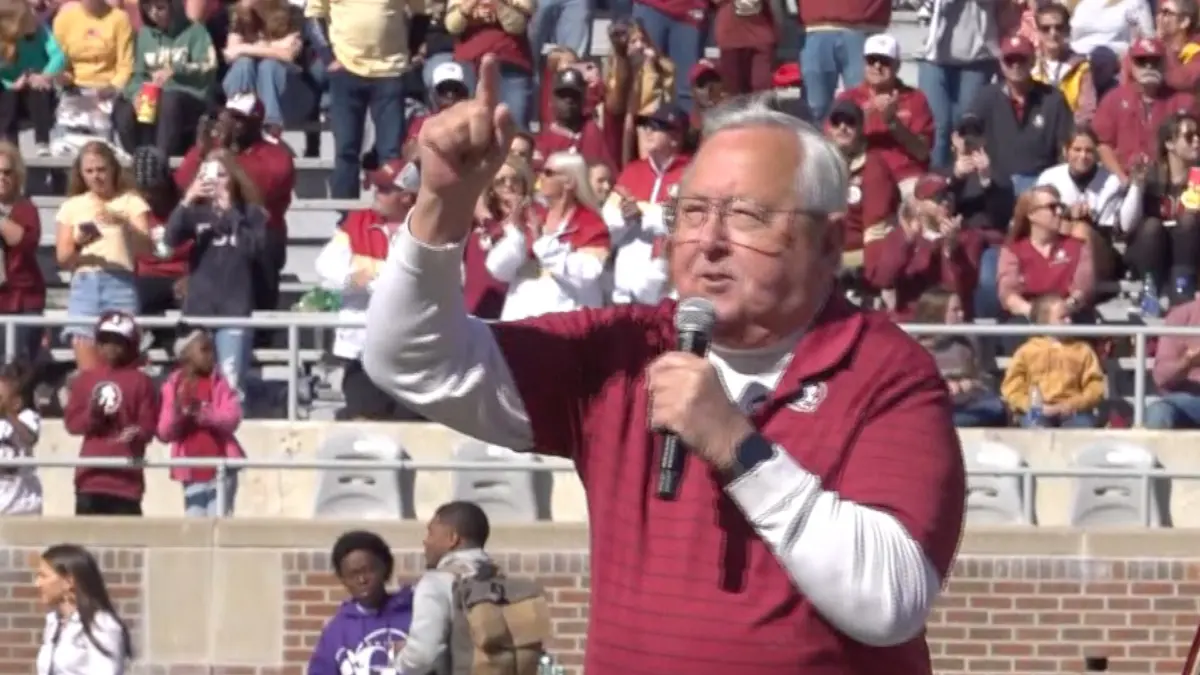
Thus, the 2022 spring game carried an emotional gravity that extended far beyond a standard exhibition matchup. When Deckerhoff took the microphone one final time to deliver his poignant farewell—"Voices have a timeline, and my timeline is up. Go ’Noles"—he closed the book on one of the most prolific and celebrated careers in the history of collegiate sports broadcasting.
The Handshake and the First Lunch
In sports media, transitions of this magnitude can often feel transactional or cold. However, Deckerhoff recognized early on that protecting the continuity and standard of the Seminole Radio Network required active participation on his part. He was determined to be a welcoming presence for the incoming broadcaster.
Jeff Culhane arrived in Tallahassee via North Dakota State, bringing a formidable resume and a sharp play-by-play instinct. Curiously, their paths had crossed years prior when Culhane—then working in Lincoln, Nebraska—had interviewed Deckerhoff for a media segment. However, the two broadcasting titans had never met face-to-face.
That changed on Culhane’s very first day on the job in Tallahassee. Over a quiet lunch, the outgoing legend and the incoming voice sat down to break bread. There was no territorial posturing, no guarded industry secrets—just an immediate, organic bond rooted in their shared craft. Deckerhoff made it a foundational priority to ease Culhane’s transition, establishing an enduring line of communication and mutual admiration that would permanently shape the culture of the FSU broadcast booth.
Forging New Memories: 2022–Present
Stepping into shoes as large as Deckerhoff’s is an unenviable task. Yet, Culhane wisely adopted a philosophy centered on authenticity rather than imitation. As he frequently notes, "You can’t fill his shoes, but you put your own pair on and have fun along the way."
It did not take long for Culhane to author his own iconic moments in Seminole history. Early in his tenure, he captured the magic of the electrifying "Block on the Bayou" against LSU during the 2022 season opener—a breathless, pulse-pounding call that immediately signaled to the FSU fanbase that the radio network was in exceptionally capable hands. This was followed by the dramatic narrative arcs of the 2023 ACC Championship season, where Culhane’s voice painted the picture of an undefeated conference title run.
Yet, even as Culhane authored these historic calls, his internal compass remained fixed on the institutional standards established by his predecessor. "Every time we go into that booth and every basketball game I do think about upholding his legacy and holding that standard in the highest regard," Culhane reflects.
The Great Reveal: Summer 2024
While Culhane was busy mastering his craft on the air, he was quietly orchestrating a masterstroke off the air. Recognizing that Deckerhoff’s monumental contributions to the university deserved physical, permanent immortalization, Culhane conceived a bold plan: to lobby for and dedicate Doak Campbell Stadium’s ninth-floor radio booth entirely to Gene Deckerhoff.
Keeping a project of this scale completely under wraps in the hyper-public world of major collegiate athletics is no small feat. Culhane coordinated closely with FSU head football coach Mike Norvell and athletic department leadership. Over the summer, in a carefully planned surprise, Norvell and Culhane revealed the project to an unsuspecting and deeply moved Deckerhoff.
The unveiling transformed an already rich tradition into a sacred space, cementing the physical architecture of Doak Campbell Stadium as a monument to those who built the Seminole brand from the press box.
Supporting Context & Metrics: The Architecture of a Legacy
To fully appreciate the significance of this transition, it is helpful to examine the quantifiable impact both broadcasters have made on the cultural and historical landscape of Florida State University.
The Numbers Behind the Voice
- Nearly 40 Years: The breathtaking duration of Gene Deckerhoff’s tenure as the "Voice of the Seminoles," spanning multiple national championships, Heisman Trophy winners, and legendary athletic eras.
- The Dual Legend: In addition to his football duties, Deckerhoff famously served as the voice of the Tampa Bay Buccaneers in the National Football League for 35 seasons, cementing his status as one of the most durable and versatile play-by-play announcers in sports history.
- The Physical Sanctuary: The ninth-floor radio booth at Doak Campbell Stadium serves as the nerve center for game-day audio distribution, reaching hundreds of thousands of listeners globally via the Seminole Radio Network, satellite radio, and digital streaming platforms.
- The Ultimate Parallel: With the official naming of the booth, Deckerhoff joins rare company within the FSU lexicon. The stadium itself is famously named Bobby Bowden Field at Doak S. Campbell Stadium. By having the radio booth officially designated as the Gene Deckerhoff Radio Booth, the physical grounds of the stadium now draw a direct, architectural line between FSU’s legendary football coach and its legendary broadcaster.
The Evolution of the Seminole Radio Network
The Seminole Radio Network has long stood as a benchmark for regional sports syndication. Maintaining audience trust across generations requires striking a delicate balance between honored traditions and modern broadcasting dynamism.
When Culhane took over, he inherited a sophisticated infrastructure that demands absolute precision. College football broadcasting in the Atlantic Coast Conference (ACC) involves complex remote setups, synchronized local commercial insertions, high-energy live reads, and the psychological challenge of remaining intensely objective while simultaneously serving as the primary regional cheerleader for the Garnet and Gold.
Culhane’s ability to maintain the high-water mark of broadcast accuracy and emotional resonance—while transitioning the network into a modern, multi-platform media environment—highlights why Deckerhoff’s initial endorsement and ongoing mentorship were so vital.
Official Statements and Personal Reflections
The profound mutual respect shared between Deckerhoff and Culhane offers a refreshing counter-narrative to the competitive Darwinism often found in professional media. Below are key reflections from the principals who engineered this seamless transition.
Gene Deckerhoff on the Transition and the Honor
Reflecting on the early days of meeting his successor, Deckerhoff emphasized why passing the torch gracefully was imperative to his own personal philosophy:
"For me it was very important to be a part of the movement from one voice to the next… I think the continuity of the greatness of the Seminole Radio Network is so important."
When confronted with the reality of having his name permanently affixed to the stadium’s ninth-floor press level, Deckerhoff expressed a level of humility and profound gratitude that transcended his decades of professional accolades:
"The stadium is named Bobby Bowden Field at Doak S. Campbell Stadium. The radio booth is now the Gene Deckerhoff Radio Booth… So there’s a connection between Bobby Bowden Field and Gene Deckerhoff and that probably is a bigger honor to me than anything else."
Even in retirement, Deckerhoff remains a fixture of the FSU family, frequently visiting Culhane and the rest of the Seminole Radio Network crew whenever he attends games in person:
"It’s great to be in that booth and now it’s got my name on it… It’s still great to be in that booth with or without the name because you feel the spirit of Florida State University football."
Jeff Culhane on Respect, Authenticity, and Passion
For Culhane, the effort to honor his predecessor was never viewed as an obligation, but rather as a profound professional privilege and a personal labor of love:
"It’s been a passion project of mine for some time now… I’m happy that we could do something right in honoring [Gene] because that is the biggest no brainer of no brainers anywhere."
Discussing the daunting task of stepping into a booth defined by a legend, Culhane outlines a philosophy centered on honoring the past while confidently establishing his own identity:
"You can’t fill his shoes, but you put your own pair on and have fun along the way… Every time we go into that booth and every basketball game I do think about upholding his legacy and holding that standard in the highest regard."
Future Outlook: A Timeline That Goes On Forever
As the Gene Deckerhoff Radio Booth makes its official debut during high-profile matchups under the Doak Campbell Stadium lights—welcoming powerhouse opponents like SMU—the physical space stands as more than just a collection of monitors, mixing boards, and microphones. It is a monument to continuity, institutional memory, and human decency in sports.
In an era where athletic departments frequently undergo radical, disruptive transformations in search of competitive edges, the story of Florida State’s radio booth offers a masterclass in cultural preservation. Gene Deckerhoff laid a four-decade foundation of excellence, warmth, and unbridled passion. Jeff Culhane has stepped into that architectural space not as a usurper, but as a respectful steward who honors the past while building upward.
The partnership between Deckerhoff and Culhane proves that timelines do not merely end—they overlap, intersect, and compound. Through mutual admiration, a shared passion for the Seminoles, and a permanent plaque bearing a legendary name on the ninth floor, the voice of Florida State football will echo across generations to come, ensuring that the spirit of the Garnet and Gold remains as timeless as the calls that defined it.

0 Comments