
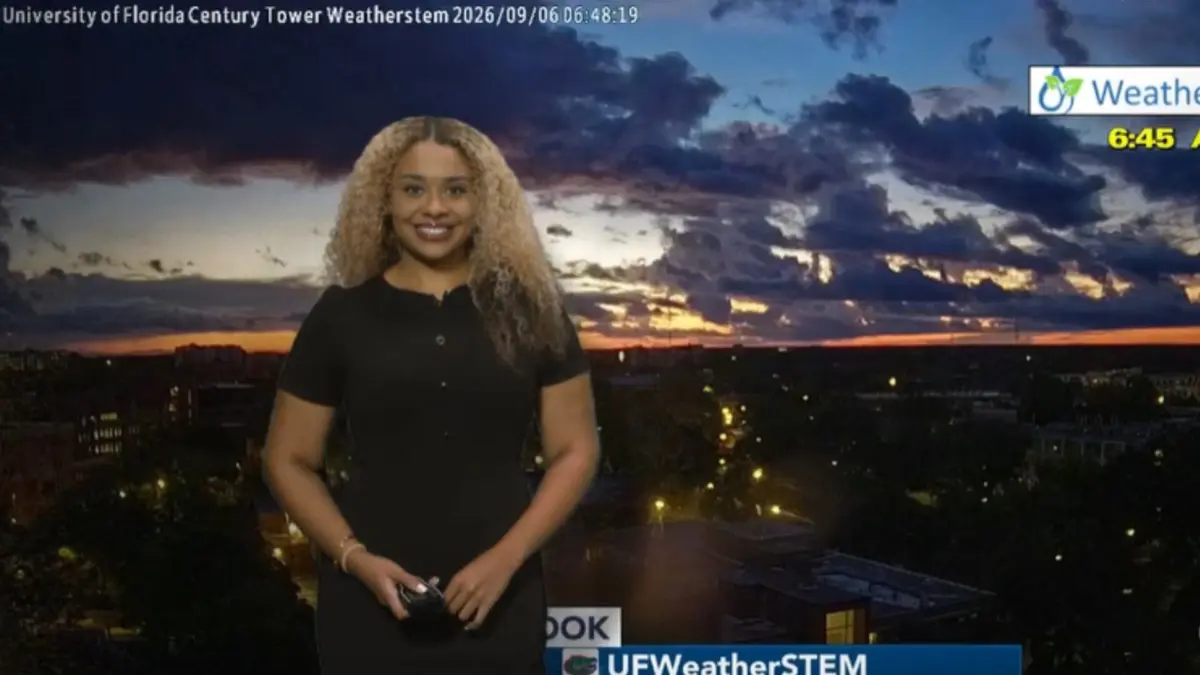

GAINESVILLE, Fla. — The intersection of late-summer collegiate athletics and a national federal holiday has historically created a high-stakes operational landscape for North Central Florida. As the calendar flipped to the first weekend of September 2024, the City of Gainesville found itself at the epicenter of a dual-celebration: a jubilant campus basking in the glow of a season-opening athletic victory, and a community preparing for the traditionally travel-heavy Labor Day holiday.
Yet, beneath the surface of the weekend’s festivities, local emergency management agencies, municipal authorities, and regional stakeholders maintained a posture of vigilant readiness. Compounding the standard logistical challenges of a packed weekend is the simultaneous arrival of the peak statistical window for Atlantic tropical cyclone development. Fortunately, early-September atmospheric telemetry delivered a rare gift to the Sunshine State: an unusually tranquil Atlantic basin.
This comprehensive retrospective examines the convergence of the Labor Day holiday and the University of Florida’s celebratory game day weekend, analyzing the economic, infrastructural, and meteorological factors that defined a pivotal 72-hour period in Alachua County.
Executive Overview
For residents, alumni, and municipal leaders in Gainesville, the opening weekend of September 2024 represented a classic Florida balancing act. On one hand, the local economy received its traditional multi-million-dollar infusion as tens of thousands of visitors descended upon the region for the University of Florida Gators’ home opener. The reverberations of Thursday and Saturday athletic events set an upbeat, celebratory tone across local commerce, hospitality sectors, and campus institutions.
Simultaneously, the Labor Day holiday weekend triggered a mass migration of travelers across state and federal highways, placing increased demands on regional infrastructure, law enforcement agencies, and emergency response personnel. Emergency management systems, historically on high alert during this specific window due to historical hurricane landfalls in Florida—such as the Labor Day Hurricane of 1935 or more recent late-season disruptions—faced a profoundly different scenario this year. According to the National Hurricane Center (NHC) and local meteorological assessments, the Atlantic basin remained remarkably quiescent, offering a reprieve from active storm mitigation and allowing emergency personnel to pivot their focus entirely toward public safety, traffic flow, and crowd management.
Detailed Chronology of the Weekend
The Buildup and Kickoff: Thursday Through Saturday
The operational tempo for the Gainesville community began escalating mid-week as early-arriving football fans, tourists, and returning students converged on the area. The combination of the upcoming federal holiday and the collegiate sports schedule transformed the urban landscape of Alachua County.
Local hotels, motels, and short-term rental properties reported near-capacity occupancy rates by Friday afternoon. Restaurants along University Avenue and the Butler Street corridor experienced peak operational hours, capitalizing on the influx of alumni and visiting supporters.
On the athletic front, the excitement reached a fever pitch following the Gators’ decisive victory. While the initial report simply noted a celebratory atmosphere ("Congratulations Gators for yesterday’s win!"), the broader impact of a successful home opener reverberated far beyond the stadium walls. Athletic victories of this magnitude historically drive elevated retail sales, bolster institutional morale, and set a positive economic baseline for the fall semester.
The Holiday Transition: Sunday and Labor Day
As the euphoria of the athletic victory transitioned into the traditional Labor Day weekend rhythm, the focus shifted from gridiron triumphs to civic leisure and travel safety. Sunday and Monday saw traditional family gatherings, retail promotional events, and the steady mass exodus of visitors preparing for the Tuesday morning return to work and school.
Unlike previous years where late-summer holiday weekends have been complicated by mandatory evacuations, severe weather watches, or tropical storm warnings, the 2024 Labor Day weekend offered uninterrupted blue skies across North Central Florida. Law enforcement agencies reported steady, heavy traffic along Interstate 75 and State Road 24, but noted an absence of major weather-related highway incidents. Municipal sanitation crews and public works departments maintained an aggressive schedule, rapidly clearing event debris and ensuring that public spaces remained pristine for the duration of the holiday.
Supporting Context & Metrics: The Peak of Hurricane Season
While the immediate operational focus was heavily weighted toward hospitality, commerce, and sports entertainment, emergency planners in Gainesville never lose sight of the overarching environmental context. September historically represents the climatological peak of the Atlantic hurricane season—a meteorological reality that instills a baseline of caution across the entire state of Florida.
The Climatological Peak
Statistical records compiled by the National Oceanic and Atmospheric Administration (NOAA) indicate that the Atlantic hurricane season exhibits a sharp, bell-shaped curve peaking around September 10th. During this narrow window, several environmental factors align with maximum efficiency:
- Ocean Surface Temperatures: Sea surface temperatures in the tropical Atlantic, the Caribbean Sea, and the Gulf of Mexico routinely reach their annual maximums during late August and September, providing the fundamental thermal energy required to fuel tropical cyclogenesis.
- Wind Shear Dynamics: Upper-level wind shear typically reaches a seasonal minimum across the main development region (MDR) during early September, reducing the atmospheric disruption that can tear developing storm systems apart.
- Atmospheric Moisture: Mid-tropospheric humidity levels reach their peak values, creating an atmosphere conducive to deep convection and thunderstorm organization.
The Current Tropical Outlook
Despite these historical markers, the tropical update issued for the region offered profound relief. Meteorological assessments confirmed that “there are currently no developments expected in the Atlantic basin.”
For emergency management directors in Alachua County, this absence of immediate meteorological threats meant that resources could be conserved and personnel deployment could remain streamlined. Rather than monitoring spaghetti plots, satellite loops, and cone-of-uncertainty projections, local meteorologists were able to focus on delivering standard regional forecasts characterized by typical late-summer convective patterns, scattered afternoon showers, and comfortable holiday conditions.
Official Statements and Institutional Perspectives
Local authorities, university administrators, and regional tourism boards emphasized the unique nature of the converging calendar events.
Municipal and Law Enforcement Preparedness
In statements released leading into the holiday weekend, the Gainesville Police Department (GPD) and the Alachua County Sheriff’s Office (ACSO) highlighted the multi-agency coordination required to manage thousands of transient visitors alongside local residents.
"When you pair a major University of Florida game day weekend with a federal holiday like Labor Day, the population density of our urban core shifts dramatically," noted a representative from local public safety communications. "Our primary objective is twofold: ensuring that celebratory events remain secure and orderly, and maintaining open lines of communication regarding infrastructural and environmental conditions."
While severe weather plans were ultimately left unactivated due to the benign tropical outlook, local emergency operations centers (EOC) maintained a standard monitoring posture. This dual-readiness framework ensures that even during periods of apparent meteorological calm, rapid-response protocols remain fully operational.
University of Florida Athletics and Institutional Pride
The university community leveraged the weekend’s success to reinforce institutional engagement. Administrative bodies, alumni associations, and student organizations utilized the dual momentum of the academic term’s launch and the athletic victory to foster school spirit.
University officials frequently remind stakeholders of the symbiotic relationship between campus life and the broader Gainesville economy. The weekend served as a textbook example of this dynamic, demonstrating how collegiate athletics act as a primary economic engine for the region, generating substantial revenue for local small businesses, lodging establishments, and service industries.
Future Outlook: Navigating the Remainder of Hurricane Season and Fall Semester
As the echoes of Labor Day weekend fade and the community returns to standard weekday routines, local leaders and residents must look forward to the challenges and opportunities that define the remainder of the autumn season.
The Long-Range Weather Outlook
While the Atlantic basin experienced a temporary lull during the first week of September, meteorologists emphasize that the peak of hurricane season extends well into October. The absence of immediate systems does not diminish the necessity of long-term preparedness. Emergency management agencies across Florida continue to urge residents to maintain their seasonal disaster kits, review evacuation plans, and stay informed through reliable local reporting networks—such as subscribing to community newsletters and emergency alert systems.
Economic and Academic Momentum
For Gainesville, the successful execution of this high-traffic holiday weekend establishes a strong operational benchmark for the remainder of the fall semester. With subsequent home games, academic milestones, and community events on the horizon, municipal planners will use the lessons learned from this weekend’s crowd management, traffic routing, and resource allocation to optimize future large-scale events.
Ultimately, the convergence of the Labor Day holiday, a celebrated athletic victory, and a tranquil meteorological window offered North Central Florida a rare and welcome weekend of unmitigated celebration—a moment of civic harmony before the relentless march of the fall season resumes.
Copyright 2024 WCJB. All rights reserved.

0 Comments