

JACKSONVILLE, Fla. — In the modern ecosystem of collegiate athletics, the traditional David-versus-Goliath matchup has long been a staple of autumn Saturdays. For smaller programs, traveling to face larger, better-funded universities offers a unique blend of national exposure, athletic challenge, and—most importantly—vital financial remuneration to balance athletic department budgets.
However, the economics of these lopsided affairs have reached a breaking point for Edward Waters University (EWU).
Following a sobering 66-14 defeat at the hands of the NCAA Division I Jackson State Tigers at Mississippi Veterans Memorial Stadium, EWU President A. Zachary Faison Jr. issued a definitive and uncompromising ultimatum. In a scathing, multi-part statement published to the social media platform X (formerly Twitter) on Sunday night, Faison announced that the Tigers will no longer schedule athletic contests against Division I Historically Black Colleges and Universities (HBCUs) or major conference heavyweights unless fundamental, systemic financial adjustments are made.
For Faison, the blowout loss was not merely a tactical setback on the gridiron; it served as an eye-opening diagnostic of a deeply flawed economic model that penalizes smaller institutions while enriching their larger counterparts. Moving forward, Edward Waters University—located in Jacksonville, Florida, and competing as an NAIA and premier SIAC institution—will refuse to serve as a heavily discounted stepping stone for larger programs.
Executive Overview: A Paradigm Shift in Small-College Athletics
The catalyst for Faison’s public declaration was Edward Waters’ early-season clash against Jackson State, a prominent Football Championship Subdivision (FCS) program competing in the Southwestern Athletic Conference (SWAC). While the fixture was initially agreed upon with high hopes two years prior, the reality of executing the game exposed a widening financial chasm.
According to financial disclosures outlined by Faison, EWU received a guarantee of $65,000 for making the trip to Jackson, Mississippi. After factoring in the steep operational costs of interstate travel, lodging, meals, and related logistical expenditures—which totaled roughly $35,000—the university cleared a net profit of approximately $30,000.
For a program striving to elevate its competitive standing, a net return of $30,000 is viewed by university leadership as an insult to the physical, mental, and operational tolls inflicted upon student-athletes and coaching staffs.
Faison’s stance represents a seismic shift in how small-school administrators view guarantee games—often colloquially referred to as "buy games." Traditionally, institutions like Edward Waters absorbed the physical beatings and lopsided scorelines in exchange for a financial lifeline that could subsidize other sports programs. Faison is now arguing that the math no longer adds up, signaling to larger Division I conferences and athletic directors that the era of cheap competition is officially over for the Tigers.
Detailed Chronology: From Scheduling Optimism to the Jackson State Reality Check
The Genesis of the Matchup
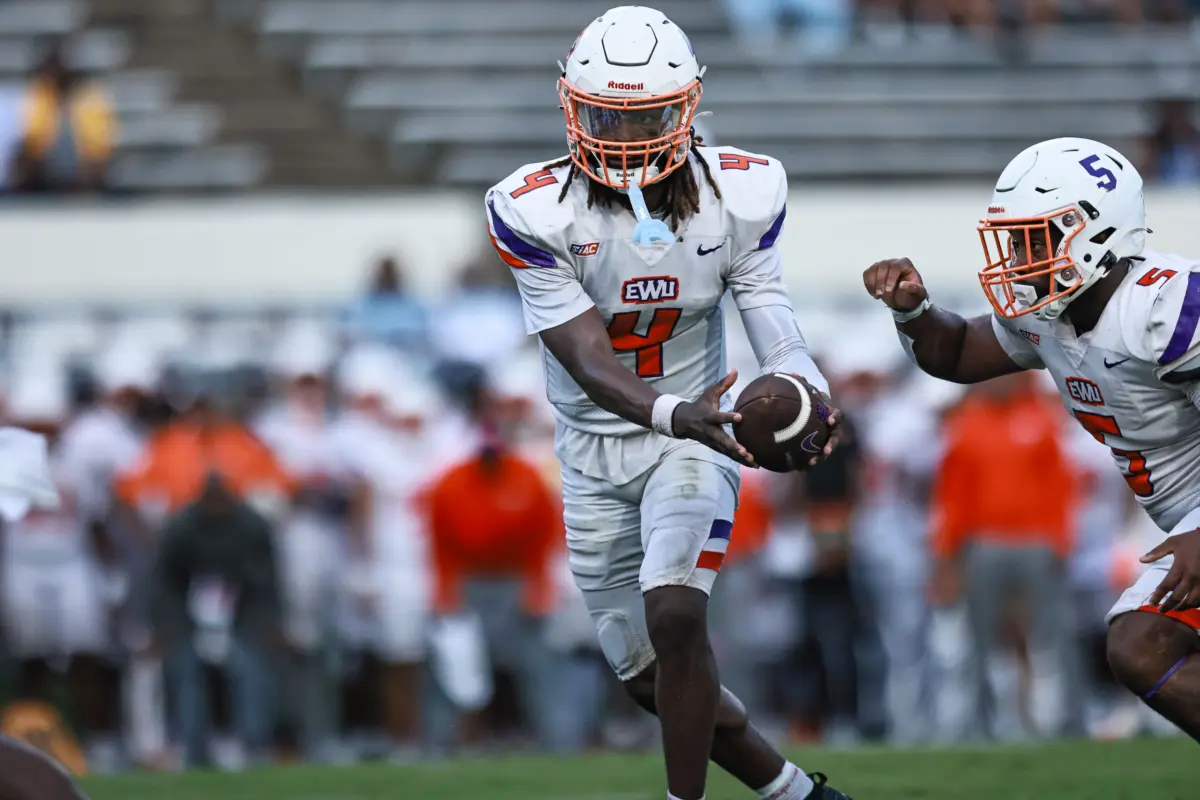
When administrators at Edward Waters University first inked the contract to play Jackson State two years ago, the landscape of college athletics looked profoundly different. At the time, the opportunity to play a high-profile FCS program with the historic legacy of Jackson State was framed as a marquee event. For EWU’s players—such as quarterback Tavion Faulk and his teammates—it was a chance to test their mettle on a prominent regional stage, broadcast to fans and alumni across the country.
Furthermore, athletic departments routinely utilize these games as revenue-generating mechanisms. In principle, a $65,000 guarantee sounded like a helpful infusion of capital for an athletic department operating on a constrained budget compared to its Division I peers.
Game Day at Mississippi Veterans Memorial Stadium
The contest itself played out as many anticipated, yet the lopsided nature of the final score threw the underlying economic disparities into sharp relief. Jackson State asserted its dominance early and often, capitalizing on depth, scholarship advantages, and physical maturation to overwhelm the Tigers en route to a commanding 66-14 victory.
While competitive athletes and coaches are conditioned to look past the scoreboard and focus on execution, the human and institutional cost of such a blowout is immense. Players absorbed punishing hits, coaching staffs were forced to manage exhaustion and potential injury risks, and the university’s brand was subjected to a public, high-margin mismatch.
The Post-Game Awakening
It was in the immediate aftermath of this defeat that President Faison’s perspective crystallized. Reviewing the ledger after returning to Jacksonville, the institutional math laid bare the true cost of the venture. With gross revenues of $65,000 slashed nearly in half by travel expenditures totaling $30,000 to $35,000, the net yield of $30,000 felt entirely disproportionate to the sacrifices made by the Edward Waters community.
Recognizing that the athletic landscape has shifted dramatically—with television revenues, conference payouts, and guarantee fees skyrocketing at the upper echelons of college sports—Faison realized that small HBCUs were being left behind in a predatory economic cycle.
Supporting Context & Metrics: The Broken Economics of "Buy Games"
To understand the vigor of Faison’s argument, one must examine the broader financial ecosystem of contemporary collegiate athletics, particularly within the HBCU and lower-division landscapes.
The Disparity in Guarantee Payouts
Major Division I programs—both within the Football Bowl Subdivision (FBS) and FCS—routinely pay lesser-known or lower-division opponents substantial sums to travel to their home stadiums. These games serve a dual purpose for the hosts: they act as "get-well" games or tune-ups against theoretically weaker competition, and they drive ticket sales and local economic activity.
However, the scale of compensation varies wildly, often leaving smaller programs severely underpaid relative to the revenue they help generate for the host institution. Faison highlighted several contemporary examples involving prominent HBCU matchups to illustrate the systemic inequity:
- Florida A&M University (FAMU): Received a guarantee of $740,000 for a high-profile matchup against the University of Miami.
- Tennessee State University: Collected a $600,000 payout for absorbing a 63-3 defeat against the University of Georgia.
When juxtaposed against the $65,000 guarantee handed to Edward Waters for playing Jackson State, the disparity is glaring. While programs like Florida A&M and Tennessee State command hundreds of thousands of dollars to shoulder the burden of playing elite or upper-tier Division I opponents, Edward Waters was asked to perform a similar athletic sacrifice for less than 10% of those figures.
The Mathematics of Faison’s Standard
Unwilling to let his institution be shortchanged, Faison formulated a rigid, mathematically driven standard for future scheduling negotiations. His statement on X laid out the parameters with absolute clarity:
- The Floor: Edward Waters will not entertain any game proposal that nets the institution less than $100,000 after all travel, lodging, meals, and related operational costs are fully accounted for.
- The Threshold for Consideration: Netting $100,000 does not guarantee a game will be played; it merely opens the door for a conversation.
- The Proportionality Rule: EWU will refuse to play any Division I opponent for less than 35% of the guarantee amount that the host institution itself receives for its own major-conference "money games" (such as Power Four matchups).
Faison illustrated this logic by pointing out that if an opposing FCS or mid-major program is collecting $600,000 or more to absorb a difficult matchup against a Power Four opponent, that same program has the financial capacity to pay a proportional, equitable share to smaller opponents like Edward Waters.
"If a program is collecting $600,000 to absorb that treatment, it can pay a proportional share to ask the same of us. Below that, the conversation does not start," Faison asserted.
Official Statements & Public Reaction
President Faison’s transparency has struck a profound chord within the collegiate sports community, sparking intense debate among athletic directors, alumni, and sports economists regarding the exploitation of lower-division and smaller HBCU programs.
In his comprehensive social media address, Faison did not mince words about the past philosophy of the university and why it must permanently change:
"So let me be direct about the standard. My keys do not begin to rattle for anything that nets this institution less than $100,000 after travel and related costs. The terms are not acceptable to Edward Waters going forward."
Faison also anticipated pushback from critics who might point to rare, competitive moral victories or tight defensive performances by other small programs—such as Albany State holding Florida A&M to a narrow 20-7 margin, or Kentucky State briefly threatening Grambling State—to justify these matchups. To Faison, competitive grit does not excuse economic exploitation.
"Someone will raise the exceptions, and they deserve an honest answer… Albany State held Florida A&M to 20 to 7 last weekend. Kentucky State led Grambling State 14 to 0 and again… but I simply no longer believe that. The economics do not work. We were paid a $65,000 guarantee, which covered none of our costs… That does not begin to justify what such a game asks of a team, a coaching staff, and a program."
The reaction from the broader athletic community has been largely supportive, with many administrators privately acknowledging the unsustainable nature of current guarantee structures. By dragging these figures into the public eye, Faison has forced a long-overdue reckoning regarding how athletic value is calculated and distributed across the collegiate sports landscape.
Future Outlook: What This Means for Edward Waters and HBCU Athletics
As the dust settles on the aftermath of the Jackson State blowout, the immediate and long-term implications for Edward Waters University are profound.
1. A Redefined Scheduling Philosophy
Moving forward, the Tigers’ athletic department will pivot away from chasing prestige matchups against larger Division I opponents unless those contests meet Faison’s strict financial thresholds. This means Edward Waters will likely focus its non-conference scheduling on regional peer institutions, Division II opponents, or NAIA rivals where travel costs are minimized and financial returns are more predictable and equitable.
2. Pressure on Larger FCS and SWAC/MEAC Programs
Faison’s public stance places immediate pressure on larger HBCU conferences and athletic directors. If programs within the SWAC and the Mid-Eastern Athletic Conference (MEAC) wish to continue scheduling smaller regional opponents like Edward Waters for early-season tune-ups, they will now have to justify significantly higher guarantee payouts. The days of securing cheap, reliable wins against small schools for a nominal fee are drawing to a close.
3. A Catalyst for Systemic Reform
Perhaps the most lasting impact of Faison’s ultimatum will be its role as a catalyst for broader structural reform within small-college athletics. As television contracts expand and the financial gulf between major conferences and lower-tier programs widens, leaders like Faison are demonstrating that institutional self-respect must outweigh the temptation of exposure.
For Edward Waters University, the message is clear: the Tigers are proud of their athletic heritage, fiercely competitive, and deeply committed to their student-athletes. But they will no longer pay the price of admission to someone else’s financial success story.
As college sports continues its relentless evolution, President Faison has drawn a clear line in the sand at Edward Waters—ensuring that the university’s future is built on financial sustainability, institutional dignity, and fair value for every mile traveled and every yard fought on the gridiron.

0 Comments