

Executive Overview
Months of agonizing uncertainty, sleepless nights, and an unyielding community pursuit of justice reached a critical turning point this week with the arrest of 24-year-old Alexander Rivera-Russo. Accused of causing the high-speed, fiery crash that claimed the life of 24-year-old Savana Pendarvis in Jacksonville, Florida, Rivera-Russo was finally taken into custody following a tense standoff in neighboring Clay County.
For the family and friends left behind, the arrest brings a complex wave of emotions—a profound sense of relief counterbalanced by the stark, permanent realization that their beloved friend is gone. What began as a routine winter night dissolved into tragedy in January, when investigators say a speeding vehicle rear-ended Pendarvis’s car on a bustling Jacksonville thoroughfare, triggering a fatal collision and a cowardly flight from the scene.
While Rivera-Russo now sits behind bars facing severe felony charges—including vehicular homicide and leaving the scene of a deadly crash—law enforcement officials emphasize that the case is far from closed. Investigators are actively probing whether accomplices assisted the fugitive during his months on the run, helping him evade the law and prolonging the anguish of a grieving community. As the legal system begins to turn, those who knew and loved Pendarvis are fighting to ensure she is remembered not by the manner of her untimely death, but by the vibrant, generous, and luminous life she lived.
Detailed Chronology: From a Last Conversation to a SWAT Standoff
The Final Evening: January’s Tragic Turning Point
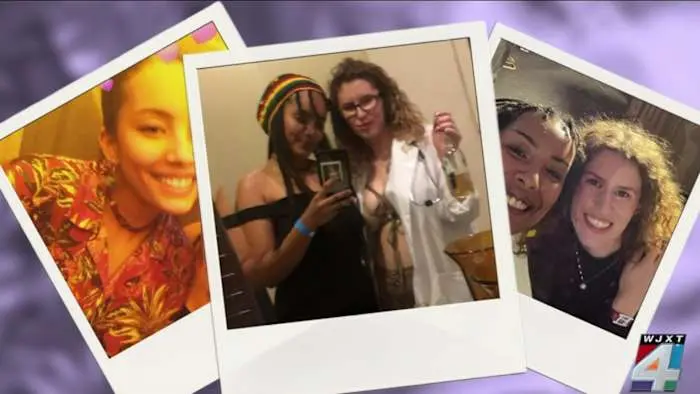
The timeline of the tragedy begins on a quiet note, defined by ordinary human connection. The night before her life was abruptly stolen, Savana Pendarvis spent four hours engaged in a deep, sprawling conversation with her best friend, Tatiana Saleh. The two young women talked until 11:00 p.m., sharing details of their lives, future plans, and daily thoughts. Neither of them could have anticipated that this would be their final exchange.
"It still always feels like we got cut off mid-conversation," Saleh shared in an interview with local news outlet News4JAX.
Hours later, the ordinary flow of life was shattered on a Jacksonville roadway. According to the Jacksonville Sheriff’s Office (JSO), Alexander Rivera-Russo was operating a vehicle at an excessive rate of speed down University Boulevard. Witnesses and crash reconstruction analysts indicate that Rivera-Russo’s vehicle violently rear-ended Pendarvis’s car. The kinetic force of the impact was catastrophic, projecting Pendarvis’s vehicle directly into a roadside telephone pole.
The collision instantly compromised the vehicle, sparking a fast-moving fire that engulfed the car. Rather than remaining at the scene to render aid, call emergency services, or face the consequences of his driving, investigators state that Rivera-Russo fled the wreckage on foot, leaving Pendarvis trapped inside. First responders arrived to a scene of utter devastation; Pendarvis was pronounced dead at the scene.
Months in the Shadows: An Open Wound
In the wake of the crash, the JSO launched a comprehensive manhunt. However, as weeks stretched into months, the trail grew cold. For Pendarvis’s family and friends, the absence of an arrest compounded an already unbearable grief.
"Feeling like this person has just gotten away with it, it’s scot-free and it’s off, we don’t know where he is, if he’s out of the country," Saleh reflected, describing the psychological toll of the manhunt. "That unknowing just left it as like an open wound that could never fully scab over or fully heal."
As rumors swirled and local residents demanded answers, law enforcement quietly continued building a meticulous case, tracking digital footprints, gathering witness testimony, and following leads across county lines.
The Raid in Oakleaf: Closing the Net
The months-long evasion came to a dramatic end when JSO and regional partners traced Rivera-Russo to a residential neighborhood in Oakleaf, located in Clay County.
On a Tuesday that disrupted the quiet suburban rhythm of Pecan Grove Drive and Spencer Plantation Boulevard, the Clay County Sheriff’s Office (CCSO) swung into action. Law enforcement agencies urged local residents to avoid the area as heavily armed personnel descended upon the target residence.
According to the CCSO, Rivera-Russo refused to cooperate or exit the home voluntarily when deputies attempted to execute the arrest warrant. Recognizing the potential danger and the fugitive’s demonstrated willingness to flee accountability, the tactical response team deployed chemical gas into the residence. Faced with the overwhelming force and tactical superiority of the SWAT team, Rivera-Russo finally surrendered. He was taken into custody without further incident, ending his months-long evasion of justice.
Supporting Context & Metrics: The Crisis of Reckless Driving and Hit-and-Runs
The heartbreaking fate of Savana Pendarvis highlights a broader, deeply troubling trend plaguing urban and suburban corridors across Florida and the United States: the lethal combination of excessive speed and hit-and-run fatalities.
The Staggering Statistics of Hit-and-Run Incidents
According to safety data compiled by the National Highway Traffic Safety Administration (NHTSA) and state transportation authorities, hit-and-run crashes have seen an upward trajectory nationwide over the past decade.
- National Impact: Thousands of fatal hit-and-run incidents occur annually across the United States, accounting for roughly 5% to 7% of all traffic fatalities.
- Florida’s Vulnerability: Florida consistently ranks among the most dangerous states for pedestrians and motorists alike, with tens of thousands of hit-and-run crashes reported annually by the Florida Department of Highway Safety and Motor Vehicles (FLHSMV). A significant percentage of these incidents result in serious bodily injury or death.
- The Psychology of Flight: Criminologists and traffic safety experts note that drivers who flee the scene of a fatal collision often do so out of panic, impairment (due to alcohol or drugs), or a lack of valid documentation (such as a suspended license or uninsured status). However, legal experts emphasize that fleeing a fatal crash elevates a momentary traffic tragedy into a severe felony carrying decades-long prison implications.
The Geography of Danger: University Boulevard
The stretch of University Boulevard in Jacksonville where the crash occurred has long been a focal point for traffic safety concerns. Characterized by multi-lane traffic, dense commercial development, and fluctuating speed patterns, urban arteries like University Boulevard frequently witness aggressive driving behaviors, particularly during late-night and low-visibility hours. Municipal leaders and community activists continue to lobby for increased traffic calming measures, automated speed enforcement, and enhanced lighting to protect motorists from reckless operators.
Official Statements and Legal Framework
Law Enforcement and Prosecution Perspectives
The arrest of Alexander Rivera-Russo represents a collaborative triumph for regional law enforcement agencies, but the legal machinery is only just beginning its work.
The Jacksonville Sheriff’s Office formally charged Rivera-Russo with multiple high-level felonies, prominently featuring:
- Vehicular Homicide: A charge reflecting the reckless, high-speed nature of the operation of his vehicle that directly caused the death of another human being.
- Leaving the Scene of a Crash Involving Death: A first-degree felony under Florida law, carrying severe statutory mandatory minimum prison sentences upon conviction.
Crucially, JSO public information officers have stressed that the investigation remains active and open. Authorities are turning their attention to a secondary, yet vital, aspect of the case: determining whether Rivera-Russo received external assistance while hiding out in Clay County and other locations during his months as a fugitive.
"Investigators are actively looking into whether anyone helped Rivera-Russo hide during the months they were searching for him," a JSO spokesperson noted. Anyone found to have harbored a fugitive or impeded a homicide/vehicular manslaughter investigation could face obstruction of justice or accessory charges.
Future Outlook: Navigating the Legal Process and Preserving a Legacy
The Road Ahead in Court
As Rivera-Russo transitions from a fugitive status to the judicial system, the case will move through the Fourth Judicial Circuit Court in Duval County. Pre-trial hearings, evidence discovery phases, and motion practices will set the stage for either a trial or a negotiated plea resolution. For the Pendarvis family, the legal proceedings will demand immense emotional stamina as they sit in courtrooms to face the man accused of shattering their lives.
Legal analysts predict that the prosecution’s case will rely heavily on:
- Accident Reconstruction Reports: Physical evidence, skid marks, vehicle telemetry data, and point-of-impact analysis to prove excessive speed and fault.
- Digital Forensics: Cell phone records, financial transactions, and digital communications that may establish Rivera-Russo’s movements and expose any individuals who assisted in his concealment.
- Eyewitness and Expert Testimony: Accounts from individuals who witnessed the chaotic moments leading up to and immediately following the crash on University Boulevard.
Beyond the Courtroom: Remembering Savana’s Light
While the legal outcome will determine the extent of Rivera-Russo’s punishment, those who loved Savana Pendarvis are determined to ensure that the narrative of her life is not permanently overshadowed by the violence of her death.
Tatiana Saleh offered a poignant plea to the public, urging friends, acquaintances, and strangers alike to focus on the goodness that defined her best friend’s time on Earth.
"I would hope that people continue to keep that memory of her life and don’t think about the accident. Don’t think about what this guy did," Saleh implored. "Just think about her light and her laugh and her generosity and her willingness to do anything for the people she loved, because that’s all we have left."
In a world often quick to consume tragedy, the enduring legacy of Savana Pendarvis stands as a reminder of the fragility of life, the resilience of friendship, and the unyielding demand for accountability when justice is delayed. As the community heals, her light—preserved in the hearts of those she touched—remains unextinguished.

0 Comments