

Executive Overview
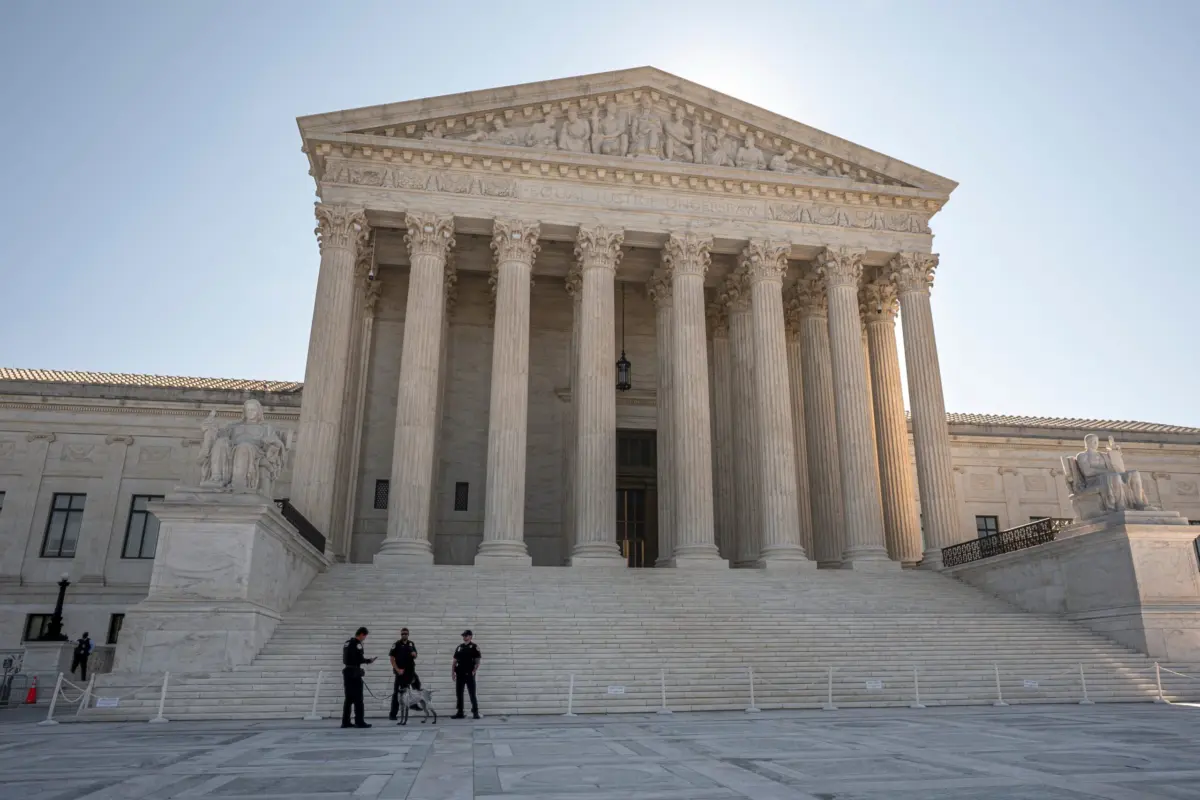
WASHINGTON — In a high-stakes legal maneuver unfolding in the shadow of an imminent lethal injection, defense attorneys representing 72-year-old Florida death row inmate Daniel Conahan Jr. formally petitioned the United States Supreme Court on Monday. The emergency application seeks a temporary stay of execution to halt a scheduled capital punishment procedure slated for Thursday. Conahan is condemned for the 1996 abduction, brutal strangulation, and mutilation of Richard Montgomery, whose body was discovered discarded in a trash-laden wooded area in Charlotte County, Florida.
The eleventh-hour appeal centers heavily on unresolved constitutional questions surrounding access to modern forensic science, specifically unperformed DNA testing that Conahan’s legal team argues could definitively exonerate him. According to court filings, Conahan has sought comprehensive DNA testing of physical evidence retrieved from the crime scene and the victim’s body since March 2025. However, these legal efforts collided directly with executive action on August 11, when Florida Governor Ron DeSantis signed Conahan’s death warrant while motions for advanced scientific testing were still actively pending in state courts. Within 24 hours of the warrant’s execution, the state postconviction court summarily denied the motion, setting the stage for an urgent federal intervention.
"Mr. Conahan does not ask to be declared innocent at this posture. Nor does he ask to be released from prison. All he asks is for this Court to stay his imminent execution so that this Court can review his meritorious claims," attorneys asserted in the compelling petition submitted to the nation’s highest court.
The case highlights the perennial, high-tension collision between the finality of criminal judgments sought by state capital punishment regimes and the evolving capabilities of postconviction forensic testing. As the legal clock winds down, the Supreme Court’s impending decision carries profound implications not only for Conahan’s life but also for broader jurisprudence regarding due process, judicial review, and access to DNA evidence in capital cases across the United States.
Detailed Chronology: From the 1996 Discovery to the 2026 Death Warrant
The Disappearance and Discovery (Spring 1996)
The grim narrative underlying the state’s case against Daniel Conahan Jr. dates back nearly three decades to the spring of 1996. Richard Montgomery vanished under circumstances that immediately drew the concern of local law enforcement in southwest Florida. Days after his disappearance, investigators located Montgomery’s body in a dense, remote wooded area situated within Charlotte County.
The scene was desolate and disturbing. The victim’s body was found nude and severely mutilated, specifically bearing signs of emasculation. Investigators classified the location as an informal dumping ground, heavily littered with household trash, discarded appliances, and debris. The nature of the crime scene suggested an offender who was familiar with the geography of southwest Florida and capable of exploiting isolated, rural pockets to conceal evidence.
Investigation and Arrest (Late 1990s)
As forensic pathologists and detectives pieced together the physical evidence, investigators linked Conahan to the crime. Authorities established that Conahan had allegedly lured Montgomery to his death after offering him money to pose for nude photographs—a modus operandi that law enforcement later suspected was tied to a broader pattern of predatory behavior targeting vulnerable men in the region during the mid-to-late 1990s.
Despite maintaining his innocence throughout the investigative process, Conahan was indicted, prosecuted, and ultimately convicted of first-degree murder and kidnapping. In the subsequent sentencing phase, the jury and trial court recommended and imposed the death penalty, cementing Conahan’s status as a condemned inmate within Florida’s penal system. Over the subsequent decades, standard appeals wound their way through state and federal appellate courts, all while Conahan remained incarcerated on death row at Union Correctional Institution.
The 2025–2026 Legal Escalation and Death Warrant
The trajectory of the case shifted sharply in March 2025, when Conahan’s defense team formally initiated requests for advanced DNA testing on evidence preserved from the 1996 crime scene and the victim’s remains. Defense counsel argued that advancements in touch-DNA technology and genetic genealogy offered a viable scientific avenue to test items that had not undergone modern profiling techniques at the time of the original trial.
Despite these pending scientific motions, Governor Ron DeSantis signed Conahan’s death warrant on August 11, setting a lethal injection date for Thursday. The issuance of the warrant compressed the timeline for judicial review dramatically. Within 24 hours of the governor’s signature, the state postconviction court moved to deny the pending DNA testing motion, effectively clearing the path for the state to proceed with the execution. Faced with what they described as an expedited and procedurally constrained state court system, Conahan’s attorneys elevated their appeals to the federal level, culminating in Monday’s emergency stay application before the U.S. Supreme Court.
Supporting Context & Metrics: The Broader Landscape of Florida Capital Punishment
To fully understand the urgency of the Supreme Court petition, it is necessary to examine the broader context of capital punishment in Florida, the statistical landscape of state-sanctioned executions, and the specific evidentiary debates surrounding postconviction DNA testing.
Execution Metrics in Florida
Florida remains one of the most active death penalty jurisdictions in the United States. With the execution of Daniel Conahan Jr. scheduled for this week, the state’s aggressive capital punishment calendar highlights a distinct acceleration in state-sanctioned deaths. Data compiled by corrections and legal watchdog organizations indicates that Florida has executed 14 individuals within the current calendar year alone. This places the state at the forefront of national execution statistics, rivaling historic peaks and underscoring a concerted push by state authorities to clear long-standing death row dockets.
The Debate Over Postconviction DNA Testing
The core legal argument presented by Conahan’s defense taps into a well-documented national debate regarding the infallibility of older convictions in the face of modern scientific breakthroughs. Since the advent of polymerase chain reaction (PCR) testing and subsequent refinements in low-copy DNA analysis, hundreds of wrongfully convicted individuals across the United States have been exonerated through postconviction DNA testing—many of whom were within days of execution.
Legal scholars and innocence projects frequently argue that execution warrants should be automatically stayed when legitimate, unadjudicated scientific testing motions are pending. They contend that executing an inmate while viable biological evidence remains untested creates an unacceptable risk of irrevocable error. Conversely, prosecutors and state attorneys general often counter that postconviction DNA motions are frequently utilized as procedural delaying tactics by condemned inmates seeking to forestall lawful sentences after decades of exhaustive judicial review.
Suspected Links to Additional Unsolved Murders
Adding to the notoriety of the Conahan case is the persistent shadow of unsolved homicides from the same era. Throughout the late 1990s, law enforcement agencies across southwest Florida investigated a series of killings sharing chilling similarities to the Montgomery murder. Investigators publicly acknowledged that Conahan was considered a prime suspect in multiple other homicides involving men found dead in isolated wooded areas across Charlotte and surrounding counties. While Conahan was never formally charged or convicted in connection with those additional suspected crimes, the lingering spectre of a potential serial offender has historically hardened public and prosecutorial resolve in his case.
Official Statements and Legal Arguments
The legal documents filed with the Supreme Court on Monday articulate a narrow, highly focused constitutional appeal. Rather than arguing the ultimate merits of his innocence at this preliminary stage, Conahan’s legal team is pressing the highest court to intervene on procedural grounds to prevent the permanent foreclosure of scientific review.
Defense Counsel Position
In their filings, Conahan’s attorneys emphasized that the denial of the DNA testing motion by the state postconviction court—accelerated by the signing of the death warrant—deprived the defense of a fair opportunity to utilize modern forensic tools.
"Mr. Conahan does not ask to be declared innocent at this posture," the petition states. "Nor does he ask to be released from prison. All he asks is for this Court to stay his imminent execution so that this Court can review his meritorious claims regarding access to biological evidence that could conclusively establish that he is not responsible for the death."
The defense argues that proceeding with the execution before the federal judiciary can evaluate whether the denial of DNA testing violated due process rights constitutes an irreversible miscarriage of justice. They maintain that the physical evidence collected in 1996—stored for decades in police archives—holds microscopic skin cells, touch-DNA, or trace biological material that could point directly toward an alternative perpetrator or, at a minimum, corroborate Conahan’s longstanding claims of wrongful conviction.
State Prosecutor and Executive Stance
While the state’s formal opposition responses were being prepared for submission to the Supreme Court, Florida authorities have consistently defended the integrity of the original 1996 conviction and the legitimacy of the execution schedule.
State attorneys have maintained throughout the postconviction proceedings that the evidence establishing Conahan’s guilt was overwhelming, multi-layered, and thoroughly vetted across multiple appellate tiers over the past three decades. From the perspective of the Florida Attorney General’s Office and the Governor’s legal counsel, the timing of the death warrant is consistent with statutory guidelines, and subsequent defense motions for DNA testing represent successive, unmeritorious attempts to delay a lawful sentence that has already survived extensive judicial scrutiny.
Future Outlook and Immediate Judicial Roadmap
As of Monday afternoon, the immediate fate of Daniel Conahan Jr. rests squarely in the hands of the nine justices of the United States Supreme Court. The legal timeline is compressed to a matter of hours and days, leaving little room for procedural maneuverability.
Potential Scenarios
- Granting of the Stay: If the Supreme Court opts to grant a temporary stay of execution, the justices will likely order a briefing schedule to review whether the state court’s handling of the postconviction DNA testing motion violated Conahan’s constitutional rights to due process. Such a ruling would halt Thursday’s lethal injection and open a new, albeit narrow, window for forensic testing.
- Denial of the Stay: If the high court denies the application—as is statistically common in emergency capital stay requests—the path will remain clear for the Florida Department of Corrections to proceed with the scheduled lethal injection at Union Correctional Institution on Thursday evening.
- Executive Clemency Intervention: While statistically rare in contemporary Florida politics, an eleventh-hour commutation or reprieve from Governor Ron DeSantis remains a theoretical, albeit improbable, avenue of last resort.
Broader Legal Implications
Regardless of the outcome, the case of Daniel Conahan Jr. serves as a powerful case study in the intersection of capital punishment jurisprudence and forensic technology. It underscores the profound tension between a state’s sovereign interest in the finality of criminal judgments and the constitutional imperatives of due process in an era where science continually redefines our understanding of physical evidence. As Thursday approaches, legal observers nationwide will be watching the Supreme Court’s docket for a decision that will either permit the execution to proceed or force a temporary halt in the name of unresolved scientific inquiry.

0 Comments