
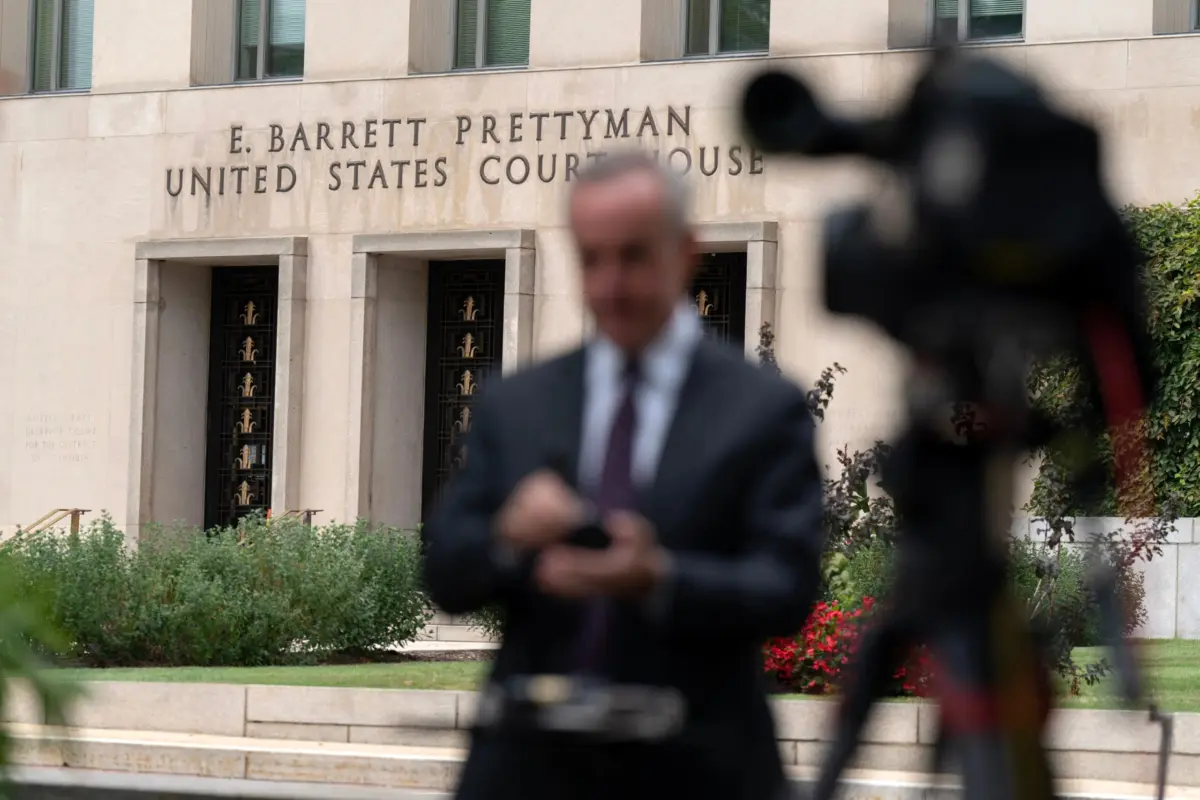

WASHINGTON — In a major judicial rebuke of executive overreach, a federal judge early Thursday temporarily blocked President Donald Trump’s administration from banning three prominent news organizations from the White House grounds. U.S. District Judge Timothy Kelly ruled that CNN, MS NOW, and Politico must have their press credentials immediately restored, writing that the media outlets had successfully met the rigorous legal threshold for a temporary restraining order (TRO).
The 14-day restraining order marks the latest flashpoint in an escalating, high-stakes showdown between the White House and mainstream media organizations over First Amendment protections, press freedom, and the limits of executive power. President Trump announced the ban late last Friday, assailing the outlets as purveyors of “fake news” and asserting that their critical reporting posed a danger to the nation.
Attorneys representing the news organizations swiftly filed suit, arguing that the blanket ban was a clear case of unconstitutional viewpoint discrimination designed to punish them for the content of their coverage. During an emergency court hearing on Wednesday, legal counsels clashed over the balance between executive privilege and constitutional safeguards during a period of intense geopolitical activity.
Judge Kelly, a 2017 appointee of President Trump who notably ruled in favor of restoring CNN correspondent Jim Acosta’s press credentials in a remarkably similar 2018 legal battle, emphasized that his decision was firmly anchored in established First Amendment jurisprudence. The unfolding legal drama raises fundamental questions regarding the accessibility of the executive branch to the press corps and establishes yet another critical constitutional test for the judiciary.
DETAILED CHRONOLOGY OF EVENTS
The sequence of events leading up to Thursday’s federal ruling unfolded rapidly over the course of a single week, transforming routine administrative press management into a constitutional crisis.
Friday: The White House Ban Announced
The confrontation began abruptly when the Trump administration issued an executive directive revoking the hard passes of journalists representing CNN, MS NOW, and Politico. The administration justified the move by labeling the outlets’ recent coverage as "fake news" and arguing that negative media reporting was inherently dangerous to the country. The sudden revocation effectively cut off the reporters from daily press briefings, access to senior administration officials, and on-site reporting capabilities at the White House complex.
The Immediate Legal Response
Recognizing the urgency of the situation—particularly with high-level international delegations visiting Washington—legal teams representing the affected news outlets mobilized over the weekend. On Monday, the media organizations filed an emergency lawsuit in the U.S. District Court for the District of Columbia. The complaint argued that singling out specific outlets for unfavorable coverage violated their constitutional rights under the First Amendment and denied them basic due process.
Wednesday: The Emergency Hearing
U.S. District Judge Timothy Kelly convened an emergency hearing on Wednesday afternoon to hear oral arguments from both sides. The courtroom battle was fierce.
- The Plaintiffs’ Argument: Theodore Boutrous Jr., lead attorney for the media outlets, argued that the ban inflicted immediate and irreparable harm during a period of momentous global events. Highlighting the presence of international leaders in Washington, Boutrous stated, “We’re at war. We have world leaders coming to Washington.” He asserted that the administration was clearly engaged in viewpoint discrimination.
- The Defense’s Argument: Michael Velchik, representing the U.S. Department of Justice, countered that access to the White House grounds is a privilege rather than a constitutional right, maintaining that the president possesses broad discretion over who is granted entry. Velchik further contended that the administration was not engaged in viewpoint discrimination, pointing out that the president had criticized other outlets, such as calling ABC "the worst," without banning them. Velchik also introduced national security arguments, claiming the president must be able to act swiftly to protect national interests.
Thursday: The Temporary Restraining Order Issued
Ruling swiftly after the Wednesday arguments, Judge Kelly issued a 14-day temporary restraining order early Thursday morning. The judge determined that the plaintiffs had demonstrated a strong likelihood of success on the merits and would suffer irreparable harm if the ban remained in place. The ruling forces the White House to restore press access immediately while the broader legal challenges are litigated.
SUPPORTING CONTEXT & LEGAL FRAMEWORKS
The legal arguments underpinning the current dispute draw heavily on established American constitutional law and past legal precedents regarding press access to government property.
The First Amendment and Viewpoint Discrimination
At the core of the lawsuit is the First Amendment protection against government retaliation based on speech content. While the White House complex is generally classified as a non-public forum subject to reasonable security and operational regulations, the courts have long held that once the government opens such a space to the press, it cannot arbitrarily exclude journalists based on the viewpoints they express or the editorial stances of their employers.
Legal scholars note that the administration faces a high evidentiary hurdle in proving that the bans were enacted for neutral, administrative reasons rather than as a punitive measure against critical reporting.
Parallels to the 2018 Jim Acosta Case
Thursday’s ruling bears a striking resemblance to a legal precedent set nearly a decade prior. In November 2018, then-CNN chief White House correspondent Jim Acosta had his press pass revoked following a contentious press conference with President Trump. CNN sued the administration, and the case was assigned to none other than Judge Timothy Kelly.
In that landmark decision, Judge Kelly ruled that the administration had violated Acosta’s Fifth Amendment right to due process by failing to provide adequate notice and an opportunity to respond before revoking his credentials. The ruling forced the administration to restore Acosta’s access, establishing a critical guardrail against the arbitrary revocation of White House press passes.
Legal analysts point out that while the 2018 case focused heavily on procedural due process under the Fifth Amendment, the current lawsuit by CNN, MS NOW, and Politico delves even deeper into substantive First Amendment claims regarding systemic viewpoint discrimination.
OFFICIAL STATEMENTS AND LEGAL ARGUMENTS
The conflicting positions of the judiciary, the plaintiffs, and the defense highlight the profound philosophical and legal divide over the role of the press in American governance.
From the Bench: Judge Timothy Kelly’s Reasoning
In his written order, Judge Kelly acknowledged the high bar required to issue a temporary restraining order but concluded that the plaintiffs had successfully met all necessary legal criteria. Addressing the administration’s defenses, Kelly noted that his decisions must be guided strictly by prior rulings in comparable First Amendment cases, irrespective of the government’s policy preferences.
During the hearing, Kelly explicitly questioned whether the administration had fulfilled its legal responsibilities to provide the targeted outlets with adequate due process before executing the bans, a vulnerability that ultimately undermined the government’s defense.
The Plaintiffs: Defending the Role of the Watchdog
Theodore Boutrous Jr., representing the media coalition, dismissed the administration’s late-stage introduction of national security justifications as a transparent post-hoc rationalization.
"Suddenly it’s a national security case," Boutrous argued in court, pointing out that the administration continually reinforced the plaintiffs’ claims by explicitly citing negative news coverage as the primary motivator for the ban.
Boutrous emphasized that a free and unfettered press is essential for keeping the public informed, particularly during times of international crisis and diplomatic engagement in the nation’s capital.
The Defense: Executive Authority and National Security
Representing the Department of Justice, Michael Velchik maintained that the executive branch must retain operational control over its workspace.
"Access to the White House is a privilege, not a right," Velchik told the court, arguing that judicial intervention in presidential press operations infringes upon core executive powers.
Velchik attempted to neutralize the viewpoint discrimination argument by highlighting the administration’s broader media critiques, asserting that because harsher critics had not been banned, the targeted exclusions did not constitute a systematic policy against specific viewpoints. Furthermore, the DOJ argued that the president must possess the agility to manage security and information flows within the executive mansion without judicial interference.
FUTURE OUTLOOK AND BROADER IMPLICATIONS
As the 14-day temporary restraining order takes effect, both legal and political observers are looking ahead to the next phases of the litigation and the broader ramifications for American media relations.
The Immediate Road Ahead
The 14-day window provided by Judge Kelly’s restraining order is specifically designed to preserve the legal status quo while allowing the court to schedule a more comprehensive hearing. Over the next two weeks, lawyers for CNN, MS NOW, and Politico are expected to file motions for a preliminary injunction, which, if granted, would extend the protections through the duration of the full trial.
Meanwhile, the White House legal team must determine whether to appeal the temporary restraining order to the U.S. Court of Appeals for the District of Columbia Circuit or focus its efforts on contesting the preliminary injunction at the district court level.
Broader Implications for Press Freedom
The outcome of this legal battle will likely set a monumental precedent regarding the balance of power between the executive branch and the news media. If the courts ultimately rule that the administration engaged in unconstitutional viewpoint discrimination, it will place firm legal boundaries on a president’s ability to weaponize press access credentials against unfavorable coverage.
Conversely, a ruling upholding the administration’s actions could fundamentally alter the landscape of White House reporting, granting future executives sweeping discretionary power to curate the press corps based on political alignment. As the case proceeds through the federal judiciary, it remains a defining test of constitutional resilience in an era of intense political polarization.

0 Comments