

Executive Overview
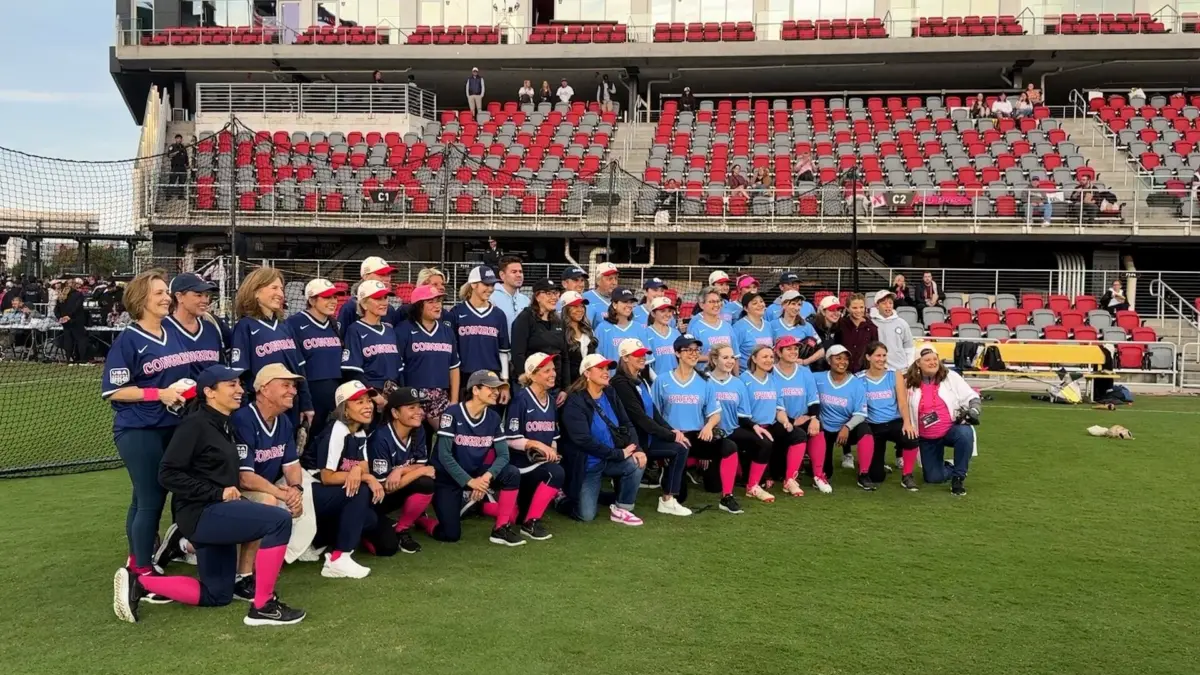
WASHINGTON — In a political landscape frequently defined by hyper-partisanship, legislative gridlock, and ideological polarization, Washington lawmakers momentarily traded their C-SPAN microphones and committee gavels for bats, gloves, and cleats on Wednesday. The occasion was the annual Congressional Women’s Softball Game, a cherished D.C. tradition that brings together female members of Congress from both sides of the aisle to face off against the formidable press corps.
Hosted at Audi Field, this year’s matchup—the 18th installment of the charity-driven competition—once again demonstrated that beyond the blinding lights of cable news studios and the fierce debates on Capitol Hill, genuine human connection and bipartisan collaboration remain possible. While the media team, playfully dubbed the “Bad News Babes,” ultimately secured a hard-fought 22-16 victory over the lawmakers, the true scoreboard measured success in funds raised, awareness generated, and relationships forged.
Originally founded in 2009 by Florida Congresswoman Debbie Wasserman Schultz following her own personal battle with breast cancer diagnosed at age 41, the event has evolved far beyond a casual athletic pastime. Over the span of nearly two decades, it has grown into a powerhouse fundraising vehicle for the Young Survival Coalition, an organization dedicated to providing critical resources, advocacy, and community for young women battling breast cancer. To date, the event has generated an impressive $5.8 million for the cause.
Beyond the philanthropic impact, the game serves as a vital psychological release valve and a testament to the power of shared physical endeavor in breaking down political barriers. In interviews conducted on and off the field, lawmakers emphasized that the teamwork required to execute a double play or rally in the seventh inning creates bonds of trust that seamlessly translate back into the legislative arena. As Washington navigates an era of profound public cynicism and institutional fatigue, the Congressional Women’s Softball Game stands as a beacon of constructive engagement, proving that shared purpose can transcend party lines.
Detailed Chronology of the 18th Annual Matchup
The crisp evening air at Audi Field set the stage for a high-energy contest that drew hundreds of spectators, staffers, journalists, and Capitol Hill insiders. From the opening warm-ups to the final out, the atmosphere was a mix of intense athletic competition and lighthearted camaraderie.
Pre-Game Atmosphere and Opening Ceremonies
Hours before the first pitch, the concourse at Audi Field buzzed with excitement. Lawmakers and members of the Washington press corps donned their respective team uniforms, trading their standard professional attire for baseball pants, custom jerseys, and athletic footwear.
True to the spirit of the event, the pre-game ceremonies focused heavily on the underlying mission of the evening: honoring breast cancer survivors and remembering those who have succumbed to the disease. Players from both squads wore commemorative jerseys featuring the names of specific young women fighting breast cancer. This poignant touch personalized the athletic competition, grounding every swing and catch in a deeply emotional context.
As the ceremonial first pitch was thrown, the crowd roared, setting a vibrant tone for an evening where traditional political adversaries stood shoulder-to-shoulder in the outfield.
The Game: Back-and-Forth Action
Once play got underway, it quickly became apparent that neither side was willing to concede an inch. The Congressional team, eager to reclaim bragging rights, came out swinging aggressively, capitalizing on early walks and sharp base hits to put runs on the board.
However, the Washington press corps—the veteran "Bad News Babes"—demonstrated why they are perennial contenders on the diamond. Relying on disciplined plate appearances, solid defensive positioning, and clutch hitting, the media squad systematically chipped away at the lawmakers’ early leads.
Midway through the game, momentum swung decisively in favor of the press corps. Capitalizing on a series of defensive miscues and stringing together multi-run innings, the "Bad News Babes" built a comfortable cushion. Despite a late-game rally by the congressional squad, which showcased impressive resilience and offensive firepower, the deficit proved too large to overcome.
When the final out was recorded, the scoreboard read 22-16 in favor of the media team. While the press corps claimed the victory on the field, the post-game scene was defined by mutual respect, warm handshakes, and shared laughter as both teams gathered for group photographs to celebrate a successful night for charity.
Supporting Context & Metrics: Philanthropy and Impact
While the final score is always a point of pride for the victors, the true legacy of the Congressional Women’s Softball Game is measured in its profound philanthropic footprint.
The Young Survival Coalition
The primary beneficiary of the annual event is the Young Survival Coalition (YSC). Founded by young breast cancer survivors, YSC is the premier global organization dedicated to addressing the unique critical issues faced by young women diagnosed with breast cancer.
Breast cancer is frequently and mistakenly perceived as an older woman’s disease. However, thousands of women under the age of 40 are diagnosed annually, facing distinct medical, emotional, and financial challenges—including fertility preservation, career disruption, and navigating diagnoses while raising young children. The funds raised through the Congressional Women’s Softball Game directly support support-group networks, educational programs, and advocacy initiatives led by YSC.
Financial Milestones and Growth
When Florida Congresswoman Debbie Wasserman Schultz organized the inaugural game in 2009—sparked by her own diagnosis at age 41—few could have predicted the long-term trajectory of the initiative. What began as a modest, grassroots athletic gathering has blossomed into one of Capitol Hill’s most anticipated annual charity events.
- Total Funds Raised: Over its 18-year history, the event has accumulated a staggering $5.8 million for the Young Survival Coalition.
- Corporate and Public Support: The game routinely attracts significant corporate sponsorships, high-profile media coverage, and enthusiastic attendance from the general public, amplifying its reach far beyond the Washington Beltway.
- Direct Beneficiaries: Beyond the raw financial metrics, the event has funded critical research grants and outreach programs, helping thousands of young women navigate the labyrinth of a cancer diagnosis.
Official Statements and Legislative Perspectives
The significance of the Congressional Women’s Softball Game extends well beyond the athletic field and the ledger books. In interviews following Wednesday’s contest, several key lawmakers articulated how the event serves as a microcosm of how Washington should function—rooted in mutual respect, shared vulnerability, and collaborative trust.
Rep. Becca Balint (D-VT): Finding Joy and Building Trust in Divided Times
Representative Becca Balint emphasized the emotional and psychological necessity of stepping away from the legislative grind to engage in communal activities.
"In this incredible time of anger and frustration at politics, all of us need to dive into doing things that we love to do and having some fun," Rep. Balint remarked.
Balint also underscored the emotional weight carried by the players, noting that every participant dedicates their performance to a specific individual battling the disease.
"Everybody on the team is playing for a particular person, a particular survivor," she explained. "It gives them a lot of hope knowing that those of us in Congress aren’t just thinking about it in terms of the legislation we need to pass, but to raise the attention and to use our platforms in order to raise money for a good cause."
Addressing the broader implications for governance, Balint argued that shared physical experiences directly impact legislative productivity:
"It’s really important, even in these really divided times, that we make an effort to do things together. That’s how you build trust, is doing stuff together. It does translate when you are on a team with somebody in the morning, and then you’re in committee with them, and you already have something that you did together that day."
Sen. Shelley Moore Capito (R-WV): Evolution of a Tradition
Senator Shelley Moore Capito, a veteran lawmaker who has participated in the event for years, reflected on how the game has matured since its inception.
"It started out fun, and it’s just continued to be fun, but now we’re really making a meaningful difference, raising money for a really great cause," Sen. Capito said.
Capito also highlighted the cross-generational and cross-institutional relationships fostered by the event, noting that the bonds created on the diamond often endure long after members leave office.
"Some people move on, some people become governors and other officeholders, so it really forms great relationships," she noted. "It’s nice to meet other women leaders."
Rep. Maxine Dexter (D-OR): Escaping the Partisan Fishbowl
For newer lawmakers like Representative Maxine Dexter, the game offers a welcome sanctuary from the relentless ideological combat that characterizes modern Washington.
"The camaraderie is really exceptional," Rep. Dexter said. "In this time where there’s so much partisanship, like getting out and playing softball, the women can put all that other stuff aside and actually just have a little bit of fun."
Future Outlook: The Enduring Legacy of Bipartisan Sport
As the dust settles on Audi Field and lawmakers return to the rigorous demands of legislative markup sessions, floor votes, and constituent meetings, the 18th annual Congressional Women’s Softball Game leaves behind a legacy of inspiration.
In an era characterized by hyper-polarization, algorithmic outrage, and institutional erosion, events like this remind the American public that elected officials are human beings capable of forming genuine bonds across ideological divides. While the media team took home the trophy this year with a decisive 22-16 victory, the real triumph belongs to the collaborative spirit of the women in Congress and the press corps who united behind a life-saving cause.
Looking forward, organizers and participants are already setting their sights on the future. With $5.8 million raised to date, momentum is building toward the milestone 20th anniversary in the coming years. As long as young women continue to face the daunting reality of breast cancer, and as long as Washington remains politically fractured, the Congressional Women’s Softball Game will stand as an essential institution—proving that camaraderie, philanthropy, and a healthy competitive spirit can bridge even the widest political divides.

0 Comments