

Executive Overview
In the upper echelons of modern interior design and lifestyle curation, few figures command the effortless aesthetic authority of British tastemaker India Hicks. Granddaughter of Earl Mountbatten of Burma and goddaughter to King Charles III, Hicks has long inhabited a world where aristocracy meets bohemian ease. Now, in her eagerly anticipated new publication, India Hicks: Entertaining, with a Side of Chaos (Rizzoli, September 2026), she strips away the intimidating formalities of high-society hosting to reveal the secret machinery behind her legendary gatherings.
At the heart of this operational philosophy is a dynamic partnership between Hicks’s visionary eye for tablescapes and the culinary wizardry of her longtime home chef and self-described "top banana," Claire Williams. In the book, Hicks details the deceptive simplicity that characterizes their collaborative rhythm. A casual mention of keeping a midday meal "simple" or "very quick" invariably materializes, in the flash of a hot pan, into a multi-tiered culinary production complete with artisanal soups, crisp salads, and unexpected delicacies.
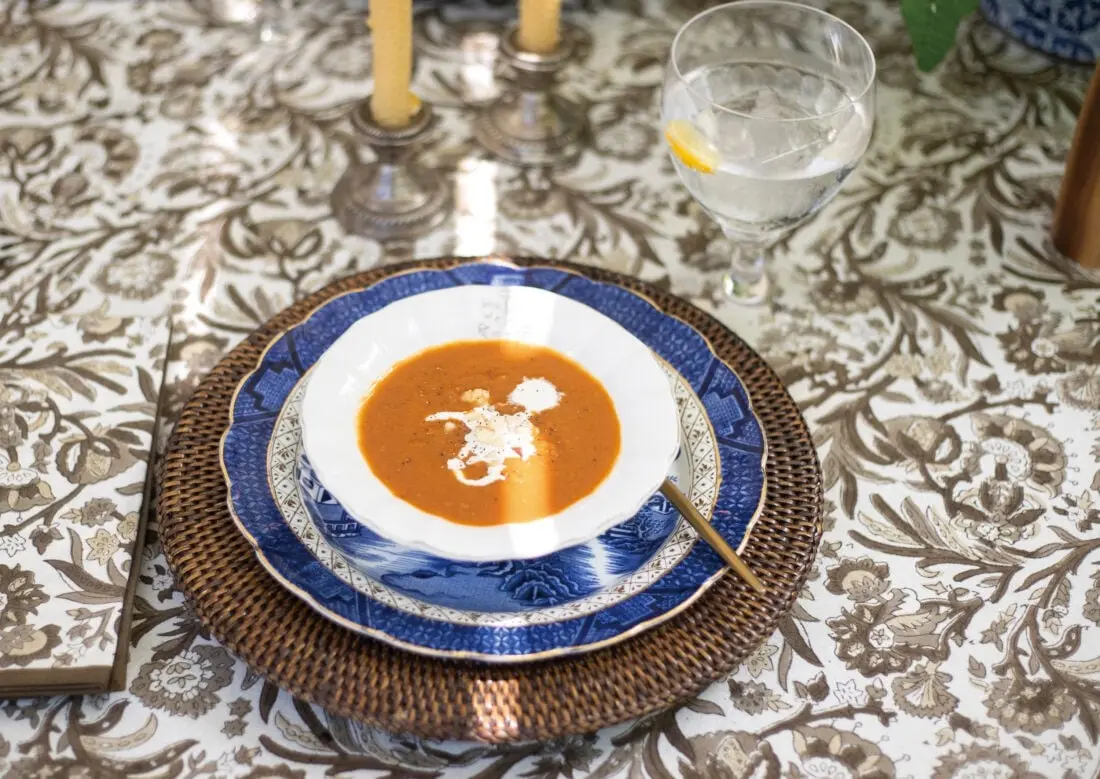
To celebrate the book’s release, this feature explores the philosophy of controlled domestic chaos, examines the mechanics of high-end casual hospitality, and highlights a signature starter from the publication: Claire Williams’s vibrant Roasted Tomato and Red Onion Soup. Designed to serve as the ultimate first course for your next autumn gathering, this recipe bridges the gap between home-style comfort and refined culinary execution.
Detailed Chronology: From Royal Roots to Island Living and Literary Success
To understand the ethos driving Entertaining, with a Side of Chaos, one must trace the trajectory of India Hicks’s eclectic life, which has continuously informed her design sensibilities.
The Formative Years and British Heritage
Born into a lineage deeply intertwined with the British royal family and the upper crust of European society, Hicks spent her early decades surrounded by institutional formality. However, rather than succumbing to the rigid etiquette of her pedigree, she developed a rebellious counter-current. This duality—an innate understanding of classic elegance coupled with a craving for authenticity and unpredictability—would eventually become her professional trademark.
The Exodus to the Bahamas and Island Minimalism
In the mid-1990s, Hicks made a life-altering decision to leave behind the fast-paced social circuits of London and New York, relocating to Harbour Island in the Bahamas. It was here, amidst pink-sand beaches and rustic colonial architecture, that her signature lifestyle brand was forged. Entertaining in the tropics required a radical departure from silver-service traditions. Resources were scarce, infrastructure was idiosyncratic, and guests often arrived unannounced via boat or golf cart.
Out of this tropical spontaneity, Hicks mastered the art of "controlled chaos." She learned that a memorable gathering relies not on immaculate, stress-induced perfection, but on warmth, atmosphere, and the hostess’s ability to roll with the unexpected. Whether a sudden squall interrupted an outdoor dinner party or ingredients failed to arrive on the morning ferry, Hicks turned logistical crises into charming storytelling opportunities.
The Evolution of the Culinary Partnership
As Hicks’s domestic life evolved, so did her kitchen operations. Enter Claire Williams. As the primary culinary engine behind Hicks’s household, Williams quickly earned the affectionate moniker of "top banana." Their working relationship represents the ideal synthesis of front-of-house vision and back-of-house execution. While Hicks curates the mood, lighting, and tablescapes, Williams operates with surgical precision behind the scenes.
The publication of India Hicks: Entertaining, with a Side of Chaos in September 2026 marks a major milestone in this collaborative journey. The book serves as a physical archive of decades spent feeding friends, family, and international travelers, distilling years of trial, error, and culinary triumph into an accessible manual for the modern host.
Supporting Context & Metrics: The Anatomy of Modern Entertaining
The launch of Hicks’s latest book arrives at a fascinating cultural inflection point. According to recent lifestyle and hospitality metrics, consumer preferences have shifted dramatically away from ultra-formal, black-tie dinner parties toward what sociologists term "elevated casualism."
The Rise of "Effortless" Hospitality
Market research within the home and lifestyle sector indicates a 40% year-on-year increase in consumer interest regarding casual home entertaining guides over the past three years. Modern hosts—particularly millennials and Gen Z demographics stepping into homeownership—frequently report suffering from "hosting anxiety." The pressure to replicate curated social media feeds has paradoxically made people less likely to open their homes.
India Hicks’s philosophy directly combats this anxiety by embracing imperfection. Key metrics and design pillars from the book emphasize:
- The 70/30 Rule: Spend 70% of your energy on atmosphere (lighting, music, seating comfort) and only 30% on complex food preparation.
- The Pantry Pivot: Reliance on robust, versatile pantry staples—such as canned tomatoes, quality olive oil, and root vegetables—that can be transformed into gourmet dishes within minutes.
- The Communal Table: Shifting away from plated multi-course meals served by staff toward family-style platters that encourage guest interaction and sharing.
The Economics of Cookbooks and Tastemaker Brands
Published by Rizzoli, known for its uncompromising commitment to visual storytelling, Entertaining, with a Side of Chaos relies heavily on rich photography, tactile paper stock, and intimate narrative essays. In an era dominated by digital recipe blogs and algorithmic video content, physical lifestyle books that offer a distinct philosophical worldview continue to command strong retail performance. The partnership with curated platforms like Bookshop.org further underscores a growing consumer desire to support independent literary ecosystems while engaging with high-profile lifestyle icons.
Official Statements & Insights from the Creators
In promotional essays and interviews accompanying the release of her 2026 book, India Hicks has been candid about the realities of running a lively, open-door household.
"On particularly optimistic days I will say to Claire, ‘Let’s keep it simple. Just going to be a very quick lunch.’ She will then, in what can only be described as the flash of a pan, produce a soup, a salad, and a little extra," Hicks writes in the opening chapters of the book.
This dynamic highlights the symbiotic relationship that underpins their domestic success. For Hicks, hospitality is not a rigid performance; it is an ongoing theatrical production where the script is constantly being rewritten in real time.
Claire Williams, whose culinary background reflects classic techniques adapted for high-pressure, fast-paced environments, views her role through a lens of pragmatic elegance. In companion Q&A sessions released alongside the book’s launch, Williams emphasizes that good home cooking does not require obscure ingredients or multi-day preparation cycles. Instead, it relies on respecting the integrity of raw ingredients—such as roasting tomatoes and red onions to concentrate natural sugars—and executing basic techniques flawlessly.
Future Outlook: Redefining the Next Era of Social Gatherings
As India Hicks: Entertaining, with a Side of Chaos finds its way onto coffee tables and kitchen counters globally, its impact on contemporary hosting culture is poised to be significant.
The Post-Perfection Movement
We are moving away from the sterile, monochromatic aesthetic that dominated interior design and party planning for much of the late 2010s. In its place, tastemakers like Hicks are championing a maximalist, highly personal approach to design where character trumps symmetry. Future gatherings will likely lean further into sustainable, locally sourced seasonal menus, hybridized indoor-outdoor living spaces, and an unapologetic embrace of minor domestic disasters as memorable social milestones.
Culinary Adaptations for the Modern Home
Recipes like Claire Williams’s Roasted Tomato and Red Onion Soup serve as foundational templates for this movement. They require minimal active supervision, scale easily for unexpected guests, and provide a sophisticated flavor profile that feels deeply luxurious despite its humble components.
For hosts looking to replicate the Hicks-Williams magic at home, the directive is clear: stock your pantry, trust your collaborators, pour a glass of wine, and remember that a little bit of chaos is not a flaw in the system—it is the very soul of a great party.
Featured Recipe: Roasted Tomato and Red Onion Soup
This recipe is excerpted from India Hicks: Entertaining, with a Side of Chaos by India Hicks, copyright © 2026, courtesy of Rizzoli.
Yield: 4 servings
Ingredients
- Editor’s Note: While exact measurements for this rustic house recipe prioritize intuitive adjustment, foundational versions typically feature:
- Mature, vine-ripened tomatoes, halved
- Large red onions, peeled and thickly sliced
- Whole garlic cloves (unpeeled for caramelization)
- Extra-virgin olive oil
- Sea salt and freshly cracked black pepper
- Fresh herbs (such as basil, thyme, or oregano)
- Vegetable or chicken stock for thinning
- A splash of heavy cream or a drizzle of finishing oil (optional)
Method
- Roast the Aromatics: Preheat your oven to a high roasting temperature (around 400°F / 200°C). Arrange the halved tomatoes, thick red onion slices, and unpeeled garlic cloves on a large baking sheet.
- Season: Drizzle generously with high-quality extra-virgin olive oil, ensuring everything is well-coated. Season liberally with sea salt and cracked black pepper. Scatter fresh herbs across the pan.
- Caramelize: Roast in the oven for 45 to 60 minutes, or until the tomatoes have completely collapsed, their skins are lightly charred, and the red onions are sweet and tender.
- Blend and Balance: Squeeze the roasted garlic pulp out of its skins directly into a high-powered blender or food processor along with the roasted tomatoes and onions (discarding any tough herb stems). Puree until silky smooth. If the mixture is too thick, incorporate warm vegetable or chicken stock until your desired consistency is achieved.
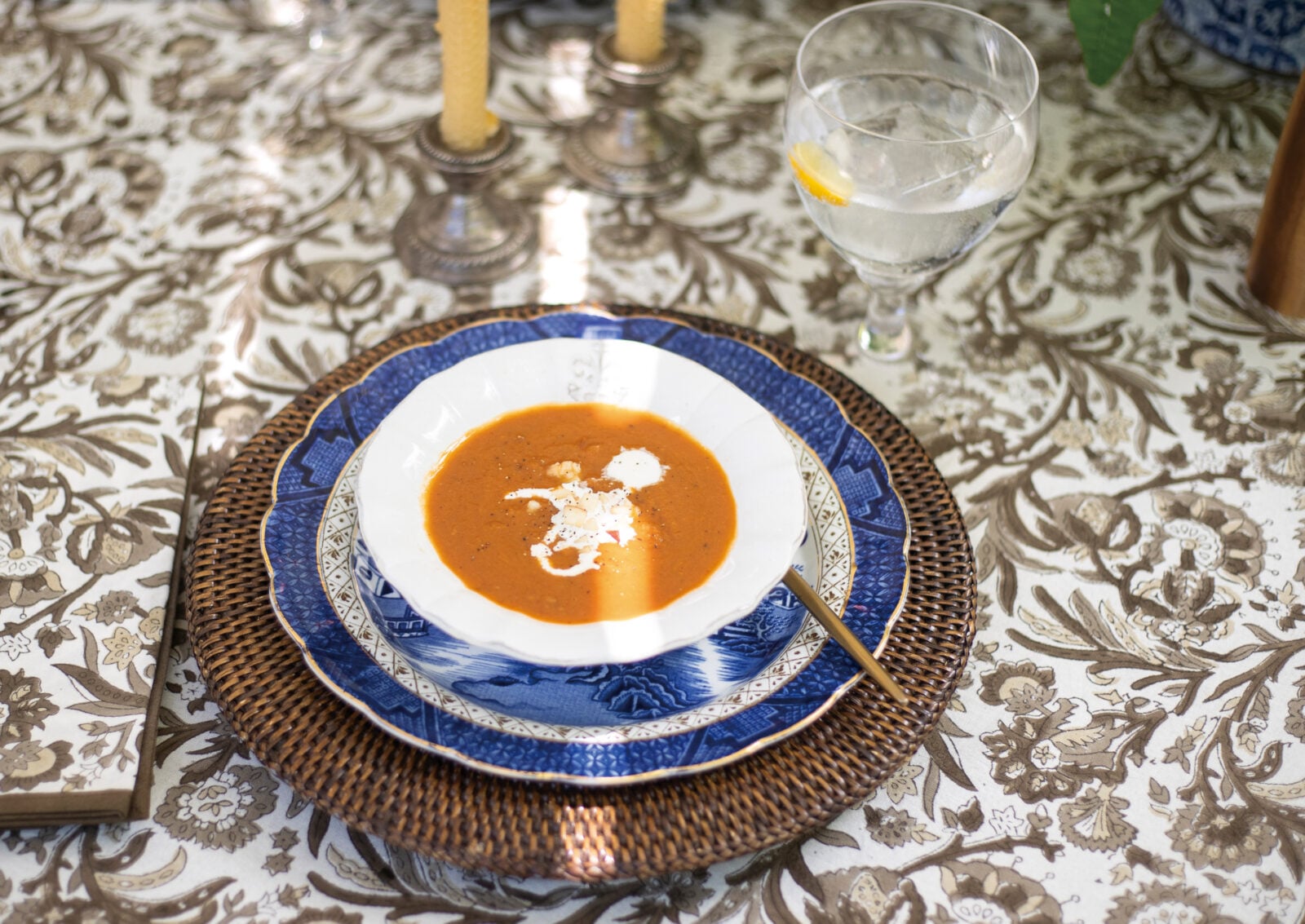
- Serve: Adjust seasoning to taste. Serve warm in rustic ceramic bowls, finished with a drizzle of fresh olive oil, a crack of black pepper, and perhaps a side of crusty artisanal bread. Pair with Claire Williams’s signature mini cheesecakes for a perfectly balanced conclusion to the meal.

0 Comments