

Executive Overview
DALLAS — As the sun beat down on the urban core of Dallas, the Republican National Committee (RNC) brought its high-stakes midterm convention to a climactic close, underscoring both the ambition and the precariousness of the party’s electoral strategy. For two intense days, Republican leaders, congressional figures, and party loyalists converged in Texas with a singular, urgent mission: mobilizing the conservative base to defy historical precedent and preserve their congressional majorities in the upcoming midterm elections.
At the absolute center of the convention’s gravity stood President Donald Trump. Despite navigating a challenging political landscape characterized by low national approval ratings, the president remained the undisputed focal point of the gathering. The event served as a dual-purpose vehicle for the GOP: rallying the party faithful while attempting to neutralize mounting Democratic attacks centered on economic anxiety, cost-of-living crises, and stubborn inflation.
Yet, the convention also laid bare internal strategic debates and external skepticism. The most explosive moment of the gathering arrived during President Trump’s keynote address, when he dangled a populist economic carrot before the American electorate: a promise to issue a sweeping $5,000 dividend check to every adult citizen, conditioned upon the Republican party retaining or expanding its majorities in both the House of Representatives and the United States Senate.
While the headline-grabbing proposal electrified the convention floor, it immediately triggered a ripple of fiscal skepticism among policy analysts, economic experts, and even several key members of the Republican caucus. Concurrently, the party leadership sought to spotlight tangible legislative priorities—such as proposed exemptions on taxes for tips and overtime pay—in an effort to counter opposition messaging regarding household affordability.
Political analysts observing the convention suggested that the RNC’s heavy reliance on President Trump is a calculated high-risk, high-reward gamble. While the strategy is exceptionally potent for firing up core loyalists who might otherwise sit out a midterm cycle, veteran pollsters warn it may do little to win over critical swing voters in fiercely contested suburban districts. Meanwhile, Democrats have seized upon the convention’s proceedings, arguing that the GOP’s economic platform is disconnected from the daily financial realities faced by average American families grappling with stubbornly high fuel and grocery prices.
As the political machinery shifts from convention halls to grassroots campaigning across the country, this comprehensive report examines the core dynamics of the RNC’s Dallas summit, analyzing the strategic calculations, legislative proposals, and partisan friction defining the road to the midterms.
Detailed Chronology: The Road Through Dallas
Day One: Setting the Stage and Assessing the Political Landscape
The convention opened under a microscope of intense media scrutiny and high political tension. Political analysts and election forecasters arrived in Dallas with a uniform assessment: Republicans face a steep, uphill battle to retain control of Congress. Historically, the political party occupying the White House—or, in this case, a fractured legislative landscape closely tethered to executive leadership—suffers notable losses during midterm cycles.
Party strategists recognized early on that conventional playbook tactics would not suffice. The opening sessions were heavily focused on diagnostic analyses of voter turnout models, voter registration drives in pivotal swing states, and localized ground-game operations. Leadership emphasized that complacency was the party’s greatest enemy.
However, holding a major national convention in Texas—a traditionally red stronghold that has nevertheless shown signs of demographic tightening—sparked debate among political observers. Some analysts argued that pouring resources and attention into Texas during an early fall convention period represented a tactical risk, potentially pulling focus away from hyper-competitive battleground states like Pennsylvania, Wisconsin, Arizona, and Michigan. Despite these criticisms, RNC organizers doubled down on the Lone Star State as a symbolic launching pad for a unified national push.
Day Two: The Trump Keynote and the $5,000 Dividend Proposal
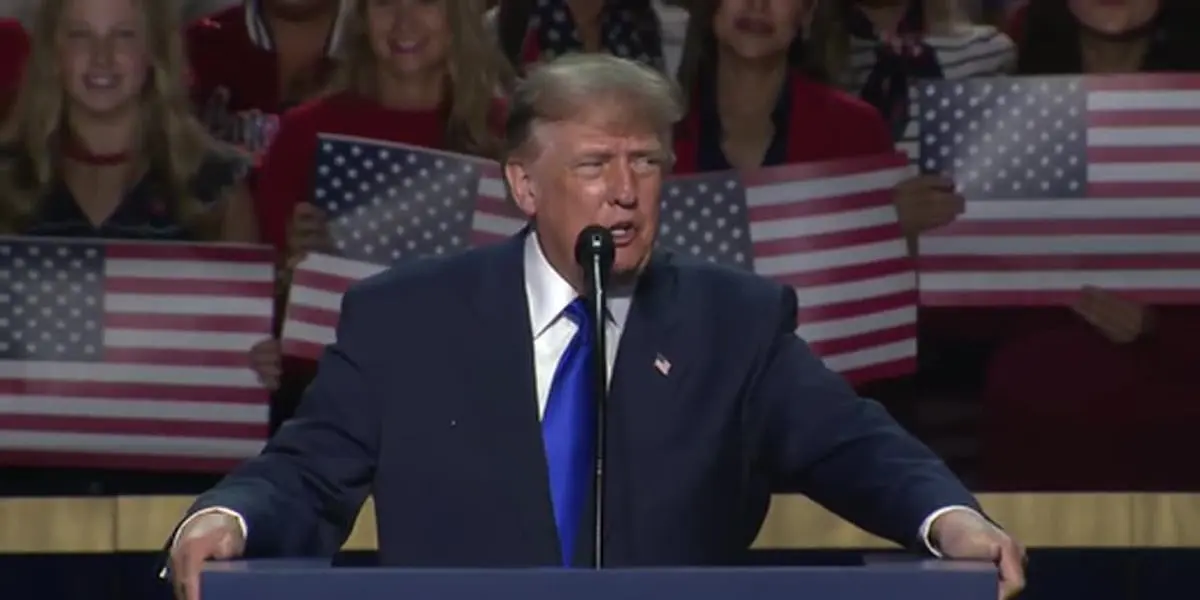
The second and final day of the convention elevated the political temperature significantly, culminating in President Trump’s high-profile evening keynote address. Speaking to a packed arena of cheering delegates, party officials, and media outlets, Trump delivered a speech that blended traditional populist grievances with a bold, unprecedented economic pledge.
The centerpiece of his address was a direct appeal tied to the legislative outcomes of November. "If the Republicans win the House of Representatives and the United States Senate, both of them, because of our economic, tremendous economic success, I will issue a dividend to every adult citizen in the United States of America for $5,000," Trump declared to a roaring ovation.
The announcement instantly dominated media cycles. For grassroots attendees, the pledge was framed as a direct, tangible dividend stemming from conservative economic policies, deregulation, and growth. However, within minutes of the speech concluding, journalists, economists, and congressional staffers began parsing the structural hurdles facing such a promise. A payout of that magnitude to every adult citizen would carry a staggering multi-billion-dollar price tag, necessitating explicit legislative approval from Congress—a body notoriously fragile in its fiscal cohesion and bound by strict budgetary rules.
Day Three and the Aftermath: Legislative Realities and Damage Control
The final morning of the convention was marked by a scramble among congressional Republicans to address the fiscal and political implications of the president’s unexpected proposal. While party leaders were eager to project a united front, the nuance in their public statements revealed the inherent tension between executive aspiration and legislative reality.
Rep. Jim Jordan (R-Ohio), a powerful voice within the conservative caucus, addressed reporters on Capitol Hill regarding the $5,000 dividend. While Jordan praised the general philosophical intent behind the proposal, he openly admitted that the details required rigorous examination. "I want to look at the proposal, because last night was the first we heard about it," Jordan acknowledged. "But the general principle and the president’s right…"
Jordan’s measured response mirrored the private sentiments of several fiscal conservatives within the party who expressed concern over how such a program would be funded without exacerbating the national debt. Nevertheless, the convention pressed forward, attempting to pivot the conversation back to core economic themes that resonate broadly with working-class voters.
Supporting Context & Metrics: The Battle Over Affordability
The Affordability Crisis and Cost-of-Living Pressures
Beneath the rhetorical flourishes of the convention floor lies a stark political reality: economic affordability remains the single most powerful motivating issue for American voters. Both major political parties recognize that the ballot box in November will be heavily influenced by public perception of inflation, purchasing power, and household financial security.
Republicans utilized the Dallas summit to argue that their legislative agenda is directly tailored to easing the financial burdens on middle-class families. During panel discussions and press briefings, lawmakers highlighted specific policy initiatives designed to put more money directly into the pockets of workers.
Rep. Derrick Van Orden (R-Wis.) articulated this strategy during a press appearance at the convention. "That’s one of the primary reasons we’re having this—is to make sure that the American public knows that we’ve been working so hard for them over the last year and a half or so," Van Orden stated. He specifically pointed to popular conservative tax proposals, adding, "and you got to think about this, American show, know that there’s no tax on tips, no tax on overtime."
The "no tax on tips and overtime" proposals have emerged as cornerstone populist economic policies for the modern GOP, designed specifically to appeal to service-industry workers, hospitality staff, truck drivers, and hourly wage earners who feel squeezed by persistent inflation.
Polling, Demographics, and the Swing Voter Dilemma
Despite the enthusiasm inside the convention hall, external metrics paint a complex picture for the Republican strategy. Veteran pollster Frank Luntz, whose analysis of public opinion trends is widely respected across the political spectrum, weighed in on the convention’s core dynamic.
According to Luntz and other independent political analysts, the heavy centering of Donald Trump at the RNC event is a double-edged sword. While featuring the former president is an exceptionally effective mechanism for mobilizing the dedicated MAGA base and high-propensity primary voters, it carries distinct limitations when it comes to persuading independent and swing voters.
In competitive suburban districts—the traditional battlegrounds where majorities are won and lost—swing voters often display fatigue with polarizing national figures. Analysts noted that by anchoring the convention’s message so tightly to Trump’s persona and his sprawling, unvetted policy announcements (such as the $5,000 dividend), the RNC may struggle to broaden its coalition among moderate voters who prioritize steady, predictable governance and detailed fiscal plans.
Official Statements and Partisan Crossfire
The ideological battle lines drawn in Dallas were mirrored by swift and aggressive pushback from the opposition. As the RNC sought to cement its narrative of economic stewardship, the Democratic National Committee (DNC) launched a coordinated counter-offensive, dismissing the Republican convention as an out-of-touch exercise in political theater.
The Democratic Rebuttal
Speaking on behalf of the DNC, Advisor Tim Hogan pulled no punches when evaluating the Republican pitch to the American public. Hogan argued that the GOP’s platform fails to address the immediate, acute financial pressures weighing down households across the nation.
"I think what’s important to know, and the American people are feeling is, for the first time ever, in August, we had gasoline at $4 or higher for every day of that month," Hogan stated, highlighting a punishing metric for working commuters. He expanded his critique to encompass broader consumer staples: "Grocery prices are skyrocketing. Trump and Republicans, they don’t have a plan, and the American people aren’t buying it."
Democrats maintained that proposals like Trump’s $5,000 dividend are unrealistic gimmicks designed to grab headlines rather than coherent economic policies capable of stabilizing the nation’s financial infrastructure. They pointed to rising costs at grocery store checkouts and gas stations as evidence that Republican economic leadership has failed to deliver tangible relief.
The Republican Counter-Defense
In response, RNC defenders argued that Democratic critiques ignore the structural roots of inflation, which they attribute to excessive federal spending under previous legislative frameworks. Republicans countered that their proposed tax cuts—particularly eliminating taxes on tips and overtime—represent immediate, structural reforms that reward labor and incentivize hard work.
Furthermore, party officials insisted that the energy policies championed by conservatives are the only viable path to bringing down fuel costs permanently. By framing the midterms as a binary choice between economic expansion under conservative governance and continued financial strain under Democratic policies, the GOP hopes to keep the focus squarely on pocketbook issues as voters head toward the polls.
Future Outlook: The Road to November
As the dust settles on the Dallas convention, both political parties are pivoting rapidly toward the final, grueling phase of the midterm election cycle. The rhetorical lines have been drawn, the policy markers have been planted, and the electoral battlegrounds have been defined.
Key Milestones and Watchpoints
- Legislative Feasibility and Congressional Action: The coming weeks will test whether the policy proposals floated in Dallas—most notably the $5,000 citizen dividend and tax exemptions on tips and overtime—can transition from convention talking points into serious legislative discussions or if they will remain purely campaign rhetoric.
- Turnout vs. Persuasion: The central strategic question for the RNC will be whether high-energy base mobilization powered by Donald Trump can outweigh the ongoing challenge of winning over independent and suburban swing voters. Conversely, Democrats must prove that their warnings regarding cost-of-living metrics can successfully drive opposition turnout.
- Economic Indicators: With inflation, gas prices, and grocery costs remaining top-of-mind for voters, upcoming monthly economic reports will serve as critical external variables capable of shifting momentum rapidly in either direction.
Ultimately, the RNC’s midterm convention in Dallas has laid bare the ambitions, risks, and calculations guiding the conservative movement into November. Whether this high-stakes strategy will successfully break historical midterm trends and preserve congressional majorities remains one of the most compelling and consequential questions in modern American politics.

0 Comments