

Executive Overview
DALLAS — The Republican National Committee (RNC) officially concluded its high-stakes midterm convention in Dallas on Thursday, wrapping up a pivotal multi-day gathering designed to energize the party’s base, outline a cohesive economic agenda, and defy historical political trends that traditionally penalize the party in power during midterms.
At the center of the convention’s political orbit was President Donald Trump, whose commanding yet polarizing presence dominated the proceedings. Throughout the event, Republican leadership and rank-and-file lawmakers converged on the Lone Star State to rally conservative voters, frame the upcoming midterm elections as a referendum on national economic prosperity, and counter mounting pressure from a unified Democratic opposition.
However, the convention exposed distinct strategic gambles. While party organizers hope that tying the midterms directly to President Trump will maximize grassroots turnout, veteran pollsters and political analysts warn that this strategy risks alienating crucial independent and suburban swing voters—particularly given the president’s current polling numbers.
The political tension reached a crescendo during the final 48 hours of the convention. President Trump delivered a blockbuster keynote address featuring a sweeping, unconventional economic proposal: a promised $5,000 dividend check distributed to every adult U.S. citizen, contingent upon Republicans retaining majorities in both the House of Representatives and the United States Senate.
While the announcement electrified the convention floor, it immediately triggered intense debates across Capitol Hill. Lawmakers, economists, and fiscal conservatives scrambled to evaluate the feasibility of the pledge, which would undoubtedly require complex congressional appropriations. Meanwhile, Democratic strategists seized upon the convention’s messaging, framing the Republican platform as an out-of-touch response to the everyday economic anxieties—such as stubbornly high gas prices and inflated grocery bills—currently weighing on American households.
As both parties pivot from convention rhetoric to ground-level campaigning, the Dallas gathering has established the ideological and strategic battlegrounds for what promises to be one of the most fiercely contested midterm cycles in modern American history.
Detailed Chronology: From Strategy Sessions to the Convention Floor
Day One: Setting the Stage and Acknowledging the "Uphill Battle"
The convention opened against a backdrop of acute political gravity. Behind closed-door strategy sessions and open-forum panel discussions, Republican strategists confronted a sobering reality: history is rarely kind to the party holding the White House during a midterm election cycle. Historical precedent suggests that governing parties frequently suffer significant legislative losses as voter enthusiasm dips and the opposition mobilizes.
Recognizing these headwinds, RNC leadership designed the Dallas convention to serve as a launchpad for an aggressive, early voter-turnout operation. Party officials emphasized that complacency is the greatest threat to the conservative majority. Throughout the opening day, state party chairs, congressional leaders, and grassroots organizers focused heavily on localized ground games, ballot harvesting where legally permitted, and digital mobilization tactics aimed at locking in reliable voters well ahead of November.
Yet, independent political analysts covering the event noted that choosing Dallas—and leaning so aggressively into a nationalized, Trump-centric strategy—carried inherent risks. While a conservative stronghold like Texas ensures a warm reception for the party’s standard-bearer, critics argued it could insulate leadership from the nuanced concerns of competitive suburban districts across the Midwest and Sun Belt, where elections are ultimately decided.
Day Two and Keynote Address: The $5,000 Dividend Gamble
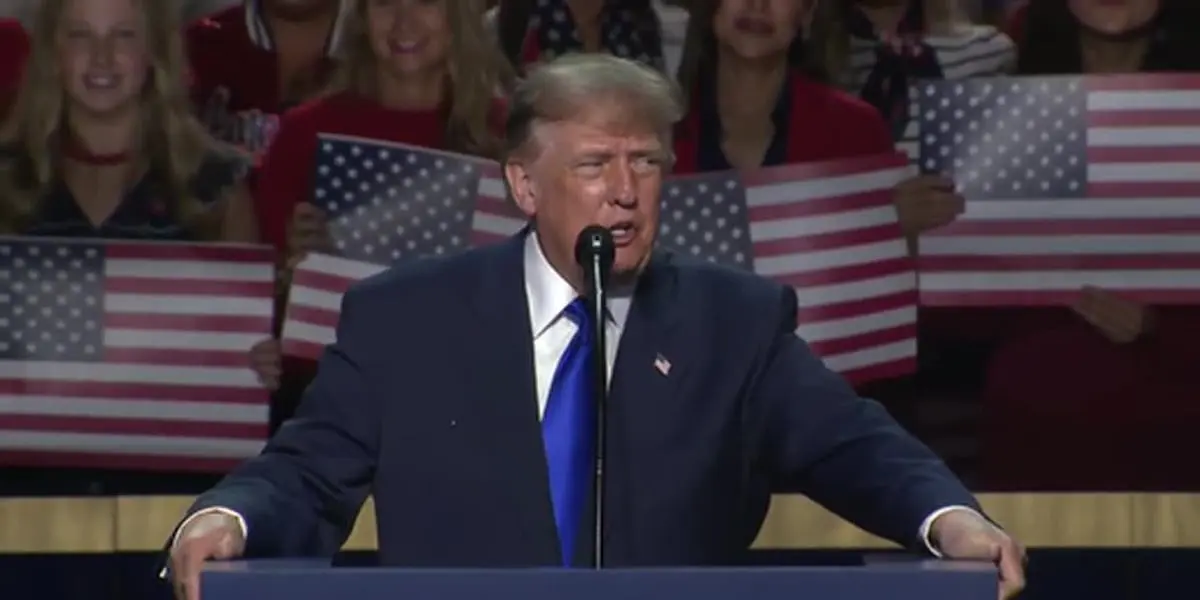
The second day of the convention marked the emotional and media peak of the gathering, culminating in President Trump’s Wednesday night keynote address. Stepping to the podium amid roaring applause, the president delivered a speech that spanned national security, immigration, and border enforcement, but anchored itself firmly on the administration’s claimed economic achievements.
“If the Republicans win the House of Representatives and the United States Senate, both of them, because of our economic, tremendous economic success, I will issue a dividend to every adult citizen in the United States of America for $5,000,” Trump declared to a rapturous convention hall.
The bold declaration immediately dominated the airwaves, shifting the political discourse. For supporters, the pledge encapsulated the administration’s "America First" economic ethos—returning capital directly to the pockets of hardworking citizens as a dividend of deregulation, tax cuts, and domestic energy production.
However, the proposal also injected immediate turbulence into the legislative landscape. Because direct federal spending bills originate in Congress, a universal $5,000 payout to every adult citizen would require sweeping legislative action, extensive budgetary offsets, and the approval of a divided or narrowly held Congress.
Day Three: Congressional Realities and Affordability Messaging
As the convention transitioned into its final day on Thursday, the immediate fallout from the president’s $5,000 dividend pledge became a dominant topic of discussion among attending lawmakers and media outlets.
While congressional leaders publicly praised the overarching philosophy of returning wealth to the American people, several admitted that the details required rigorous legislative vetting. The tension between executive ambition and congressional procedure was on display as Capitol Hill Republicans navigated the sudden policy announcement.
Simultaneously, the convention’s remaining panel discussions and press briefings zeroed in on the core issue dominating kitchen tables across the nation: affordability. With inflation and the cost of living remaining top-of-mind for voters, Republican lawmakers utilized the Dallas stage to promote targeted tax reliefs passed or proposed over the previous eighteen months, arguing that conservative policies offer the only viable remedy to household financial strain.
Supporting Context & Metrics: The Economic and Polling Landscape
The Affordability Crisis and Voter Sentiment
To understand the high stakes of the Dallas convention, one must examine the economic landscape framing the midterm cycle. Affordability remains the definitive battleground issue for both major parties. According to recent economic data and consumer confidence metrics, voters continue to express deep anxiety regarding the cost of everyday goods, despite broader macroeconomic indicators showing steady GDP growth.
During the convention, Republican lawmakers frequently pointed to specific tax-cut proposals—such as eliminating taxes on tips and overtime pay—as proof of their commitment to working-class Americans. Rep. Derrick Van Orden (R-Wis.) encapsulated this messaging during a press briefing on Thursday, emphasizing the party’s legislative efforts over the prior year and a half.
"That’s one of the primary reasons we’re having this is to make sure that the American public knows that we’ve been working so hard for them over the last year and a half or so… you got to know that there’s no tax on tips, no tax on overtime," Van Orden stated.
The Polling Dilemma: Base Mobilization vs. Swing Voter Persuasion
Political scientists and pollsters watching the Dallas convention have highlighted a classic electoral dilemma facing the GOP: the tension between energizing the core base and appealing to independent swing voters.
Veteran pollster Frank Luntz, speaking on the implications of the convention’s heavy focus on President Trump, noted that while centering the party’s messaging around the president is an effective tool for driving base turnout, it historically struggles to win over skeptical suburbanites and independent voters.
+-------------------------------------------------------------------------+
|                  THE MIDTERM STRATEGIC EQUATION                         |
+-----------------------------------+-------------------------------------+
| BASE MOBILIZATION (Trump Focus)   | SWING VOTER PERSUASION (Affordability)|
+-----------------------------------+-------------------------------------+
| • Maximizes conservative turnout  | • Required in competitive districts |
| • Energizes grassroots networks   | • Sensitive to inflation & prices   |
| • Carries risk of high opposition | • Demands pragmatic policy solutions|
+-----------------------------------+-------------------------------------+
This strategic trade-off underscores why the Republican leadership used the convention to simultaneously champion populist economic promises—like the $5,000 dividend—and granular, populist tax reforms aimed at service workers and wage earners.
Official Statements and Political Reactions
The fallout from the RNC midterm convention extended far beyond the convention center walls, drawing sharp contrasts between Republican optimism and Democratic critique.
The Republican View: Legislative Ambition and Past Delivery
Republican leaders maintained a unified front throughout the week, insisting that their legislative track record and forward-looking economic proposals will withstand Democratic attacks. Lawmakers addressed the practicality of the president’s newly unveiled dividend proposal with measured diplomacy while defending its populist appeal.
Rep. Jim Jordan (R-Ohio), speaking to reporters on Thursday morning, addressed the $5,000 pledge directly:
"I want to look at the proposal, because last night was the first we heard about it. But the general principle and the president’s right," Jordan remarked, signaling that while the caucus respects the president’s economic vision, the legislative mechanics would necessitate thorough committee review and debate.
The Democratic Rebuttal: Rejecting the "Out of Touch" Narrative
Democrats were quick to push back against the narrative emerging from Dallas, arguing that the Republican platform fails to address the immediate, tangible economic pressures facing everyday families.
Tim Hogan, a senior advisor to the Democratic National Committee (DNC), launched a scathing critique of the GOP’s economic messaging during a media availability tied to the convention:
"I think what’s important to know, and the American people are feeling is, for the first time ever, in August, we had gasoline at $4 or higher for every day of that month. Grocery prices are skyrocketing. Trump and Republicans, they don’t have a plan, and the American people aren’t buying it," Hogan asserted.
Democrats plan to use the coming months to pivot the midterm conversation away from nationalized political personalities and toward localized issues of healthcare access, reproductive rights, and consumer price stabilization.
Future Outlook: The Road to November
As the RNC convention dust settles in Dallas, both political parties are hurtling toward the critical final months of the midterm election cycle. The choices made on the convention stage—ranging from high-profile economic pledges to grassroots ground-game enhancements—have set the parameters for an intensely aggressive campaign season.
Key Milestones and Watchpoints for the Midterms:
- Legislative Follow-Through: Watch for how congressional Republicans treat the proposed $5,000 dividend in upcoming policy rollouts. Whether it transforms from a convention keynote promise into a formal legislative bill will test the party’s cohesion.
- Economic Indicators: Inflation metrics, fuel prices, and consumer sentiment reports released between now and November will heavily influence which party successfully claims ownership of the "affordability" mantle.
- Suburban Battlegrounds: The ultimate balance of power in the House and Senate will be decided not in strongholds like Dallas, but in razor-thin suburban districts where independent voters hold the deciding vote. Both parties must now calibrate their rhetoric to capture these critical demographics without alienating their respective bases.
With control of Congress hanging in the balance, the Dallas convention has laid bare the ambitions, risks, and fiercely contested economic narratives that will define American politics for the remainder of the year.

0 Comments