

Executive Overview
GADSDEN COUNTY, Fla. — The ongoing statewide debate regarding digital surveillance, civil liberties, and municipal budgeting reaches a pivotal crossroads in the Florida Big Bend region. Next week, the Gadsden County Commission is scheduled to review and formally consider a resolution to terminate its contract with Flock Group Inc., a prominent automated license plate reader (ALPR) technology provider.
This impending vote follows hot on the heels of a decisive statewide directive issued by Governor Ron DeSantis, which mandated the removal of Flock camera systems from state-maintained roadways. In response to the Governor’s order, a cascading series of policy shifts has rippled across Florida. Numerous local governments and municipal law enforcement agencies are actively reassessing, suspending, or altogether severing their operational and financial ties with ALPR infrastructure.
For Gadsden County, the stakes of the upcoming vote involve both fiscal prudence and community-wide governance. Initially approved on March 19, 2024, the county’s agreement with Flock is fast approaching its October 1 expiration date. Without formal written notice of termination from the county, the contract is structured to automatically renew for an additional two-year term.
According to official meeting agenda items, county administrators are urging the Commission to view non-renewal not merely as a reaction to external political pressure, but as a proactive move in the "best interest" of local taxpayers. Officials point to a guaranteed annual recurring expenditure of $77,500 drawn directly from General Revenue funds—money that could be redirected toward core infrastructural or community services if the contract is dissolved.
Parallel to the county’s fiscal evaluations, law enforcement leadership has also stepped back. Last week, Gadsden County Sheriff Morris Young ordered a temporary, immediate suspension of the agency’s utilization of the Flock program. While Sheriff Young acknowledged that the technology has historically aided investigators in solving violent crimes, he grounded his suspension in a necessary philosophical equilibrium: the perpetual demand for effective policing must be continually balanced against the preservation of individual privacy rights and rigorous administrative oversight.
If the Gadsden County Commission votes to approve the contract termination next Monday at 6:00 p.m., the exit strategy will spare the county from incurring additional cancellation penalties. Furthermore, it will trigger a standardized 30-day data recovery and systems transition period, effectively closing a chapter on automated optical surveillance in the county.
Detailed Chronology: From Adoption to Anticipated Dissolution
The trajectory of automated license plate reader technology in Gadsden County reflects the broader, rapid integration—and subsequent sudden questioning—of high-tech surveillance assets by local governments nationwide. Understanding how the county arrived at this critical juncture requires an examination of the timeline governing financial outlays, administrative decisions, and political developments.
March 2024: The Inception of the Partnership
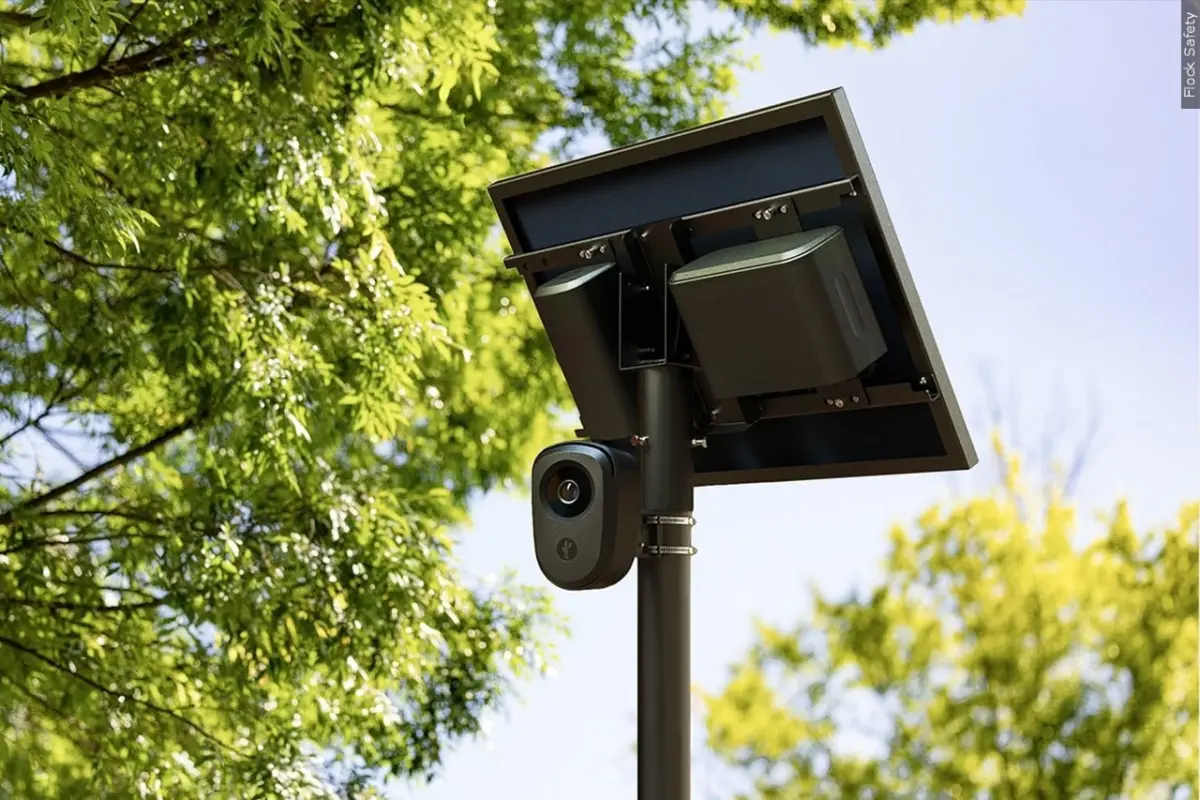
On March 19, 2024, the Gadsden County Commission officially entered into a binding contractual agreement with Flock Group Inc. At the time, the deployment of ALPR cameras was heavily marketed to local municipalities and sheriffs’ offices as a cutting-edge force multiplier. Proponents argued that fixed-position, solar-powered cameras capable of capturing high-resolution images of passing vehicle license plates, makes, models, and color attributes would drastically improve crime-fighting capabilities.
To fund the initial deployment and operational costs of the Flock system, Gadsden County relied on a mix of federal and local funding sources. Records indicate that the county allocated a cumulative total of $162,000 to date, drawing from the American Rescue Plan Act (ARPA) relief funds alongside standard General Revenue allocations.
Late August 2026: The Statewide Mandate
The operational landscape shifted dramatically in late August 2026. Governor Ron DeSantis announced a definitive statewide policy directive ordering the removal of all Flock camera systems from state-maintained roadways. The executive stance brought long-simmering debates regarding state sovereignty, data ownership, private-public partnerships, and mass surveillance out into the open.
While the immediate legal enforcement of the Governor’s order primarily targeted state-controlled rights-of-way, the signaling effect was immediate. Local municipalities and counties across Florida recognized that maintaining independent ALPR programs on county or local roads would place them at odds with the state’s shifting regulatory posture, prompting a wave of emergency reviews by county attorneys and risk management teams.
Mid-September 2026: Sheriff Young’s Suspension Order
As the political winds shifted, local law enforcement leadership took decisive action. Gadsden County Sheriff Morris Young issued an administrative order directing his department to temporarily suspend its use of the Flock camera network.
While numerous police chiefs and sheriffs throughout the state fought tooth and nail to defend their access to real-time ALPR data feeds, Sheriff Young’s public communication struck a measured, reflective tone. He formally recognized that the technology had served as a functional tool in resolving violent crimes within the county. However, he balanced that pragmatic admission against a constitutional imperative, stating that effective law enforcement must forever be harmonized with the ironclad protection of individual rights and adherence to transparent policies and procedures.
Next Week: The Commission Decision
The sequence of events culminates at the upcoming Gadsden County Commission meeting. Scheduled for next Monday evening at 6:00 p.m., the agenda features a dedicated line item addressing the formal termination of the Flock contract.
With the current agreement set to expire automatically on October 1 unless stopped by proactive administrative intervention, the Commission faces a simple binary choice: allow the contract to roll over into a new multi-year cycle or vote to sever ties completely, initiating a structured 30-day offboarding phase.
Supporting Context & Metrics: Financial Realities and Technical Realities
To fully appreciate why Gadsden County officials are leaning toward terminating the Flock agreement, one must evaluate the fiscal ledgers and the technical mechanics governing Automated License Plate Reader (ALPR) systems.
Fiscal Breakdown: The Cost of Digital Eyes
Publicly available county documents lay bare the financial implications of maintaining an enterprise-level surveillance contract:
- Total Historical Expenditure: Gadsden County has spent $162,000 on the Flock system since its inception, utilizing a blend of federal ARPA allocations and local General Revenue funds.
- Annual Recurring Cost: Maintaining the contract moving forward locks the county into a yearly recurring expenditure of $77,500 drawn strictly from General Revenue.
- Budgetary Impact: In the context of Gadsden County’s overall fiscal planning, removing a recurring $77,500 line item represents a tangible savings. County administrative notes explicitly state that non-renewal is in the "best interest" of the jurisdiction primarily due to these mounting budget improvements.
By terminating the contract ahead of its October 1 automatic renewal date, county financial officers avoid locking taxpayers into a multi-year financial obligation at a time when local governments are facing tightening economic forecasts and the eventual depletion of federal COVID-19 relief monies.
Understanding Flock Technology and the Privacy Debate
Flock Safety, the parent company of the camera systems deployed in Gadsden County and thousands of other communities across the United States, builds its business model around fixed-position, solar-powered cameras. These units capture photographs of every vehicle passing their field of view, logging timestamps, geographical coordinates, and vehicle characteristics (make, model, color, bumper stickers, and temporary tags).
This data is then uploaded to a centralized, cloud-based software platform accessible to law enforcement agencies. The system allows officers to run hotlists—instantaneous alerts that ping dispatch or mobile devices whenever a vehicle associated with a stolen car, missing person (Silver or Amber Alerts), or warrant passes a camera.
While law enforcement agencies praise the system for its ability to generate leads in hit-and-runs, kidnappings, and armed robberies, civil liberties organizations—such as the American Civil Liberties Union (ACLU) and the Electronic Frontier Foundation (EFF)—have continuously raised constitutional red flags. Core criticisms include:
- Mass Surveillance of Non-Criminals: ALPR systems indiscriminately record the daily movements of thousands of law-abiding citizens who happen to drive past a camera, creating permanent, searchable travel histories.
- Data Sharing and Retention: Concerns persist regarding how long data is stored, who has access to the database outside of local law enforcement (such as out-of-state agencies or federal entities), and whether the data can be monetized or subpoenaed in civil litigation.
- Lack of Uniform Regulation: Critics argue that the rapid commercial expansion of private surveillance tech has outpaced statutory frameworks, leaving citizens with little legal recourse to audit how their location data is utilized.
Official Statements and Stakeholder Perspectives
The debate surrounding the Gadsden County Flock contract is informed by a chorus of diverging viewpoints, ranging from frontline law enforcement executives to municipal administrators and state-level political actors.
Sheriff Morris Young: Balancing Utility and Civil Liberties
The statement released by Gadsden County Sheriff Morris Young represents a nuanced perspective often missing from polarized technological debates. Rather than casting the technology as universally evil or an unmitigated public safety panacea, Sheriff Young’s administrative pause highlights the ongoing tension within modern policing.
"While the Flock program has undeniably assisted our agency in successfully resolving violent crimes within our jurisdiction, effective law enforcement must always be balanced with the protection of individual rights and adherence to sound policies and procedures."
This sentiment underscores a growing awareness among elected and appointed law enforcement officials that public trust is a fragile commodity. By voluntarily stepping back from the technology while the county evaluates its financial and legal status, the Sheriff’s Office has positioned itself as responsive to community concerns regarding privacy and government overreach.
County Administration and Fiscal Pragmatism
The Gadsden County Commission agenda item approaches the matter through an unvarnished fiscal lens. County staff frame the non-renewal not as a political statement against technological innovation, but as a disciplined budgetary maneuver:
"Non-renewal will result in elimination of the annual recurring cost of $77,500 per year in General Revenue expenditures… Termination is determined to be in the best interest of the county."
For local administrators tasked with balancing roads, utilities, public health, and public safety within fixed tax caps, trimming $77,500 in annual software and hardware subscription fees offers immediate, quantifiable relief to the general fund.
The State Executive Office: Setting a Statewide Tone
Governor Ron DeSantis’s intervention regarding state-maintained roadways fundamentally altered the calculus for local municipalities. By signaling that optical surveillance hardware is subject to statewide oversight and potential restriction on public rights-of-way, the executive branch created a legal and political climate where local leaders feel empowered—and in some cases pressured—to audit their own vendor relationships.
Future Outlook: What Happens Next?
As Gadsden County prepares for next Monday’s pivotal vote, the immediate and long-term futures of local surveillance, budgetary allocations, and law enforcement strategy hang in the balance.
The Immediate Transition Phase
Should the Gadsden County Commission vote as anticipated to approve the termination of the Flock contract on Monday evening, a structured wind-down process will immediately take effect.
- Zero Financial Penalty: County leadership has confirmed that terminating the agreement prior to the October 1 automatic renewal date will incur no additional cancellation fees or financial penalties.
- The 30-Day Transition Window: The county will enter a mandatory 30-day data recovery and systems transition period. During this window, historical data generated by the Gadsden County cameras will be systematically archived or purged in accordance with data governance agreements, and physical units will be prepped for decommissioning or removal.
Implications for Local Law Enforcement
With the temporary suspension already enacted by Sheriff Morris Young and the potential permanent cancellation looming on the horizon, the Gadsden County Sheriff’s Office will pivot back to traditional investigative methodologies. While detectives will lose the automated real-time alerts provided by the ALPR network, the agency retains standard investigative tools, community tip lines, and inter-agency cooperation frameworks.
Furthermore, the county’s decision may prompt regional dialogue among neighboring Big Bend law enforcement agencies. As surrounding counties and municipalities evaluate their own vendor contracts in the wake of the Governor’s statewide order, Gadsden County’s experience will serve as an instructive case study in weighing the high subscription costs of proprietary surveillance against community privacy standards and municipal budget constraints.
Conclusion of the Meeting
The Gadsden County Commission will convene its regular session next Monday at 6:00 p.m. at the county municipal chambers. With public interest heightened and the agenda item slated for formal debate and voting, citizens, privacy advocates, and taxpayers will be watching closely to see whether Gadsden County permanently pulls the plug on automated license plate readers.

0 Comments