

Executive Overview
NEWBERRY, S.C. — In a case that has sent shockwaves through the heart of the South Carolina Midlands, local and state authorities have arrested and charged five individuals in connection with the tragic death of five-year-old Aniyah Williams. The young girl, described by loved ones as a resilient fighter who had battled severe health complications since infancy, was brought to a local medical facility unresponsive on August 6, 2026. Despite the swift intervention of emergency medical personnel, she was pronounced dead later that same day.
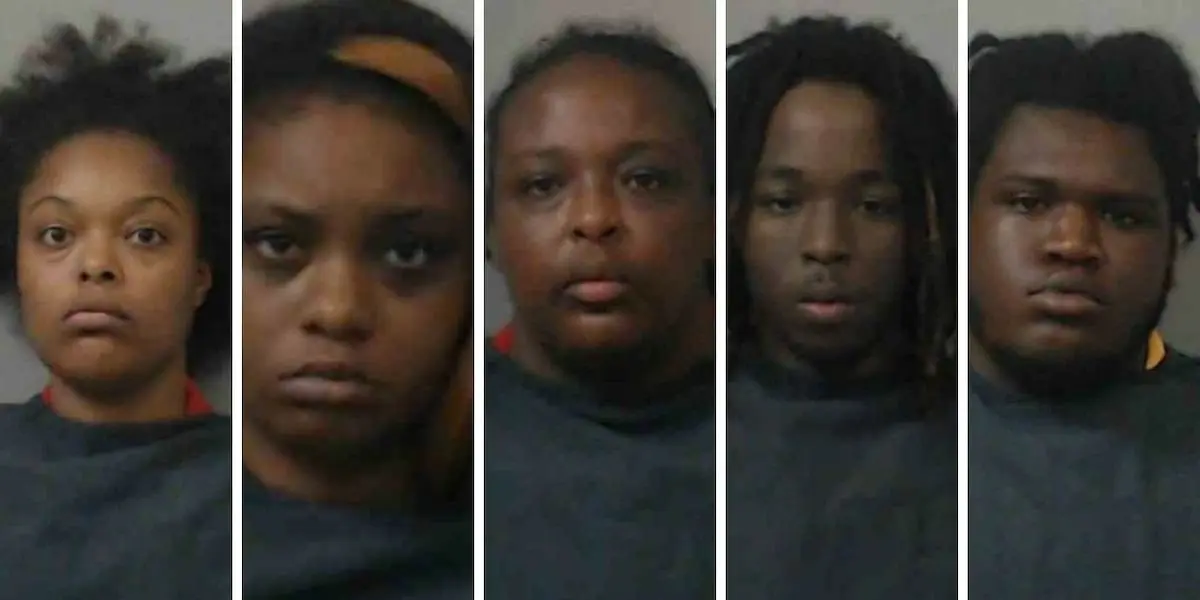
Following a rigorous, multi-agency investigation spanning roughly a month, the Newberry Police Department, alongside cooperating state and county law enforcement units, executed a sweep of arrests that resulted in five suspects facing capital-level charges. The accused—identified as Ebony Davis, Jamarion Sligh, Mantrevis Sligh, Isis Gary, and Tekeyia Sligh—now face severe legal repercussions, including charges of murder and homicide by child abuse.
The case has drawn intense scrutiny from regional media outlets, community advocates, and local residents alike. It highlights deep-seated concerns regarding child welfare, domestic safety, and the complex web of accountability surrounding minor protection in rural and semi-urban communities. While investigators have kept specific forensic and circumstantial details under tight wraps to preserve the integrity of the ongoing judicial proceedings, the sheer volume of arrests underscores a complex narrative of alleged collective culpability, failure to protect, and severe neglect or intentional harm.
This comprehensive investigative report delves into the timeline of the tragedy, analyzes the legal architecture of the charges brought against the five defendants, examines the socio-emotional impact on the Newberry community, and explores the broader systemic frameworks governing child abuse investigations in South Carolina.
Detailed Chronology
August 6, 2026: The Emergency Response and Fatal Hospitalization
The sequence of events that would ultimately mobilize the South Carolina criminal justice system began on a seemingly ordinary summer day. According to statements released by Newberry Police Chief Kevin Goodman, emergency services were alerted when five-year-old Aniyah Williams was rushed to a local medical facility by a family member.
At the time of her arrival, the young girl was entirely unresponsive. Emergency medical technicians and hospital staff initiated immediate life-saving protocols, but their efforts proved unsuccessful. Aniyah was pronounced dead shortly after arrival. Given her young age and the sudden, unexplained nature of her unresponsiveness, medical personnel immediately flagged the case for law enforcement review—a standard protocol designed to protect vulnerable minors from potential foul play or undetected domestic trauma.
The Immediate Aftermath: A Community in Mourning and Public Appeals
In the days following Aniyah’s death, the community of Newberry began to grapple with the profound loss. Public grief manifested through various channels, notably via digital spaces. Isis Gary, one of the five individuals subsequently arrested by police, publicly identified herself as a family member of the victim. In the wake of the tragedy, Gary established a GoFundMe digital fundraising campaign utilizing photographs of the smiling five-year-old to rally financial support for funeral and memorial expenses.
The campaign description provided a glimpse into Aniyah’s brief, medically complex life. According to the fundraiser narrative, Aniyah had been battling epilepsy—a severe neurological seizure disorder—since she was just six months old. For nearly five years, the child had required specialized care to manage her chronic condition. However, as the criminal investigation began to uncover darker elements surrounding the household dynamics, public scrutiny intensified. Shortly after the announcement of the criminal arrests, the GoFundMe campaign donations were officially paused, and the page became a focal point of public bewilderment and grief.
September 2026: The Multi-Agency Sweep and Arrests
Nearly a month after Aniyah’s passing, the investigative efforts culminated in a coordinated series of arrests. The Newberry Police Department, supported by specialized investigative units, concluded that the circumstances surrounding the child’s death warranted major criminal charges.
Authorities took five suspects into custody:
- Ebony Davis
- Jamarion Sligh
- Mantrevis Sligh
- Isis Gary (who had previously organized the memorial fundraiser)
- Tekeyia Sligh
The swiftness and scale of the arrests indicated a coordinated prosecution strategy, suggesting that investigators believe multiple parties bore direct or indirect responsibility for the events that led to the five-year-old’s fatal collapse.
First Judicial Appearances and Bond Hearings
Following their apprehension, all five defendants were booked into the Newberry County Detention Center. Within statutory timeframes, the suspects made their initial appearances before a local bond judge to face formal arraignment.
Given the nature of the charges—which include capital offenses such as murder and homicide by child abuse—the judicial proceedings regarding pretrial release are expected to be protracted and legally complex. Under South Carolina law, bond hearings for capital-level offenses involving minors typically require comprehensive arguments from both the state’s prosecutors and defense attorneys concerning flight risk, community danger, and the weight of the preliminary evidence gathered by law enforcement.
Legal Architecture and Charges Explained
The severity of the charges filed against the five Newberry residents reflects South Carolina’s stringent legal statutes regarding crimes against children. Understanding the specific legal definitions helps clarify the gravity of the accusations leveled by the state.
Murder vs. Homicide by Child Abuse in South Carolina
Under South Carolina criminal jurisprudence, prosecutors have charged the defendants with combinations of murder, homicide by child abuse, and aiding and abetting.
- Homicide by Child Abuse (S.C. Code Ann. § 16-3-85): This specific statutory charge applies when a child under the age of eleven dies as a result of child abuse or neglect. To secure a conviction under this statute, the state must prove that the defendant caused the death of the child under circumstances manifesting an extreme indifference to human life, or while committing or attempting to commit child abuse or cruelty to children. A conviction for homicide by child abuse carries a penalty of imprisonment for a term up to life.
- Murder: Distinct from homicide by child abuse, a traditional murder charge requires proof of malice aforethought—either express or implied. The inclusion of murder alongside child abuse charges indicates that prosecutors may present alternative theories of the crime to the grand jury and eventual petit jury, ranging from premeditated lethal action to depraved-heart indifference.
- Aiding and Abetting: The addition of aiding and abetting charges for several of the defendants (such as Ebony Davis, Jamarion Sligh, Mantrevis Sligh, and Isis Gary) is a critical legal mechanism. In South Carolina, an accomplice can be held just as criminally culpable as the principal actor if the state can prove that the individual knowingly associated themselves with the criminal venture, participated in it, or sought to make it succeed through acts of omission, facilitation, or concealment. This explains how multiple individuals residing in or connected to the same household can face identical felony counts even if the direct physical act that precipitated the child’s death was executed by a single person.
Supporting Context & Metrics: Child Welfare in South Carolina
Aniyah Williams’s tragic death does not occur in a vacuum; it highlights broader systemic challenges confronting child protection agencies across the American South.
Examining Regional Vulnerabilities
Public health and social work organizations frequently analyze the intersection of chronic pediatric medical conditions—such as severe epilepsy—and domestic stress. Raising a medically fragile child demands continuous, specialized care, financial resources, and emotional resilience. When families lack adequate support systems, healthcare access, or mental health interventions, domestic environments can become strained to a breaking point.
While law enforcement has not yet explicitly linked Aniyah’s medical history to the alleged abuse or neglect that caused her death, child advocates emphasize that children with chronic disabilities are statistically at a heightened risk for maltreatment. The vulnerability inherent in managing complex medication regimens, frequent seizures, and developmental delays requires robust oversight from community healthcare networks and social services.
Law Enforcement Collaboration in Rural Jurisdictions
The investigation into Aniyah’s death involved multiple agencies supporting the Newberry Police Department. In smaller municipalities like Newberry—a historic county seat with a population hovering around 10,000 residents—local police departments often rely heavily on state-level resources, such as the South Carolina Law Enforcement Division (SLED), forensic pathology experts, and specialized child abuse task forces.
This multi-agency approach is vital for ensuring that complex forensic evidence, digital communications, medical histories, and witness testimonies are meticulously handled. In cases involving multiple suspects, separating co-defendants, analyzing cellular data, and conducting exhaustive forensic autopsies demand investigative bandwidth that routinely stretches local municipal budgets and staffing limits.
Official Statements and Community Impact
Law Enforcement Reticence and Investigative Strategy
To date, Chief Kevin Goodman and the Newberry Police Department have maintained a deliberate policy of operational transparency balanced with strict confidentiality. Law enforcement officials have withheld specific details concerning the exact medical findings of the autopsy, the specific mechanism of injury or neglect, and the precise roles allegedly played by each of the five suspects.
This reticence, while frustrating to an inquiring public, is standard investigative practice. Premature disclosure of sensitive evidence can jeopardize future grand jury indictments, contaminate witness testimony, or provide defense counsel with strategic advantages before all depositions and discovery materials are formally exchanged in court.
The Voice of the Community
The residents of Newberry have expressed profound sorrow and disbelief over the tragedy. Local resident Kira Berry captured the collective emotional resonance of the town in a public statement following the arrests:
"It makes you really think about how precious your own children are, and it’s just really sad and unfortunate. I would hope that it was just a terrible accident, but if something bad happened to her intentionally, I would hope that everyone is brought to justice."
Berry’s sentiment reflects a community caught between the natural human desire to attribute a child’s death to an unfortunate medical emergency and the harsh reality of criminal culpability brought to light by the police department’s decisive actions. Vigils, private memorials, and quiet conversations in local establishments have centered on how a five-year-old girl with a bright, smiling face depicted on memorial banners could slip through the safety nets designed to protect the most defenseless members of society.
Future Outlook: The Road Ahead in the Justice System
As the calendar moves forward, the legal proceedings surrounding the death of Aniyah Williams will enter several critical phases.
1. Grand Jury Indictments and Formal Arraignments
Following their initial bond hearings at the Newberry County Detention Center, the cases against Ebony Davis, Jamarion Sligh, Mantrevis Sligh, Isis Gary, and Tekeyia Sligh will be presented to a local grand jury. The grand jury will evaluate the state’s preliminary evidence to formally hand down indictments, converting the initial arrest warrants into formal trial-ready indictments.
2. Discovery and Pretrial Motions
Defense attorneys will initiate the discovery process, demanding all investigative notes, forensic pathology reports, toxicology results, police body-camera footage, and statements made by the defendants. Given that there are five distinct defendants—each likely to retain separate legal counsel or be assigned public defenders to avoid conflicts of interest—the pretrial phase is expected to involve numerous motions regarding the severance of trials, evidentiary admissibility, and bond reconsiderations.
3. Community Healing and Policy Reflection
Beyond the courtroom, the tragedy of Aniyah Williams is prompting quiet introspection among local leaders, social workers, and child advocates in Newberry County. Questions regarding how community institutions, extended family networks, and medical providers interact with high-risk households will inevitably be raised as more details emerge during the public trial phases.
For now, a small community in the South Carolina Midlands remains locked in mourning, holding fast to the memory of a five-year-old girl who loved through hardship, while the wheels of the state’s judicial system begin the solemn, meticulous work of seeking accountability, truth, and justice for Aniyah.

0 Comments