

Russia’s first parliamentary elections conducted under wartime conditions drew to a close amid intense geopolitical friction, unprecedented aerial bombardments, and severe domestic suppression. Designed to consolidate President Vladimir Putin’s grip on power and legitimize the Kremlin’s ongoing military campaign in Ukraine, the balloting concluded on Sunday, September 20, 2026. The electoral process, stretching over three days to encourage participation among its 111 million eligible voters, took place in an environment nearly entirely devoid of genuine political opposition.
The culmination of the vote coincided with one of the most concentrated aerial assaults of the conflict. Ukrainian forces launched more than 1,000 drones overnight into Russian territory, targeting key infrastructure and triggering extensive air defense operations across the wider Moscow region. Despite the disruptions, the Kremlin pushed forward with the elections, expanding polling to illegally annexed territories in Ukraine and the Crimean Peninsula—a move met with immediate, widespread international condemnation.
Domestically, the election functioned as a referendum on the state’s military trajectory, though managed under conditions that independent observers and exiled opposition leaders described as heavily rigged. With the ruling United Russia party heavily favored to retain its supermajority in the State Duma, and critical voices largely sidelined, imprisoned, or exiled, the election underscored the deep polarization of Russian society. While the state apparatus orchestrated a narrative of national unity and patriotic duty, opposition groups both inside the country and abroad utilized protest votes, demonstrations, and digital campaigns to register dissent against the war and the autocratic status quo.
Detailed Chronology: The Three-Day Wartime Election
Friday, September 18: Opening Salvos and International Condemnation
The parliamentary contest opened under heavy state security and aggressive promotion of online and multi-day voting formats, which the Central Election Commission argued would maximize convenience and turnout. However, the first day of voting was immediately overshadowed by sharp geopolitical pushback.
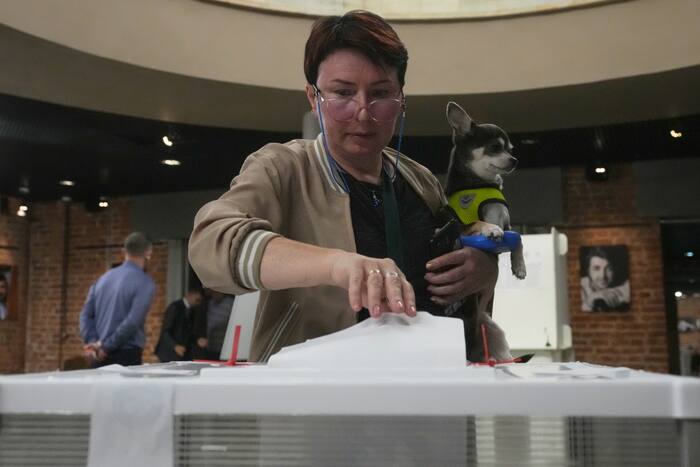
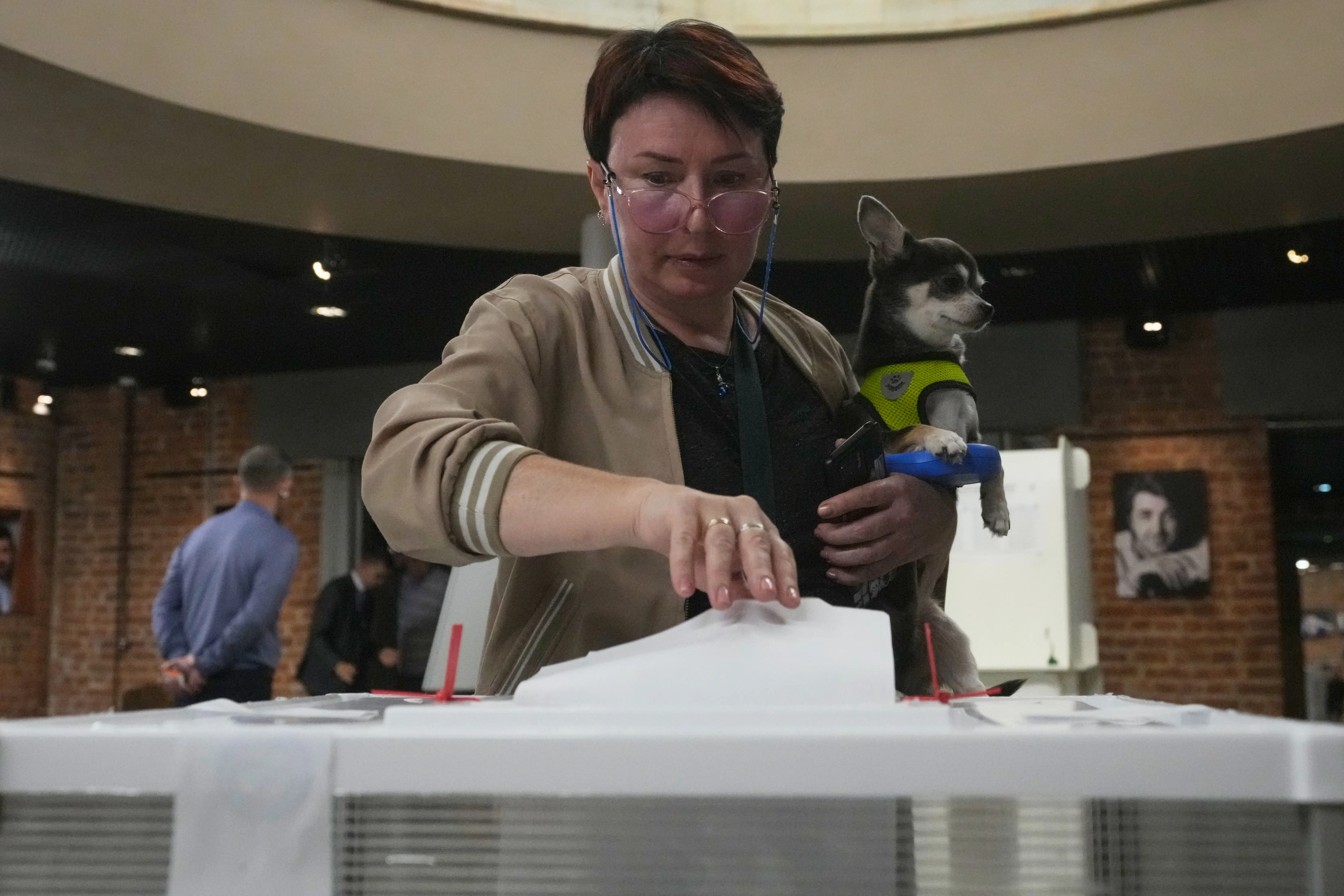
Following the expansion of voting into four partially occupied Ukrainian regions—Donetsk, Luhansk, Zaporizhzhia, and Kherson—as well as the Crimean Peninsula, Kyiv officially denounced the exercise as an egregious violation of national sovereignty and international law. Foreign ministries across Europe and North America echoed these sentiments. The European Union issued a formal declaration on Friday, denouncing the inclusion of occupied Ukrainian territories in the Russian electoral map as a "blatant violation of international law" and urging foreign governments to withhold recognition of any resulting mandates.
Simultaneously, human rights monitors and independent news outlets began reporting immediate procedural irregularities. Reports surfaced regarding unsecured ballot storage overnight, refusal to issue paper ballots, and instances where election officials aggressively directed voters toward digital terminals.
Saturday, September 19: Escalating Crackdowns and Procedural Friction
As voting entered its second day, friction between independent election monitors and state authorities intensified. The liberal Yabloko party—the sole registered political entity allowed to field a limited number of single-constituency candidates after its central party lists were barred—reported widespread harassment of its observers.
In St. Petersburg, a volatile situation unfolded at a local polling station when police arrested a Yabloko observer. Election officials accused the monitor of attempting to disrupt the proceedings; during the altercation, the observer reportedly lost consciousness. Independent media organizations, including SotaVision, documented numerous technical glitches within the electronic voter registry systems across Moscow. Voters complained they were barred from receiving paper ballots, ostensibly due to systemic failures, and were forced to use electronic voting terminals instead.
Leonid Volkov, a prominent associate of the late opposition figure Alexei Navalny, accused the authorities of deliberately engineering technical breakdowns in paper ballot distribution to herd citizens toward easily manipulated electronic voting systems. "Demand a paper ballot!" Volkov urged supporters via social media platform X.
Sunday, September 20: The Final Hours, Drone Attacks, and Protest Actions
The final day of voting brought a volatile convergence of domestic electoral defiance and direct military conflict. Early Sunday morning, the Russian Ministry of Defense reported a massive wave of incoming aerial threats, intercepting what it claimed were 1,110 Ukrainian drones targeting various regions, including the capital. Regional authorities confirmed that the strikes resulted in structural damage, two fatalities, and at least 20 injuries across the wider Moscow region.
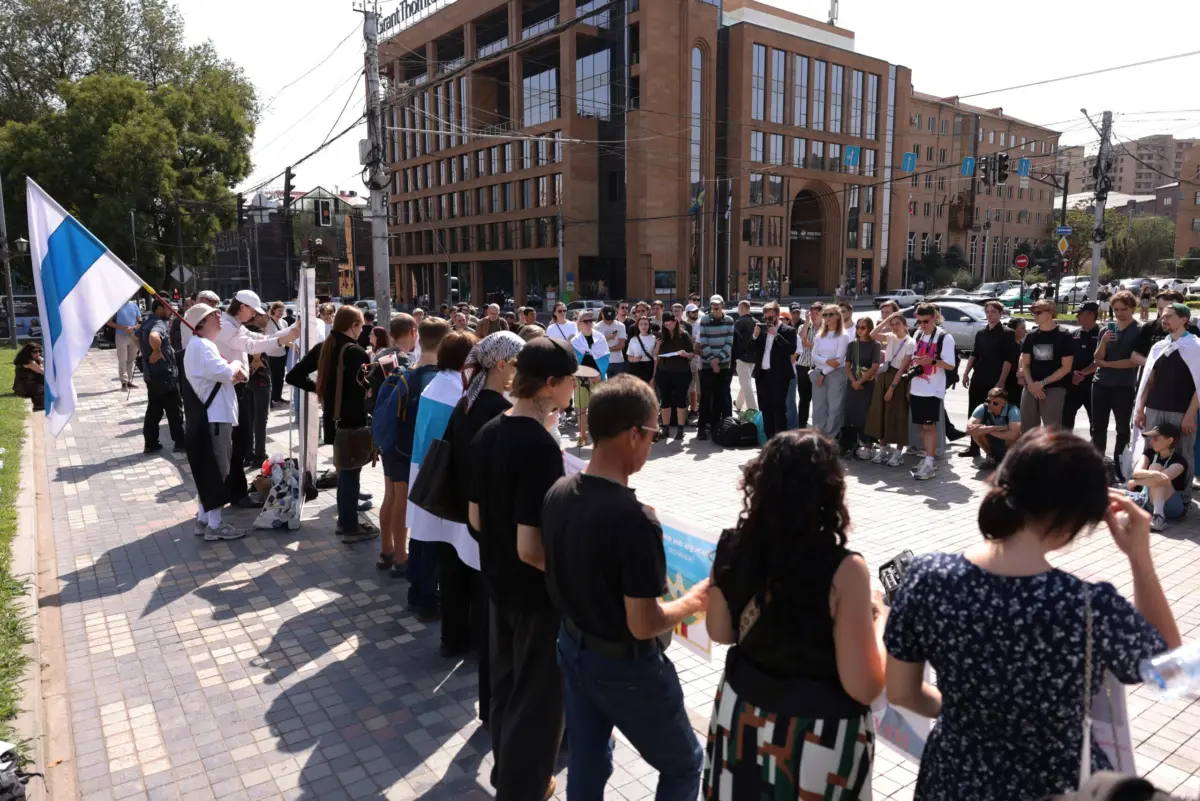
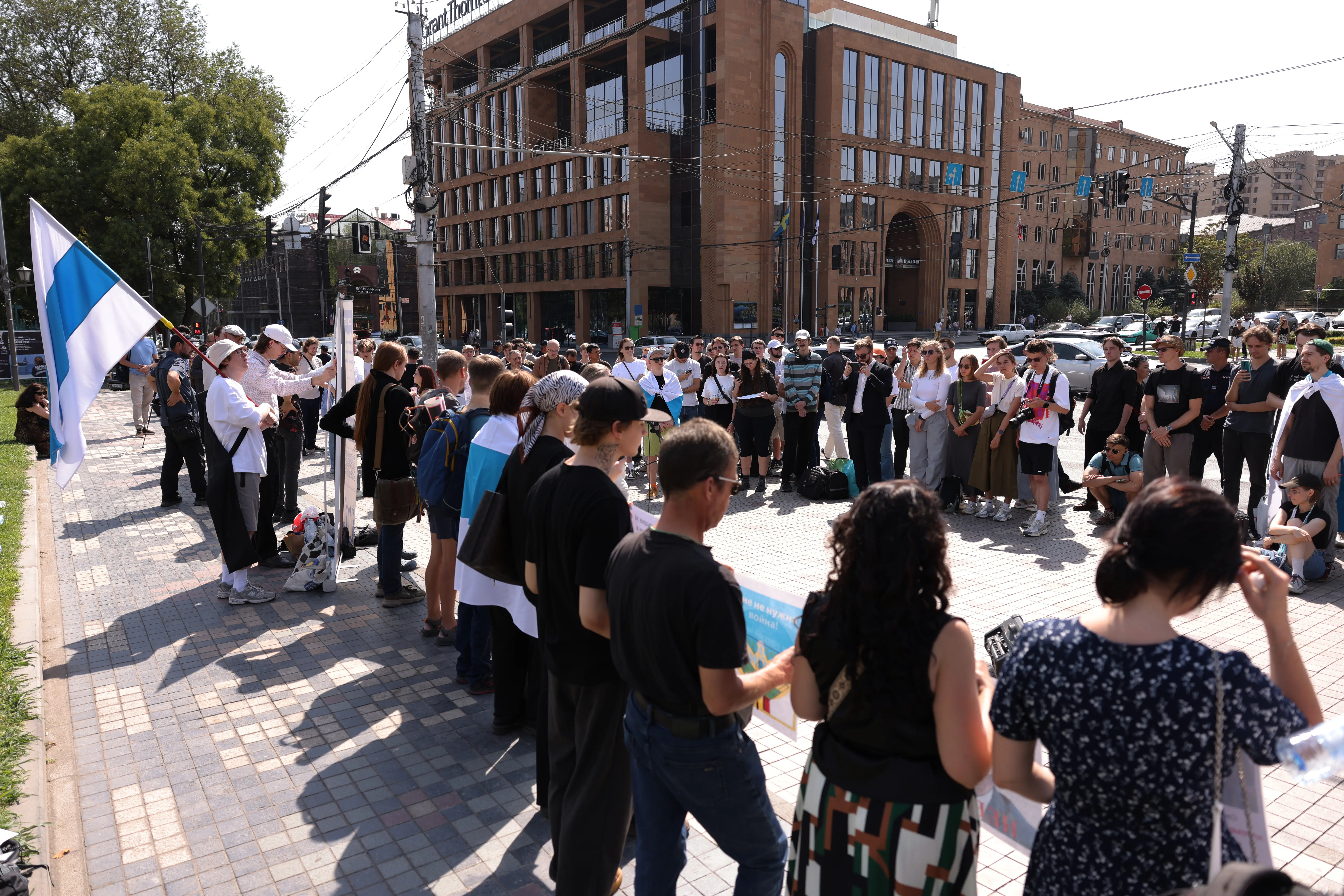
Despite air raid sirens and heightened security, anti-war Russians participated in the "Noon for a Peaceful Russia" protests organized by exiled opposition leaders, including Yulia Navalnaya, the widow of Alexei Navalny. Thousands of expatriates queued outside Russian diplomatic missions abroad. In Yerevan, Armenia, long lines formed outside the Russian Embassy as demonstrators held anti-war and anti-Putin placards. In Berlin, exiled activist and former Open Russia head Andrei Pivovarov delivered a fiery address to a crowd gathered outside the Russian diplomatic compound.
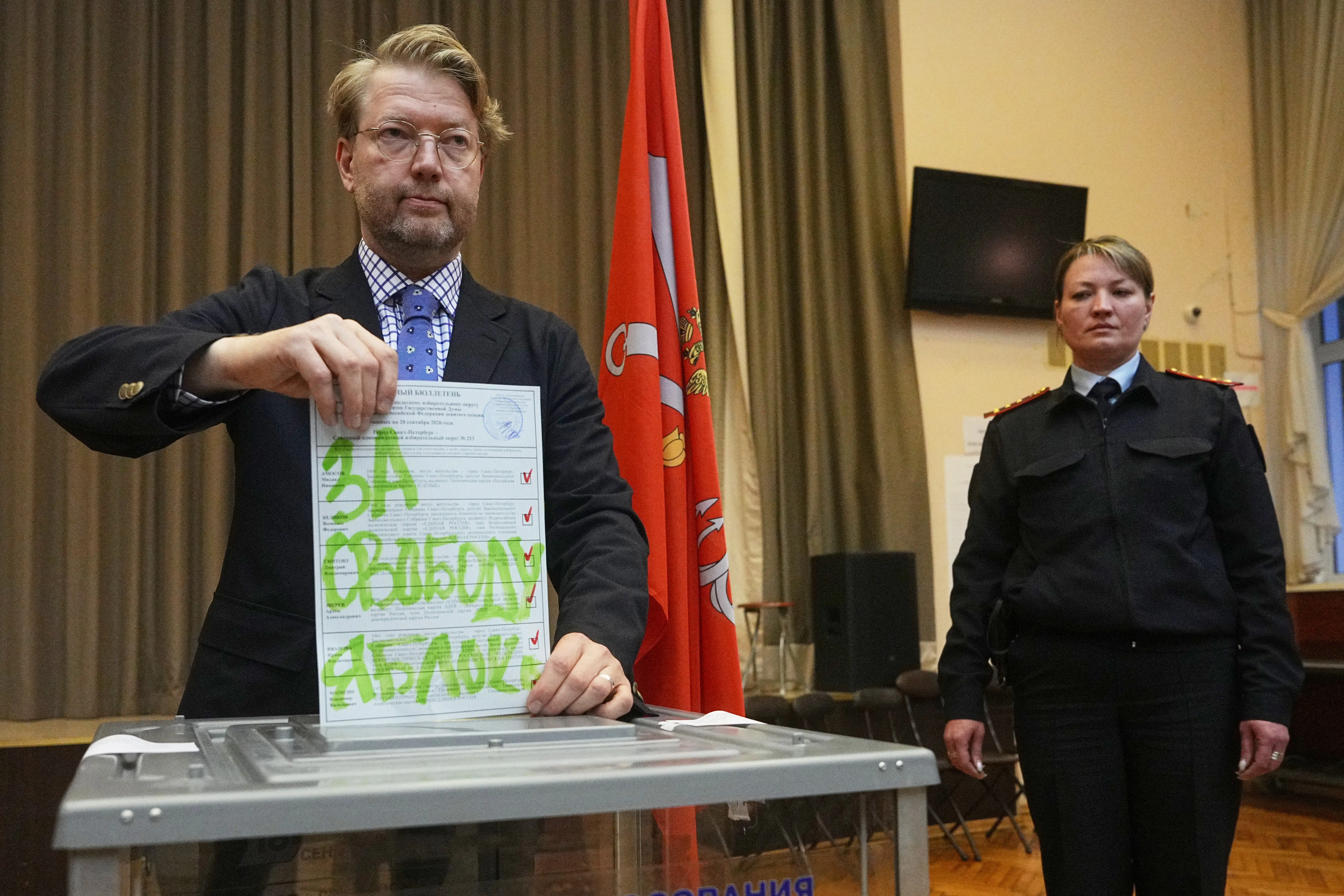
Inside Russia, acts of subtle defiance occurred at polling booths. Nikolai Rybakov, leader of the sidelined Yabloko party, cast his ballot in St. Petersburg on a ballot paper covered in bright green ink bearing handwritten messages demanding "freedom" and "peace." Meanwhile, in the Russian-occupied sector of the Donetsk region, voters dropped ballots into transparent boxes under the watchful gaze of armed Russian soldiers.
Supporting Context & Metrics
Electoral Architecture and Mechanics
The State Duma, Russia’s lower house of parliament, consists of 450 seats. The electoral system is split evenly:
- Party-List Proportional Representation: 225 seats are allocated to political parties that clear a 5% national threshold.
- Single-Constituency Mandates: 225 seats are contested by individual candidates in specific geographic districts.
With 111 million eligible voters registered across the Russian Federation, occupied Ukrainian territories, and international consulates, the Central Election Commission utilized an integrated digital voting infrastructure. However, this infrastructure faced persistent allegations of manipulation. Ella Pamfilova, head of the Central Election Commission, acknowledged on Sunday that the electronic voting system in Moscow had been targeted by external cyberattacks, though independent watchdogs countered that the claims were manufactured to cover up internal system failures and facilitate state control over vote tallies.
The Economic and Military Backdrop
The election occurred against a punishing economic and security backdrop. The preceding summer months saw an unprecedented campaign of long-range Ukrainian drone strikes targeting Russian critical infrastructure, most notably oil refineries and fuel depots. These attacks precipitated a widespread domestic fuel crisis and struck major logistical hubs, including distribution centers for retail giants Wildberries and Ozon.
These events brought the tangible costs of the protracted conflict directly to the doorsteps of millions of Russian citizens, making the 2026 legislative election a critical psychological battleground for the Kremlin. By staging a controlled democratic exercise, the state sought to project an aura of unshakeable stability and popular mandate.
Official Statements
The ideological battle lines of the election were clearly drawn through sharply contrasting official rhetoric from Moscow, Kyiv, and international bodies:
- The Kremlin and Electoral Authorities: President Vladimir Putin’s administration framed the election as a testament to national resilience and democratic continuity during a historic existential struggle. Central Election Commission Chief Ella Pamfilova emphasized the high security and resilience of the voting apparatus, downplaying technical glitches and dismissing foreign criticism as politically motivated interference. The ruling United Russia party maintained that the high turnout reflected overwhelming public endorsement of the "special military operation" and the government’s economic policies.
- Ukrainian Government: Kyiv remained unwavering in its condemnation. Ukrainian officials reiterated that any vote held within internationally recognized Ukrainian borders—specifically Crimea, Donetsk, Luhansk, Zaporizhzhia, and Kherson—is null, void, and legally non-binding. Ukrainian leadership called on international allies to increase sanctions against individuals and entities involved in administering the illegal polls.
- International Bodies: The European Union formally condemned the inclusion of occupied territories, labeling the exercise a flagrant breach of the United Nations Charter. Meanwhile, the Organization for Security and Cooperation in Europe (OSCE) criticized Moscow’s decision to bar its observers. OSCE Parliamentary Assembly President Pere Joan Pons stated that Russia’s refusal to permit independent observation constituted a severe violation of its multilateral commitments as a participating state.
- The Russian Opposition: Exiled opposition leaders characterized the election as a cynical farce. In a joint statement, networks aligned with the Anti-Corruption Foundation (FBK) argued that participation in the state-sanctioned process was futile unless used as an active platform for civil disobedience, praising those who spoiled their ballots or joined the international demonstrations.
Future Outlook
As preliminary results indicate that United Russia and its aligned "systemic opposition" factions will comfortably maintain their ironclad grip on the State Duma, the political landscape of the Russian Federation appears more consolidated—and more repressive—than at any point in the post-Soviet era.
The successful execution of a wartime election without significant internal fracture demonstrates the resilience of the Russian state security apparatus. However, the unprecedented scale of the Ukrainian drone campaign during the voting weekend signals that the security challenges facing the country are escalating rapidly.
Moving forward, the complete marginalization of liberal, anti-war alternatives like the Yabloko party, combined with the continuous exile or imprisonment of dissident leaders, leaves virtually no institutional space for legal political dissent within Russia. Consequently, political resistance is likely to remain driven underground, channeled through localized acts of sabotage, digital protest, and demonstrations by the growing Russian diaspora abroad. For the Kremlin, the newly constituted parliament will rubber-stamp an intensification of wartime policies, cementing a permanent war economy and deepening Russia’s geopolitical alienation from the West.

0 Comments