
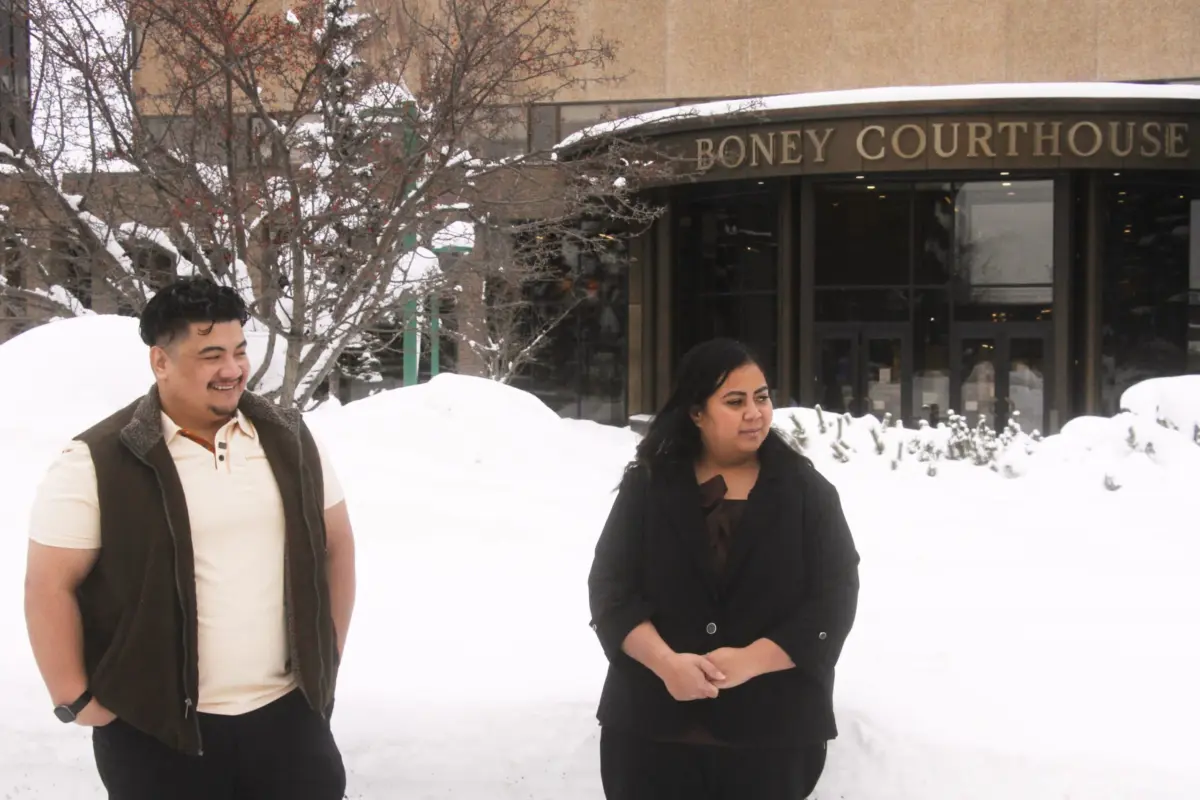

ANCHORAGE, Alaska — In a major legal about-face, Alaska prosecutors have moved to dismiss all remaining voter misconduct cases against a group of residents born in American Samoa. The decision, announced by the Alaska Department of Law, comes directly in the wake of a decisive state appeals court ruling that fundamentally shifts the burden of proof required to secure felony convictions for honest administrative errors on voter registration forms.
The sweeping legal retreat brings to a close a controversial chapter that began with felony indictments against 11 residents of Whittier, a small community located roughly 50 miles southeast of Anchorage. The defendants, all U.S. nationals native to American Samoa, found themselves entangled in the criminal justice system after checking boxes indicating U.S. citizenship on local voter registration paperwork—an action prosecutors initially argued was a deliberate and calculated violation of state law.
However, a three-judge panel of the Alaska Court of Appeals dismantled the state’s legal theory, ruling that securing a felony conviction under Alaska’s voter-misconduct statute requires prosecutors to demonstrate that a defendant acted with a "consciousness of wrongdoing." The appellate court found critical flaws in both the investigative tactics employed by state troopers and the underlying grand jury proceedings, rendering the state’s prior prosecutorial strategy untenable.
Executive Overview
The termination of these voter misconduct proceedings marks a significant victory for voting rights advocates and defense attorneys who argued that the state was criminalizing administrative confusion rooted in complex federal immigration statuses.
At the heart of the controversy is the unique legal status of American Samoa, the only U.S. territory where individuals born on native soil are granted the status of U.S. nationals rather than automatic U.S. citizens. This distinction prevents them from participating in most U.S. mainland elections or holding public office, despite possessing U.S. passports, serving in the United States military, and paying federal taxes.
When Tupe Smith, an American Samoan resident of Whittier, successfully ran for and won a seat on a regional school board in 2023, her victory was swiftly overshadowed by a criminal investigation. Smith and her husband, Michael Pese, were among the 11 residents targeted by state authorities. Smith maintained that she had relied directly on guidance from municipal election officials when filling out her registration forms, having been advised to select the citizen box in the absence of a designated "U.S. national" option.
Acting Alaska Attorney General Cori Mills announced on Friday that, following a comprehensive review of the appellate court’s ruling and an exhaustive re-examination of the facts, the Department of Law concluded it could no longer sustain the charges. "We respect the role of the courts in interpreting Alaska law and will faithfully execute our duty to apply the law and carefully evaluate our prosecutorial decisions," Mills stated.
Detailed Chronology: From School Board Victory to Appellate Vindication
The 2020 and 2022 Registrations
The legal ordeal for Tupe Smith and her fellow Whittier residents began years prior to their indictments. When registering to vote, the standard Alaska voter registration forms presented binary options regarding citizenship, lacking a nuanced category for individuals who hold U.S. national status without full citizenship.
According to court filings, Smith—whose native language is not English—actively sought guidance from local Whittier city representatives. She informed them of her status as an American Samoan national. City officials allegedly advised her that checking the citizenship box was appropriate under the circumstances to facilitate local civic participation. Smith proceeded to register and subsequently voted in local elections, unaware that her actions would later be classified as a felony offense.
The 2023 School Board Election and Subsequent Arrest
In 2023, Smith ran a successful campaign for a regional school board seat, earning the trust of her community. Her electoral success, however, drew scrutiny from state investigators.
State troopers launched an investigation into Whittier’s voter rolls, zeroing in on residents hailing from American Samoa. Smith was subjected to a police interrogation that would later become the central focus of the Alaska Court of Appeals’ critique.
During the interview, a state trooper subjected Smith to what appellate judges described as a "long compound question" that improperly presumed guilt. The trooper’s phrasing implied that Smith consciously knew she was ineligible to vote yet deliberately chose to deceive election officials out of a desire to secure her school board seat. When Smith—visibly hesitant and processing the complex, multi-part legal query in her non-native language—did not immediately answer, a second trooper intervened to push for a response. The first trooper repeated the convoluted phrasing, prompting a confused or acquiescent "Yes" from Smith.
This single, coerced response served as the cornerstone for the state’s indictment, leading to Smith’s arrest and charging on two counts of felony voter misconduct.
The Grand Jury Indictment and Lower Court Battles
Armed with the interview transcript and boilerplate warnings printed on voter registration forms—which state that noncitizens are ineligible to vote—prosecutors presented the case to a grand jury. The grand jury returned indictments against Smith, her husband Michael Pese, and nine other Whittier residents.
In the lower courts, defense counsel fought to dismiss the charges, arguing that the state was misinterpreting the legislative intent of Alaska’s voter fraud statutes. However, initial lower court rulings kept the prosecutions alive, forcing the defendants to prepare for protracted, high-stakes criminal trials that carried the threat of substantial prison time and felony records.
The Landmark Appellate Court Decision
The legal landscape shifted dramatically when a three-judge panel of the Alaska Court of Appeals reviewed Smith’s case. The panel issued a scathing critique of the state’s investigative methodology and legal interpretations.
The court ruled that the state cannot rely solely on the existence of a false statement on a registration form to secure a felony conviction. Instead, the prosecution bears the heavy burden of proving that the defendant possessed a "consciousness of wrongdoing"—meaning they knew their actions violated the law and intended to commit fraud. Furthermore, the appellate panel highlighted the inherent unfairness of the interrogation tactics used against Smith, noting that the compound questioning of a non-native English speaker was fundamentally misleading and legally unreliable.
The appellate court’s decision successfully threw out the lower court’s rulings keeping the charges alive, effectively dismantling the prosecution’s case and creating binding precedent across the state.
Supporting Context & Metrics: The American Samoan Citizenship Dilemma
To fully comprehend the gravity of the Whittier voter cases, one must examine the complex geopolitical and legal framework governing American Samoa.
+-------------------------------------------------------------------+
                  U.S. NATIONAL VS. U.S. CITIZEN
+------------------------------------+------------------------------+
| U.S. National (American Samoa)     | U.S. Citizen (General U.S.)  |
+------------------------------------+------------------------------+
| • Born on U.S. soil (territory)    | • Born on U.S. soil (states) |
| • Eligible for U.S. Passports      | • Eligible for U.S. Passports|
| • Can serve in U.S. Military       | • Can serve in U.S. Military |
| • CANNOT vote in federal elections | • Can vote in all elections  |
| • CANNOT hold public office (U.S.) | • Can hold any public office |
| • Naturalization required for full | • Inherent constitutional    |
|   citizenship (costly/complex)     |   rights                     |
+------------------------------------+------------------------------+- Unique Territorial Status: American Samoa is unique among U.S. territories (which include Puerto Rico, Guam, the U.S. Virgin Islands, and the Northern Mariana Islands) because birth within its borders does not automatically confer U.S. citizenship under the 14th Amendment. Instead, residents are designated as U.S. nationals.
- Civic Paradox: While American Samoans proudly serve in the United States Armed Forces at higher per-capita rates than many U.S. states and carry American passports, they face severe disenfranchisement when relocating to the U.S. mainland. They cannot vote in federal or state elections outside their territory, nor can they hold public office, creating immense confusion regarding municipal voting eligibility.
- The Naturalization Hurdle: Transitioning from a U.S. national to a full U.S. citizen requires undergoing the federal naturalization process. This administrative pathway is notoriously expensive, time-consuming, and cumbersome—factors that often leave long-term residents navigating administrative gray areas when attempting to participate in local civic life in communities like Whittier, Alaska.
- Scale of the Prosecution: In total, 11 individuals from Whittier’s small, tight-knit community were targeted by state prosecutors. The aggressive pursuit of these residents placed an immense emotional, social, and financial toll on the local population, many of whom felt targeted for attempting to engage in civic duties encouraged by their local municipality.
Official Statements and Legal Perspectives
The legal community and civil rights advocates have widely praised the appellate court’s intervention, viewing it as a vital check against prosecutorial overreach.
Whitney Brown, defense counsel for Tupe Smith, issued a strong statement following the appellate ruling, emphasizing the broader protective implications of the court’s decision.
"This decision establishes an important safeguard against imposing felony liability for an honest mistake," Brown stated. "The court made clear that Alaska law requires more than simply showing that a statement was false—the State must prove a person acted with a consciousness of wrongdoing. That distinction makes a world of difference to Ms. Smith and helps ensure that Alaska’s voter-misconduct statute is applied as the legislature intended going forward."
Legal scholars have noted that the case exposes systemic shortcomings in voter registration infrastructure, particularly regarding how state and local agencies handle demographic groups with non-standard federal documentation. By failing to provide clear, unambiguous categories for U.S. nationals on standard registration documents, election systems inadvertently set administrative traps for otherwise law-abiding residents eager to contribute to their local governments.
On the prosecution side, Acting Attorney General Cori Mills defended the Department of Law’s initial decisions while acknowledging the binding nature of the judicial review. Mills emphasized that prosecutors acted based on the evidence available at the time of the grand jury presentations, but conceded that the appellate standard of proof—requiring demonstrated intent to violate the law—prevented the state from moving forward with a reasonable expectation of conviction.
Future Outlook: Implications for Alaska and Beyond
As the Alaska Department of Law officially files motions to dismiss the remaining cases against the 10 other Whittier residents, the legal fallout from the American Samoa voter fraud controversy will likely reverberate across municipal and state election boards nationwide.
- Overhaul of Registration Forms: Election administrators in Alaska and other states with significant territorial migrant populations face mounting pressure to redesign voter registration forms. Introducing clear, explicit options or guidance for U.S. nationals is seen as an essential step to prevent future administrative misunderstandings.
- Standard of Intent in Voter Prosecutions: The appellate court’s ruling sets a formidable legal precedent within Alaska, ensuring that future voter misconduct cases cannot rely on strict liability theories. Prosecutors will now face the rigorous hurdle of establishing subjective criminal intent, shielding voters who make good-faith clerical errors from catastrophic felony charges.
- Community Healing in Whittier: For the small community of Whittier, the dropping of charges brings a profound sense of relief. Residents like Tupe Smith and Michael Pese can finally put the years of legal jeopardy behind them, though the trauma of facing felony charges for seeking local civic participation leaves lingering questions about equity, representation, and the treatment of territorial minorities within the American legal system.
Ultimately, while the courtroom battles have concluded, the case of Tupe Smith serves as a sobering reminder of the complex intersections between federal immigration status, municipal administration, and the fundamental right to participate in local democracy.

0 Comments