
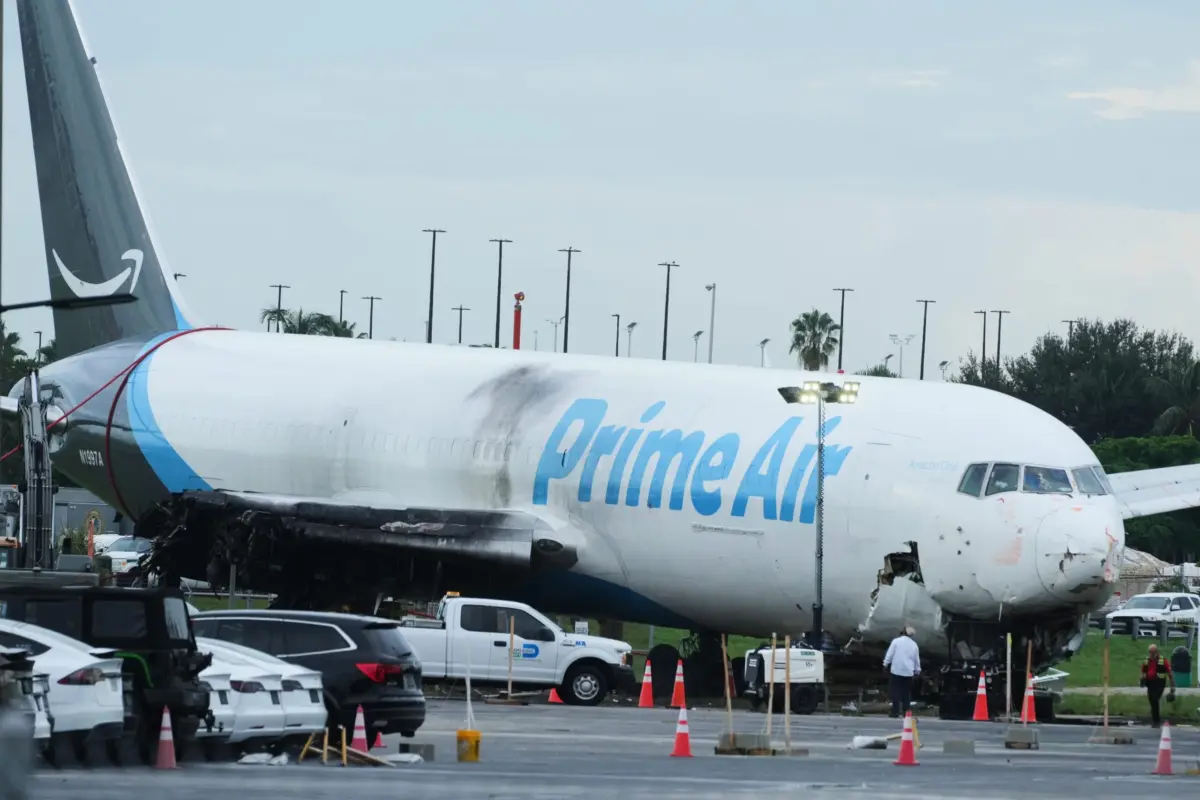

MIAMI — In the wake of a catastrophic aviation disaster that shook the logistics and commercial air-freight industry, e-commerce titan Amazon announced on Sunday that it has officially suspended its partnership with cargo carrier 21 Air.
The decisive move by corporate leadership comes just days after a Boeing 767 freighter, operating on behalf of Amazon, careened off a runway at Miami International Airport (MIA). The tragic accident resulted in the deaths of five individuals on the ground, injured five others, and immediately triggered intensive federal investigations into pilot actions, aircraft maintenance, operational protocols, and corporate safety oversight.
Executive Overview
The suspension of operations between Amazon and North Carolina-based 21 Air marks a significant turning point in the aftermath of the September 6 catastrophe. Flight 7598, heavily laden with consumer packages destined for Amazon’s vast distribution network, approached Miami International Airport at excessive speeds before overshooting the runway tarmac by roughly 1,300 feet (396 meters). The aircraft plowed through airport perimeter infrastructure, ultimately crushing a service van occupied by local aviation cleaning personnel.
For Amazon, which relies heavily on a complex, outsourced web of regional cargo airlines to maintain its vaunted delivery speeds, cutting ties with 21 Air highlights the growing reputational and operational risks tied to third-party logistics providers. While 21 Air had been contracted to fly packages for Amazon since 2024, the sudden termination of their business relationship underscores the immediate pressure major corporations face to distance themselves from catastrophic safety failures.
As federal investigators from the National Transportation Safety Board (NTSB) sift through cockpit voice recorders, flight data, and maintenance logs, the incident has ignited broader industry questions regarding the safety culture, regulatory oversight, and aging fleet dynamics within the booming air-cargo sector.
Detailed Chronology of the Disaster
Approach and Descent
The sequence of events that led to the tragedy unfolded rapidly on the afternoon of September 6. Flight 7598, a 32-year-old Boeing 767 converted freighter, was making its final approach into Miami International Airport under conditions that are currently being scrutinized by meteorological experts and federal regulators.
Preliminary flight data and preliminary disclosures released by the NTSB paint a harrowing picture of the aircraft’s final moments in the air. According to investigators, the jet came in significantly faster than recommended parameters. Audio retrieved from the cockpit voice recorder (CVR) revealed a tense exchange between the flight crew, with one pilot explicitly warning their counterpart about the aircraft’s excessive speed both during the final approach and immediately following touchdown.
Compounding the human warnings, the flight deck was flooded with a series of automated alerts. The aircraft’s built-in systems sounded persistent warnings regarding rapid rates of descent and the rapidly diminishing runway distance. Despite these alarms, the heavy cargo jet failed to decelerate in time.
The Runway Overrun and Impact
Upon touching down on the MIA runway, the aircraft was unable to brake effectively within the remaining distance. It barreled down the tarmac, blowing past the designated threshold, and traveled approximately 1,300 feet beyond the end of the pavement.
The jet smashed through perimeter fencing and collided directly with a service vehicle stationed on airport grounds. The vehicle belonged to a local plane-cleaning company and was carrying routine maintenance and sanitation personnel.
The catastrophic force of the collision resulted in the immediate deaths of all five individuals inside the ground vehicle. Five other people sustained various injuries, requiring emergency transport to local trauma centers. Miraculously, the flight crew aboard the Boeing 767 survived the impact, though they were treated for shock and minor injuries before being made available for federal questioning.
Immediate Aftermath and Response
First responders swarmed the disaster site within minutes, deploying foam to suppress potential fuel fires and establishing a secure perimeter around the wreckage of the Boeing freighter. The sprawling debris field immediately shut down portions of Miami International Airport’s operations, leading to temporary flight diversions and delays that rippled across regional supply chains.
By Thursday, September 10, forensic teams and NTSB investigators were meticulously picking through the mangled remains of the cargo plane, examining everything from landing gear positioning and brake assembly integrity to the structural damage sustained during the overrun.
Supporting Context & Metrics: The Aircraft, The Carrier, and The Industry
The Aircraft’s History
The aircraft involved in the crash—a Boeing 767 wide-body twinjet—carries a long and complex operational history that has drawn intense scrutiny from aviation safety advocates. Flight-tracking data compiled by Flightradar24 reveals that the airframe was a remarkable 32 years old at the time of the crash.
Originally manufactured in the early 1990s as a commercial passenger airliner, the plane spent more than two decades flying international and domestic routes for various foreign carriers. In 2015, as the global demand for e-commerce logistics skyrocketed, the aging jet underwent a comprehensive structural conversion, transforming it from a passenger transport into a dedicated cargo freighter.
While converted freighters are standard practice in the modern logistics industry, critics and safety analysts frequently raise concerns regarding the cumulative stress, metal fatigue, and maintenance burdens placed on airframes that have been in service for over three decades. The NTSB’s ongoing review will evaluate whether structural wear, aging mechanical systems, or past maintenance oversights played any contributing role in the aircraft’s inability to stop.
The Carrier: 21 Air
Based in North Carolina, 21 Air is a specialized cargo airline operating mid-sized and heavy freighters to support major logistics networks. The carrier had established a business relationship with Amazon beginning in 2024, operating dedicated routes to shuttle consumer goods across regional hubs.
The sudden termination of this contract represents a devastating blow to 21 Air’s corporate viability and market standing. In the ultra-competitive landscape of air-cargo logistics, the loss of an anchor client like Amazon—which accounts for massive flight volumes and steady revenue—jeopardizes the carrier’s future operations. As of Sunday, representatives for 21 Air had not immediately responded to public requests for comment regarding Amazon’s decision to sever ties.
Official Statements and Investigations
Amazon’s Corporate Stance
In a formal statement released Sunday afternoon, Amazon spokesperson Kelly Nantel addressed the company’s decision to distance itself from the troubled carrier, emphasizing cooperation with ongoing federal inquiries.
"After the tragic incident last weekend, we’ve spent time supporting the investigation and reviewing some of the surrounding circumstances, and we’ve decided to pause our operations with 21 Air, the operator of Flight 7598," Nantel stated. "We’ll continue working to support the investigation and everyone affected."
The carefully worded statement reflects corporate sensitivity toward the loss of life on the ground, while signaling to regulators and consumers that Amazon holds its third-party contractors to stringent safety expectations. However, the suspension also exposes vulnerabilities in Amazon’s heavily outsourced "Prime Air" network, prompting renewed debates over whether the retail giant exerts enough direct oversight over the subcontracted airlines carrying its parcels.
The NTSB Investigation
The National Transportation Safety Board is spearheading the comprehensive probe into the Miami crash. Investigators have seized the aircraft’s flight data recorder (FDR) and cockpit voice recorder (CVR), extracting critical telemetry and audio data.
While preliminary NTSB readouts released on September 9 confirmed that the pilot explicitly warned of excessive speed during the approach, federal investigators cautioned that a complete determination of probable cause will take many months.
According to NTSB protocols, the full, unredacted transcript of the cockpit conversation will be withheld from public release until the investigation reaches a more advanced stage. Investigators are systematically analyzing multiple contributing factors:
- Human Factors: Pilot fatigue, training standards, decision-making processes during high-workload landing phases, and crew resource management.
- Environmental Conditions: Localized weather patterns, wind shear, visibility, and runway friction coefficients at the moment of touchdown.
- Mechanical and Maintenance Records: The operational status of the Boeing 767’s braking systems, thrust reversers, spoilers, and overall airframe maintenance history by 21 Air technicians.
- Airport Infrastructure: The layout of the runway overrun area, perimeter security barriers, and the placement of ground personnel service vehicles.
Future Outlook: Industry Implications and Regulatory Scrutiny
The Miami disaster and Amazon’s subsequent blacklisting of 21 Air are expected to send powerful shockwaves through the air-freight and e-commerce logistics sectors.
Increased Scrutiny on Outsourced Air Cargo
As consumers increasingly demand rapid, two-day and next-day delivery, major retailers have built sprawling aviation networks by partnering with smaller, lesser-known cargo operators. Industry analysts warn that this rapid expansion has created a complex web of subcontractors where safety standards can occasionally vary. The Federal Aviation Administration (FAA) and the NTSB are likely to face renewed congressional pressure to step up surveillance of aging converted freighters and third-party charter operators.
Operational Adjustments for Amazon
For Amazon, pausing operations with 21 Air requires immediate supply chain adjustments. The company must rapidly redistribute its cargo volume to other partner carriers to prevent delivery bottlenecks, particularly as the lucrative year-end holiday shopping season approaches. More broadly, the tragedy forces Amazon and its competitors to re-evaluate how they vet, monitor, and audit the safety cultures of the regional airlines flying under their corporate banners.
Honoring the Victims
While corporate boardrooms grapple with contracts and regulatory compliance, the human toll of the September 6 crash remains the central tragedy. Local labor unions, aviation advocacy groups, and families of the deceased ground crew members continue to demand accountability. As the NTSB digs deeper into the final seconds of Flight 7598, the aviation community waits for answers that could ultimately reshape how cargo operations are managed on crowded airport tarmacs across the globe.

0 Comments