
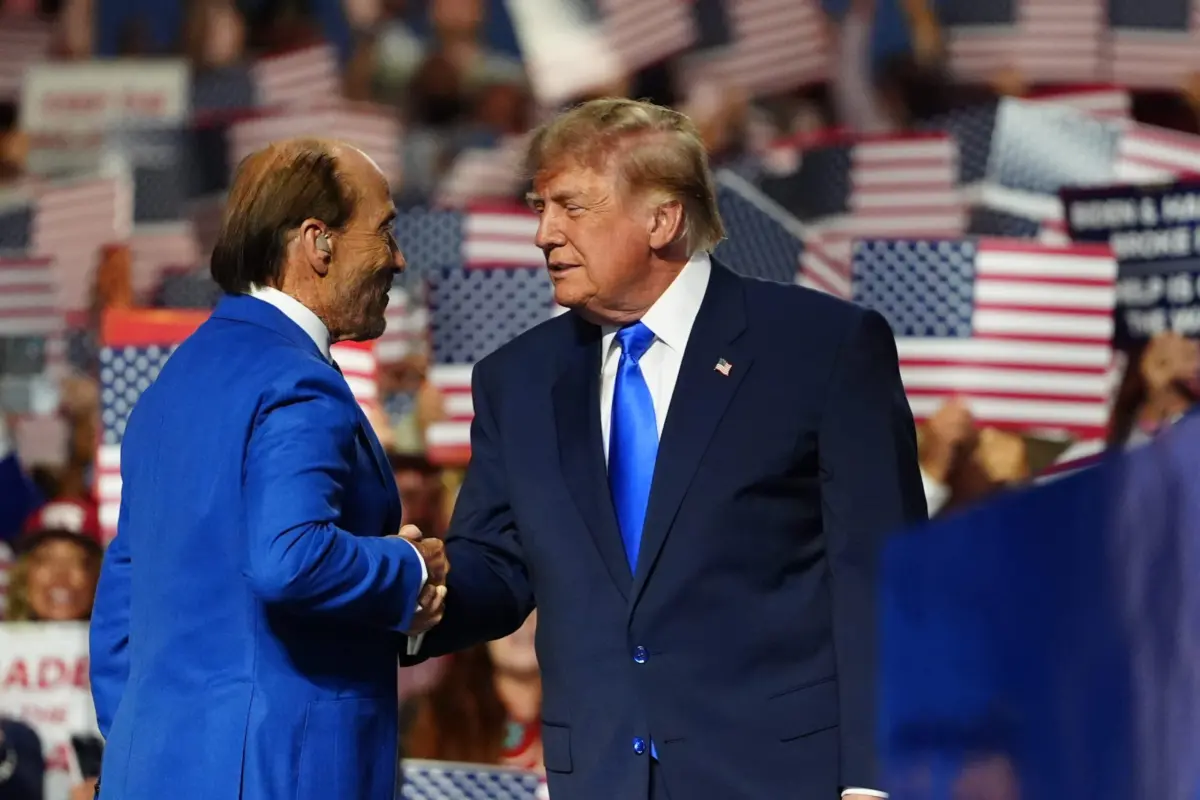

WASHINGTON — In a wide-ranging slate of diplomatic nominations submitted to the U.S. Senate on Monday, President Donald Trump selected Kimberly Greenwood—wife of patriotic recording artist Lee Greenwood—to serve as the United States Ambassador to Barbados and the Eastern Caribbean. The announcement was part of a broader package of ambassadorial appointments that underscores the longstanding presidential tradition of blending political allies, campaign supporters, and legislative figures into the fabric of American foreign policy.
Alongside the Caribbean posting, the White House announced the nomination of outgoing Texas Republican Representative Wesley Hunt to serve as the U.S. Ambassador to Riyadh, Saudi Arabia. These high-profile selections, alongside choices for vacant missions in Haiti, Somalia, Djibouti, and Suriname, have reignited the perennial debate over the balance between career Foreign Service professionals and politically connected appointees in key international posts.
Executive Overview
The practice of allocating ambassadorships to political allies and major financial contributors is a bipartisan fixture of American governance, utilized by successive administrations across decades. However, President Trump’s latest wave of nominations brings unique visibility to the intersection of personal loyalty, entertainment, and high-stakes geopolitics.
- The Caribbean Mission: Kimberly Greenwood has been tapped to lead diplomatic missions across a sprawling network of island nations. If confirmed, she will serve concurrently as the U.S. Ambassador to Barbados and, without additional compensation, oversee relations with St. Kitts and Nevis, St. Lucia, Antigua and Barbuda, Dominica, Grenada, and St. Vincent and the Grenadines. Her nomination bridges her extensive background in pageant administration—including an 18-year tenure working alongside Trump in the Miss Universe Organization—and her connection to her husband, whose anthem "God Bless the USA" has been a fixture of Trump’s political rallies.
- The Strategic Post in Riyadh: Rep. Wesley Hunt, currently finishing his second term representing a Houston-area district, faces a Senate confirmation process to step into one of the most volatile and strategically vital diplomatic postings in the world. Tasked with managing relations with Saudi Arabia at a moment of acute Middle Eastern friction, Hunt brings a background as a U.S. Army officer and former diplomatic liaison in the Kingdom.
- Historical Precedents and Risks: While political appointees frequently serve without incident, history demonstrates that deploying non-career diplomats to sensitive posts carries inherent risks. Previous administrations—including Trump’s first term—have seen political envoys become embroiled in domestic political controversies, misjudge local security dynamics, or face scrutiny over ethical boundaries.
Detailed Chronology of the Nominations
The mechanics of the recent White House announcement unfolded rapidly on Monday, culminating in social media confirmations from the nominees and setting the stage for upcoming Senate Foreign Relations Committee hearings.
The Greenwood Nomination and Background
Kimberly Greenwood’s introduction to the upper echelon of American diplomacy follows years of public alignment with Donald Trump’s personal and political brand. Her husband, Lee Greenwood, occupies a singular space in the modern conservative movement. His signature patriotic ballad, "God Bless the USA," has served as Trump’s definitive walk-on and walk-off anthem at political events for years. The relationship deepened commercially when Trump collaborated with the singer to market the "God Bless the USA Bible," retailing at $59.99.
In an Instagram post published shortly after the White House announcement, Kimberly Greenwood expressed gratitude for the appointment, sharing a photograph featuring herself, her husband, and the president. "Mr. President, thank you for believing in me and entrusting me with this extraordinary opportunity to serve," she wrote.
Adding context to her administrative background, Lee Greenwood noted in a separate social media statement that his wife spent nearly two decades working closely with Trump during his ownership of the Miss Universe Organization, where she directed state-level pageants. This operational experience in large-scale event coordination and public relations forms the core of her administrative credentials for the diplomatic corps.
Rep. Wesley Hunt’s Transition to Riyadh
In a distinct category from entertainment-adjacent appointments, Rep. Wesley Hunt represents a legislative and military pedigree within the new slate. Hunt, who finished third in the March 2026 Texas Republican primary for the U.S. Senate behind Ken Paxton and John Cornyn, is nearing the conclusion of his second term in the House of Representatives.
His nomination to Riyadh places him at the center of American diplomatic efforts in the Persian Gulf during a period of immense regional instability. Before entering electoral politics, Hunt graduated from West Point, served as an Apache helicopter pilot in the U.S. Army, and completed a tour as a diplomatic liaison officer in Saudi Arabia.
Reacting to the nomination on the social media platform X, Hunt acknowledged the gravity of the assignment: "I understand the strategic importance of the partnership between the United States and Saudi Arabia and the profound responsibility of this position."
Additional Diplomatic Postings
Beyond Barbados and Saudi Arabia, the White House submitted nominations for several other critical missions facing complex humanitarian, security, and governance challenges:
- Haiti: A posting requiring intensive coordination amid ongoing civil unrest, gang violence, and international stabilization efforts.
- Somalia: A post central to counterterrorism operations and regional stability in the Horn of Africa.
- Djibouti: A vital logistical hub hosting key foreign military bases overlooking the Bab el-Mandeb strait.
- Suriname: A South American partner increasingly relevant to energy security and regional trade dynamics.
Supporting Context & Metrics: The Patronage Pipeline
The appointment of political supporters to ambassadorial roles is not unique to any single administration. Both Democratic and Republican presidents have consistently rewarded major donors, political allies, and influential surrogates with prestigious or strategically sensitive postings.
Bipartisan Precedents
To contextualize the Trump administration’s selections, political scientists frequently point to the choices made by his immediate predecessor. For instance, Democratic President Joe Biden selected prominent Seattle business leader and major Democratic donor Roger Nyhus to serve as the U.S. Ambassador to Barbados and the Eastern Caribbean—the exact diplomatic post now assigned to Kimberly Greenwood.
Historically, ambassadorial posts are broadly divided into two categories:
- Career Foreign Service Posts: Typically assigned to professional diplomats who have spent decades rising through the ranks of the State Department, mastering local languages, and managing complex political negotiations. These are often allocated to more challenging or politically sensitive embassies.
- Non-Career / Political Appointees: Frequently designated for pleasant postings (such as Western European capitals or stable island nations) or assigned to close political allies where the bilateral relationship is institutionalized and robust enough to withstand a non-traditional envoy.
Past Controversies Involving Political Appointees
While many political appointees perform their ceremonial and administrative duties competently, critics argue that the practice can undermine the professional morale of the career Foreign Service and occasionally lead to high-profile diplomatic friction.
During Donald Trump’s first term, several political appointees generated substantial media scrutiny and political blowback:
- Gordon Sondland: A hotelier and $1 million inaugural contributor who served as the U.S. Ambassador to the European Union. Sondland became a central figure in Trump’s first impeachment inquiry, delivering testimony regarding allegations that the administration sought foreign assistance to investigate political rivals. He was subsequently dismissed by the White House.
- Jeffrey Ross Gunter: A political donor appointed as ambassador to Iceland. Gunter raised eyebrows among local officials and residents in Reykjavik—frequently ranked among the world’s safest cities—by requesting permission to hire armed bodyguards, a move viewed as disconnected from local realities.
- Robert "Woody" Johnson: The owner of the New York Jets and a major political fundraiser who served as ambassador to the United Kingdom. Johnson faced allegations that he attempted to steer the British Open golf tournament toward a Trump-owned resort in Scotland, alongside internal workplace complaints regarding inappropriate commentary.
Official Statements and Institutional Reactions
The announcement of the new diplomatic slate has drawn varied responses from Capitol Hill, foreign policy analysts, and institutional watchdogs.
Supporters of the administration defend the selections as a prerogative of the executive branch, arguing that political appointees bring a unique direct line to the Oval Office and a business-oriented mindset unencumbered by bureaucratic orthodoxy. Proponents of Rep. Hunt’s nomination, in particular, emphasize his military background and firsthand familiarity with Saudi culture and military logistics as tangible qualifications that transcend standard political patronage.
Conversely, career diplomats and foreign policy watchdogs have raised concerns over the diminishing proportion of career ambassadors. The American Foreign Service Association (AFSA) has repeatedly advocated for legislation to cap the percentage of political appointees, arguing that complex global crises require specialized diplomatic expertise rather than political rewards.
Regarding the Caribbean assignment, regional analysts note that while Barbados and its neighbors maintain strong, stable democratic institutions and tourism-based economies, effective U.S. engagement requires nuanced understanding of local climate adaptation challenges, security cooperation agreements, and counter-narcotics initiatives—areas where a non-career ambassador must rely heavily on the institutional knowledge of the permanent diplomatic staff stationed at the embassy in Bridgetown.
Future Outlook: The Senate Confirmation Process
All nominated candidates must clear the Senate Foreign Relations Committee before advancing to a full floor vote. While non-controversial nominees typically move smoothly through the committee, high-profile political appointments—particularly those involving individuals with close personal ties to the president or controversial past statements—frequently face rigorous questioning from both parties.
Key Milestones Ahead:
- Committee Questioning: Senators are expected to question Kimberly Greenwood on her administrative readiness, her vision for bilateral ties with Caribbean nations, and her plans to address regional economic and security priorities. Rep. Hunt will likely face intensive inquiry regarding his strategic assessment of the Middle East, U.S.-Saudi oil production dynamics, human rights considerations, and the ongoing conflict involving Houthi rebels in Yemen.
- Confirmation Votes: Floor votes in the Senate will determine the final composition of the diplomatic corps for these critical missions. Given the current composition of the Senate, administration nominees generally hold a viable path to confirmation, though partisan debate is anticipated.
- Deployment and Transition: Upon confirmation, the new envoys will undergo diplomatic training at the Foreign Service Institute in Arlington, Virginia, before presenting their credentials to the respective heads of state and government in their assigned nations.
As the confirmation hearings approach, the debate over the proper balance between political loyalty and professional expertise in American diplomacy will once again take center stage in Washington, setting the tone for how the United States projects its influence abroad in an increasingly complex geopolitical landscape.

0 Comments