

Federal authorities in Southern California have dismantled a sophisticated, multi-million-dollar embezzlement network that systematically drained public funds designated for vulnerable populations. In a sweeping indictment announced Wednesday, three non-profit leaders and executives were formally charged with wire fraud, money laundering, and conspiracy after allegedly stealing over $12 million in federal and state homelessness aid.
The illicit scheme, which diverted resources meant to provide emergency shelter, mental health services, and permanent housing solutions, fueled lavish personal lifestyles. According to federal prosecutors, the stolen capital financed luxury international travel to exotic destinations, the acquisition of vintage automobiles, high-end commercial real estate ventures, and even the launch of an Inglewood nightclub.
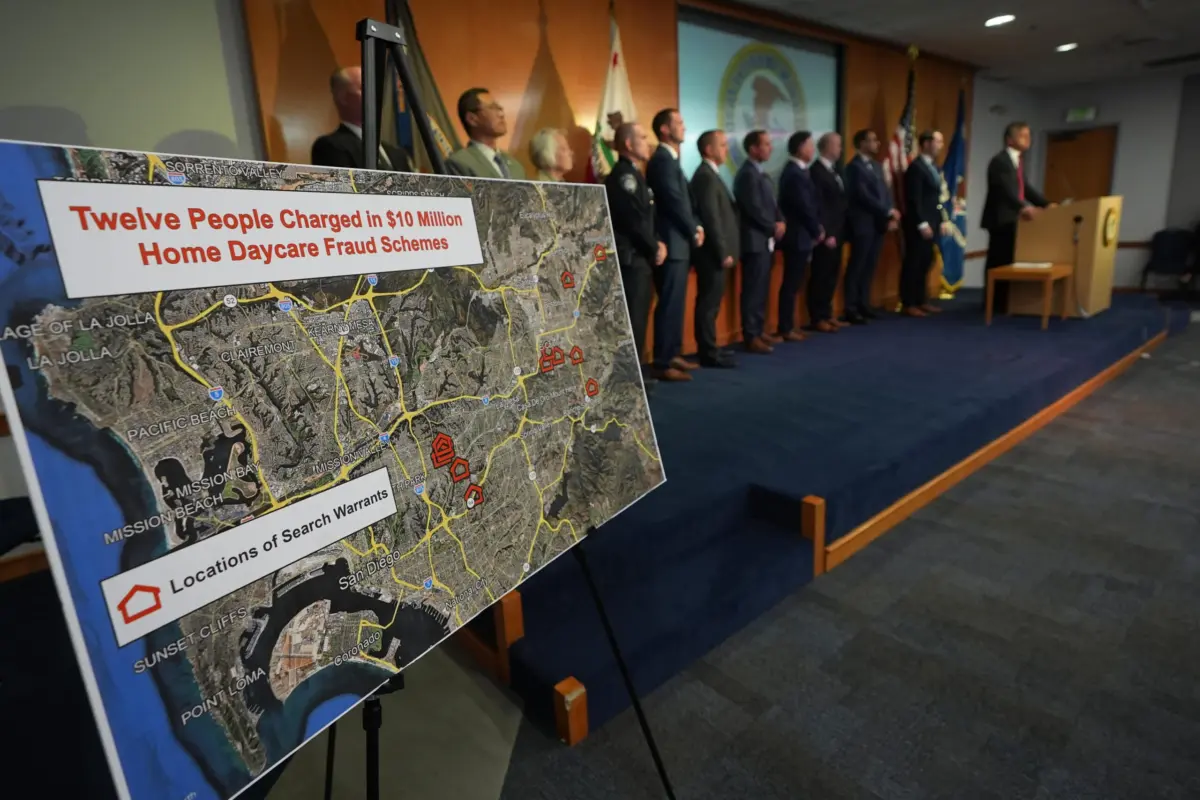
This high-profile enforcement action marks the second major white-collar fraud bust in the region within a 48-hour window. It follows a Tuesday announcement in San Diego where a dozen individuals were indicted for orchestrating a parallel $10 million scam targeting federal childcare subsidies. Together, these actions underscore an aggressive, coordinated push by the federal government—intensified under the current administration—to root out systemic waste, fraud, and abuse across public assistance programs.
As investigators continue to untangle webs of shell companies, falsified rosters, and kickback schemes, the scandal has ignited a fierce national debate. While watchdogs and federal prosecutors praise the aggressive defense of taxpayer dollars, critics and civil rights advocates are closely scrutinizing the broader policy implementations and political motivations driving the administration’s sweeping fraud-detection apparatus.
Detailed Chronology of the Fraud Scheme
The unraveling of the Southern California homelessness aid network exposes how deep-seated structural vulnerabilities within non-profit oversight mechanisms can be exploited for personal enrichment. Federal charging documents paint a picture of calculated greed, spanning years of deceptive contracting, internal collusion, and blatant misuse of public trust.
The Rise and Fall of "Home At Last"
At the center of the federal indictments is Michael Young, 46, founder and principal operator of the homelessness-aid non-profit Home At Last. Since 2019, Young’s organization successfully positioned itself as a cornerstone of community support, securing upwards of $118 million in public funds from municipal, county, state, and federal agencies.
Investigators assert that rather than channeling these extensive resources into emergency housing and social services for the unhoused, Young utilized Home At Last as a personal ATM. The cornerstone of his alleged operation was a vast network of shell companies. Young reportedly incorporated multiple vendors and contracting firms that he covertly owned and controlled, while fraudulently representing them to government auditors as independent, arms-length entities.
Through this elaborate self-dealing framework, Young allegedly overbilled federal and local authorities by an estimated $7.5 million. Prosecutors detail how the extracted funds bypassed social program beneficiaries entirely, instead flowing directly into personal accounts used to finance luxury vacations to Tahiti, purchase prized vintage vehicles, and underwrite commercial developments—including the establishment of the Six Seven Five Lounge, an upscale nightclub in Inglewood, California.
"Big Blue Umbrella" and Fictitious Services
Simultaneously, federal authorities trained their sights on Donye Mitchell, 55, the chief executive officer of Big Blue Umbrella. The non-profit had been awarded more than $1.2 million via a federally supported regional intermediary to deliver comprehensive housing and mental healthcare support to marginalized individuals.
According to the federal complaint, Mitchell not only grossly misstated his organization’s operational capacity and credentials to secure the grant, but immediately treated the capital as a discretionary slush fund. Prosecutors allege that Mitchell funneled grant money directly toward settling personal credit card debt, distributing unauthorized cash gifts to family members, purchasing high-end video games, and covering legal expenses associated with an unrelated judicial matter.
Furthermore, forensic accountants revealed that the mental health and housing support services promised under the grant agreement were largely, if not entirely, non-existent.
Bribery, Phantom Clients, and the Co-Conspirators
The corruption network extended deeper into administrative channels through Lakiya Malone, 48, who was taken into custody alongside Young in early-morning raids across Los Angeles on Wednesday. Malone stands accused of accepting more than $180,000 in direct bribes from a separate, unnamed homelessness-aid non-profit.
In exchange for these kickbacks, Malone allegedly compromised the integrity of local placement systems. Federal investigators state that she systematically falsified client rosters, deliberately placing individuals into specialized housing and support programs who did not meet the eligibility criteria because they were not actually homeless. This manipulation allowed corrupt organizations to inflate their participant metrics, thereby justifying continued funding renewals from unsuspecting government agencies.
In a related development, federal prosecutors announced a major breakthrough with the guilty plea of a fourth key player. Alexander Soofer, 42, executive director of the non-profit Abundant Blessings, entered a formal plea to charges of wire fraud and money laundering. Soofer admitted to orchestrating the theft of at least $2 million in public homeless aid. Crucially, court documents indicate that Soofer confessed to actively collaborating with Malone to bill federal and state authorities for comprehensive homelessness support services during periods when his programs maintained zero active participants. Donye Mitchell, meanwhile, remains at large and is currently designated as a federal fugitive, with U.S. Marshals actively pursuing his capture.
Supporting Context & Metrics: The Scale of Public Waste
The multi-million-dollar scams uncovered in Southern California are symptomatic of a broader national challenge regarding the oversight of emergency funding streams deployed during and after times of acute economic stress.
The Explosive Growth of Public Assistance Budgets
Over the past decade—and particularly accelerated by pandemic-era relief legislation—federal, state, and local governments poured unprecedented sums of money into social welfare initiatives. Programs designed to combat homelessness, provide childcare, and stabilize food security saw budgets expand exponentially.
While these funding surges were critical for preventing widespread destitution, they frequently overwhelmed the administrative capacity of regional oversight bodies. Local government agencies, operating under immense pressure to disburse aid rapidly, often relaxed traditional auditing protocols and vetting procedures for non-profit contractors.
Cross-Program Vulnerabilities
The current federal crackdown highlights two distinct sectors that have proven particularly vulnerable to white-collar exploitation:
- Homelessness Aid Contracts: Because these programs often involve multi-layered subcontracting, specialized housing acquisition grants, and complex supportive service reimbursements, tracking the direct lineage of a single dollar from a federal treasury to an individual client is exceedingly difficult. Fraudsters have repeatedly capitalized on these bureaucratic blind spots by creating paper organizations that simulate community impact while siphoning capital.
- Childcare Subsidies: Amplifying the administration’s enforcement narrative, Tuesday’s San Diego indictment—which targeted 12 individuals accused of stealing over $10 million in federal childcare assistance—demonstrates that predatory actors view institutional subsidies as low-risk, high-reward targets. In similar past scandals, such as Minnesota’s infamous "Feeding Our Future" case, networks of shell daycares and fraudulent nutrition programs bilked taxpayers out of tens of millions of dollars before being caught.
Financial Breakdown of the Recent Indictments
- Total Misappropriated Funds (Homelessness Aid – Wednesday Case): ~$12 Million
- Total Misappropriated Funds (Childcare Subsidies – Tuesday Case): ~$10 Million
- Principal Public Funds Allocated to Home At Last Since 2019: >$118 Million
- Estimated Taxpayer Losses Embezzled by Michael Young via Shell Companies: ~$7.5 Million
- Public Grant Value Awarded to Big Blue Umbrella: >$1.2 Million
- Stolen Public Aid Acknowledged in Alexander Soofer’s Guilty Plea: ≥$2 Million
Official Statements and Institutional Reactions
The severity of the charges has elicited strong rebukes from federal watchdogs and law enforcement officials, who are framing the prosecutions as a vital defense of society’s most defenseless demographics.
Brian D. Harrison, acting inspector general at the U.S. Department of Housing and Urban Development (HUD), did not mince words when addressing the public impact of the alleged crimes during a joint Department of Justice briefing.
"Stealing from programs meant to feed, shelter, and support people experiencing homelessness isn’t just a financial crime—it’s an attack on the most vulnerable communities provided for by these programs," Harrison stated. "When corrupt actors siphon public funds for luxury cars, foreign vacations, and commercial real estate, they directly deny a warm bed and a fighting chance to a fellow human being living on the streets."
Federal prosecutors echoed these sentiments, emphasizing that white-collar criminals who manipulate social safety nets will face the full weight of federal statutes, including aggressive asset forfeiture proceedings aimed at recovering stolen real estate, luxury vehicles, and bank accounts funded by taxpayers.
At the same time, the administration’s broader anti-fraud crusade has become a focal point of intense political controversy. The White House has increasingly spotlighted these high-profile prosecutions as evidence of rampant institutional decay within progressive-led municipalities and state administrative apparatuses.
However, critics and civil rights organizations argue that certain facets of the administration’s anti-fraud campaign have crossed the line from legitimate criminal prosecution into politically motivated overreach and xenophobic targeting.
Legal challenges have already emerged in response to aggressive enforcement actions. In December, Vice President JD Vance—who chairs the administration’s high-level task force on government waste and fraud—publicly amplified a viral YouTube video produced by a prominent right-wing influencer. The video levied explosive accusations against childcare providers in Minnesota, alleging widespread fraud concentrated heavily within the state’s immigrant community, specifically targeting individuals of Somali descent.
Following the viral amplification, state authorities executed unannounced compliance visits across numerous targeted childcare centers. Inspectors ultimately discovered that nearly all of the investigated facilities were operating in full compliance with state and federal regulations, with zero evidence of the alleged systemic scams.
Despite the largely clean audit results from the state-level inspections, the administration subsequently initiated a sweeping immigration enforcement surge across Minnesota. Furthermore, federal officials attempted to unilaterally freeze federal childcare block grant funding across five prominent Democratic-led states. That maneuver was swiftly blocked in federal court, where judges ruled the funding freezes violated statutory administrative procedures and exceeded executive authority.
Future Outlook: Accountability vs. Overreach
As the legal proceedings against Michael Young, Lakiya Malone, and their co-conspirators progress through the U.S. District Court for the Central District of California, the fallout from these high-profile indictments will likely reverberate far beyond Los Angeles.
Stricter Compliance and Auditing Standards
For the non-profit sector, the immediate future will undoubtedly involve a harsh reckoning. Municipalities and federal agencies are anticipated to implement vastly stringent compliance frameworks, mandatory forensic audits, and rigorous independent verification processes for organizations receiving public social-service grants. While these measures are essential for restoring public confidence, transparency advocates warn that burdensome bureaucratic red tape could inadvertently slow down the disbursement of emergency aid to grassroots organizations that genuinely need resources on the ground.
The Legal and Political Horizon
On the national stage, the tension between the executive branch’s aggressive anti-fraud posture and civil liberties watchdogs is set to intensify. As federal task forces continue to probe pandemic-era relief funds and social assistance disbursements, courts will increasingly serve as the ultimate arbiters separating legitimate, evidence-based white-collar prosecutions from politically charged overreaches.
For now, federal prosecutors in California are signaling that the net is tightening around those who manipulate public empathy for personal gain. With Donye Mitchell remaining at large, federal warrants active, and asset forfeiture teams moving to seize luxury properties, the message from the Department of Justice is unequivocal: exploiting the social safety net will yield severe, long-lasting legal consequences.

0 Comments