

Executive Overview
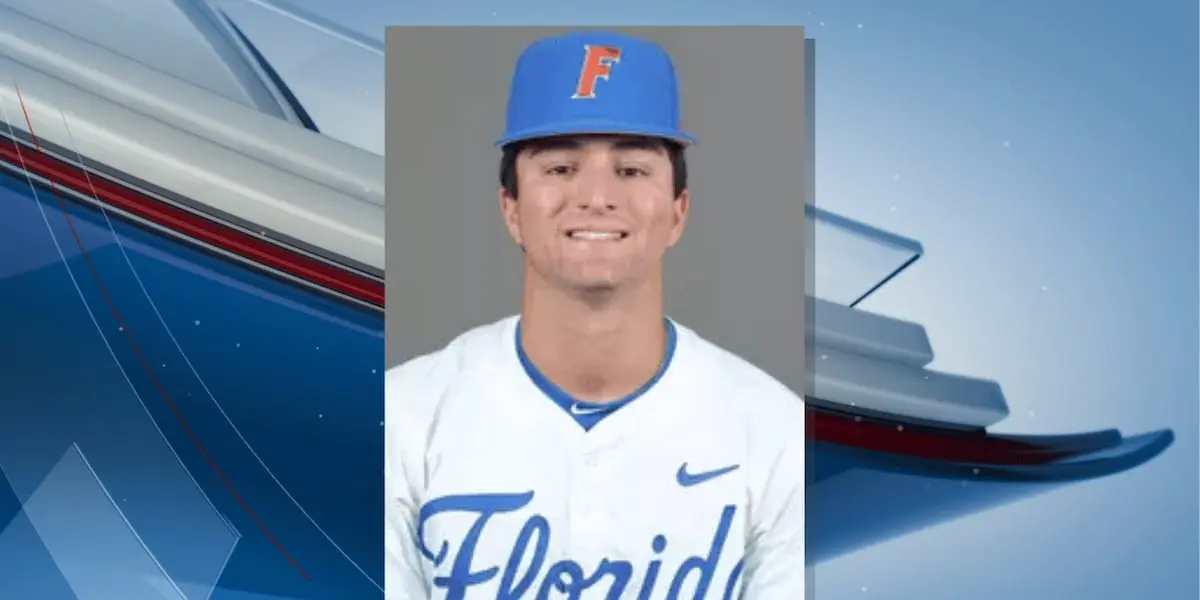
GAINESVILLE, Fla. — A high-profile legal and ethical reckoning has gripped the collegiate athletic community following explosive allegations against a former University of Florida baseball player. Jacob Gomberg, a collegiate pitcher whose athletic career has spanned multiple Division I programs, has been criminally charged and hit with a sweeping federal lawsuit. The legal actions stem from allegations that he distributed unauthorized, sexually explicit media of a fellow student without her consent, utilizing anonymous social media profiles to amplify the content across multiple digital platforms.
The victim, identified in court documents and public filings as Madison Kowalski, courageously stepped forward to break the silence surrounding the incident. Eschewing anonymity, Kowalski has opted to bring the full weight of the federal judicial system against her alleged perpetrator. According to a sworn probable cause affidavit filed in Alachua County, Florida, the ordeal began last November when Kowalski was allegedly recorded in a state of inebriation during an incident of sexual assault. Investigators state that the resulting media—capturing deeply vulnerable and non-consensual moments—was subsequently weaponized and broadcast to a global audience within minutes.
The case has ignited a fierce national conversation regarding the intersection of collegiate sports, student safety, institutional accountability, and the dark underbelly of digital harassment. As Gomberg navigates a tumultuous collegiate athletic trajectory that has seen him move across multiple universities—including stints at the University of Florida, the University of Nevada, Las Vegas (UNLV), and Indiana University—the legal machinery of the state and federal courts continues to close in.
This comprehensive report examines the meticulous chronology of the alleged offense, the investigative breakthroughs that linked Gomberg to the anonymous accounts, the psychological and societal metrics governing digital non-consensual sexual content, the broader implications for collegiate athletic departments, and the path forward as the federal litigation unfolds.
Detailed Chronology of Events
To understand the gravity of the legal actions now facing Jacob Gomberg, it is essential to trace the timeline of events as documented by law enforcement officials, court filings, and the victim’s public disclosures.
The November Incident
The genesis of the criminal complaint and subsequent federal lawsuit traces back to a night in November, the specifics of which are detailed in the Alachua County sworn complaint. According to investigators, Madison Kowalski was inebriated to a degree that compromised her capacity to grant legal or meaningful consent. While in this vulnerable state, she was allegedly subjected to a sexual assault, during which covert recordings were captured without her knowledge or permission.
Kowalski steadfastly maintained to Gainesville police investigators that she never consented to the creation of the video recordings, nor did she ever grant permission for the media to be shared, disseminated, or viewed by anyone else. In cases of sexual cyber harassment and assault, the absence of affirmative, freely given consent is the cornerstone upon which criminal charges are built.
The Digital Dissemination and Viral Spread
Weeks or months following the initial recording, the digital infrastructure of modern social media was allegedly leveraged to inflict maximum psychological damage upon the victim. Investigators assert that Jacob Gomberg orchestrated the distribution of the explicit images and video footage utilizing anonymous burner accounts across major platforms, prominently including Snapchat and X (formerly known as Twitter).
The execution of the digital leak was swift and devastating. According to digital forensics and platform analytics cited in investigative summaries, the explicit video posted to X went viral within minutes of its upload. Driven by algorithmic amplification, anonymous reshars, and the morbid curiosity of online users, the footage racked up thousands of views in a compressed timeframe, exposing Kowalski to widespread public humiliation before she even had the opportunity to alert platform moderators or law enforcement.
The Investigation and Identification
As the digital footprint of the leaked media expanded, local law enforcement launched an active investigation to unmask the perpetrators behind the anonymous accounts. Gainesville police investigators, working in conjunction with digital evidence specialists, deployed cyber-investigative techniques to trace the origin of the posts.
Through IP logs, device identifiers, and cross-platform correlation, investigators successfully connected Jacob Gomberg to the anonymous accounts used to upload and disseminate the explicit content. Law enforcement concluded that the dissemination was not accidental or the result of a misdirected message, but rather an intentional and maliciously executed act. Furthermore, investigators determined that the nature of the distribution was reasonably likely to cause substantial psychological distress and emotional trauma to the victim—a legal threshold required to elevate the conduct to specific criminal statutes.
Legal Action and Filings
Following the conclusion of the preliminary police investigation, the Alachua County State Attorney’s Office filed a sworn complaint against Gomberg, formally charging him with a misdemeanor count of sexual cyber harassment.
Simultaneously, Madison Kowalski took the bold step of filing a federal civil lawsuit against Gomberg. By moving the dispute into federal court, Kowalski’s legal team can pursue damages under federal statutes, civil rights frameworks, and tort law, bypassing the potential limitations of local jurisdictions. While the precise monetary damages and specific legal claims within the federal complaint remain heavily restricted or sealed from immediate public scrutiny, the existence of the suit signals a determined effort to hold the athlete accountable far beyond the scope of a misdemeanor criminal docket.
Supporting Context & Metrics
The case of Kowalski v. Gomberg sits at the dangerous intersection of modern technology, campus culture, and institutional sports. To contextualize the severity of these allegations, it is vital to examine the statistical realities of digital harassment, the legal frameworks governing sexual cyber harassment, and the transient nature of modern collegiate athletics.
The Epidemic of Digital Sexual Harassment
Non-consensual sharing of intimate imagery (often colloquially referred to as "revenge porn," though criminologists prefer the more accurate term "image-based sexual abuse") has reached epidemic proportions in the digital age. According to data compiled by the Cyber Civil Rights Initiative (CCRI):
- Prevalence: More than 10% of Americans have been victims of non-consensual pornography or explicit image sharing.
- Psychological Impact: Victims frequently report symptoms mirroring post-traumatic stress disorder (PTSD), severe anxiety, depression, suicidal ideation, and profound social alienation. The speed and permanence of the internet mean that once an image goes viral, it can resurface indefinitely, trapping the victim in a perpetual loop of trauma.
- Gender Disparity: Studies consistently show that women and marginalized genders disproportionately bear the brunt of image-based sexual abuse, with perpetrators often utilizing the media to exert power, control, or public shaming.
The Athletic Trajectory of Jacob Gomberg
Jacob Gomberg’s athletic career has been characterized by frequent institutional migration—a reality that complicates accountability in collegiate sports. Athletic records indicate the following timeline for the collegiate pitcher:
- 2024–2025 Season: Gomberg pitched in four games for the University of Florida (UF) Gators, operating within the high-pressure environment of Southeastern Conference (SEC) baseball.
- 2026 Season: Following his tenure at Gainesville, Gomberg transferred to the University of Nevada, Las Vegas (UNLV), seeking a fresh start in the Mountain West Conference.
- 2027 Season: In a subsequent move, Gomberg transitioned once again, securing a roster spot at Indiana University to continue his collegiate baseball career.
This pattern of transferring across multiple Division I universities raises critical questions regarding how athletic departments vet incoming student-athletes, manage background checks, and handle pending legal investigations or behavioral red flags. When an athlete can seamlessly jump from the SEC to the Mountain West and subsequently to the Big Ten while legal clouds gather, it underscores systemic vulnerabilities in how universities police and prioritize athletic talent over community safety.
Official Statements and Institutional Silence
As the story broke across local and national media outlets, public scrutiny naturally turned toward the institutions involved—specifically the University of Florida, UNLV, Indiana University, and the legal representatives for both parties.
Law Enforcement and the Judicial System
Alachua County prosecutors and investigators have maintained a professional, measured stance regarding the ongoing criminal proceedings. In public statements, law enforcement reiterated that the charge of sexual cyber harassment is treated with the utmost seriousness, regardless of the accused’s status as a student-athlete.
"The deliberate dissemination of non-consensual intimate media is a cowardly act that inflicts profound, lasting harm on victims," noted a legal advocate unaffiliated with the case. "When perpetrators use anonymity to hide behind keyboards, digital forensics provide the tools necessary to unmask them and drag their actions into the light of a courtroom."
Institutional Responses
The response from the universities associated with Gomberg’s athletic career has been closely monitored by student advocacy groups and legal watchdogs.
- The University of Florida: Having hosted Gomberg during the period when the alleged offense occurred, UF officials have emphasized their commitment to Title IX compliance, student safety, and cooperation with local law enforcement. However, critics argue that universities often move too slowly when athletes are implicated in off-campus misconduct.
- Current and Past Athletic Departments: Both UNLV and Indiana University have faced mounting pressure from alumni, student bodies, and digital activists demanding transparency regarding what administrative staff knew about Gomberg’s legal status at the time of his recruitment and enrollment.
The Victim’s Stance
Madison Kowalski’s decision to share details of the incident on social media and pursue federal litigation has transformed her from a victim into a reluctant public advocate for survivors of digital abuse. By refusing to hide in the shadows, Kowalski has challenged the stigma historically attached to victims of sexual assault and cyber harassment. Her legal counsel has indicated that the federal lawsuit will serve as a vehicle not only for personal restitution but as a public indictment of the systems that permit such violations to occur with impunity.
Future Outlook & Legal Implications
As this high-profile legal battle moves forward, several critical trajectories will define the outcome for all parties involved.
1. The Criminal Proceedings in Alachua County
Jacob Gomberg’s misdemeanor charge of sexual cyber harassment will wind its way through the Florida state court system. While a misdemeanor classification might seem lenient to casual observers given the gravity of the underlying allegations, legal experts note that conviction can still carry substantial penalties, including probation, mandatory counseling, community service, and potential jail time. Moreover, the existence of a permanent criminal record will severely impede Gomberg’s future professional aspirations, both in professional baseball and in the corporate sector.
2. The Federal Civil Lawsuit
The federal lawsuit filed by Madison Kowalski represents the most significant financial and legal threat to Gomberg. Civil litigation in federal court allows for extensive discovery, depositions, subpoena powers, and the potential for multi-million-dollar judgments for intentional infliction of emotional distress, invasion of privacy, and violations of civil rights. Unlike criminal court, where the standard of proof is "beyond a reasonable doubt," civil court operates on a "preponderance of the evidence" standard, which may afford Kowalski a more viable path toward judicial accountability.
3. The Future of Collegiate Athletic Accountability
Beyond the courtroom, this case serves as a watershed moment for the National Collegiate Athletic Association (NCAA) and member institutions. Calls are growing louder for standardized, rigorous background screening policies for incoming transfers. Universities can no longer afford to operate in silos, allowing athletes facing criminal investigations or civil lawsuits to simply pack their bags, transfer to a new program, and sweep their past conduct under the rug.
Institutional integrity must supersede athletic expediency. If universities wish to maintain public trust, athletic directors and university presidents must implement robust compliance protocols that evaluate character, ethics, and respect for the law with the same rigor applied to batting averages, earned run averages, and recruiting rankings.
Conclusion
The legal battle between Madison Kowalski and Jacob Gomberg is far from over, but its resonance is already being felt across campuses nationwide. It stands as a stark reminder of the devastating human toll of digital abuse, the vital importance of holding perpetrators accountable through both criminal and civil avenues, and the urgent need for a cultural awakening within collegiate sports. As the federal lawsuit progresses and the criminal trial looms, the eyes of the legal community, student advocates, and sports fans alike remain fixed on Gainesville, waiting to see whether justice will prevail for a survivor who refused to be silenced.

0 Comments