

Executive Overview
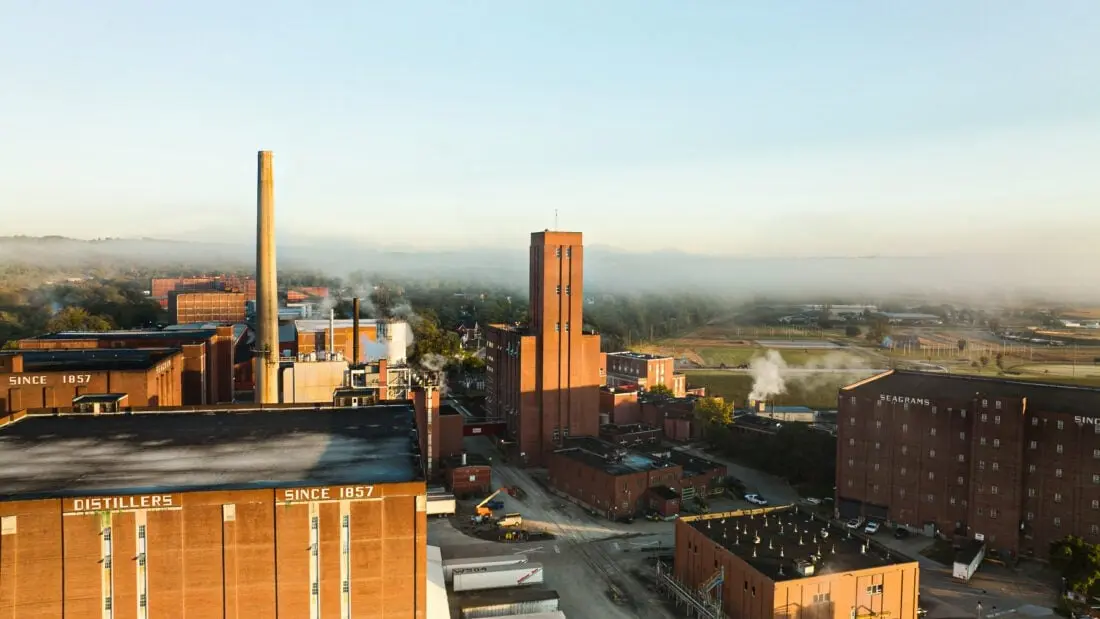
For decades, the phrase "Distilled in Indiana" printed in small, discreet type on the back of a craft whiskey bottle served as a secret handshake among connoisseurs. It was a subtle indicator pointing toward a massive, sprawling industrial campus nestled along the banks of Tanners Creek in Lawrenceburg, Indiana. Here, Midwest Grain Products (MGP) has quietly functioned as the backbone of the American craft spirits boom, distilling bulk bourbon and rye for countless upstart and established labels alike. While many whiskey brands built their entire reputations—and market valuations—around MGP’s distinct flavor profiles, the massive operation itself remained virtually unknown to the everyday consumer.
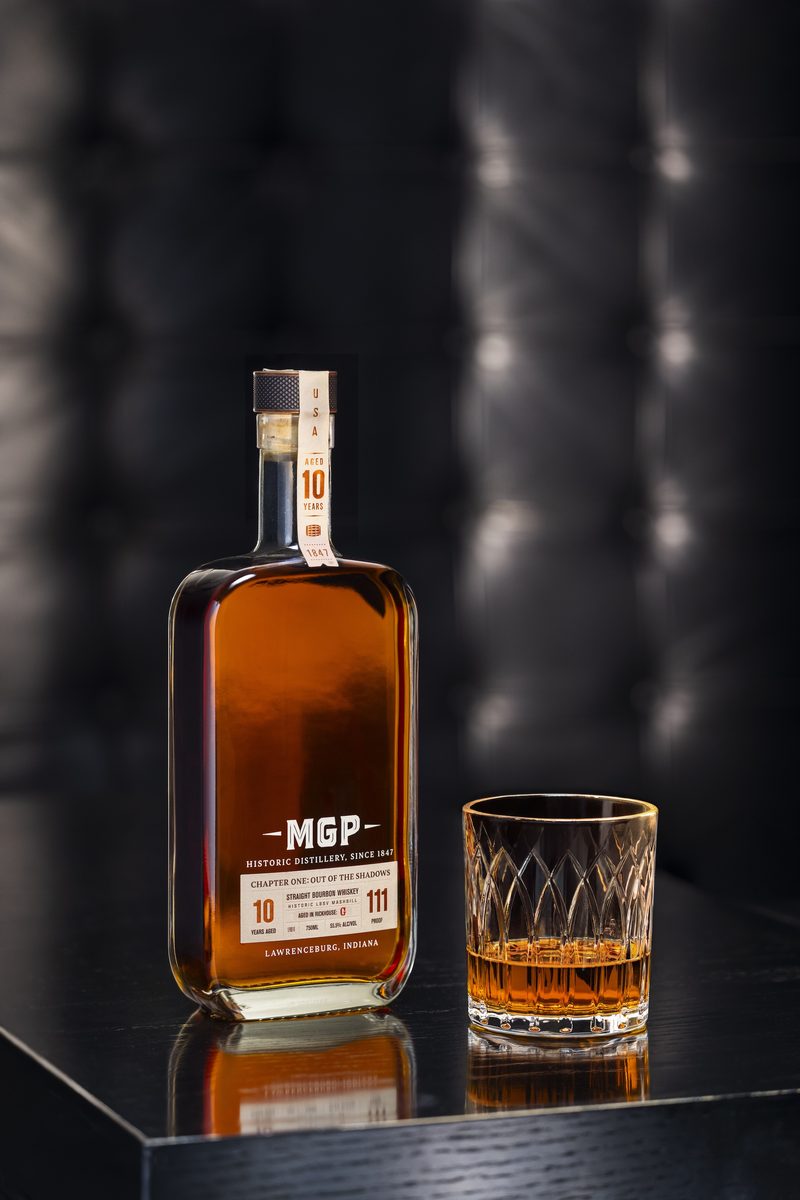
That era of anonymity officially ended at the Kentucky Bourbon Festival in Bardstown. In a historic strategic pivot, MGP has stepped out from behind the curtain to launch its very first proprietary, namesake-branded whiskey: MGP Chapter One: Out of the Shadows.
Priced at $70 and bottled at 111 proof, this ten-year-old high-rye bourbon represents a monumental shift for the industrial titan. Coinciding with the release, the Lawrenceburg facility—briefly branded as the Ross & Squibb Distillery in 2021—is reverting to its roots under the MGP Distillery banner. Bearing the provocative tagline "The distillery behind the curtain is revealed," Chapter One is not merely a new product launch; it is a long-overdue declaration of identity from an American whiskey institution that is finally claiming its rightful place in the spotlight.
Detailed Chronology: From Rossville Pioneers to the Seagram Era and Beyond
To understand the magnitude of MGP’s public debut, one must trace the deep historical roots of the Lawrenceburg facility, a campus whose timeline reads like a micro-history of American distilling itself.
1. The Nineteenth-Century Origins (1847)
Commercial distillation on the Lawrenceburg site dates back to 1847 with the establishment of the Rossville Distillery. Founded during an era when small, agrarian distilleries dotted the American landscape, the operation laid the foundation for the region’s industrial-scale alcohol production. It was later joined by the Squibb Distillery, cementing the area’s reputation for producing high-caliber spirits long before modern branding and marketing departments dictated industry trends.
2. The Seagram Transformation (1933)
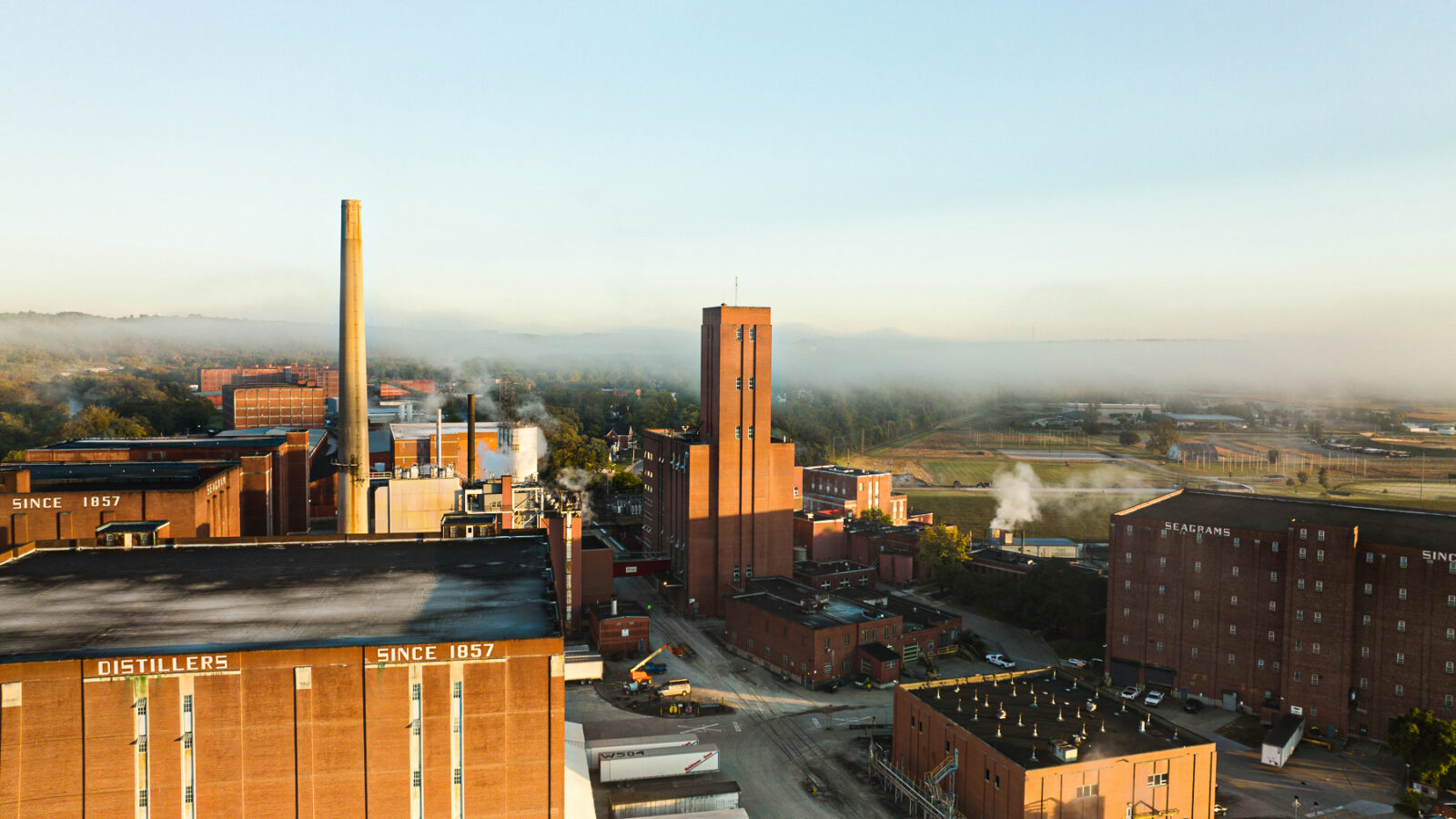
The modern architecture and staggering operational scale of the campus, however, are largely the legacy of spirits giant Seagram, which acquired and heavily expanded the facility beginning in 1933 following the repeal of Prohibition. Seagram rebuilt the complex to fuel the production of its flagship offering: Seagram’s Seven Crown whiskey. By blending multiple components, Seagram turned Seven Crown into an American cultural phenomenon. At its peak during the 1970s, the brand moved millions of cases annually, establishing the Lawrenceburg site as one of the most technologically advanced and operationally versatile distilleries in the Western Hemisphere.
3. The Bulk-Production Era and the Craft Boom
As market trends shifted away from blended whiskeys toward single-barrel bourbons and high-rye craft spirits in the late 2000s and 2010s, MGP pivoted strategically. Rather than building consumer-facing brands, the company capitalized on its massive production capacity to supply bulk whiskey to a burgeoning wave of craft distillers and independent non-distilling producers (NDPs).
What started as an open secret among industry insiders gradually transformed into a badge of honor. Upstart labels proudly touted their Indiana provenance, recognizing that MGP’s rigorous distillation standards and unique flavor profiles commanded instant respect among hardcore enthusiasts.
4. The Rebrand and the Reveal (2021–2026)
In 2021, the company briefly attempted a localized consumer-facing identity by renaming the campus the Ross & Squibb Distillery. While successful in launching regional products, leadership realized that the true equity lay in the name whispered across enthusiast forums and tasting rooms worldwide. The 2026 debut of Chapter One: Out of the Shadows marks the culmination of this evolution—a deliberate reclaiming of the MGP legacy.
Supporting Context & Metrics: Inside the Industrial Behemoth
A behind-the-scenes tour of the Lawrenceburg facility reveals an industrial cityscape that leaves visitors awestruck. Spanning roughly a mile along Tanners Creek—which empties into the Ohio River just downstream—the campus operates with precision engineering, utilizing natural geography and historical infrastructure to power its modern output.
Water and Agriculture: The Natural Engine
The distillery’s location is no accident. Situated directly above the vast Great Miami aquifer, the facility enjoys a nearly limitless supply of pure water drawn at a constant, cool 56 degrees Fahrenheit.
- Daily Draw: The distillery extracts approximately 8.5 million gallons of groundwater daily for production and cooling processes without impacting the local water table.
- Grain Sourcing: Corn arrives via a meticulously choreographed succession of tractor-trailers, primarily sourced from farms within a 100-mile radius. The grain is hoisted into towering silos before being milled, cooked, and mashed.
Versatility and Production Scale
While many modern craft distilleries focus on a handful of mash bills, MGP’s industrial heritage affords it unmatched flexibility. In a typical year, the Lawrenceburg facility produces more than forty different whiskey mash bills, alongside gin, vodka, and neutral grain spirits.
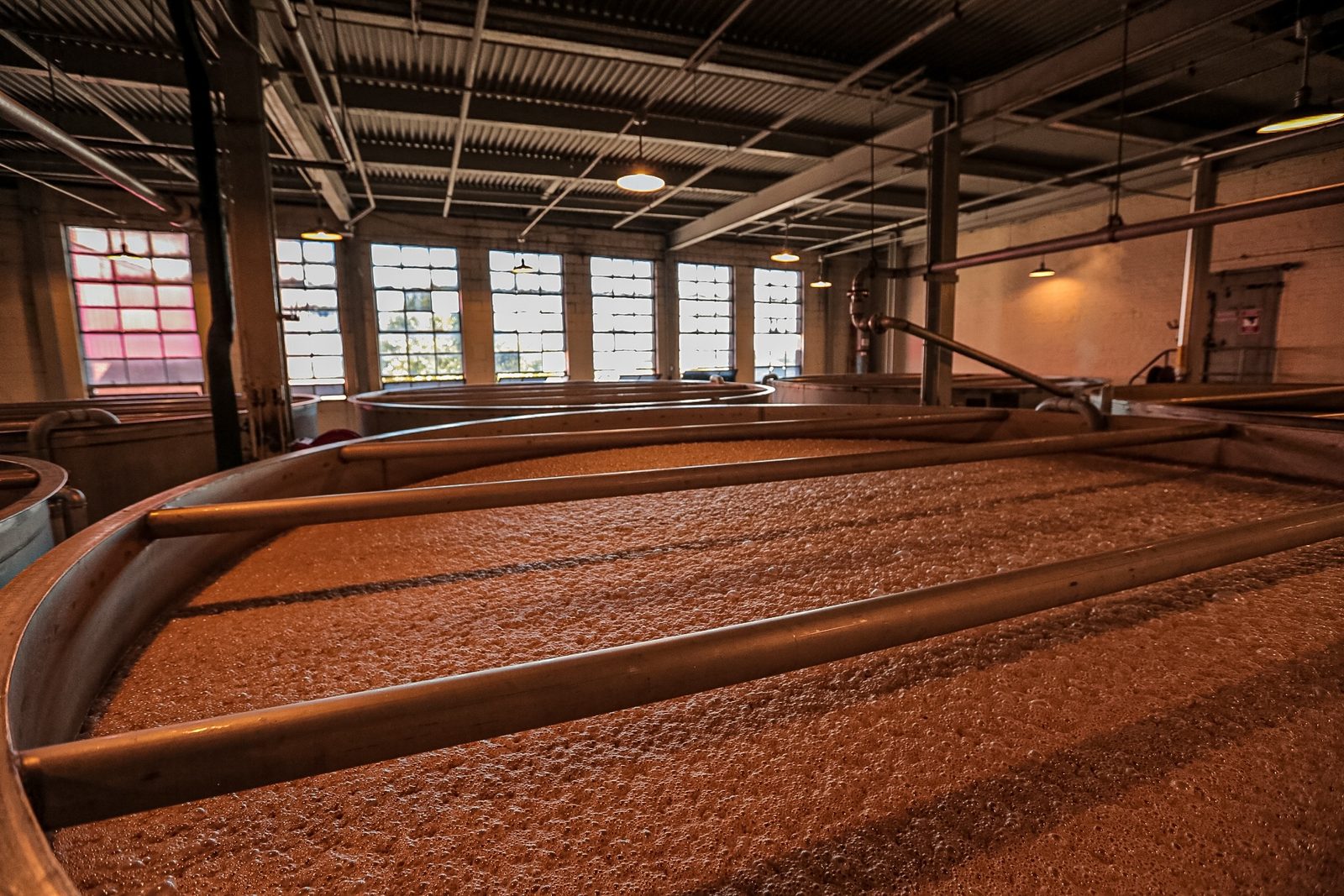
- Fermentation Infrastructure: The facility houses sixteen active stills and massive stainless-steel fermenters. The largest tanks stand two stories tall and hold roughly 28,000 gallons each—what master distiller Ian Stirsman casually refers to as "the small ones."
- The Control Room: Operations are monitored from state-of-the-art control rooms that evoke comparisons to NASA space-flight centers rather than traditional country rickhouses.
The Historic Yeast Strain
One of MGP’s most closely guarded operational secrets dates back to the Seagram era: its proprietary house yeast strain, originally isolated and cultivated in the 1940s. Yeast dictates not only alcohol yield during fermentation but also governs the complex esters that define a whiskey’s aromatic profile.
To protect this vital asset, MGP stores master samples in secure, offsite locations. Technicians painstakingly propagate an almost imperceptible amount of the strain to inoculate the massive fermenters. According to Stirsman, "Just that tiny bit of yeast will end up making enough for about fifteen 50,000-gallon fermenters."
Warehousing and Aging Microclimates
Once barreled, the distillate is transferred to historic brick and concrete warehouses that ring the campus. Constructed across different eras, these multi-story facilities feature diverse microclimates. Some warehouses incorporate subterranean basements where barrels mature in cooler, subterranean conditions, imparting unique oak interaction and ester development over time.
Official Statements and Industry Perspectives
The transition from invisible supplier to marquee brand represents a delicate balancing act. MGP must step into the light without alienating the craft brands and NDP partners who built their businesses on the back of Indiana whiskey. According to company leadership, the move is designed to celebrate shared heritage rather than compete with long-standing clients.
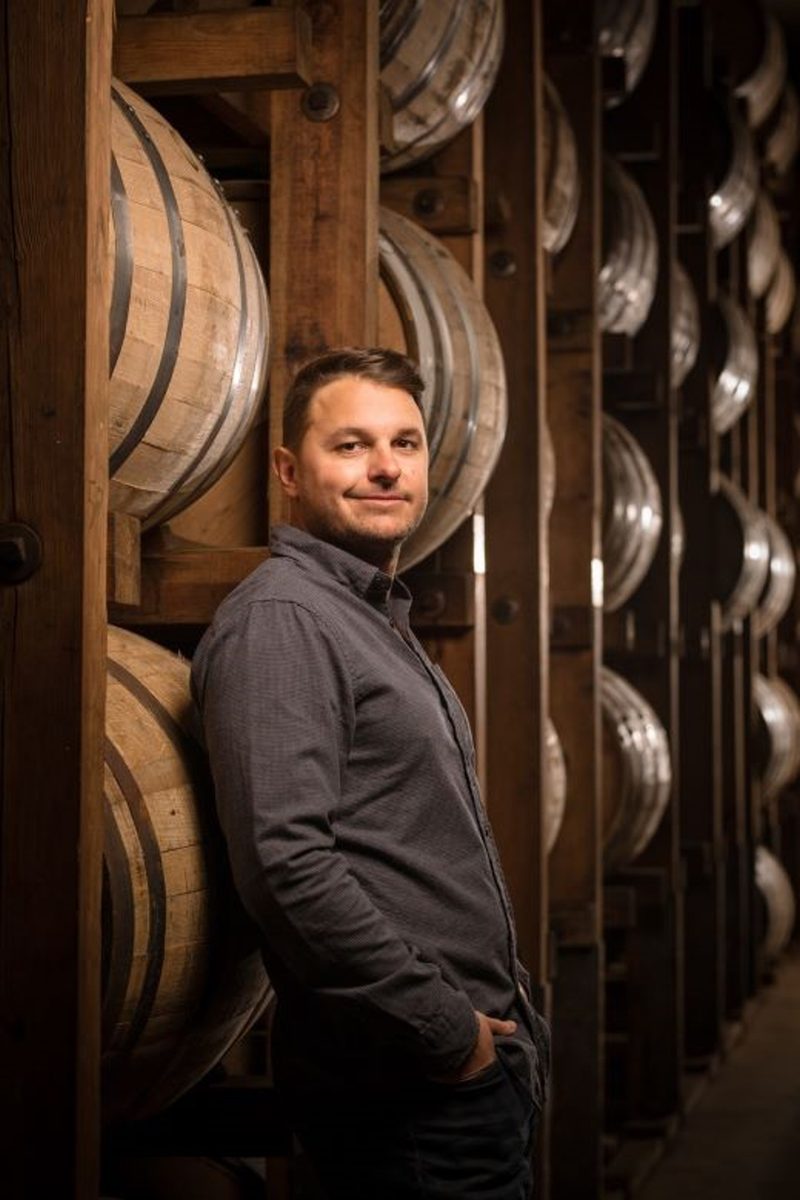
"It went from a thing that nobody talked about to now, for most of our customers, it’s kind of a badge of honor," says Ian Stirsman, master distiller at the Lawrenceburg facility. "The MGP name carries so much weight with people in the industry and with enthusiasts, but your everyday consumer doesn’t necessarily know that name."
Stirsman emphasizes that Chapter One serves as an unfiltered expression of the distillery’s core identity—a tangible manifestation of decades of institutional knowledge.
"This is the first thing that’s just us shouting ‘This is from us’ and putting the MGP name actually on the label," Stirsman notes.
Reflecting on the whiskey selected for this inaugural release—a ten-year-old high-rye bourbon aged in the historic Warehouse G—Stirsman points directly to the mash bill: 60 percent corn, 36 percent rye, and 4 percent malted barley.
"There’s nothing more quintessentially MGP than that," he says. Describing the flavor profile, which balances rich custard and caramelized sugar with a lively, peppery bite and classic cherry-cola notes, Stirsman concludes: "I think this is a good example of the best of what we do."
Future Outlook: What Chapter One Means for the Market
The debut of MGP Chapter One: Out of the Shadows is expected to send ripples across the American whiskey landscape. For years, independent brands have leaned on the "Distilled in Indiana" designation as a shorthand for quality. By launching an official, distillery-branded flagship, MGP is establishing a benchmark against which all sourced Indiana whiskey will inevitably be measured.
Furthermore, the release signals the beginning of an ongoing series. Industry analysts anticipate subsequent annual releases that will explore older stocks, experimental mash bills, and alternative barrel finishes from MGP’s vast inventory warehouses.
For the everyday consumer, the $70 price point for a ten-year-old, 111-proof bourbon positions Chapter One as an aggressively competitive offering in an increasingly inflated market. As the curtains finally pull back on Lawrenceburg’s industrial giant, whiskey enthusiasts no longer have to guess what is happening behind closed doors. MGP has arrived, and American whiskey will never look at Indiana the same way again.

0 Comments