

Executive Overview
For over a century, the sparkling subterranean history of Arkansas has captivated geologists, treasure hunters, and fine art aficionados alike. Now, that legacy has come full circle. At the Crystal Bridges Museum of American Art in Bentonville, Arkansas, a breathtaking new exhibition titled Nature Adorned: The Artistry of Tiffany & Co. and the American Imagination has opened its doors, running through March 29, 2027.
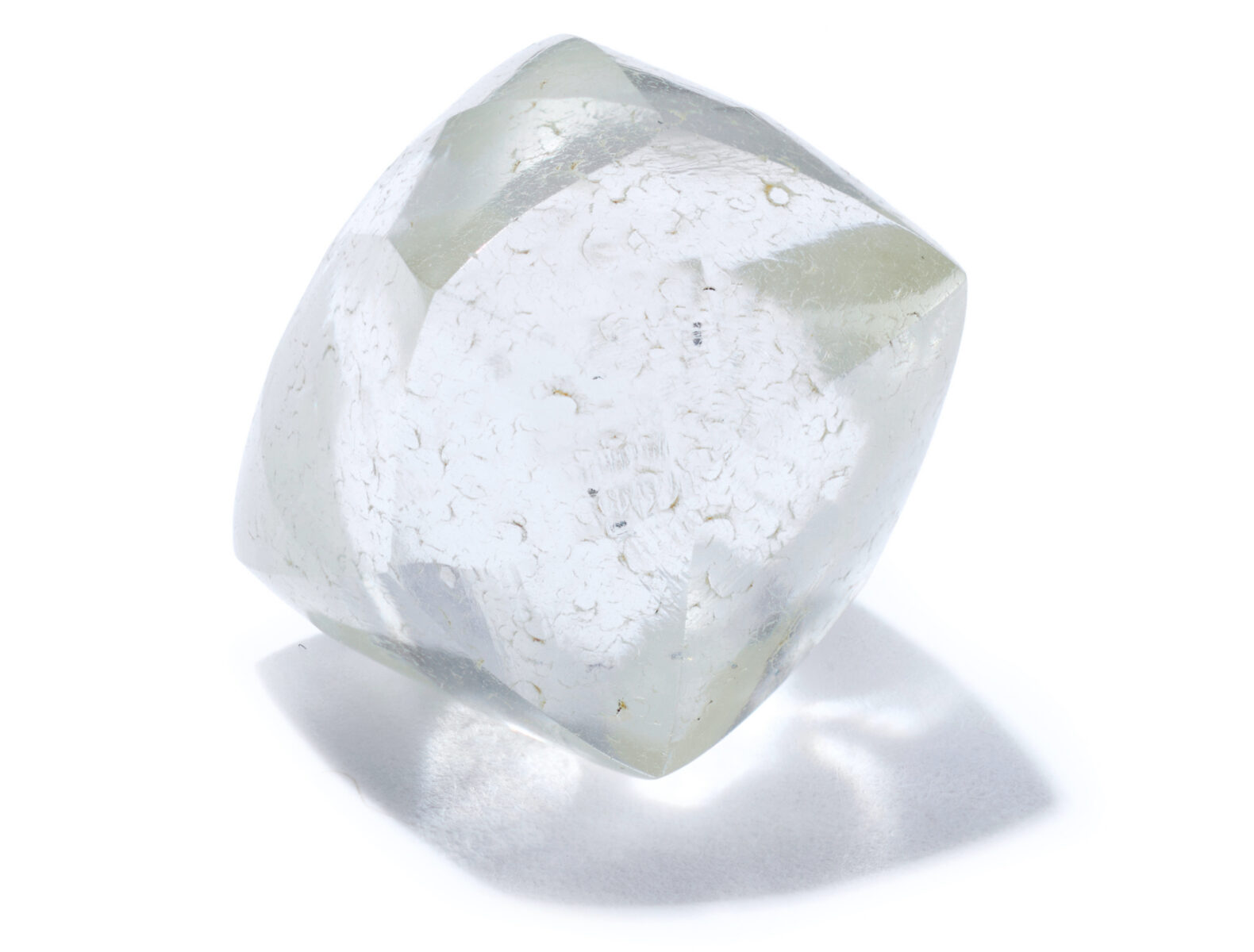
At the absolute center of this cultural milestone is a momentous homecoming: the legendary 27.21-carat "Arkansas Diamond." Discovered by an eleven-year-old girl in Searcy, Arkansas, a century ago, the massive gemstone was swiftly acquired by the prestigious House of Tiffany and has remained housed within the high-security vaults of the Tiffany Archives in New York City ever since. Today, it travels back to its native soil, accompanied by two other historic diamonds unearthed in the Natural State.
Curated with meticulous attention to detail by Jen Padgett, Nature Adorned places these exceptional regional gemstones in direct, striking dialogue with rare Tiffany & Co. jewelry, masterworks of American painting, and the permanent collection’s own geological specimens. By juxtaposing the natural earth with human artistic ingenuity, the exhibition explores a profound central question: how has the organic, untamed world of nature inspired generations of fine artists, painters, and master jewelers?
Spanning decades of American creativity—from late-19th-century Art Nouveau masterpieces to mid-century abstract geometry—the exhibition creates an immersive environment where minerals, gemstones, and canvases reflect one another, casting entirely new light on both the Tiffany Archives and the cultural landscape of the American South.
Detailed Chronology: From Volcanic Upheaval to Modern Museum Halls
To fully appreciate the gravity of the Arkansas Diamond’s return, one must trace a geological and historical timeline stretching back tens of millions of years.
- 100 Million Years Ago (Cretaceous Period): Deep within the earth beneath what is now Southwest Arkansas, a violent volcanic explosion forced a column of magma upward through the Earth’s crust. Known as a lamproite pipe, this geological event carried untold thousands of diamonds from the mantle to the surface near modern-day Murfreesboro, laying the foundation for America’s only active diamond-producing region.
- 1906 (The First Discovery): Long dismissed as unlikely terrain for precious stones, Arkansas surprised the world when an unsuspecting local farmer unceremoniously unearthed the first diamond on the property that would later become a public state park. This discovery triggered a minor gold-rush-style frenzy in the region.
- 1926 (The Arkansas Diamond Emerges): Exactly twenty years after the first discovery, an eleven-year-old girl walking in Searcy, Arkansas, stumbled upon an extraordinary crystal. Weighing an astonishing 27.21 carats, it stood out immediately as one of the largest, highest-quality gem-quality diamonds ever found in the United States. Recognizing its historic and commercial value, Tiffany & Co. acquired the stone, whisking it away to New York City, where it became a crown jewel of the corporate archives.
- The Mid-To-Late 20th Century: Alongside the diamond trade, American artistic movements evolved rapidly. Designers like George Paulding Farnham and later the legendary French designer Jean Schlumberger translated organic forms—ranging from orchids to exotic birds—into enduring treasures for Tiffany & Co. Simultaneously, painters such as Martin Johnson Heade and George Inness captured the shifting moods of natural light and botanical life across large canvases.
- October 2026 (The Grand Homecoming): Nature Adorned: The Artistry of Tiffany & Co. and the American Imagination opens at the Crystal Bridges Museum of American Art in Bentonville, Arkansas. For the first time in a century, the 27.21-carat Arkansas Diamond leaves New York to go on public display in the state of its birth, anchoring an exhibition that bridges fine art, decorative design, and regional natural history.
- March 29, 2027 (Exhibition Close): The scheduled conclusion of the exhibition, after which the loaned archival items—including the historic diamonds—will return to their permanent homes, leaving behind a permanently enriched understanding of American artistic heritage in Bentonville.
Supporting Context & Metrics: The Science and Art of the Exhibition
The brilliance of Nature Adorned lies in its interdisciplinary approach. It is not merely a showcase of expensive baubles, but an academic and aesthetic exploration of biomimicry and geological wonder.

The Geology of the Natural State
Arkansas holds a unique, singular distinction in North America: it is home to Crater of Diamonds State Park in Murfreesboro, the only place on the continent where amateur prospectors can search an eroded volcanic crater for genuine diamonds and legally keep whatever they find. Over the decades, visitors have uncovered tens of thousands of stones. However, finding a stone of the sheer magnitude of the 27.21-carat Arkansas Diamond is a once-in-a-century occurrence.
The exhibition also features raw, un-faceted mineral specimens drawn from Crystal Bridges’ permanent holdings. Among these are:
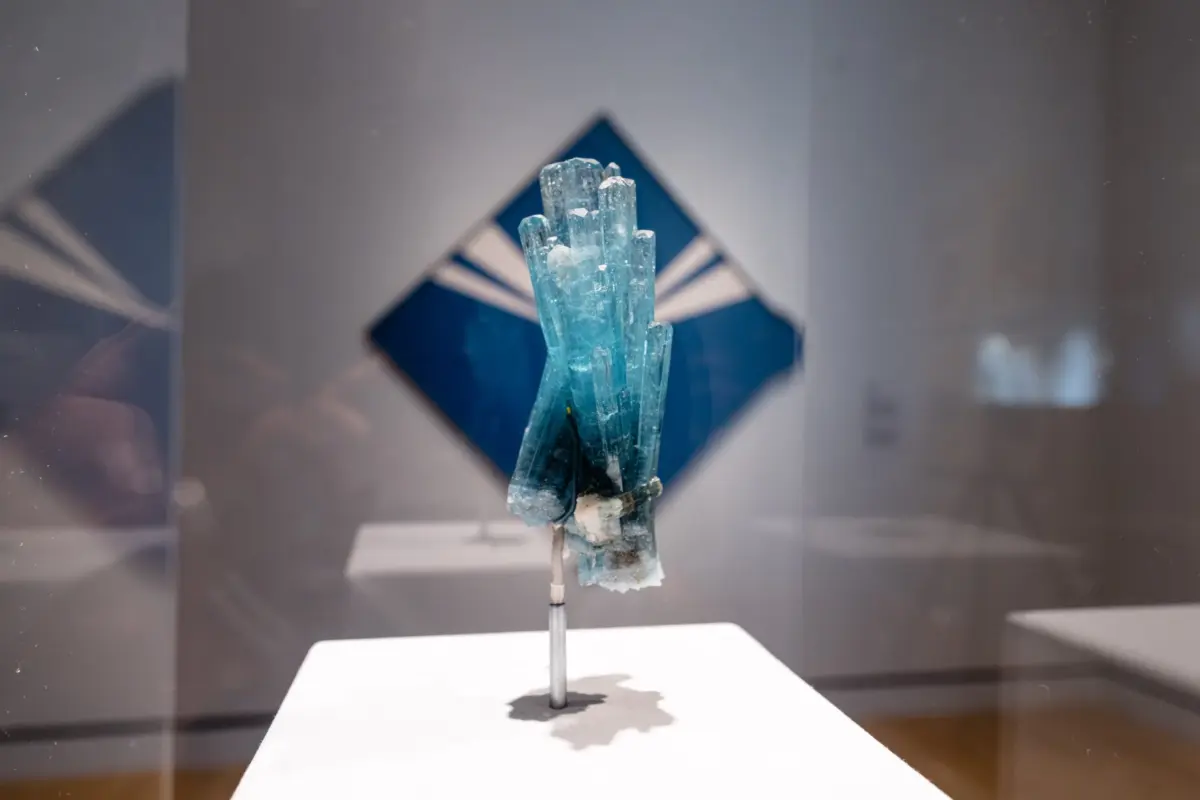
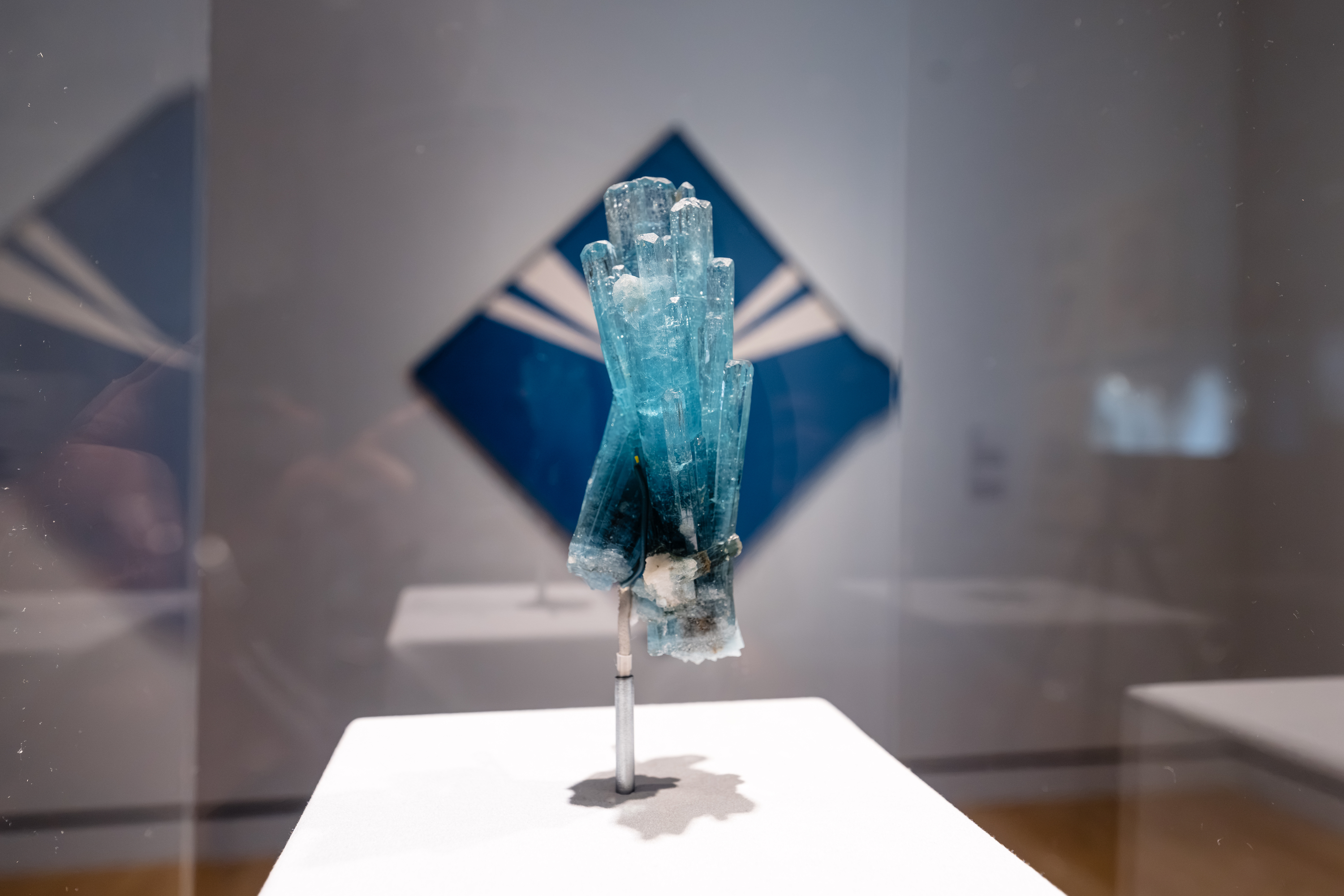
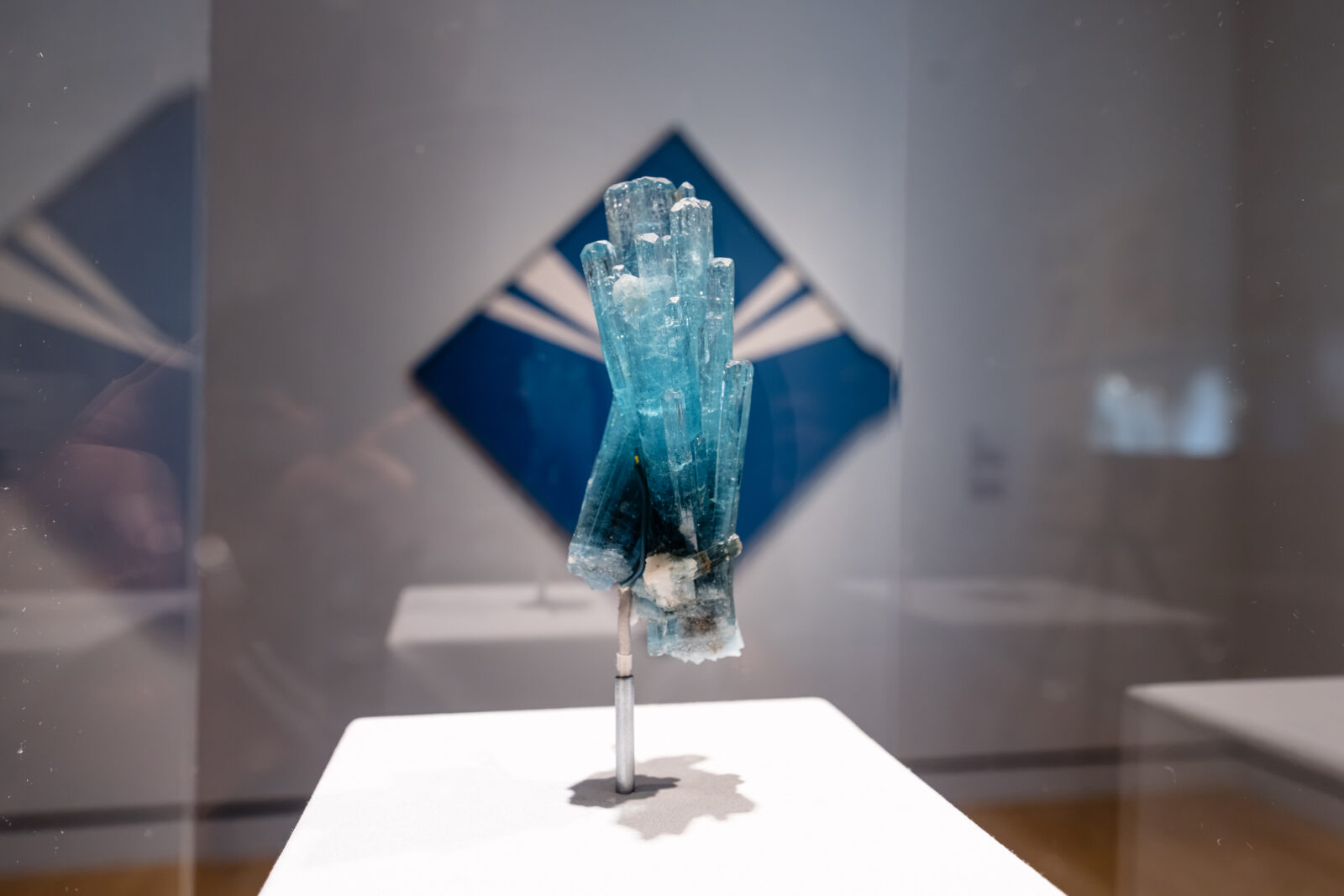
- Beryl: A mineral crystal that acquires its striking, hypnotic blue hues through iron impurities within its chemical structure.
- Quartz Crystal: Towering nearly four inches tall, showcasing the perfection of natural geometrical growth.
Masterpieces in Dialogue
The curatorial framework pairs physical gems and jewelry with master paintings and sculptures to highlight shared organic motifs:
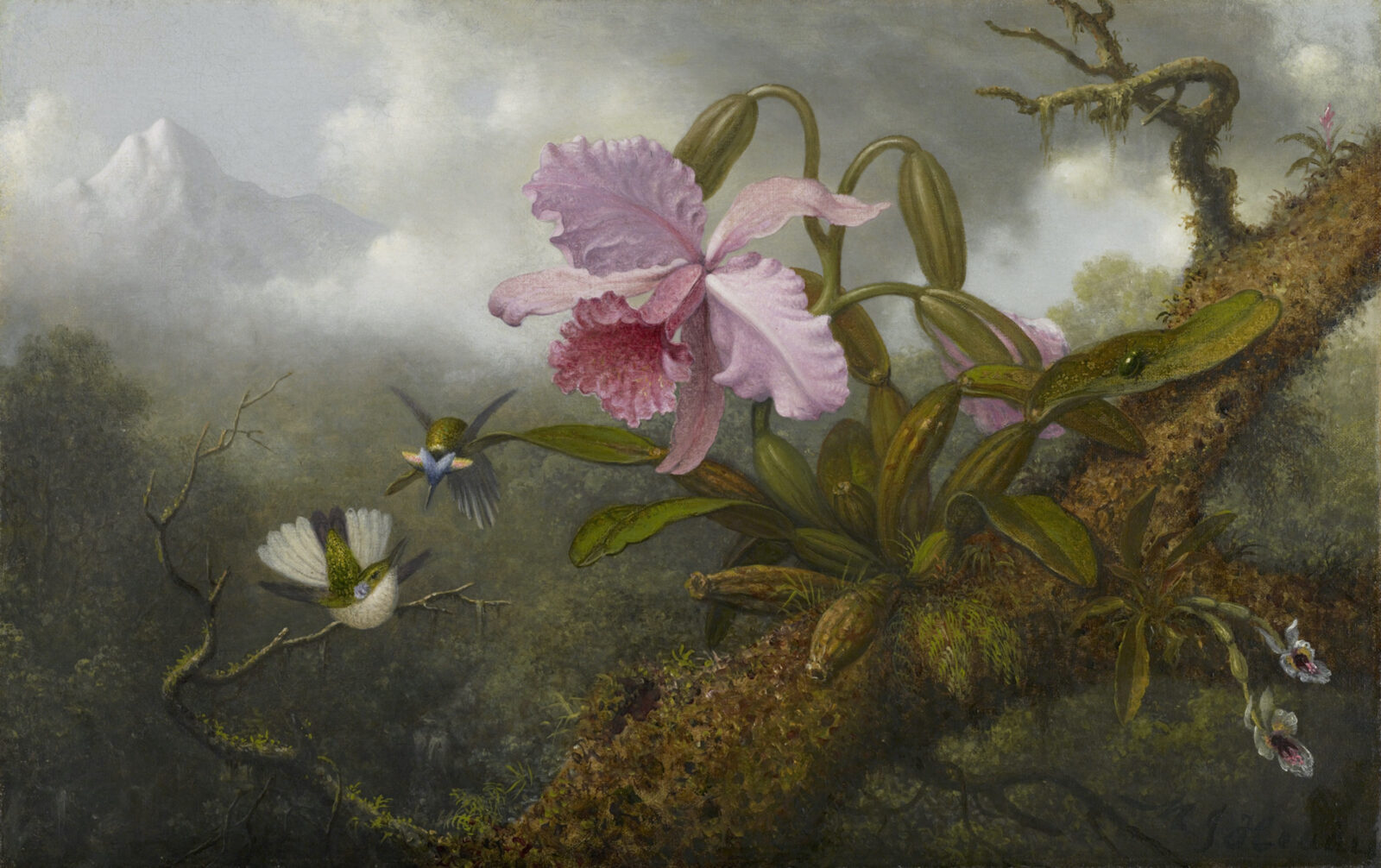
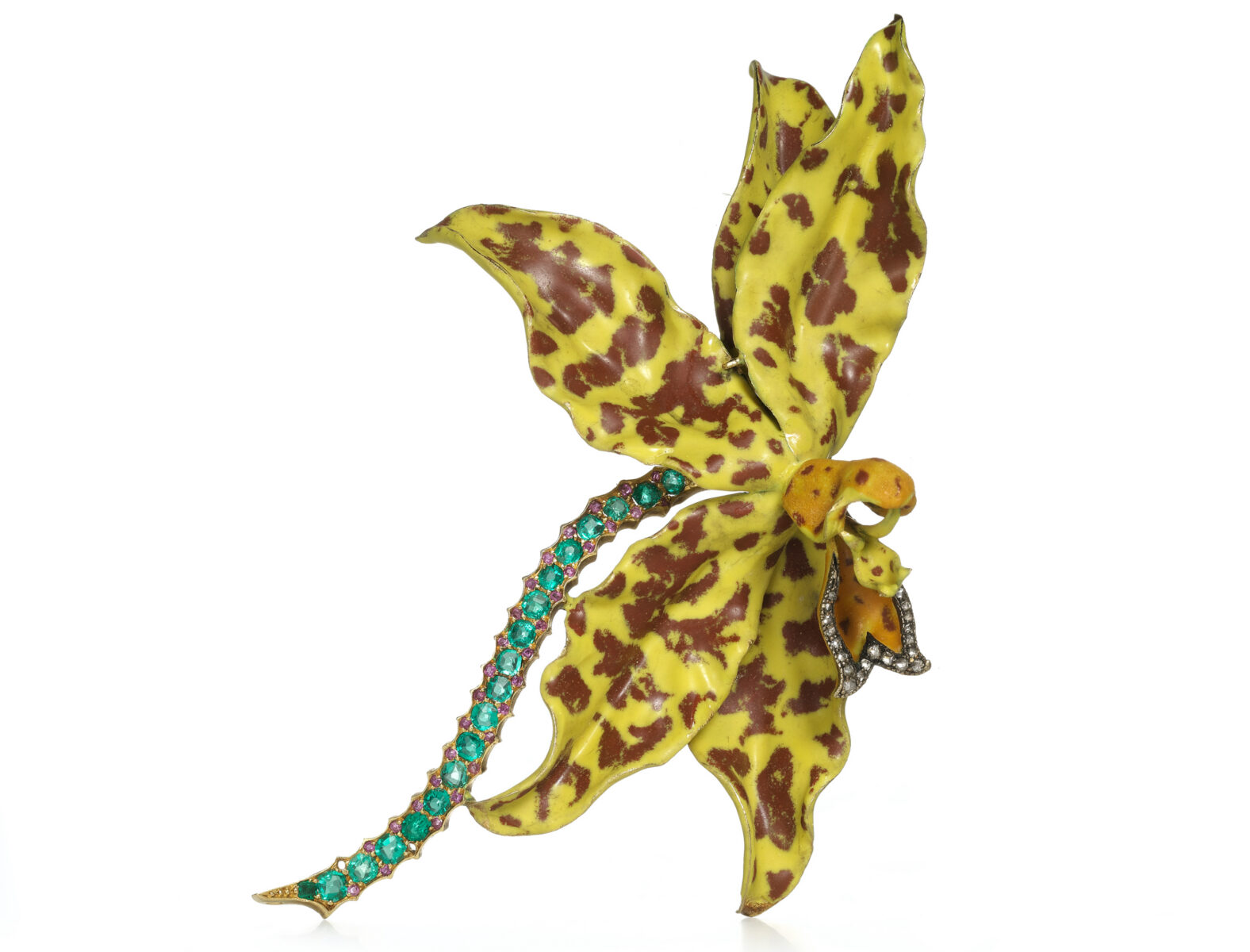
- Orchids and Enamel: George Paulding Farnham’s late-19th-century Tiger Orchid Brooch—crafted meticulously for Tiffany & Co. using sterling silver, diamonds, emeralds, pink sapphires, and vitreous enamel—is displayed in direct conversation with Martin Johnson Heade’s luminist masterpiece, Cattleya Orchid, Two Hummingbirds and a Beetle (c. 1871). Both works capture the iridescent, hyper-realistic allure of tropical flora and fauna.
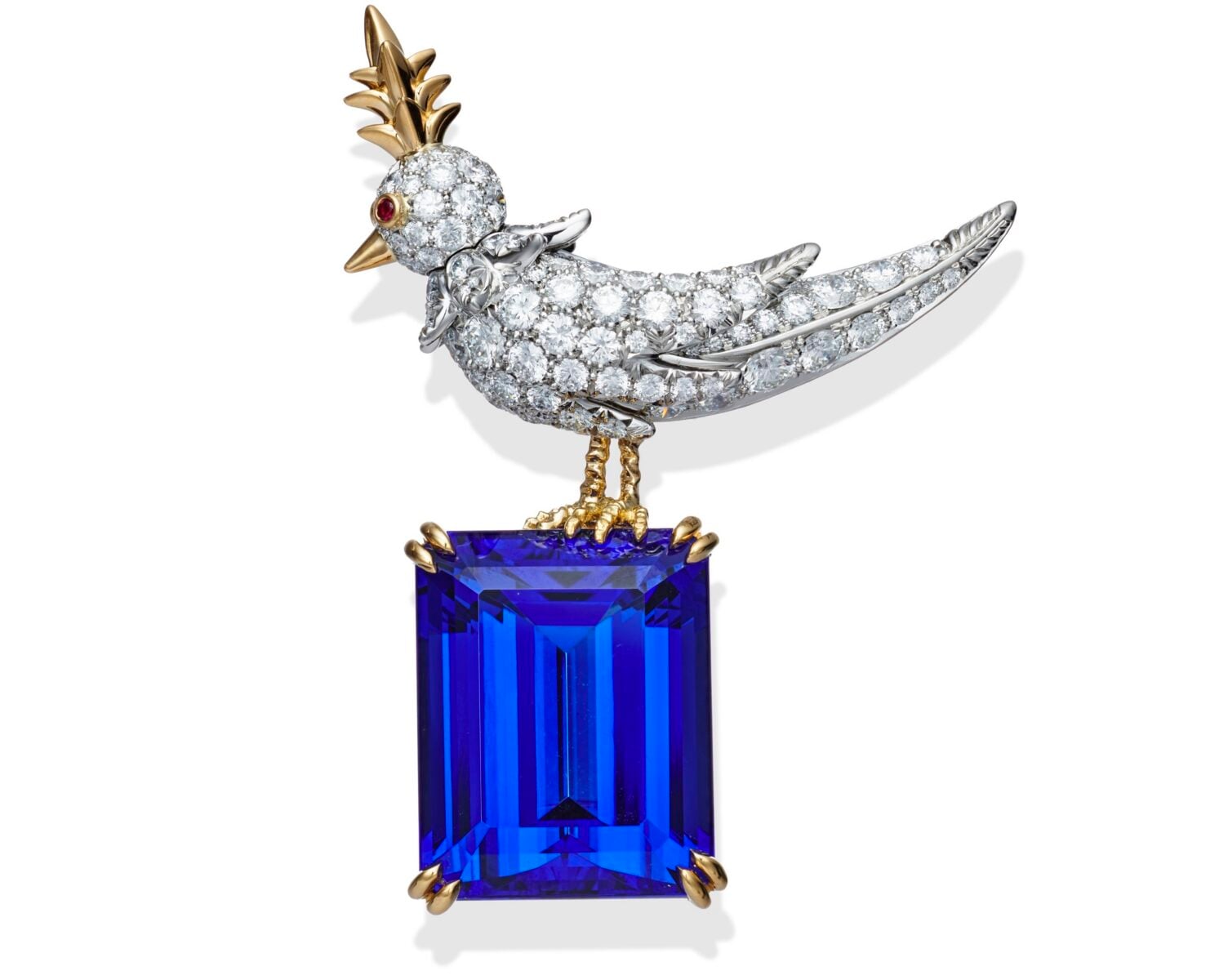
- Organic Light and Line: Jean Schlumberger’s whimsical Bird on a Rock brooch is juxtaposed against Hope Gangloff’s contemporary figurative painting, Queen Jane Approximately. Both pieces manipulate organic forms and textures, exploring how rigidity in metal and fluidity in paint can evoke the same emotional response to nature.
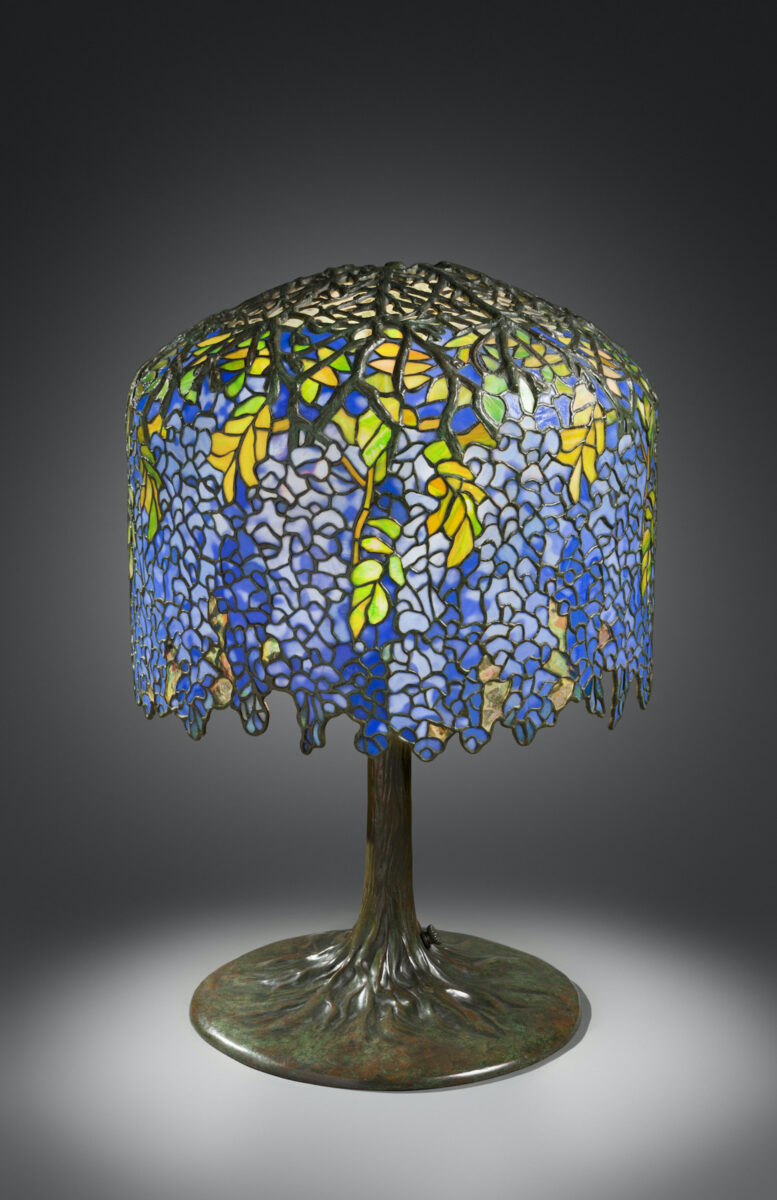
- The Art Nouveau Glow: Clara Driscoll, who famously led the pioneering all-female "Tiffany Girls" glass-cutting department at Tiffany Studios, engineered the legendary Wisteria Table Lamp (c. 1905–1906). Its cascading, tree-like glass canopy is displayed alongside George Inness’s 1867 atmospheric landscape painting, Sunset on a River, creating a profound meditation on the manipulation of natural light through human craftsmanship.
- Geometry and Space: The mineral crystals and diamonds are set against Carmen Herrera’s stark, striking 1965 abstract painting, Cerulean. Herrera’s work ingeniously transforms a familiar square canvas into a diamond shape through precise cuts in spatial geometry, drawing a visual line between mathematical abstraction and the crystalline structures found deep within the earth.
Official Statements and Curatorial Insights
The cultural significance of bringing the Tiffany Archives to Northwest Arkansas cannot be overstated. Museum leadership and curatorial staff have emphasized that the exhibition reframes how visitors perceive the relationship between high design and the natural world.
"The pairings across the Tiffany Archives and Crystal Bridges help us to see both collections in a new light," explains Jen Padgett, the exhibition’s curator. "Comparing how artists draw inspiration from nature—whether depicting an orchid in a painting or transforming its form into a brooch—allows us to appreciate their ingenuity and imagination."
Padgett notes that the presence of the historic stones acts as a vital anchor for regional identity.
"Having the diamonds here allows us to highlight Arkansas’s natural resources," Padgett continues, "and bring attention to the state’s unique place in the story of American gems."
By removing the barrier between "fine art" (paintings and sculptures housed in climate-controlled galleries) and "decorative art" (jewelry, lamps, and gemstones), Nature Adorned challenges traditional museum hierarchies. It posits that a diamond plucked from an Arkansas volcanic pipe and cut by a master lapidary is every bit as expressive of the human and natural spirit as a brushstroke by Inness or Herrera.
Future Outlook: A Lasting Legacy for Crystal Bridges
As Nature Adorned: The Artistry of Tiffany & Co. and the American Imagination welcomes visitors through the winter of 2026 and into the spring of 2027, its impact extends far beyond its closing date.
For the Crystal Bridges Museum of American Art, hosting an exhibition of this caliber cements its reputation as a world-class institution capable of securing top-tier loans from exclusive institutional repositories like the Tiffany Archives in New York. It signals a growing recognition of regional museums as premier destinations for interdisciplinary art historical scholarship.
Furthermore, the exhibition serves as a powerful economic and cultural boost for Arkansas tourism. By tying the global prestige of the Tiffany brand back to the local, rugged soil of Crater of Diamonds State Park and the geological wonders of the Ouachita Mountains, the museum has forged an unforgettable narrative.
When the 27.21-carat Arkansas Diamond eventually makes its journey back to the Manhattan vaults in late March 2027, it will leave behind a changed landscape. Visitors who walked through the galleries will never look at a sparkling stone, a stained-glass lamp, or an oil painting the same way again. They will see them as different expressions of the same timeless impulse: humanity striving to capture, honor, and wear the breathtaking, untamed beauty of the natural world.

0 Comments