Long before the arrival of modern institutions, the primordial geological forces shaping North America left an indelible signature across the landscape of Arkansas. Roughly one hundred million years ago, a violent volcanic pipeline thrust untold thousands of diamonds from the Earth’s mantle directly to the surface in what is now the Natural State. What followed was a storied, centuries-old legacy of discovery, fortune, and high-fashion craftsmanship.
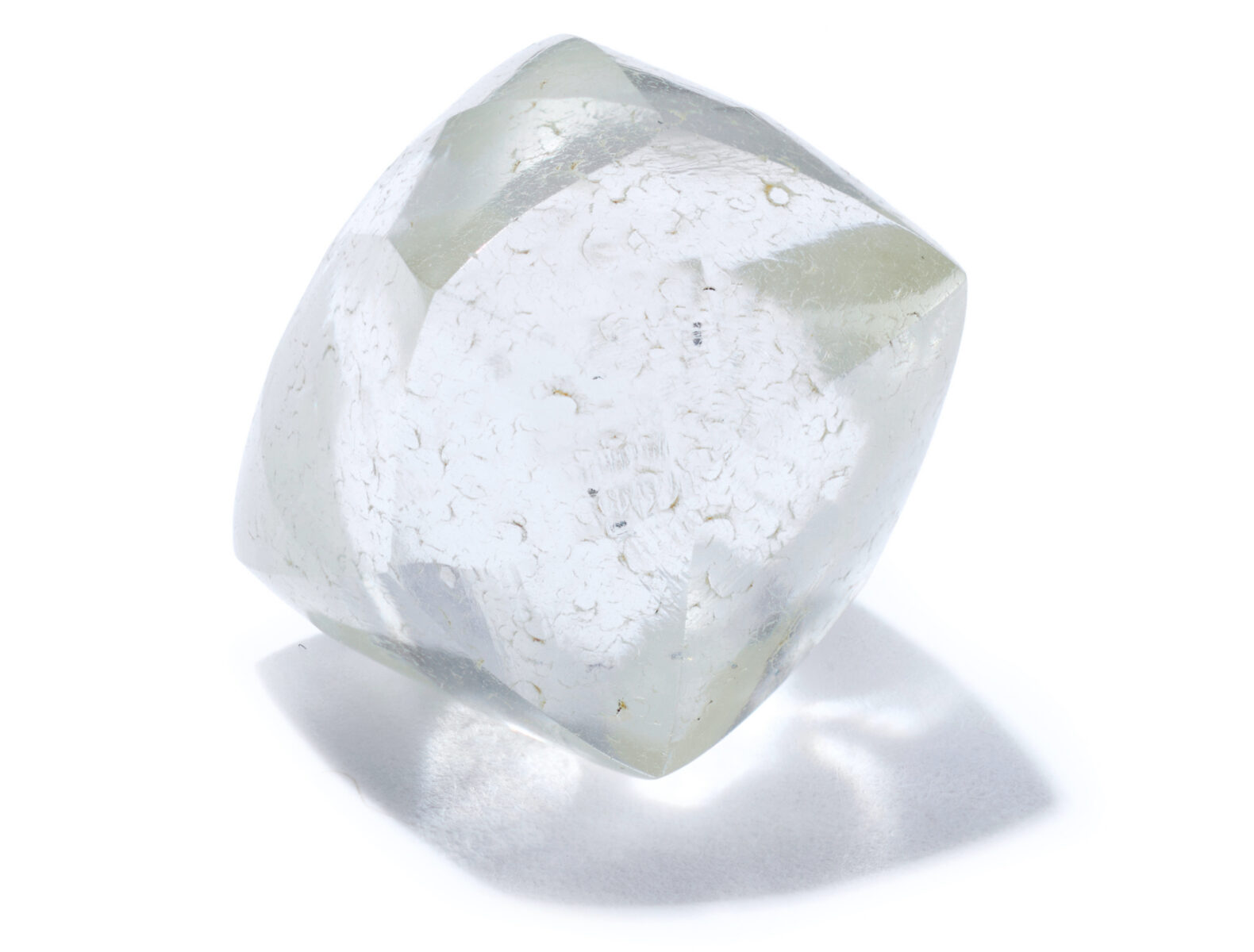
At the center of this legacy is the legendary "Arkansas Diamond"—an astonishing 27.21-carat marvel unearthed by an eleven-year-old girl in Searcy, Arkansas, in 1926. Purchased swiftly by the prestigious house of Tiffany & Co., the gemstone has remained securely housed within the elite Tiffany Archives in New York City for nearly a century.
Now, in a triumphant domestic homecoming, the monumental diamond—alongside two other notable diamonds discovered within the state—has traveled back to Arkansas. They serve as the crown jewels of a major new exhibition, Nature Adorned: The Artistry of Tiffany & Co. and the American Imagination, currently on view at the Crystal Bridges Museum of American Art in Bentonville.
Running through March 29, 2027, the exhibition represents a breathtaking cross-disciplinary synthesis. It deliberately pairs high jewelry masterpieces from the Tiffany Archives with iconic American paintings, sculptures, and raw geological minerals drawn from Crystal Bridges’ permanent collection. By placing fine art and master-crafted jewelry in direct dialogue, Nature Adorned explores how the untamed beauty of the natural world has relentlessly sparked human imagination, ingenuity, and artistic expression across generations.
Detailed Chronology: A Century of Discovery and Design
To fully grasp the magnitude of the Nature Adorned exhibition, one must trace the intertwined histories of Arkansas diamond mining and the evolutionary arc of American decorative arts. The chronology of these treasures spans prehistoric geological cataclysms to modern curatorial triumphs.
The Deep Geological Past (c. 100 Million Years Ago)
Deep beneath the surface of southwestern Arkansas, intense magmatic activity forced a rare volcanic pipe—known as a lamproite blow—upward. This geological vehicle carried deep-earth carbon deposits to the upper crust, crystallizing them into diamonds. This singular event established Arkansas as home to the only active, diamond-bearing volcanic crater in North America.
The Twentieth-Century Discoveries (1906–1926)
For millennia, these mineral riches remained hidden beneath topsoil and dense foliage. That changed forever in 1906, when an unsuspecting Arkansas farmer unearthing stones on his property discovered the first documented diamond in the state, sparking a localized diamond rush. Two decades later, in 1926, an eleven-year-old girl walking through Searcy, Arkansas, stumbled upon an uncut stone of staggering proportions. Weighing an extraordinary 27.21 carats, the find instantly cemented its place as one of the largest and most flawless gem-quality diamonds ever discovered within the borders of the United States. Recognizing its historic and aesthetic value, Tiffany & Co. acquired the stone, whisking it away to Manhattan, where it became a foundational piece of the legendary Tiffany Archives.
The Late-Nineteenth-Century Golden Age of Design
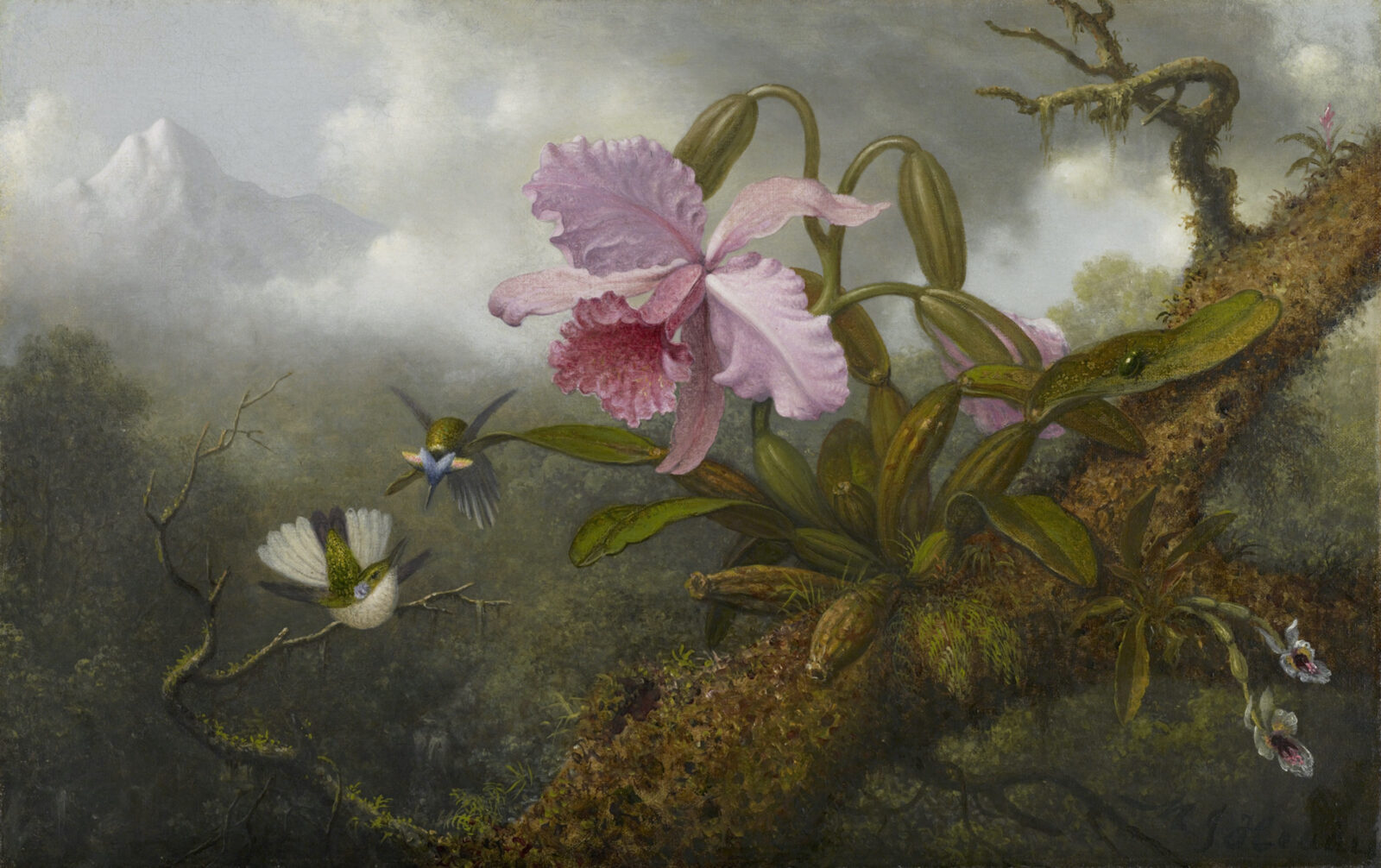
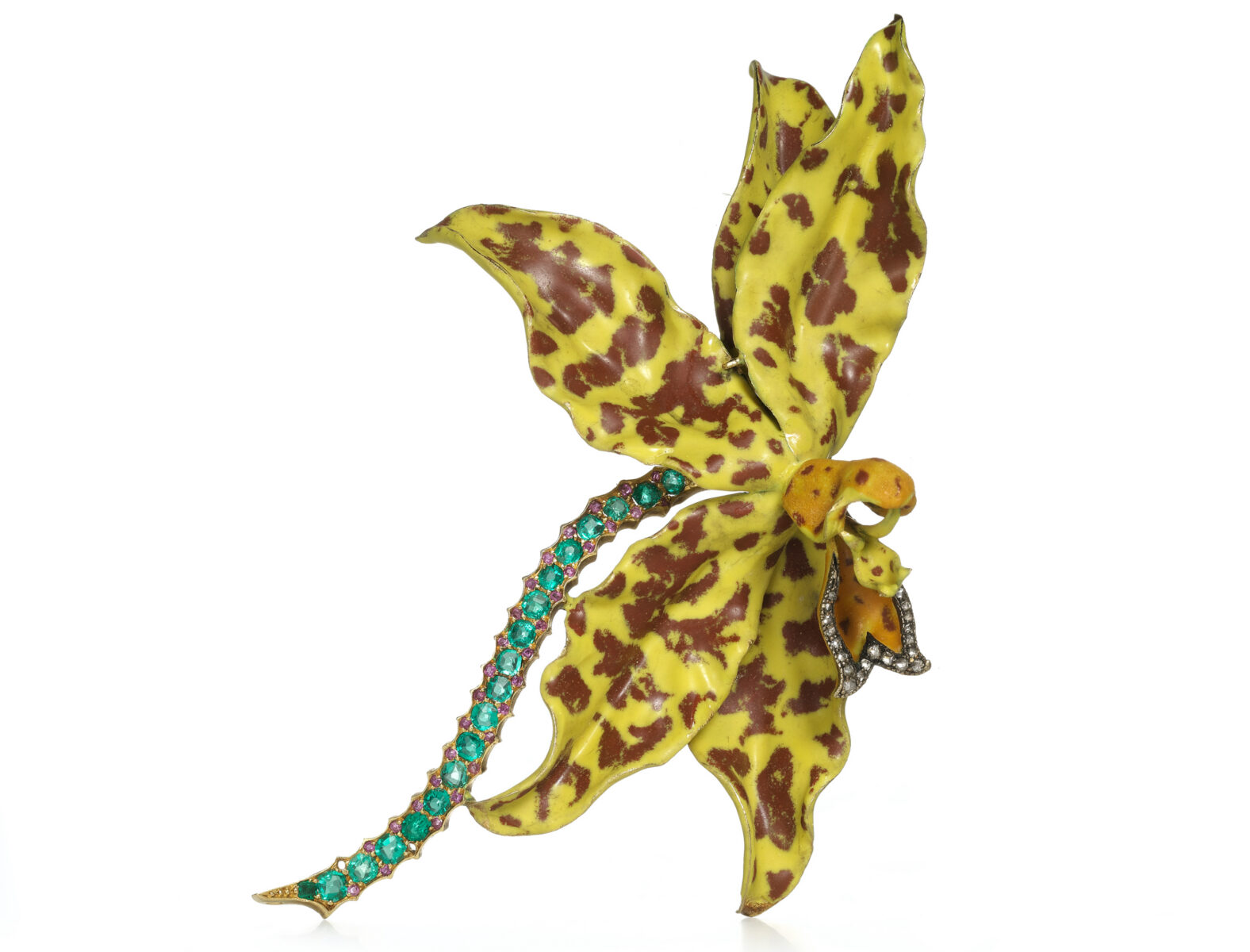
While the Arkansas Diamond was waiting to be unearthed, Tiffany & Co. was already revolutionizing American decorative arts by turning to botanical and zoological forms. Master designers like George Paulding Farnham crafted jaw-dropping botanical statements, such as the late-1800s Tiger Orchid Brooch—a tour de force constructed from sterling silver, diamonds, emeralds, pink sapphires, and vitreous enamel. Concurrently, painters like Martin Johnson Heade were capturing the delicate ecosystems of the Americas in works like Cattleya Orchid, Two Hummingbirds and a Beetle (c. 1871).
The Art Nouveau Revolution (c. 1905–1906)
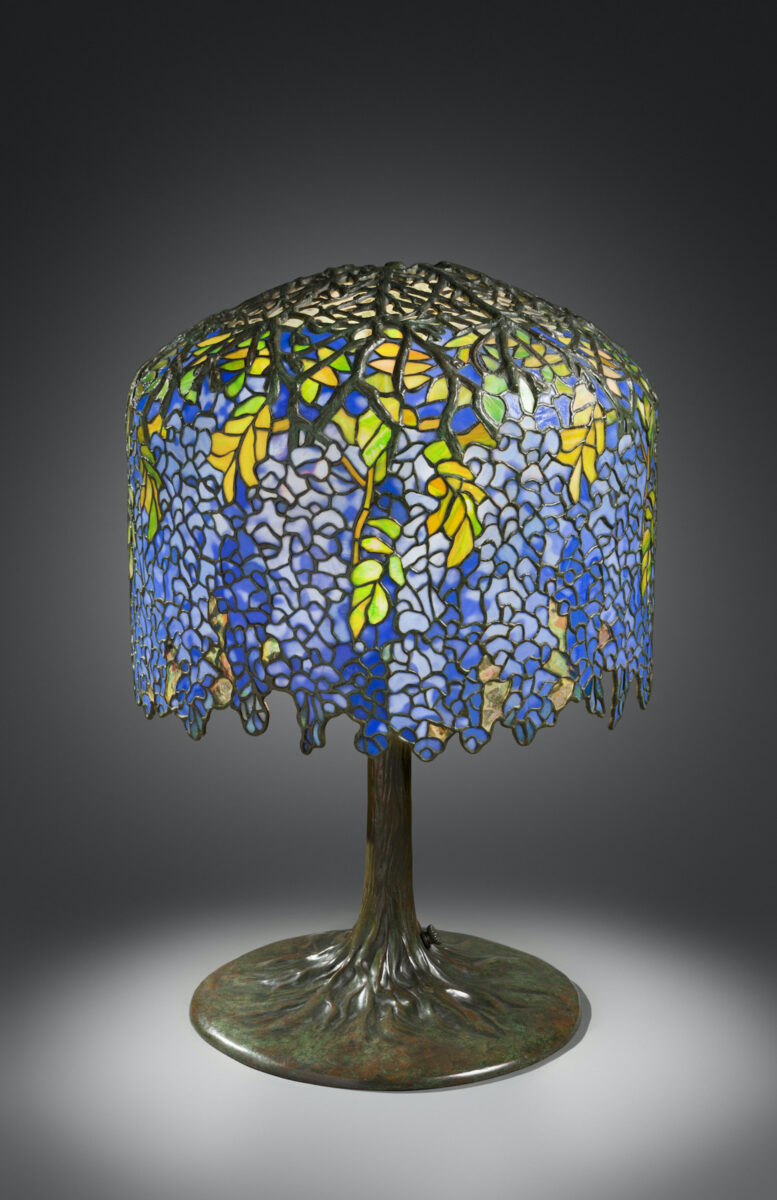
As the twentieth century dawned, the decorative arts shifted toward organic, flowing lines inspired by nature. During this period, visionary designer Clara Driscoll led the pioneering "Tiffany Girls" glass-cutting department at Tiffany Studios. Driscoll conceptualized and oversaw the creation of the world-famous Wisteria Table Lamp, a masterpiece of leaded glass that translated the drooping blossoms of a wisteria tree into a functional sculpture of glowing light.
The Present Homecoming (October 2026 – March 2027)
One hundred years after the discovery of the 27.21-carat Arkansas Diamond, the stone has crossed the threshold of the Crystal Bridges Museum of American Art in Bentonville, Arkansas. Opened in October 2026, Nature Adorned brings the historic gem back to its home state, uniting it with contemporary masterworks, historical paintings, and raw mineral specimens in an exhibition space designed to challenge and expand visitors’ perceptions of art and nature.
Supporting Context & Metrics
The curatorial framework of Nature Adorned rests on a sophisticated matrix of cross-medium comparisons. Museum leadership has meticulously curated pairings that demonstrate how human creators translate biological and geological phenomena into lasting cultural artifacts.
Exhibition Dates: Open now through March 29, 2027.
Venue: Crystal Bridges Museum of American Art, Bentonville, Arkansas.
Key Artifacts & Pairings:
The Arkansas Diamond (27.21 carats): Accompanied by two additional notable diamonds found by amateur prospectors at Arkansas’s Crater of Diamonds State Park. The stones are displayed alongside Carmen Herrera’s 1965 abstract geometric painting Cerulean, which explores spatial cuts that transform familiar square geometries into diamond shapes.
The Tiger Orchid Brooch & Botanical Art: George Paulding Farnham’s diamond, emerald, and sapphire-encrusted orchid brooch for Tiffany & Co. is exhibited in direct conversation with Martin Johnson Heade’s oil painting Cattleya Orchid, Two Hummingbirds and a Beetle.
The Wisteria Table Lamp: Clara Driscoll’s iconic 1905–1906 leaded-glass lamp is paired with George Inness’s 1867 luminous landscape painting Sunset on a River, exploring how artists across media manipulate light, shadow, and organic structure.
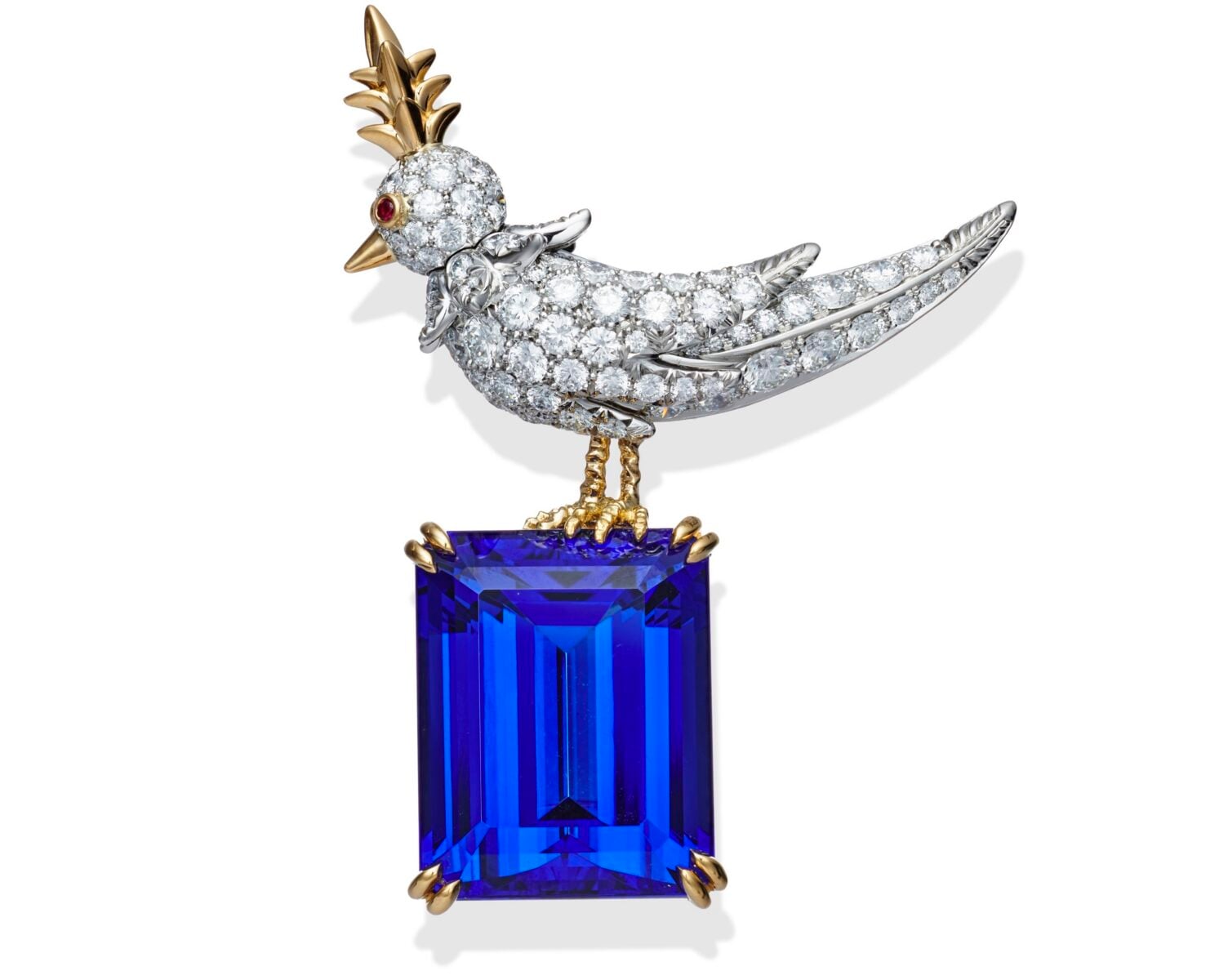
Jean Schlumberger’s Bird on a Rock: The whimsical and sophisticated brooch designed by the legendary French artist for Tiffany is juxtaposed with Hope Gangloff’s contemporary figurative painting Queen Jane Approximately, highlighting shared investigations into organic forms and posture.
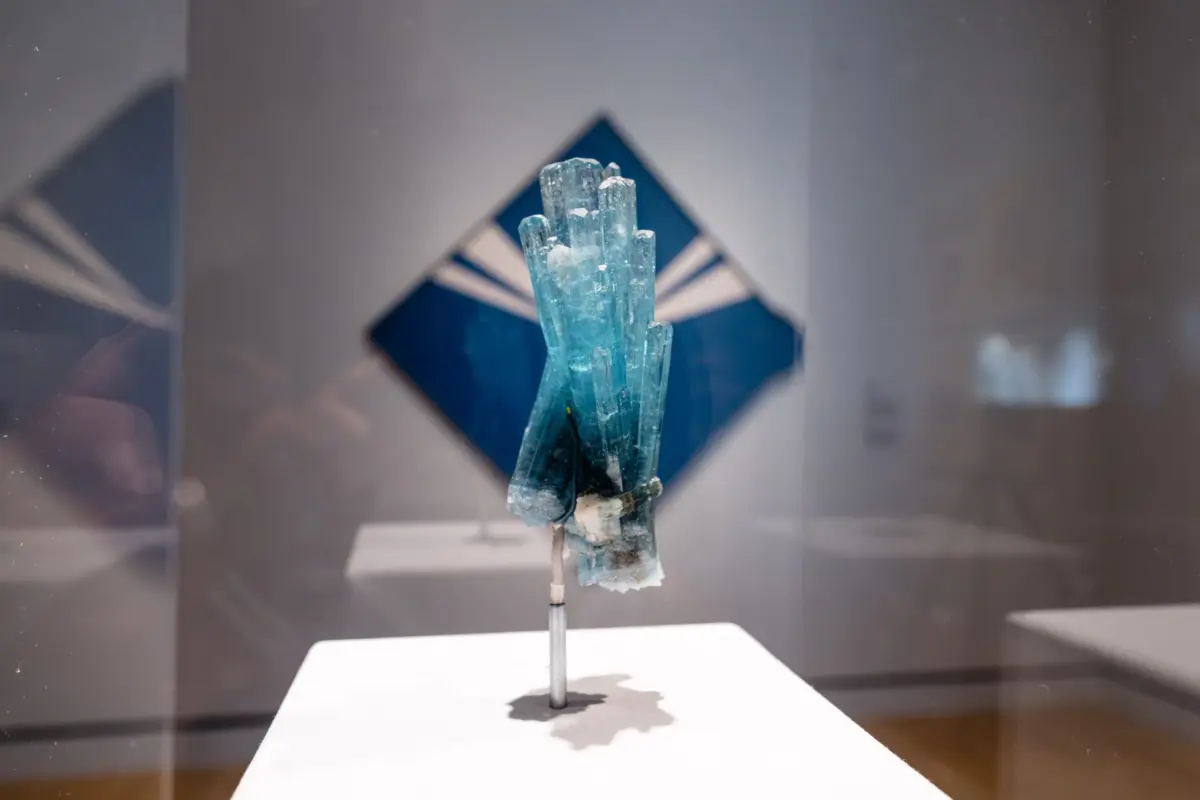
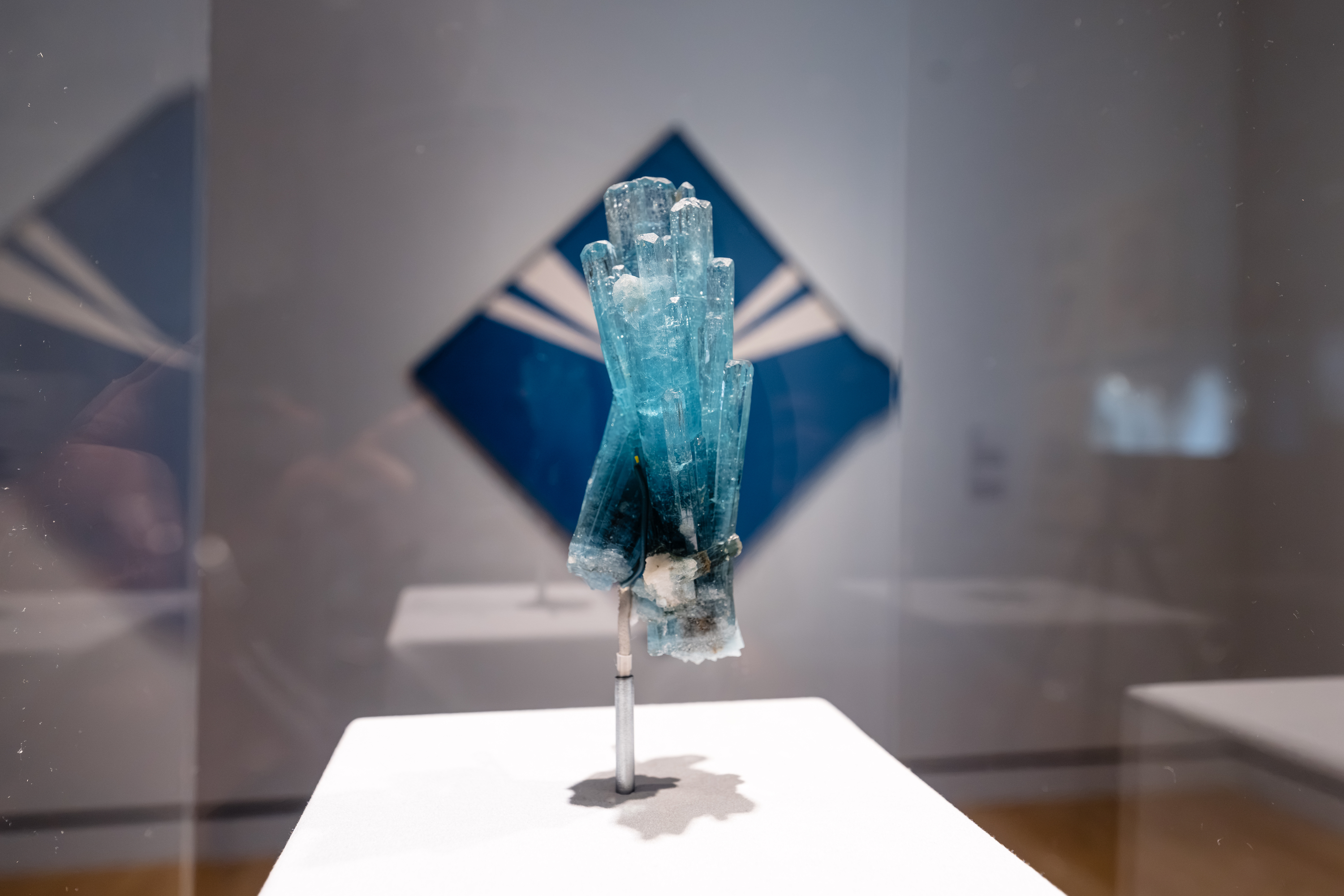
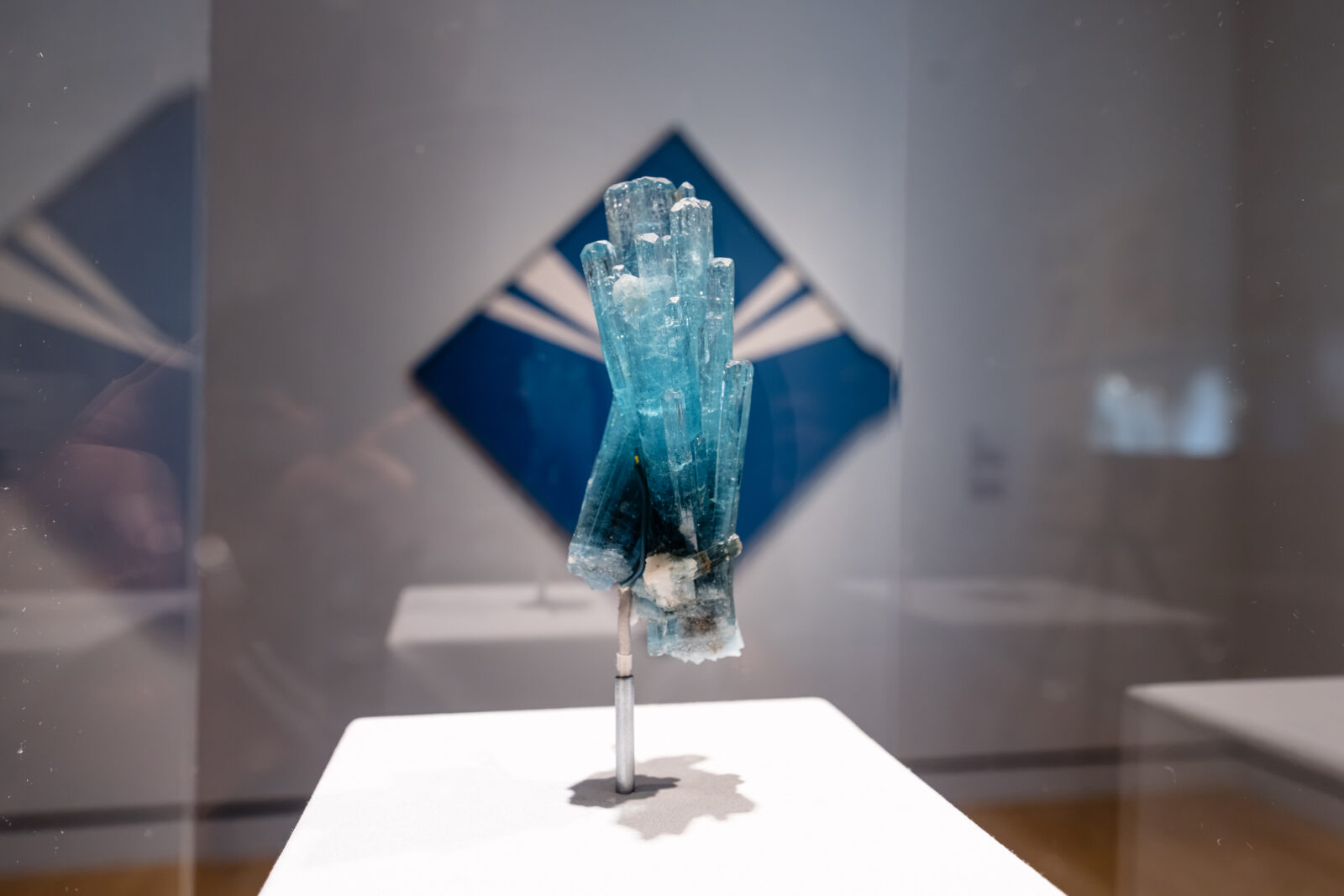
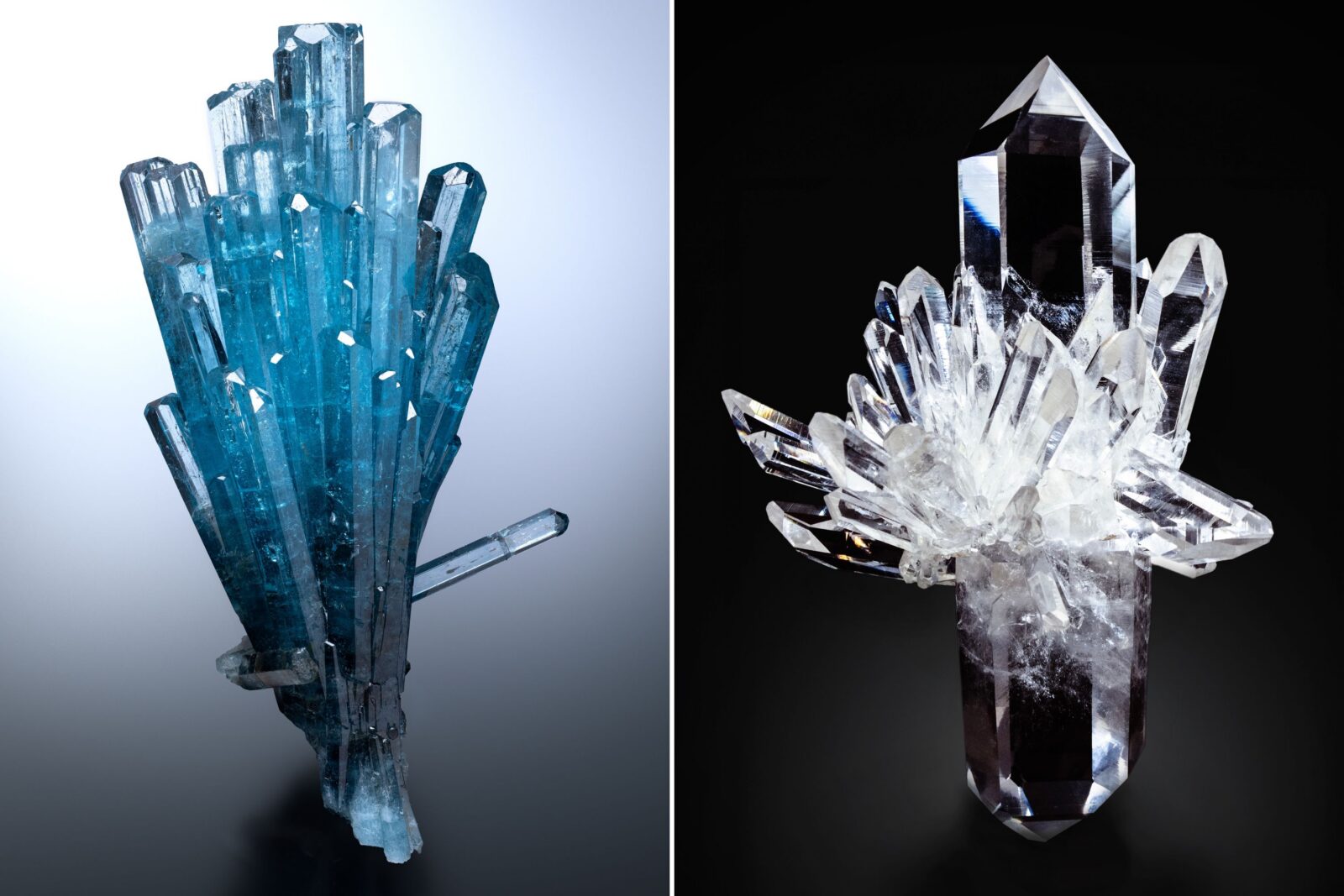
Raw Mineral Specimens: Natural formations from Crystal Bridges’ permanent collection—including a striking blue beryl crystal colored by iron and a towering four-inch quartz crystal—anchor the exhibition’s grounding in earth sciences.
Official Statements & Curatorial Insights
The intellectual backbone of Nature Adorned relies on bridging the gap between fine art and applied decorative design. Jen Padgett, the exhibition’s lead curator, emphasizes that the juxtaposition of corporate archives and museum collections yields profound aesthetic revelations.
"The pairings across the Tiffany Archives and Crystal Bridges help us to see both collections in a new light," notes Jen Padgett, curator of the exhibition. "Comparing how artists draw inspiration from nature—whether depicting an orchid in a painting or transforming its form into a brooch—allows us to appreciate their ingenuity and imagination."
Furthermore, Padgett underscores the deep cultural significance of returning the state’s most famous gem to its geographic roots.
"Having the diamonds here allows us to highlight Arkansas’s natural resources," Padgett explains, "and bring attention to the state’s unique place in the story of American gems."
This sentiment reinforces the unique status of Arkansas within American geology. As the only state in the nation where amateur prospectors can legally search for diamonds—and keep every precious stone they successfully unearth—at Crater of Diamonds State Park in Murfreesboro, Arkansas holds a democratic and egalitarian relationship with luxury minerals that few other regions can claim.
Future Outlook: A New Paradigm for Museum Exhibitions
As Nature Adorned: The Artistry of Tiffany & Co. and the American Imagination welcomes visitors through the winter of 2026 and into the spring of 2027, its impact extends far beyond regional pride or corporate retrospectives. The exhibition establishes a forward-thinking blueprint for how regional institutions can leverage world-class corporate archives—such as those maintained by Tiffany & Co.—to recontextualize their own permanent holdings.
By dissolving the historical boundaries that have traditionally separated "fine art" (paintings and sculptures) from "decorative arts" (jewelry, lamps, and metalwork), Crystal Bridges has positioned itself at the forefront of modern art-historical scholarship. Visitors walking through the Bentonville galleries do not simply view objects in isolation; they witness an ongoing, centuries-old conversation about humanity’s eternal drive to capture, refine, and immortalize the ephemeral beauty of the natural world.
For scholars, tourists, and everyday art enthusiasts alike, Nature Adorned offers a rare, once-in-a-generation opportunity. It allows the public to stand face-to-face with a glittering piece of American history—the 27.21-carat Arkansas Diamond—while pondering the delicate thread connecting a raw subterranean mineral to a master’s canvas, a brilliant brooch, and the boundless American imagination.




0 Comments