

Executive Overview
As the population centers of North Florida continue to expand outward, infrastructure development has taken center stage in regional planning discussions. The Florida Department of Transportation (FDOT) is moving forward with a high-stakes, multi-million-dollar initiative to overhaul a critical regional artery in southern Leon County: a nearly two-mile stretch of U.S. 319, widely known locally as Crawfordville Road.
The scope of the project centers on transforming a bottlenecked two-lane segment into a robust four-lane thoroughfare. Stretching from just south of the State Road 61 intersection down to L.L. Wallace Road, this targeted corridor serves as a daily economic and logistical lifeline for thousands of residents commuting between suburban Wakulla County, southern Leon County, and the employment hubs of Florida’s capital city, Tallahassee.
The initiative represents more than just a simple paving project; it is a calculated response to surging regional growth, chronic traffic congestion, and pressing safety concerns. By doubling the roadway’s capacity, state transportation planners aim to significantly mitigate commute times, accommodate future residential expansion, and slash accident rates along a route that has long struggled to keep pace with local development.
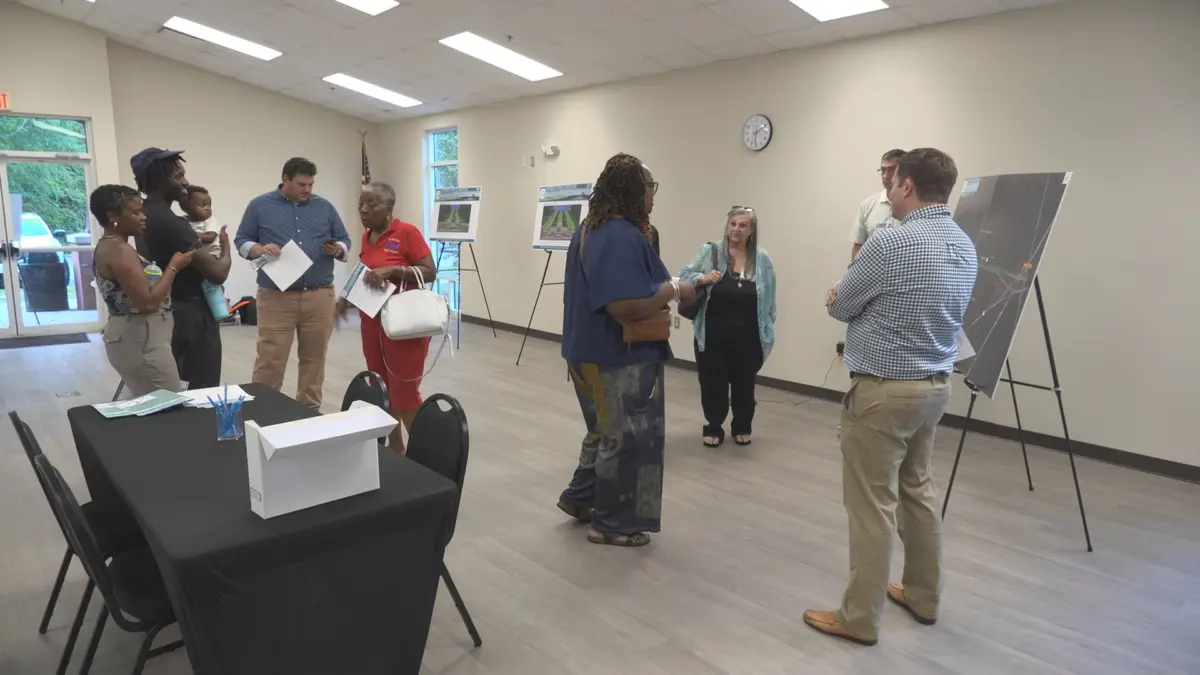
To ensure the project aligns with community needs, FDOT recently hosted a hybrid public meeting at the Woodville Community Center. The gathering offered residents, business owners, and daily commuters a transparent look at ongoing design phases, tentative construction timelines, and measures intended to minimize disruptions. While transportation projects of this scale invariably invite scrutiny regarding community impact and construction delays, initial local feedback suggests a prevailing sentiment of cautious optimism.
As final design phases lock into place over the next several years, the Crawfordville Road widening project stands as a prime case study in balancing regional mobility demands with local community preservation. This report explores the chronological development of the initiative, provides essential traffic and demographic metrics, highlights official statements from state and local stakeholders, and outlines the prospective milestones leading up to the groundbreaking slated for 2028.
Detailed Chronology: From Concept to Construction
The trajectory of the U.S. 319 widening project is the product of years of localized traffic analysis, safety audits, and long-range state transportation planning. Understanding how this initiative evolved requires examining the step-by-step timeline that has brought state officials and local residents to the current milestone phase.
Phase 1: Identifying the Need and Initial Studies
For over a decade, transportation planners in Florida’s capital region have monitored the explosive growth occurring south of Tallahassee. Wakulla County, situated directly south of Leon County, has consistently ranked among the fastest-growing counties in the state on a percentage basis. Because a vast majority of Wakulla County residents travel north into Tallahassee for work, education, and commerce, U.S. 319 has absorbed an increasingly unsustainable volume of commuter traffic.
Preliminary studies conducted by FDOT District 3 highlighted severe peak-hour delays along the two-lane bottleneck between State Road 61 and L.L. Wallace Road. Traffic models showed that without intervention, the corridor would rapidly exceed its intended design capacity, leading to exacerbated gridlock, heightened emergency response times, and an increased frequency of vehicular collisions. These early findings prompted the state to formally add the widening initiative to its Project Development and Environment (PD&E) study pipeline, initiating the formal evaluation of environmental, social, and engineering factors.
Phase 2: Public Engagement and Hybrid Hearings
With the planning framework established, transition into the design phase necessitated robust public participation. FDOT’s strategy relied heavily on transparency, culminating in the hybrid public meeting hosted at the Woodville Community Center.
The meeting format—combining in-person presentations at the community hub with digital access via online streaming and teleconferencing tools—was designed to maximize outreach. Residents were given direct access to engineers, project managers, and environmental specialists. Detailed maps, schematics of proposed storm-water management systems, and right-of-way acquisition outlines were displayed for public inspection.
During this window, community members voiced questions concerning property access, environmental runoff into local watersheds, and the potential disruption of local commerce. FDOT officials utilized the forum not only to present data but also to gather qualitative feedback regarding specific local nuances that traditional traffic counters might overlook.
Phase 3: The Design and Final Engineering Horizon
Following the close of the public feedback period—which includes a two-week open window for online submissions via the official FDOT website—the project transitions into its final design phase. Scheduled to wrap up by mid-2027, this critical window involves finalizing structural blueprints, acquiring necessary easements or right-of-way parcels, and coordinating utility relocations.
Engineers will spend these months fine-tuning the exact specifications for the four-lane configuration, ensuring that turning lanes, signalized intersections, and pedestrian infrastructure (such as sidewalks and crosswalks) comply with modern accessibility and safety standards.
Phase 4: Anticipated Groundbreaking and Construction Rollout
If the schedule holds, heavy equipment is slated to move onto Crawfordville Road by 2028. State transit officials have emphasized that construction management will prioritize maintaining traffic flow throughout the multi-year building process. Current operational strategies mandate that at least two lanes of traffic remain open during peak daytime hours, restricting more intrusive construction operations—such as paving, major grading, or heavy material transport—to overnight hours to spare commuters from catastrophic daytime delays.
Supporting Context & Metrics
To fully appreciate why FDOT has prioritized the U.S. 319 expansion, one must examine the broader socioeconomic and infrastructural metrics defining the southern Leon and Wakulla County corridors.
Traffic Volume and Regional Growth
U.S. 319 is classified as a principal arterial highway, a designation reserved for roadways designed to handle high volumes of regional travel at relatively high speeds. However, the two-lane stretch south of the State Road 61 intersection has functioned well beyond its intended traffic threshold for years.
- Daily Commuter Counts: Current estimates indicate that tens of thousands of vehicles traverse portions of Crawfordville Road on any given workday.
- Wakulla-Leon Spillover: Wakulla County’s population has surged past 35,000 residents, with a significant percentage commuting daily into Tallahassee’s job market, which is anchored by state government agencies, Florida State University, Florida A&M University, and Tallahassee Memorial HealthCare.
- Level of Service (LOS): Transportation engineers measure road efficiency using a grading scale from A (free-flowing traffic) to F (gridlock). During peak morning and evening rushes, segments of U.S. 319 have frequently dipped into D and E ratings, characterized by unstable traffic flow, low operating speeds, and long queues at signalized intersections.
Safety Implications
Capacity is intrinsically tied to safety. Two-lane undivided highways carrying high volumes of mixed traffic—ranging from large commercial freight trucks and agricultural vehicles to standard passenger cars and school buses—are statistically more prone to severe accidents. Head-on collisions, rear-end crashes due to sudden stops, and dangerous passing maneuvers on narrow stretches present ongoing hazards.
By widening the corridor to four lanes, FDOT aims to introduce modern safety countermeasures. These typically include:
- Physical Medians: Raised medians or continuous turn lanes that dramatically reduce the potential for head-on and sideswipe collisions.
- Expanded Shoulders: Wider paved shoulders that provide safe refuge for disabled vehicles, reducing secondary crash risks.
- Improved Intersection Geometry: Enhanced turning radii and dedicated acceleration/deceleration lanes to smooth out turning movements and prevent rear-end collisions.
Economic and Logistical Impact
A reliable transportation network is the bedrock of regional economic vitality. Delays along Crawfordville Road do not merely inconvenience office workers; they impact local service providers, delivery fleets, and emergency medical services. Ambulances transporting patients from southern Leon or Wakulla counties to Tallahassee hospitals frequently contend with the same bottlenecked conditions, making predictable travel times a matter of public health.
Official Statements and Community Perspectives
The success of any major public works project relies heavily on the communicative bridge built between government agencies and the taxpaying public. Insights gathered from state representatives and daily commuters highlight the balancing act of municipal engineering.
State Perspective: Prioritizing Capacity and Safety
Speaking on behalf of the Florida Department of Transportation, District 3 spokesperson Ian Satter emphasized that the core tenets of the initiative remain focused on foundational infrastructure needs.
"I think what’s important here obviously is just looking at the capacity improvements that will be there that will reduce congestion and improve safety," Satter stated during the public outreach event. "That’s always the most important thing of all of our projects—those two components."
Satter also addressed logistical concerns regarding the construction phase, reassuring residents that the state is acutely aware of the daily disruption potential. The department is engineering a construction management plan designed to keep traffic moving.
"We are going into this with the intent to keep impacts low for traffic in the area," Satter noted, confirming that two active lanes of traffic will be maintained throughout the construction timeline, with disruptive closures restricted exclusively to overnight hours.
Community Perspective: Cautious Optimism from Commuters
Public reception, often a source of friction for controversial highway projects, has leaned notably positive, driven by the sheer exhaustion of navigating the current two-lane bottleneck.
Cheryl Collier-Brown, a regular U.S. 319 commuter who attended the Woodville Community Center meeting, voiced her strong support for the initiative, emphasizing that the long-term benefits far outweigh any temporary construction pains.
"Whatever happens, everyone is going to benefit from it," Collier-Brown remarked. "Those who live in this area, those of us that come out in this area. It’s a win-win for everybody, more so for the citizens that live out here. But when coming to visit, we can feel safer and don’t have to be on pins and needles."
Collier-Brown’s reference to being "on pins and needles" captures the psychological toll exacted by driving a congested, high-stress roadway where minor driver errors or stalled vehicles can trigger massive, hours-long traffic delays. Her perspective underscores a shared community desire for infrastructure that matches the modern realities of North Florida’s population growth.
Future Outlook and Next Steps
As the Florida Department of Transportation processes the data and commentary gathered from the Woodville community meeting, the project enters a critical transitional window.
The Path to 2028
- Public Comment Window Closure: Residents still wishing to register official feedback have a limited two-week window following the public meeting to submit their comments via the official FDOT web portal (
www.fdot.gov). Planners review these submissions to incorporate localized insights into engineering modifications. - Right-of-Way Acquisition and Final Design (2025–2027): Civil engineers will complete construction plans, secure required land parcels, and coordinate utility relocations. Property owners directly affected by minor right-of-way needs will be contacted individually by state representatives.
- Bidding and Contractor Selection (Late 2027): Once final designs are approved, FDOT will open the project to competitive bidding, selecting a qualified heavy civil construction contractor to execute the build.
- Construction Phase Initiation (2028): Groundbreaking will commence, marking the physical beginning of the multi-year transformation of Crawfordville Road from a two-lane pinch point into a modern, four-lane divided highway.
Conclusion
The U.S. 319 widening project in southern Leon County serves as a necessary blueprint for regional infrastructure management in fast-growing Florida. By addressing capacity limits and safety deficiencies before gridlock becomes absolute, FDOT—in cooperation with engaged local commuters like Cheryl Collier-Brown and community stakeholders—is laying the groundwork for sustainable growth.
While the construction years stretching toward the end of the decade will demand patience from motorists, the ultimate promise of a safer, more fluid, and resilient Crawfordville Road represents a vital investment in the future of North Florida’s capital region.

0 Comments