

Executive Overview
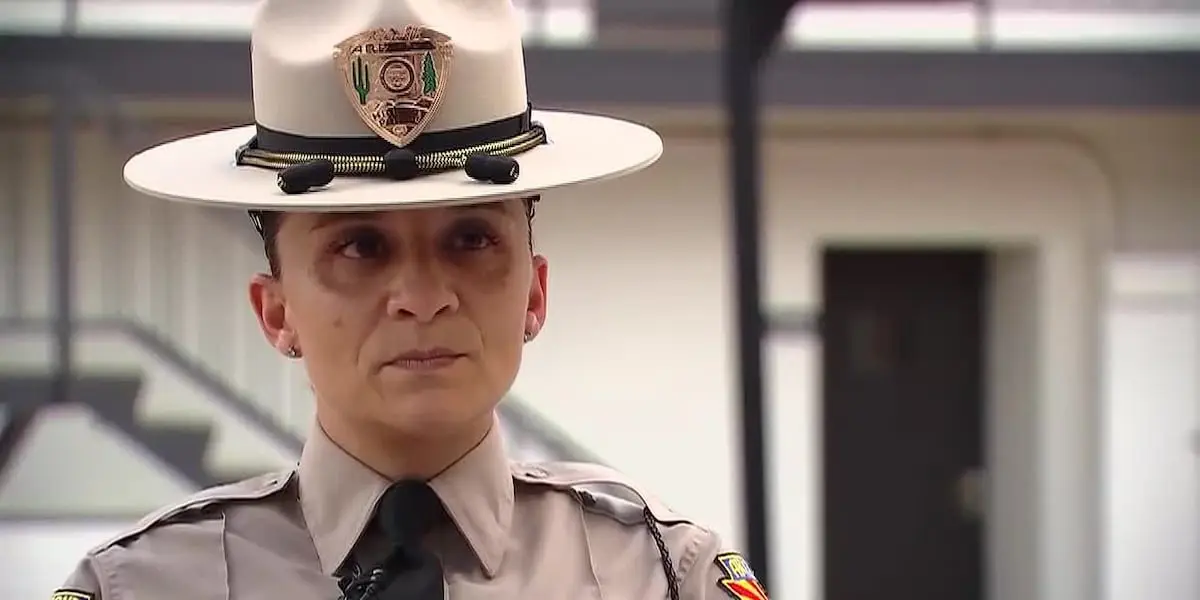
PHOENIX — In the quiet hours of a desert night, the ribbon of highway stretching across southern Arizona carries countless stories. For newly minted Arizona Department of Public Safety (AZDPS) Trooper Tracy Murphy, the asphalt of Tucson now serves as both a place of service and a deeply personal battleground. Months after burying her husband of 19 years—a retired U.S. Marine killed by an intoxicated motorist just a block from their home—Murphy walked across a graduation stage to join the ranks of AZDPS Class 39.
Her journey, forged through 255 grueling days of paramilitary academy training, represents more than a career shift; it is a profound act of reclamation. Stepping into the uniform amid a severe statewide staffing shortage, Murphy has chosen to confront the very menace that shattered her family: impaired driving. Stationed on the overnight shift in Tucson, one of the state’s most chronically under-patrolled corridors, her mission is clear and uncompromising.
"I’m here because if I can get one drunk off the road, then I’m saving one family, if not multiple, from what my family is going through," Murphy said, reflecting on her motivation. "And to me, if I can save one family, then I know that my entire career was successful."
This report examines the convergence of personal sacrifice, law enforcement recruitment challenges in the American Southwest, and the ongoing legislative efforts to combat the devastating toll of drunk driving on Arizona’s roadways. Through a detailed chronology, official insights, and broader context on departmental metrics, this piece explores how Tracy Murphy’s story encapsulates the high stakes of modern highway patrol.
Detailed Chronology: From High School Sweethearts to the AZDPS Academy
A Life Built on Dedication
The story of Tracy and Justin Murphy began decades before the badge, the academy, or the tragedy. High school sweethearts who spent 21 years intertwined, the couple built a life defined by public service and mutual support. Justin Murphy was a career United States Marine, a man who had dedicated his life to national defense.
In March 2024, that chapter of service reached its natural conclusion. After decades of military life, Justin officially signed his retirement paperwork, looking forward to a well-earned chapter of civilian life with Tracy. It was a milestone that represented safety, longevity, and the promise of a future together.
That future was stolen just 48 hours later.
The Midnight Knock
On a fateful night in March 2024, the Murphy household was enveloped in the quiet normalcy of suburban life. Justin had been out riding his motorcycle, enjoying the crisp Arizona air. Just after midnight, the telephone rang.
"I got a phone call just after midnight. It was a friend of my husband’s," Murphy recalled, the memory still vivid. "He was 10 houses from our driveway, so they told me, ‘You need to get ready. Justin was just in an accident.’"
Rushing out into the night, Tracy discovered a nightmare unfolding mere steps from her own door. Justin had been struck by a drunk driver while operating his motorcycle. Despite the proximity to home and the swift arrival of emergency services, Justin succumbed to his injuries, leaving Tracy a widow and abruptly ending a partnership that had spanned more than two decades.
The Crucible of Class 39
In the wake of unimaginable grief, many individuals retreat into private mourning. Tracy Murphy chose a different path. Recognizing that the driver who killed her husband was part of a persistent, preventable societal crisis, she redirected her grief into a rigorous transformation.
She applied to the Arizona Department of Public Safety academy, stepping into a world of intense physical conditioning, tactical instruction, and legal education. For 255 days, Murphy endured the demanding crucible of AZDPS training—a program designed to test the limits of human endurance and resolve.
When the fatigue of long training hours weighed heavily, Murphy leaned on her internal compass. In an emotional address to her fellow graduates of Class 39, she shared the mantra that kept her moving forward:
"So when those difficult days come, remember your why. Remember why you raised your hand. Remember why you put on that uniform."
On graduation day, standing proudly in her dress uniform, Murphy reflected on how her late husband would view her extraordinary pivot. "Oh, he’d be super proud of me," she smiled through the emotion. "I mean, I’m sure he’s shaking his fist up there a few times at me, but I’m sure he’d be super proud."
Supporting Context & Metrics: The Crisis on Arizona’s Highways
The Anatomy of an Enforcement Shortage
Trooper Murphy enters the AZDPS at a critical juncture in the agency’s history. For years, the department—like law enforcement agencies nationwide—has grappled with severe recruitment and retention hurdles. In Arizona, these shortages have manifested in troubling ways: hundreds of trooper vacancies have left vast stretches of state highways and interstate corridors critically understaffed, particularly during overnight hours.
In regions like Tucson, the lack of personnel means that some major roadways operate without dedicated overnight patrols. This operational gap creates vulnerabilities that impaired drivers, speeders, and criminal enterprises frequently exploit.
State leadership has attempted to address these gaps through budgetary allocations. Arizona’s most recent state budget includes increased funding earmarked specifically for the Department of Public Safety. While officials note that these financial infusions do not completely solve the agency’s vast structural needs, the capital has allowed AZDPS to prioritize targeted recruitment and strategic deployment.
The Scourge of Impaired Driving
Murphy’s individual mission directly addresses one of the state’s most persistent public safety threats. Impaired driving remains a leading cause of preventable fatalities on American roadways, and Arizona is no exception. Despite aggressive public awareness campaigns, rideshare availability, and stringent legal penalties, law enforcement agencies across the state process thousands of driving under the influence (DUI) arrests annually.
When a trooper like Murphy patrols the overnight shift in Tucson, their cruiser functions as a mobile sanctuary against potential catastrophe. The mathematical reality of highway safety underscores her philosophy: removing a single impaired driver from the road at 2:00 AM can radically alter the trajectory of multiple lives, preventing the cascading trauma that devastated the Murphy family.
Official Statements and Institutional Impact
The Arizona Department of Public Safety has watched Class 39 graduate with a mixture of solemn respect and pragmatic optimism. Agency leadership has publicly acknowledged the unique composition of this graduating class, noting that recruits who bring profound life experience and personal dedication often become the bedrock of the department.
AZDPS officials have emphasized that they hope to attract more candidates of Murphy’s caliber—individuals who view law enforcement not merely as a profession, but as a calling rooted in community protection and personal accountability.
In her graduation speech, Murphy challenged her peers to look past the routine inconveniences of the job and keep their foundational motivations in sharp focus. Her message resonated deeply within an agency that relies heavily on camaraderie and shared purpose to weather the psychological tolls of police work.
By choosing to wear the badge, Murphy has also transformed her private grief into an institutional asset. She carries Justin’s memory on every shift, using the pain of her loss as armor against complacency.
Future Outlook: A Legacy on Patrol
As Trooper Tracy Murphy settles into her new routine patrolling the nocturnal landscape of Tucson, her career represents a powerful intersection of personal resilience and public service.
The road ahead will not be easy. The structural challenges facing AZDPS—ranging from staffing deficits to the sheer volume of traffic traversing Arizona’s desert corridors—will continue to test the department’s resolve. Yet, in the cab of her patrol vehicle, Murphy carries a renewed sense of purpose that transcends administrative metrics.
For the motoring public traveling through southern Arizona late at night, the presence of Trooper Murphy offers a quiet reassurance. Behind the wheel is an officer who intimately understands the devastating cost of negligence, and who has dedicated her professional life to ensuring that fewer families have to experience the heartbreak she endured in March 2024.
In the words of the newly badge-wearing widow, every successful traffic stop, every impaired driver intercepted, and every life preserved stands as a testament to Justin Murphy’s memory—a legacy of protection that now stretches far beyond the boundaries of a single home, patrolling the highways of Arizona with unwavering vigilance.

0 Comments