

Executive Overview
CEDAR KEY, Fla. — In the crisp, salt-laden hours well before dawn on Saturday, a formidable coalition of students, local residents, environmental advocates, and civic leaders converged on the historic shores of Cedar Key. Armed with gloves, data sheets, and mesh collection bags, the eager crowds formed long queues up to an hour before the official start time of the 41st annual International Coastal Cleanup. Organized globally by the Ocean Conservancy and spearheaded locally by passionate community groups, this year’s deployment in Florida’s Big Bend region underscores an escalating, grassroots commitment to safeguarding fragile marine ecosystems against the relentless tide of anthropogenic debris.
What transpired over the next several hours was more than a routine neighborhood cleanup; it was a masterclass in civic engagement, scientific data collection, and youth leadership development. High school students from the Cedar Key School—harnessed through career and technical student organizations such as DECA and the Future Business Leaders of America (FBLA)—worked side-by-side with seasoned environmentalists and local government figures. Together, they removed hundreds of pounds of trash, plastics, and abandoned aquaculture equipment from the local estuaries.
Beyond the immediate visual transformation of the coastline, this year’s initiative served a dual purpose: fulfilling community service mandates while unlocking vital funding for academic travel, and generating longitudinal data critical to marine biologists and environmental regulators. As coastal communities across the globe grapple with the compounding pressures of climate change, commercial fishing, and burgeoning tourism, events like the Cedar Key cleanup offer a vital line of defense. This report examines the chronological unfolding of Saturday’s event, the broader ecological and socioeconomic metrics driving the initiative, official insights from community leaders, and the long-term outlook for Cedar Key’s pristine yet vulnerable coastal sanctuary.
Detailed Chronology: A Morning of Action in Cedar Key
06:00 AM – The Premature Gathering
Well before the sun crested over the horizon, painting the Gulf of Mexico in hues of amber and violet, the staging area at the Cedar Key waterfront buzzed with unexpected urgency. Organizers had scheduled the check-in for 7:00 AM, yet by 6:00 AM, a diverse assembly of volunteers had already formed a spirited queue.
Families, retirees, local business owners, and high school students swapped stories of past cleanups while awaiting the distribution of supplies. The early turnout caught event coordinators by surprise, serving as an immediate testament to the community’s deep-seated investment in its marine environment. Safety vests were handed out, clipboards with standardized Ocean Conservancy data sheets were distributed, and teams were assigned specific coastal quadrants, ranging from the historic docks to the marshy periphery of the salt flats.
07:30 AM – Deployment and Cataloging
Following a brief safety orientation emphasizing hydration, sun protection, and safe handling of sharp objects or heavy commercial gear, platoons of volunteers fanned out across the tidal zones. The methodology was meticulous. Unlike conventional cleanups where waste is simply bagged and discarded, the International Coastal Cleanup relies on citizen science.
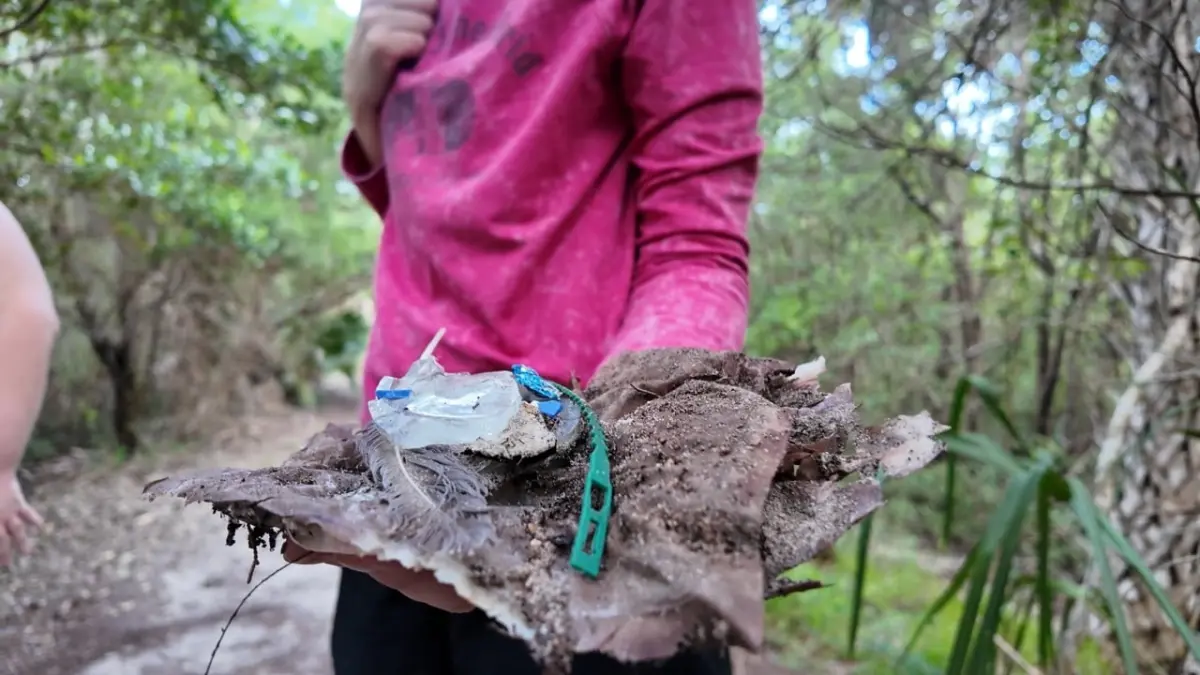
Volunteers were instructed not only to collect debris but to itemize it. Every plastic bottle, discarded fishing line, Styrofoam fragment, and piece of weathered aquaculture gear was logged onto specific category sheets. This rigorous cataloging transforms a standard community service project into a sophisticated ecological census, providing researchers with granular insights into the composition of marine pollution affecting the Nature Coast.
10:00 AM – The Student Vanguard in Action
By mid-morning, the physical labor peaked. Among the most visible and energetic groups on the shoreline were the delegations from Cedar Key School’s DECA and FBLA chapters. Maneuvering through dense mangrove roots and navigating the muddy intertidal terrain, these young leaders exemplified the intersection of civic duty and practical education.
For these students, the cleanup was twofold: an institutional requirement for community leadership and a pathway toward professional growth. The physical exertion of hauling water-logged debris translated directly into fundraising capabilities, enabling students to finance upcoming state and national leadership conferences. As they wrestled discarded crab traps and tangled monofilament from the spartina grass, these students were not merely cleaning a beach; they were investing in their own futures as tomorrow’s business and community leaders.
12:00 PM – Tally, Debrief, and Environmental Relief
As the midday heat began to beat down upon the coastline, volunteers returned to the central pavilion to deposit their mountain of collected waste. The visual impact was striking: towering mounds of plastic refuse, rusted metal, and synthetic ropes stood in stark contrast to the natural beauty of the Gulf backdrop.
Event organizers weighed the haul, consolidated the data sheets, and provided a debriefing session. Smiles, exhaustion, and a palpable sense of accomplishment marked the conclusion of the field operations. Cedar Key was visibly transformed—cleaner, safer, and structurally better prepared to host the weekend influx of visitors and protect its endemic wildlife populations.
Supporting Context & Metrics: The Science of the Cleanup
The Global Framework: The Ocean Conservancy’s Legacy
To understand the significance of Saturday’s cleanup in Cedar Key, one must examine the broader apparatus of the International Coastal Cleanup (ICC). Established more than four decades ago by the Ocean Conservancy, the ICC stands as the world’s largest volunteer effort on behalf of ocean and waterway health. Operating in over 100 countries annually, the program has mobilized millions of volunteers over its lifetime to remove hundreds of millions of pounds of trash from lakes, rivers, and ocean shores.
In Florida—a state defined by its extensive coastline, complex estuarine systems, and multi-billion-dollar marine economy—the ICC takes on critical importance. The state’s unique geography creates vast nurseries for marine life, making them simultaneously rich in biodiversity and highly vulnerable to land-based and marine-derived pollution.
Longitudinal Research and Aquaculture Dynamics
What sets the Cedar Key cleanup apart from standard litter sweeps is its integration into ongoing scientific research models. Cedar Key is not merely a scenic coastal retreat; it is a bustling hub for commercial fishing and aquaculture, renowned particularly for its thriving hard-clam industry. While this industry is vital to the local economy and cultural identity, it inherently generates gear—ranging from mesh bags and PVC stakes to buoy lines—that can become lost or dislodged during severe weather events or heavy tides.
Michael Presley Bobbitt, affectionately known throughout the community as Cedar Key’s "clam-bassador," articulated the scientific rationale driving the data collection:
"We’re measuring and collecting the amount of trash and the amount of aquaculture gear relative to prior years so we can study how the folks being here is evolving over time and how we hopefully are doing a better job keeping the estuary clean."
By comparing year-over-year metrics, marine researchers and local stakeholders can evaluate the effectiveness of waste management policies within the aquaculture sector. If data indicates a spike in specific types of lost gear following a storm season, industry leaders and local authorities can collaborate on targeted mitigation strategies, such as improved securing protocols or enhanced retrieval programs. Furthermore, tracking macro-plastics and single-use consumer waste helps quantify the impact of tourism on the local ecosystem, providing municipal planners with the empirical backing needed for future environmental ordinances.
Official Statements and Stakeholder Perspectives
Cultivating Leadership Through Service: The Educator’s View
The integration of academic advancement with environmental stewardship proved to be one of the most compelling narratives of the 41st annual cleanup. Nicole Gill, advisor for both the DECA and FBLA chapters at Cedar Key School, provided deep insight into the pedagogical philosophy guiding the student volunteers.
"It’s actually part of a community service effort to where our kids have to have leadership activities in the community and giving back," Gill explained during a brief respite from overseeing her student squads. "So as we fundraise, they’re able to afford going on trips to states and nationals that are really big opportunities for them to network."
Gill’s perspective highlights a modern educational model where civic responsibility is not treated as an abstract concept, but as an active, transactional tool for personal and professional development. For rural and coastal school districts like Cedar Key, funding travel to state and national conferences can pose a significant financial barrier. By leveraging sweat equity and environmental conservation, these students bypass traditional fundraising limitations while simultaneously learning the value of environmental accountability. The skills forged while pulling debris from a salt marsh—teamwork, resilience, logistical planning, and public stewardship—are precisely the competencies that DECA and FBLA seek to instill in future business leaders.
The Voice of the Coast: Bridging Industry and Ecology
Michael Presley Bobbitt’s role as the "clam-bassador" bridges the often-contentious divide between commercial industry and environmental conservation. In many coastal communities across the globe, economic drivers such as fishing, aquaculture, and tourism are frequently pitted against ecological preservation. Bobbitt’s framing of the cleanup reframes this dynamic into one of cooperative evolution.
By embracing the data collection process, Cedar Key’s working waterfront community acknowledges its footprint while actively participating in its mitigation. The message is clear: economic activity and environmental health are not mutually exclusive; rather, the long-term viability of Cedar Key’s famed clam industry is inextricably linked to the pristine health of the estuary. When local watermen, civic boosters, and youth organizations labor side-by-side to clear the waterways, it sends a powerful message of collective ownership over the natural resources that sustain the region.
Future Outlook: Sustaining Cedar Key’s Ecological Integrity
Challenges on the Horizon
Despite the overwhelming success of Saturday’s mobilization, environmental advocates and municipal leaders are under no illusions about the magnitude of the ongoing challenge. Marine debris is a systemic, global issue exacerbated by rising sea levels, increased storm frequency, and unrelenting consumer reliance on single-use plastics.
For Cedar Key, situated low on the Gulf Coast and highly exposed to tropical weather systems, storm-driven debris remains a persistent threat. Hurricane and tropical storm events routinely displace docks, aquaculture infrastructure, and household refuse, depositing them deep into sensitive salt marshes where manual extraction is both arduous and ecologically delicate.
Scaling Up Citizen Science and Educational Outreach
Looking forward, local organizers aim to build upon the momentum generated by the 41st annual cleanup. Plans are already underway to expand youth participation, not only through DECA and FBLA, but by integrating broader marine science curricula into the Cedar Key School district. By transforming students into trained citizen scientists who understand the scientific methodology behind the Ocean Conservancy data sheets, the community ensures a continuous pipeline of environmentally literate citizens.
Moreover, municipal planners are exploring enhanced waste-receptacle placement along high-traffic tourist zones, alongside public awareness campaigns targeting visitors and seasonal residents. Strengthening partnerships between the city government, commercial aquaculture associations, and volunteer networks will be paramount in establishing proactive, year-round preventive measures rather than relying solely on annual reactive cleanups.
Conclusion: A Blueprint for Coastal Resilience
As the last bags of debris were hauled away and the volunteers dispersed to enjoy the remainder of their Saturday, Cedar Key stood as a shining example of proactive coastal stewardship. The 41st annual International Coastal Cleanup proved that when a community unites—bridging the gap between the classroom and the commercial dock, between scientific research and civic pride—remarkable transformations are possible.
The data gathered on Saturday will soon find its way into international research databases, contributing to a global understanding of marine pollution. Locally, the restored shorelines will continue to support the rich biodiversity, the vibrant tourism economy, and the resilient aquaculture heritage that define Cedar Key. In an era where environmental news is frequently dominated by stories of degradation and despair, the tireless efforts of Cedar Key’s youth, leaders, and volunteers offer a compelling counter-narrative: a story of hope, shared responsibility, and enduring dedication to the health of our shared oceans.

0 Comments