
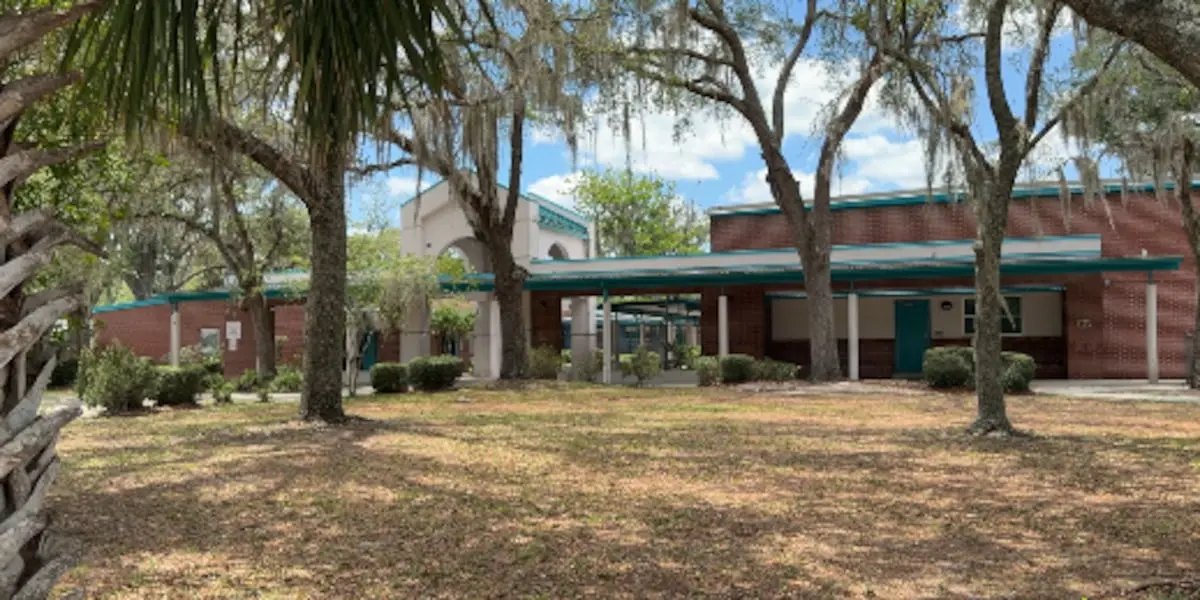

GAINESVILLE, Fla. — In the early hours of Friday morning, local law enforcement intervened in a peculiar yet telling case of unauthorized occupancy on the grounds of a recently shuttered educational facility. Gainesville Police Department officers apprehended 22-year-old Devon Hicks after discovering he had been residing inside a portable classroom at the closed Stephen Foster Elementary School.
The incident, while seemingly localized, shines a harsh spotlight on broader systemic challenges facing Alachua County, including the ripple effects of recent school board rezoning decisions, shifting municipal real estate portfolios, and the escalating pressures of affordable housing availability in North Central Florida.
Executive Overview
The arrest of Devon Hicks, 22, occurred on Friday following a police response to the vacant Stephen Foster Elementary School campus, located at 3800 NW 6th St. in Gainesville. According to official police reports, investigators found that Hicks had gained access to the perimeter by scaling a security fence using a chair as a stepping aid. Once inside the fenced complex, he established living quarters within a standalone portable classroom structure.
While trespassing and unauthorized habitation of public property typically result in standard misdemeanor charges, the context surrounding this arrest elevates it to a matter of significant public interest. Stephen Foster Elementary School ceased operations as an active educational facility at the conclusion of the previous academic year. The closure was mandated by the Alachua County Public Schools (ACPS) district following controversial, sweeping rezoning measures designed to address demographic shifts and budgetary constraints.
The transition of Stephen Foster from a vibrant neighborhood learning hub to a vacant, mothballed property created an immediate vulnerability. This security lapse allowed an unhoused individual to utilize the campus as shelter. As local authorities grapple with the immediate legal ramifications of the break-in, community stakeholders, urban planners, and school district officials are forced to confront the unintended consequences of shuttering public infrastructure without comprehensive asset-protection and transition plans in place.
Detailed Chronology of Events
The Breach and Discovery
The sequence of events leading to the Friday morning arrest began when neighborhood residents or automated perimeter sensors—details of which remain tightly held by the Gainesville Police Department—notified law enforcement of suspicious activity on the dormant school grounds.
Upon arrival, officers conducted a systematic sweep of the sprawling campus. The property, which spans several acres, includes a main brick-and-mortar instructional building, administrative offices, recreational playgrounds, and a series of detached modular portable classrooms situated along the perimeter.
Officers observed signs of forced or unauthorized entry near the rear boundary fence, where a plastic or metal lawn chair had been strategically positioned to aid in scaling the chain-link barrier. Following the trail of access, officers zeroed in on one of the portable classrooms typically reserved for overflow classes or specialized instruction.
Upon entering the modular unit, law enforcement personnel encountered Devon Hicks. According to police statements, Hicks had settled into the space, utilizing classroom furnishings and personal belongings to establish a temporary living area. He was taken into custody without incident, cooperative with authorities, and subsequently transported to the local detention facility, where he faces formal charges of trespassing on school grounds and property damage related to the unauthorized entry.
The Immediate Aftermath
Following the arrest, maintenance crews and district security personnel were dispatched to secure the perimeter of Stephen Foster Elementary. Additional locks were placed on the portable classrooms, and patrols of the campus were intensified.
The discovery raised immediate questions among local residents regarding how long Hicks had been occupying the space undetected. While police have not released a definitive timeline regarding the duration of his stay, the presence of accumulated personal items within the modular unit suggests that the occupancy may have spanned multiple days, if not weeks, capitalizing on the relative isolation of the campus during the summer and early fall transition periods.
Supporting Context & Metrics
The Closing of Stephen Foster Elementary
To fully understand the circumstances surrounding Friday’s arrest, one must examine the institutional history of Stephen Foster Elementary School. For decades, the school served as a cornerstone of the local Gainesville community, providing elementary education, after-school programs, and a communal gathering space for families in the surrounding neighborhoods.
However, financial pressures, declining student enrollment in specific geographic sectors, and an overarching district-wide master plan forced the Alachua County Public Schools board to reevaluate its footprint. Following months of contentious public hearings, impassoned parent protests, and exhaustive demographic studies, the school board voted to shutter Stephen Foster Elementary at the end of the previous academic year.
The closure was part of a larger district optimization strategy intended to consolidate resources, reduce administrative and maintenance overhead, and reallocate students to neighboring facilities experiencing under-capacity issues. Yet, closing a school does not eliminate the physical infrastructure; it merely leaves behind vast, empty buildings and grounds that require ongoing maintenance, security, and capital allocation to prevent deterioration or, in this case, unauthorized access.
The Broader Housing and Homelessness Crisis in Alachua County
The choice of a vacant school as a makeshift shelter is not an isolated phenomenon. It is symptomatic of a severe and persistent housing affordability crisis gripping Gainesville and the broader Alachua County region.
Recent economic data compiled by regional housing authorities and municipal planners underscore a widening gap between median household incomes and the soaring costs of rent and real estate. Gainesville, home to the University of Florida, faces unique market pressures where student housing demands frequently collide with the needs of working-class families and vulnerable unhoused populations.
Key metrics illustrating the local housing strain include:
- Rising Rental Rates: Over the past five years, average monthly rents for one- and two-bedroom apartments in Gainesville have increased by more than 35%, significantly outpacing regional wage growth.
- Limited Inventory of Affordable Housing: Public housing waitlists administered by the Gainesville Housing Authority regularly remain closed for years due to overwhelming demand and insufficient federal subsidization.
- Encampment Shifts: As municipal law enforcement and local ordinances increasingly crack down on public camping in downtown parks, commercial corridors, and rights-of-way, unhoused individuals are frequently pushed into the urban periphery, seeking out abandoned commercial spaces, wooded tracts, and vacant public properties like shuttered schools.
The convergence of these factors creates a high-risk environment where public assets, once decommissioned, can easily become default shelters for individuals who have fallen through the cracks of the social safety net.
Official Statements & Legal Perspectives
Law Enforcement Response
Law enforcement officials have emphasized the legal boundaries governing public property while acknowledging the complex socioeconomic realities underpinning the incident.
In a brief operational summary released following the arrest, the Gainesville Police Department reiterated its commitment to securing public facilities, particularly those located within residential and educational zones. "While our primary duty is to enforce the law and ensure the safety of our community’s neighborhoods and public assets, situations involving trespassing on vacant properties often highlight broader community challenges that require multi-agency solutions," a department spokesperson noted.
Legal experts point out that trespassing on school grounds carries heightened legal penalties compared to standard commercial or residential trespassing under Florida law. Educational facilities enjoy specific statutory protections designed to safeguard students, faculty, and school property. Consequently, even though Stephen Foster Elementary is currently unoccupied by students, the legal classification of the property remains tied to its status as a school board facility, potentially exposing offenders to stricter sentencing guidelines.
School District Accountability and Asset Management
Alachua County Public Schools officials have faced renewed scrutiny regarding the security protocols enforced at closed campuses. Transitioning a school from active status to vacant holding requires a rigorous security plan, including boarded-up entry points, functional motion-activated lighting, comprehensive security camera coverage, and regular physical inspections by district safety personnel.
In the wake of the incident, representatives for ACPS released a statement outlining their ongoing asset-management strategies. "The safety and security of our district properties, whether active or closed, remain a top priority. We are currently reviewing our monitoring procedures at Stephen Foster Elementary to ensure that all access points are fully secured and that unauthorized individuals cannot compromise the integrity of the facilities."
District officials also noted that discussions are underway regarding the long-term future of the Stephen Foster site. Proposals under consideration by the school board include repurposing the campus for district administrative offices, leasing the property to charter or specialized educational providers, or selling the real estate to private developers to generate capital for active school modernization projects. However, until a definitive decision is reached and executed, the burden of securing the sprawling, vacant campus falls squarely on the district’s operational budget.
Future Outlook: Navigating Vacant Infrastructure and Social Vulnerability
The arrest of Devon Hicks at Stephen Foster Elementary School serves as a cautionary tale for municipal leaders, school boards, and urban planners across Florida. As demographic shifts, economic pressures, and changing educational models lead to the closure of more public facilities nationwide, communities must proactively address the multi-faceted vulnerabilities that emerge when buildings are left vacant.
Policy Implications for School Districts
Moving forward, school boards facing closures must integrate comprehensive asset-management and security frameworks directly into their closure timelines. Relying solely on standard perimeter fencing is evidently insufficient in environments where desperate individuals seek shelter.
Recommended policy adaptations include:
- Immediate Asset Redeployment or Disposal: Minimizing the window between a school’s closure and its ultimate sale, lease, or demolition to reduce the period during which the property is vulnerable to neglect and intrusion.
- Enhanced Technological Surveillance: Installing temporary, solar-powered surveillance trailers equipped with motion-activated audio alarms and live video feeds to deter trespassing before law enforcement intervention is required.
- Inter-Agency Collaboration: Establishing formal communication channels between school district security and local social service outreach teams. If a vacant property is known to attract unhoused individuals, early intervention by social workers can often connect vulnerable populations to legitimate housing resources and shelter beds before criminal charges become necessary.
Broader Community Solutions
Ultimately, law enforcement actions and enhanced fencing treat the symptoms rather than the root causes of unauthorized occupancy. For Gainesville and Alachua County, the incident underscores the urgent need for sustained investment in affordable housing infrastructure, mental health support systems, and diversion programs for individuals experiencing homelessness.
As city commissioners, county planners, and school board members deliberate on future budgets and zoning laws, the case of Stephen Foster Elementary will likely be cited as a stark reminder of the interconnectedness of public policy. When educational infrastructure is retired, the community’s responsibility to protect both its physical assets and its most vulnerable citizens does not end—it simply evolves.
Reporting by WCJB Digital News Desk. Additional reporting and analysis by regional investigative correspondents.

0 Comments