

Executive Overview
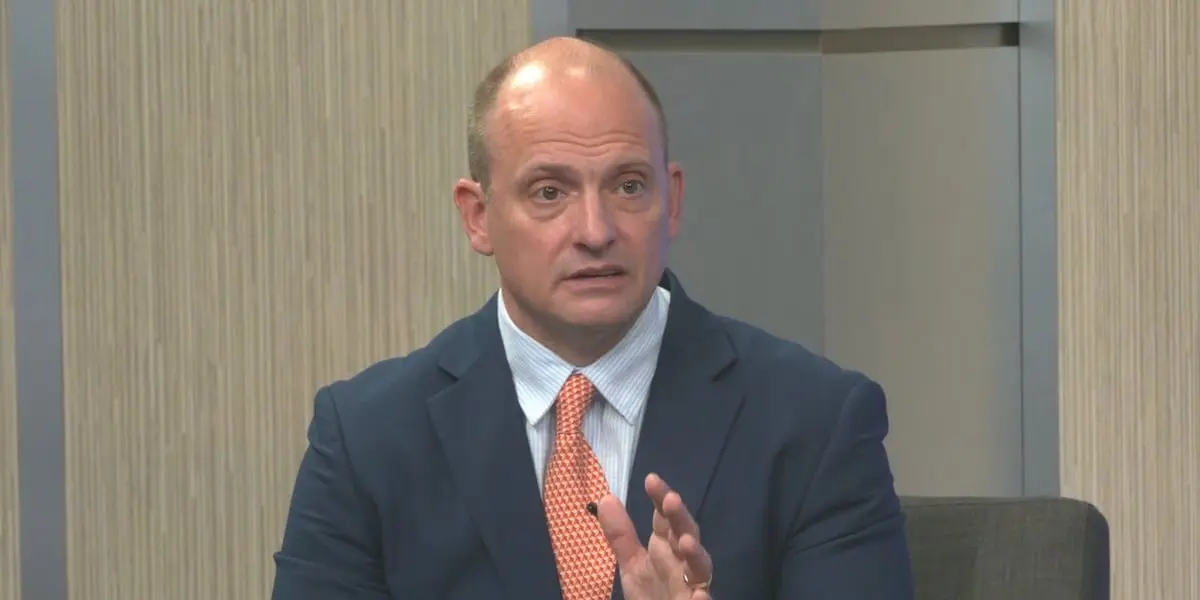
GAINESVILLE, Fla. — As the political landscape of Florida braces for a high-stakes electoral cycle, the race for the state’s top legal post has emerged as a premier battleground between competing visions of governance. Democratic challenger José Javier Rodríguez, a former labor lawyer, state legislator, and federal official, sat down for an exclusive interview with TV20 ahead of a scheduled debate at the University of Florida. Rodríguez is campaigning to unseat appointed Attorney General James Uthmeier, a stalwart of the current state administration who took office in early 2025 following an appointment by Governor Ron DeSantis.
The race crystallizes a fundamental debate over the scope and independence of the Florida Office of the Attorney General. While Uthmeier has leveraged his position to aggressively enforce state mandates, challenge local government policies, and align closely with executive priorities, Rodríguez is pitching himself as a populist defender of consumers, workers, and local autonomy. Promising an independent streak that transcends partisan boundaries, Rodríguez has staked his campaign on tackling corporate monopolies, insurance costs, and systemic corruption, while championing local home rule against what he characterizes as overreach from Tallahassee.
The contrast between the two candidates could not be starker. Uthmeier enters the race armed with formidable institutional backing, including endorsements from President Donald Trump, the Florida Sheriffs Association, and the Florida Police Benevolent Association, alongside a record centered on law and order and executive alignment. Rodríguez, drawing on a multi-faceted career that spans the courtroom, the Florida Legislature, and the U.S. Department of Labor under the Biden administration, is positioning himself as an adversarial watchdog ready to take on entrenched corporate interests.
As the race intensifies, questions surrounding debates, policy priorities, and the structural independence of the Attorney General’s office are taking center stage. With neither campaign leaving room for consensus on how state power should be wielded, Florida voters face a pivotal choice regarding the future direction of their chief legal and law enforcement agency.
Detailed Chronology
The Evolution of the 2026 Attorney General Race
The groundwork for the 2026 general election matchup was laid through years of shifting political dynamics within Florida’s executive branch and legislative chambers. To understand the current trajectory of the race, one must examine the distinct career arcs and institutional milestones of both candidates.
José Javier Rodríguez: From Labor Lawyer to State Legislator and Federal Official
José Javier Rodríguez’s path to the statewide ballot has been defined by advocacy, electoral contests, and executive service. A labor lawyer by trade, Rodríguez built his professional reputation representing consumers, policyholders, and working-class families against corporate entities. This advocacy served as a springboard into electoral politics.
Rodrighuez successfully transitioned from the courtroom to the public arena when he was elected to the Florida House of Representatives, where he served from 2012 to 2016, representing parts of Miami-Dade County. His legislative portfolio during this period focused heavily on consumer protections, environmental safeguards, and labor rights. Following his tenure in the House, Rodríguez advanced to the Florida Senate, serving from 2016 to 2020. In the Senate, he established himself as a vocal critic of utility monopolies and state-level preemption of local ordinances, often sparring with Republican leadership over policy priorities.
After narrowly losing a high-profile, dramatic congressional bid in 2020, Rodríguez answered a call to national service. He joined the administration of President Joe Biden as Assistant Secretary of Labor, a role that expanded his administrative portfolio and gave him a front-row seat to federal regulatory enforcement, labor standards, and nationwide worker protection initiatives. Returning to Florida with this elevated administrative experience, Rodríguez positioned his gubernatorial or statewide ambitions around a core thesis: that the state’s legal apparatus has been captured by corporate special interests and executive overreach, necessitating a course correction led by a seasoned litigator.
James Uthmeier: The Rise of an Executive Insider
Conversely, James Uthmeier’s ascent to the Attorney General’s office represents the consolidation of executive power within Florida’s dominant political apparatus. Uthmeier first gained widespread prominence as Governor Ron DeSantis’s chief of staff, a role that positioned him at the nerve center of Florida’s hard-hitting conservative governance model. As chief of staff, Uthmeier was instrumental in executing the governor’s legislative agenda, managing state agency responses to high-profile cultural and political debates, and navigating complex legal challenges brought against state policies by federal agencies and civil rights organizations.
When a vacancy arose in the Attorney General’s office in early 2025, Governor DeSantis appointed Uthmeier to fill the post, ensuring ideological continuity at the head of the state’s Department of Legal Affairs. Since stepping into the role, Uthmeier has wasted little time in signaling his enforcement priorities. He has concentrated heavily on state oversight of local jurisdictions, utilizing the powers of the Attorney General to demand compliance with state statutes regarding law enforcement policies, education standards, and municipal ordinances. Uthmeier’s approach has earned him deep institutional loyalty from law enforcement groups and conservative figures alike, culminating in key endorsements from President Donald Trump, the Florida Sheriffs Association, and the Florida Police Benevolent Association.
The Gainesville Encounter and the Debate Impasse
The current phase of the campaign kicked into high gear in Gainesville, where Rodríguez arrived to participate in a planned debate at the University of Florida. Speaking with TV20 ahead of the event, Rodríguez addressed not only his policy platform but also the logistical status of the debates themselves. Expressing a desire to face the incumbent head-to-head, Rodríguez noted his intention to see Uthmeier on the debate stage. However, outreach from local media outlets to Uthmeier’s office regarding debate participation and scheduling yielded no immediate response by the time of publication, highlighting the strategic calculus incumbent campaigns often employ when weighing open forums against the risks of unscripted encounters.
Supporting Context & Metrics
Structural Realities and Institutional Dynamics
Running a statewide campaign in Florida as a Democrat presents steep mathematical and structural hurdles, particularly given the entrenched Republican majorities in both the Florida Senate and the Florida House of Representatives. Pundits and political strategists widely project that the GOP will maintain its legislative dominance following the 2026 elections. Yet, Rodríguez argues that these legislative realities do not diminish the potency or utility of the Attorney General’s office.
+-----------------------------------------------------------------+
|               FLORIDA ATTORNEY GENERAL'S OFFICE                 |
|                   (Constitutional Authority)                    |
+-----------------------------------------------------------------+
                                 |
         +-----------------------+-----------------------+
         |                                               |
         v                                               v
+------------------+                           +------------------+
|   Independent    |                           |  Prosecutorial   |
| Constitutional   |                           |    Discretion    |
|     Powers       |                           | (Crime, Drugs,   |
| (No Legislative  |                           |  Tech, Consumer  |
|   Permission     |                           |   Protection)    |
|     Needed)      |                           +------------------+
+------------------+
To understand how an Attorney General can operate effectively in a politically split environment, one must examine the constitutional architecture of Florida’s executive branch:
- Constitutional Independence: Unlike cabinet departments that may be tightly bound to legislative appropriations or joint executive-legislative oversight boards, the Attorney General is an independently elected constitutional officer.
- Litigation Authority: The office possesses broad, independent authority to initiate lawsuits, defend state statutes, join multistate antitrust actions, and prosecute consumer fraud without needing explicit permission from the Governor or the Legislature.
- Jurisdictional Reach: The Attorney General’s jurisdiction spans consumer protection, Medicaid fraud, antitrust enforcement, public corruption, and statewide criminal prosecution—domains where statutory authority is already deeply codified.
Despite these constitutional parameters, the ideological battlelines between Rodríguez and Uthmeier extend far beyond legal technicalities into the realm of local governance and state preemption. Under Uthmeier’s tenure, the Attorney General’s office has taken an aggressive stance on enforcing state laws at the local level. Notable flashpoints include:
- Gainesville Police Department Policy: Uthmeier’s office demanded alterations to local law enforcement guidelines regarding transgender-inclusive protocols, arguing they conflict with state directives.
- Alachua County Public Schools: The office scrutinized educational environments, targeting instances where educators utilized nonbinary titles in classrooms, framing such actions as violations of broader state educational statutes.
Rodríguez has staked out a diametrically opposed philosophy regarding state-local relations. Dubbing himself in advance of the campaign trail as "Home Rule José," Rodríguez has made local autonomy a cornerstone of his platform. He contends that unless local jurisdictions are in direct violation of established state law, municipal governments, school boards, and police departments do not require dictatorial oversight from bureaucrats in Tallahassee.
Furthermore, the economic pressures facing everyday Floridians form a central metric of public concern in this election cycle. With property insurance rates remaining among the highest in the nation, utility bills climbing, and cost-of-living pressures squeezing families, the economic mandate of the Attorney General’s office has never been more scrutinized. Rodríguez points to his historical battles against major corporate utilities—including Florida Power & Light (FPL)—as proof that his legal career has been forged in direct opposition to corporate monopolies and special interests.
Official Statements
The ideological chasm between the two candidates is best understood through their own words. Below are key excerpts and contextual analyses of statements made by José Javier Rodríguez during his interview with TV20, contrasting with the operational record of incumbent Attorney General James Uthmeier.
On Standing Up for Working Floridians and Taking on Special Interests
José Javier Rodríguez emphasized his lifelong commitment to advocacy on behalf of everyday citizens, framing his candidacy as a continuation of his legal and legislative career:
"My entire career, I have stood up for the little guy in one way or the other, whether it’s policyholders, taxpayers, workers who’ve been cheated, low-income owners who are getting scammed. And Floridians need somebody who’s gonna fight for them in Tallahassee. My whole career has been that: as a lawyer, as a legislator, I took on the most powerful special interests in the state."
Contextual Analysis: This statement serves as the ideological anchor of Rodríguez’s campaign. By explicitly invoking groups like policyholders and taxpayers, he speaks directly to Floridians who feel abandoned by the state’s failure to curb skyrocketing property insurance rates. His framing positions him as an external disruptor to Tallahassee’s political establishment, even as a former insider who understands the legislative machinery.
On Executive Independence and Partisanship
Addressing concerns over whether a Democratic Attorney General could function effectively under a Republican-controlled legislature and executive branch, Rodríguez asserted the absolute independence of the office:
"The Office of Attorney General is an independent office; it doesn’t need to ask the governor or legislature for permission. And I think it’s extremely important because my entire career has been standing up to the most powerful entrenched interests in our state. So it doesn’t matter who you are, doesn’t matter if you’re the same or a different political party. If you’re dangerous to Floridians or you’re taking advantage of them, you’re going to hear from the Attorney General’s office."
Contextual Analysis: Rodríguez is intentionally signaling to independent and moderate voters that his enforcement priorities will be blind to party affiliation. By asserting that the office does not require permission from political allies or opponents, he seeks to reassure the electorate that public corruption, corporate fraud, and consumer scams will be prosecuted vigorously regardless of who commits them.
On Local Autonomy Versus State Preemption
Contrasting his vision with incumbent James Uthmeier’s interventionist approach to local government policies, Rodríguez introduced his intended moniker:
"I believe that as the next Attorney General, I’m going to earn the nickname ‘Home Rule Jose’ because I think local jurisdictions, if they’re in compliance with the law, do not need somebody in Tallahassee dictating to them how they should do things."
Contextual Analysis: This position draws a sharp line between the current administration’s use of the Attorney General’s office to police municipal and county cultural and administrative policies and Rodríguez’s preference for decentralized governance. It appeals to local elected officials across the political spectrum who chafe at state-level preemption of local decision-making.
On Corporate Monopolies and Utility Battles
Highlighting his history of litigating against corporate power structures, Rodríguez pointed to his past legal fights:
"My entire career has been standing up for people who are getting screwed by corporations, government institutions. That has been my whole career. I famously battled our monopoly utilities, including the one in my own backyard, Florida Power and Light (FPL). We need somebody who’s going to go and fight these special interests."
Contextual Analysis: Utility costs and corporate accountability are perennial hot-button issues in Florida. By highlighting his direct confrontations with entities like FPL, Rodríguez seeks to establish concrete credibility on consumer issues, contrasting himself with candidates whose campaigns are heavily financed by corporate political committees.
Future Outlook
The Path to November 2026
As the 2026 election cycle progresses toward the general election, the race for Florida Attorney General will serve as a bellwether for the state’s shifting political consciousness. Several key dynamics will dictate the outcome:
- Debate Dynamics and Media Engagement: Whether incumbent James Uthmeier ultimately agrees to debate José Javier Rodríguez will significantly shape the media narrative. Unscripted debates offer challengers a platform to define their opponents, while incumbents often calculate whether public forums provide diminishing returns.
- The Economy and Consumer Pocketbooks: As Floridians continue to grapple with high property insurance premiums, cost-of-living adjustments, and utility rate increases, the candidate who successfully frames themselves as the true protector of consumer wallets will hold a major advantage among independent and unaffiliated voters.
- The Role of Law Enforcement and Endorsements: Uthmeier enters the race with robust institutional backing from law enforcement organizations, including the Florida Sheriffs Association and the Florida Police Benevolent Association, as well as an endorsement from President Donald Trump. Countering this formidable coalition will require Rodríguez to mobilize urban and suburban voter bases while appealing to rank-and-file public safety personnel who value operational independence.
- Local Autonomy as a Wedge Issue: The ongoing legal and administrative battles between state authorities and local municipalities—spanning police department protocols, educational guidelines, and municipal ordinances—will remain front and center. Voters will decide whether they prefer Tallahassee-driven enforcement or Rodríguez’s promised "Home Rule" model.
Ultimately, the 2026 Attorney General contest is more than a race for a single constitutional seat; it is a referendum on how power is exercised in Florida. Whether voters choose the continuity, executive alignment, and law-and-order focus represented by James Uthmeier, or the reform-minded, consumer-advocacy, and local-autonomy platform championed by José Javier Rodríguez, the decision will shape the legal and regulatory contours of the Sunshine State for years to come.

0 Comments