

Executive Overview
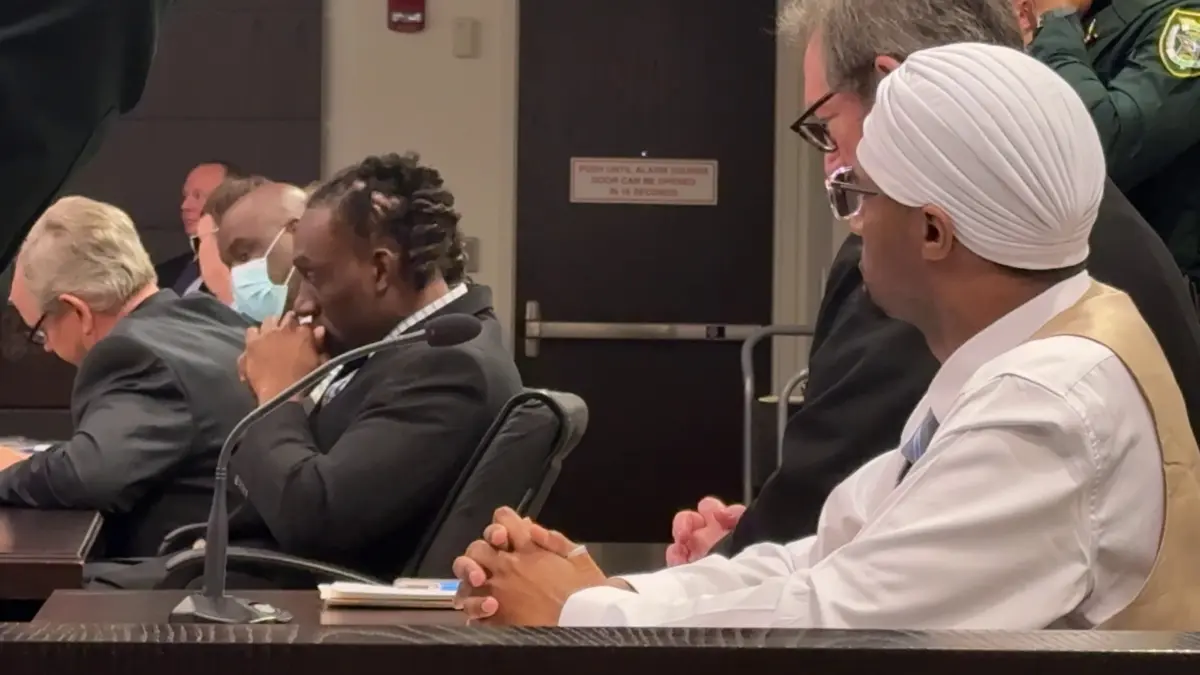
GAINESVILLE, Fla. — More than seven years after a hail of gunfire shattered the quiet of a Florida night and claimed the life of 23-year-old Christin Cassels just days before her birthday, the pursuit of accountability has officially entered the courtroom. On Tuesday, legal proceedings commenced at the Alachua County Courthouse with the successful selection of a 12-person jury panel—comprising nine women and three men, alongside two alternates—to preside over a joint trial that is expected to captivate and weigh heavily on the local community for the remainder of the week.
Three men—Nikenson Perin, Blake Jackson, and Keneth Altidor—stand accused of first-degree murder in connection with the April 2017 homicide. The tragedy, which initially baffled local law enforcement and languished as an unsolved cold case for nearly a decade, was ultimately blown wide open through advancements in digital forensics. Investigators leveraged cellular tower data and electronic tracking metrics to pierce the shroud of anonymity surrounding the perpetrators, leading to a coordinated sweep of arrests in 2024.
As opening arguments approach, the case presents a deeply emotional dichotomy. On one side stands Brenda Cassels, the victim’s mother, who has waited nearly a decade for justice, grappling with the agonizing realization that the trial will reopen unhealed psychological wounds. On the other side stands Charlene Rigby-Martin, the mother of defendant Blake Jackson, who maintains her son’s absolute innocence and insists that law enforcement has targeted the wrong man. With the death penalty reportedly off the table, prosecutors are pushing for a permanent resolution: life sentences for all three co-defendants. This comprehensive report explores the chronology of the crime, the investigative breakthroughs that revived a dormant file, the contrasting perspectives of the families involved, and the broader implications of this high-stakes trial.
Detailed Chronology: From a Tragic April Night to the Courtroom
The Fatal Night in Hawthorne (April 2017)
The events that set this multi-year legal drama into motion occurred in late April 2017. Christin Cassels, described by her family as a vibrant and deeply affectionate young woman, was visiting her boyfriend at his residence in Hawthorne, located near southeast U.S. Highway 301 in Alachua County.
According to investigative files and photographic evidence released by local authorities, the domestic tranquility of the evening was violently interrupted when multiple gunshots were fired directly into the residence. The barrage of bullets penetrated the structure, striking Christin while she was in the garage. Despite emergency response efforts, the young woman succumbed to her injuries. She was just days away from celebrating her 24th birthday.
In the immediate aftermath, law enforcement scoured the crime scene for ballistic evidence, interviewed neighborhood witnesses, and combed the property for clues. However, the initial momentum slowed. Lacking definitive eyewitness accounts or immediate forensic matches, the trail grew cold. For the Cassels family, the agonizing descent into uncertainty began—a nightmare marked by unanswered questions, silent phones, and a growing fear that justice would never find the individuals responsible for cutting Christin’s life short.
The Seven-Year Void and Digital Breakthrough (2024)
For seven years, the case file sat gathering dust in the cold case archives of the Alachua County Sheriff’s Office. Cold cases notoriously resist resolution as memories fade, physical evidence degrades, and potential witnesses relocate or become unreachable. However, the paradigm of criminal investigation has shifted dramatically over the past decade, with digital footprints frequently proving more reliable than human testimony.
In 2024, cold case investigators utilized advanced digital forensics, specifically analyzing historical cellular phone data and network mapping tools. By correlating cell site location information with the timeline of the shooting, detectives were able to place electronic devices belonging to Nikenson Perin, Blake Jackson, and Keneth Altidor in the vicinity of the crime scene at the exact hour of the homicide.
This technological breakthrough bridged the gap between suspicion and probable cause. Armed with geo-location data, call records, and corroborating analytical reports, investigators obtained warrants and successfully executed arrests for Perin, Jackson, and Altidor, charging all three men with first-degree murder. The arrests stunned the local community and offered the first genuine glimmer of hope to a grieving family that had nearly abandoned hope of closure.
Supporting Context & Metrics: The Mechanics of the Trial
Jury Selection and Judicial Scrutiny
The trial formally began on Tuesday with a rigorous jury selection process overseen by the presiding judge in Alachua County. Given the high-profile nature of a seven-year-old cold case involving multiple co-defendants, court officials anticipated significant scrutiny regarding potential juror bias.
Before being empaneled, prospective jurors underwent extensive questioning regarding their personal backgrounds, prior knowledge of the case through media coverage, and any personal experiences with violent crime or law enforcement. The core legal challenge for the court was identifying individuals capable of setting aside emotional reactions and evaluating the voluminous digital and forensic evidence strictly on its merits.

The resulting panel consists of nine women and three men, supplemented by two alternates—one man and one woman. Legal analysts note that joint trials involving three defendants charged with capital-level offenses require meticulous judicial management to ensure that evidence admissible against one defendant does not improperly prejudice the jury against the others. The trial is projected to move swiftly, with proceedings anticipated to conclude by the end of the week.
Evidentiary Landscape: Technology vs. Testimony
While traditional murder trials often hinge on eyewitness testimony or physical trace evidence like DNA and fingerprints, this case is expected to rely heavily on circumstantial and digital evidence.
- Cellular Tower Triangulation: Prosecutors will likely present expert testimony mapping out the precise movements of the defendants’ mobile phones on the night of the murder.
- Communications Records: Text messages, call logs, and application data recovered during the 2024 investigation may be deployed to establish coordination or motive among Perin, Jackson, and Altidor.
- Ballistics and Crime Scene Reconstruction: Forensic experts will walk the jury through the trajectory of the bullets fired into the Hawthorne garage, attempting to tie the physical attack back to the accused trio.
Official Statements and Family Perspectives
The Victim’s Family: Grief, Resolve, and Frustration
For Brenda Cassels, Christin’s mother, the arrival of the trial date is a bittersweet milestone. Speaking with local media outlets prior to the proceedings, Brenda articulated the profound toll the ordeal has taken on her family. She remembered Christin as "a good, loving daughter" whose life was extinguished needlessly.
While Brenda expressed profound relief that arrests were finally made in 2024, she acknowledged that sitting through the courtroom testimony would forcefully reopen emotional wounds that have barely begun to scab over. Furthermore, she voiced explicit frustration regarding the legal parameters of the prosecution: the death penalty is reportedly off the table in this case. Despite this limitation, Brenda remains steadfast in her ultimate objective, stating that she wants all three suspects sentenced to life in prison without the possibility of parole, ensuring they never walk free again.
The Defense Perspective: A Mother’s Plea of Innocence
Conversely, the families of the accused maintain a narrative of wrongful prosecution and mistaken identity. Outside the Alachua County Courthouse ahead of Tuesday’s jury selection, Charlene Rigby-Martin—mother of defendant Blake Jackson—spoke passionately in defense of her son.
Rigby-Martin categorically rejected the prosecution’s theory that Jackson participated in the 2017 homicide. Offering an alibi, she recalled the night of the incident:
"I believe he was on my couch asleep at night as far as I knew because I went to work… No, I don’t believe he played any part at all, and they are mistaken."
Jackson has remained incarcerated at the Alachua County Jail throughout the pretrial phase and continues to be held as the joint trial proceeds. Rigby-Martin acknowledged the immense strain the legal battle places on all parties involved, expressing hope that the judicial process will ultimately vindicate her son and expose what she believes to be a critical error by investigators.
Future Outlook: What Lies Ahead for Alachua County
As the jury hears opening arguments and testimony unfolds over the coming days, the outcome of this trial will carry profound ramifications for all participants.
For the judicial system in Alachua County, the case serves as a benchmark for how cold cases can be successfully revitalized through modern digital forensics. It demonstrates that the passage of time, while eroding traditional witness testimony, no longer guarantees immunity for perpetrators who leave behind an electronic footprint.
For the community of Hawthorne and the wider Gainesville area, the trial brings closure to a long-standing local mystery that had lingered without resolution since 2017. Regardless of the verdicts rendered by the newly seated jury, the emotional reverberations of Christin Cassels’ untimely death will endure. As the state presents its case against Nikenson Perin, Blake Jackson, and Keneth Altidor, the central question remaining before the court is whether the digital evidence of 2024 is robust enough to convince twelve jurors beyond a reasonable doubt that justice is finally due.

0 Comments