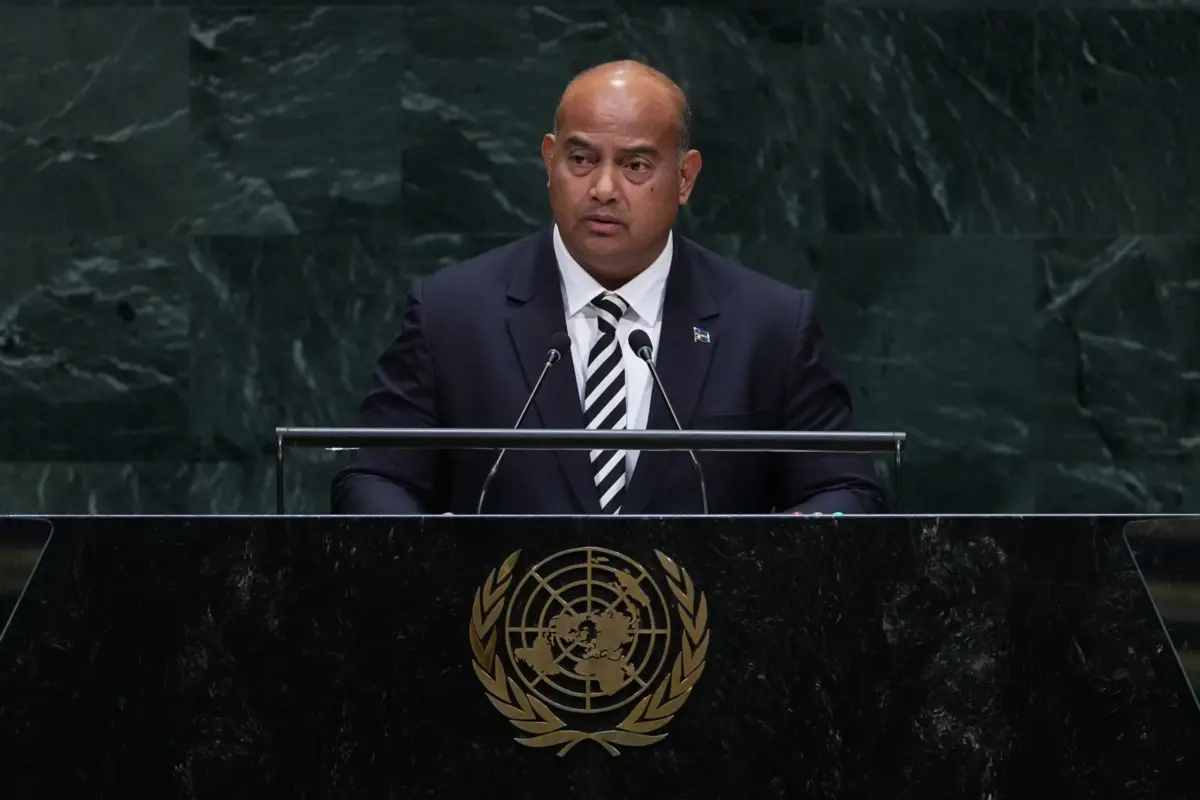
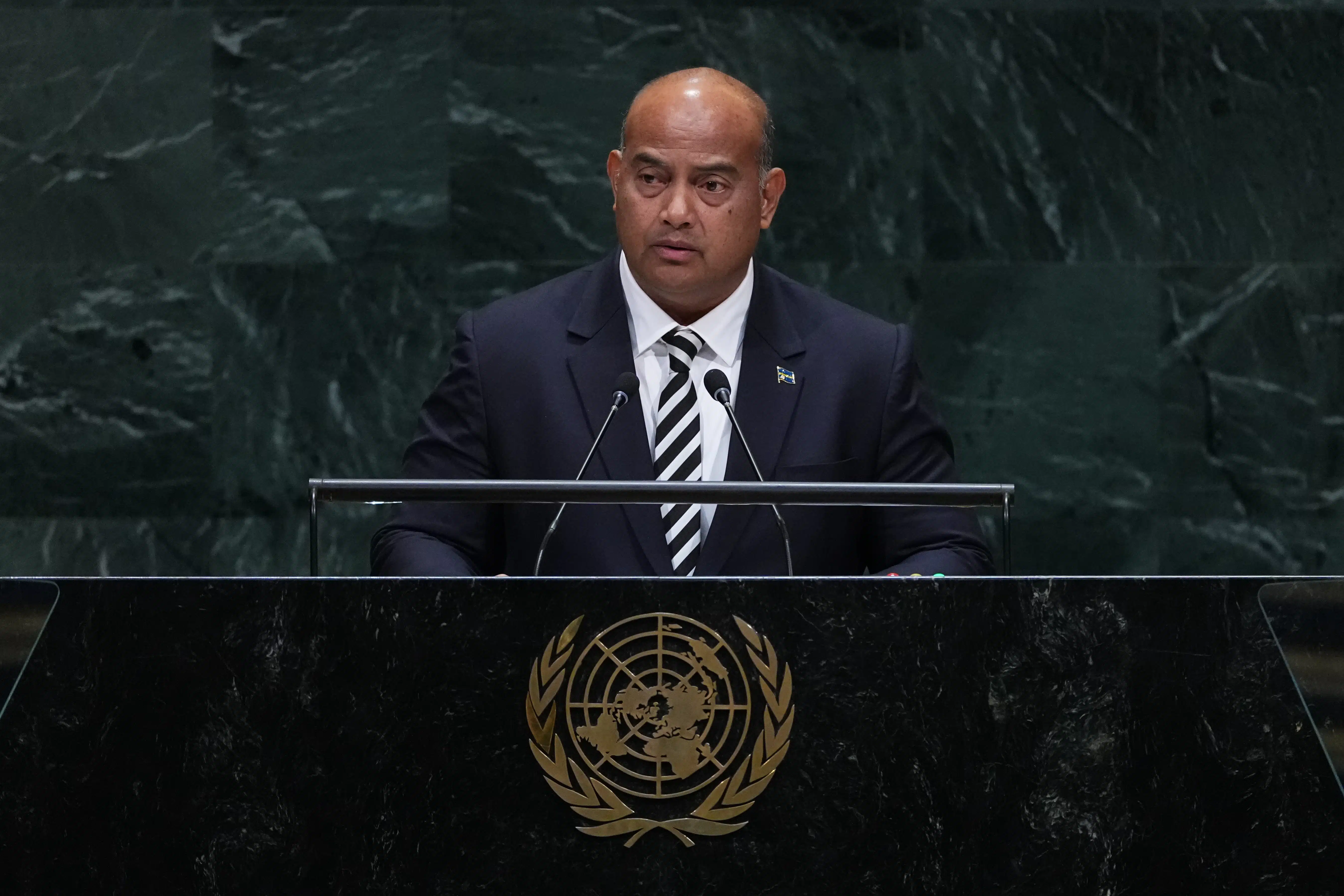
NEW YORK — In a historic address to the 81st session of the United Nations General Assembly on Tuesday, September 22, 2026, President David Ranibok Adeang of the newly designated Naoero formally introduced the world to his nation’s profound identity shift. Standing before the international community at U.N. headquarters, Adeang delivered a powerful speech officially notifying global leaders that the tiny South Pacific island nation formerly known as Nauru had reclaimed its ancestral heritage, updating both its spelling and native pronunciation.
What the world has long recognized as "Nauru"—pronounced Now-roo—is now officially and proudly designated as Naoero, pronounced Now-ero. Alongside this linguistic restoration, the nation’s international country code has shifted from NRU to NRO, and its people, formerly referred to as Nauruans, are now formally recognized as dei-Naoero.
This transition is far more than a cosmetic update or a mere bureaucratic rebranding exercise. It represents a deeply intentional decolonial act, a rejection of simplified foreign phonetic adaptations, and a reclamation of indigenous dignity for an isolated island nation spanning just eight square miles with a population of approximately 12,000. As global conversations surrounding indigenous rights, linguistic preservation, and historical reckoning continue to take center stage, Naoero’s bold declaration at the United Nations serves as a powerful reminder of the enduring significance of names, heritage, and self-determination on the world stage.
Detailed Chronology: From Colonial Label to Indigenous Restoration
The journey toward the restoration of the name Naoero is anchored in a complex history of colonial rule, geopolitical transitions, and an unyielding indigenous identity that survived decades of foreign administration.
The Colonial Era and the Genesis of "Nauru"
Long before European contact, the inhabitants of the isolated coral atoll referred to their island home in their native tongue as Naoero (or variants thereof, depending on dialectal nuances). The island was first sighted by Westerners in 1798 by British captain John Fearn, who named it "Pleasant Island" due to its lush environment and the welcoming nature of its people.
However, as European imperial ambitions expanded across the Pacific, the island was swept into the machinery of colonial administration. In 1888, Nauru was annexed by the German Empire and incorporated into its Marshall Islands protectorate. During this period, German administrators and traders phoneticized the native name into "Nauru" to better suit European orthography and pronunciation conventions.
Following the outbreak of World War I, Australian forces occupied the island in 1914. Subsequently, a League of Nations mandate—and later a United Nations trusteeship—was established, administered jointly by Australia, Great Britain, and New Zealand. Throughout these successive waves of foreign governance, the simplified colonial moniker "Nauru" became entrenched in international maps, shipping lanes, and diplomatic registries.
Independence and the Path to Modern Self-Determination
On January 31, 1968, the island officially gained its independence, becoming the smallest independent republic in the world. While political autonomy was achieved, the administrative residue of the colonial era persisted, including the standardized global use of the name "Nauru."
For decades, the name served its purpose in global trade and diplomacy, yet beneath the surface, the island’s indigenous population continued to use Naoero in daily conversation, cultural practices, and community life. The disconnect between how the islanders spoke of their homeland among themselves and how the outside world addressed them remained a quiet, persistent reminder of historical impositions.
The Legislative Push and U.N. Formalization
The movement to formally correct this historical oversight gained critical momentum in late 2025 and early 2026. Following legislative motions tabled in the country’s parliament in January 2026, the government officially announced the name change in August 2026.
The culmination of this legislative effort arrived on September 22, 2026, when President Adeang took the podium at the United Nations General Assembly in New York. His address transformed a domestic policy shift into an international statement of sovereignty, ensuring that the global community acknowledged, respected, and adopted the authentic indigenous name of the republic.
Supporting Context & Metrics: The Profile of Naoero
To fully appreciate the gravity of President Adeang’s announcement, it is essential to examine the unique geographical, demographic, and geopolitical profile of Naoero.
Geographic and Demographic Realities
Total Land Area: Approximately 21 square kilometers (8.1 square miles), making it the third-smallest independent nation in the world behind Vatican City and Monaco.
Population: Roughly 12,000 residents, predominantly of Naoero descent, alongside expatriate communities engaged in governance, education, and regional development.
Geographical Location: Located in Micronesia in the central Pacific Ocean, approximately 42 kilometers (26 miles) south of the equator.
Economic Foundation: Historically driven by phosphate mining, the economy of Naoero has undergone significant structural transformations in recent decades, increasingly relying on international aid, fisheries, and regional cooperation agreements.
Comparative Global Precedents: Renaming Nations in the Modern Era
Naoero joins a long and storied tradition of sovereign states reclaiming their indigenous or preferred nomenclature to shed colonial legacies, foster national unity, or correct international mischaracterizations.
Eswatini (2018): King Mswati III officially changed the name of Swaziland to Eswatini ("land of the Swazis") to mark the 50th anniversary of independence from British rule and to eliminate ongoing confusion with Switzerland.
Turkiye (2022): Following a decades-long historical trajectory dating back to the fall of the Ottoman Empire, the government of Ankara formally requested that the United Nations replace "Turkey" with "Turkiye" in all foreign languages, emphasizing cultural authenticity and avoiding confusion with the North American bird.
Burkina Faso (1984): Revolutionary leader Thomas Sankara renamed Upper Volta to Burkina Faso ("Land of Incorruptible People"), combining words from the country’s two major native languages, Moore and Dioula, to erase the colonial-era designation imposed by France.
Zimbabwe (1980) & Zambia (1964): Upon achieving independence and majority rule, Rhodesia and Northern Rhodesia adopted indigenous African names reflecting their historical heritage and geography.
Siam to Thailand (1939): The Southeast Asian kingdom officially shifted its name to foster civic nationalism, ethnic solidarity, and independence from Western conceptual frameworks.
These historical examples underscore a universal truth: a name is not merely a label, but a vital vessel of cultural memory, political autonomy, and psychological sovereignty.
Official Statements and International Reception
The address delivered by President David Ranibok Adeang at the 81st session of the U.N. General Assembly resonated deeply within the plenary hall, capturing the attention of diplomats, journalists, and global leaders alike.
"I have traveled far," Adeang began, immediately drawing the assembly’s focus to the journey of his people across generations, oceans, and geopolitical landscapes. "There are moments in the life of a nation when its people are called to remember who they have always been. This is such a moment for us."
Addressing the linguistic mechanics of the change, Adeang offered a candid critique of historical linguistic imposition without harboring bitterness, framing the shift as an act of self-affirmation rather than retroactive grievance.
"For many years, the world has known our country as Nauru. Nauru is how our name sounded to those who found it hard to say, and the world kept it. But it is not the name our people used among themselves."
He emphasized that the transition was designed to honor the past while securing a dignified cultural future for the upcoming generations of dei-Naoero.
"We do not make this choice to erase our past. We make it because we honor it. That name carries the memory of our ancestors, our language, and our identity. It has been there all along. Never lost, never absent. Today, we restore Naoero."
As he concluded his remarks—pivoting seamlessly from cultural reclamation to urgent contemporary crises facing small island developing states, including rising sea levels, economic vulnerability, and global equity—Adeang left the assembly with a succinct, unforgettable directive:
"Say our name."
Diplomatic delegations across the Pacific bloc, as well as representatives from various international bodies, met the address with widespread respect and acknowledgement. Secretariat officials confirmed that internal database updates, official translation protocols, and mapping registries would immediately incorporate the transition from Nauru to Naoero, along with the updated country code NRO.
Future Outlook: Challenges and Triumphs Ahead for Naoero
While the ceremonial restoration of the name Naoero marks a monumental chapter in the republic’s history, the nation continues to navigate profound practical and existential challenges as it looks toward the future.
Navigating Climate Vulnerability and Economic Resilience
Like many low-lying island nations across the Pacific, Naoero faces severe threats posed by global climate change and rising sea levels. Coastal erosion, freshwater security, and shifting weather patterns present continuous challenges to infrastructure and local livelihoods. President Adeang’s utilization of the U.N. platform served as both a cultural celebration and a stark reminder that sovereignty and cultural preservation are inextricably linked to environmental survival.
Global Integration and Administrative Adaptation
The operational shift from Nauru to Naoero—encompassing passport renewals, international aviation and maritime registries, diplomatic communications, and financial clearinghouse updates—will require sustained administrative coordination over the coming months. International partners, particularly Australia, New Zealand, and regional organizations such as the Pacific Islands Forum, have pledged logistical support to ensure a seamless transition across global networks.
Ultimately, by reclaiming its true name on the world’s most prominent diplomatic stage, Naoero has demonstrated that size is no metric for cultural magnitude. Through an act of quiet courage and steadfast pride, the island nation has ensured that its ancestral voice will echo clearly across the international community for generations to come.



0 Comments