

As modern suburban aesthetics face a growing reckoning over water scarcity, pesticide runoff, and ecological degradation, a quiet yet powerful counter-movement is taking root across America’s yards. The paradigm of the traditional, manicured green lawn—historically prized for its uniformity but criticized for its ecological sterility—is giving way to a more regenerative vision. Enter the concept of "foodscaping": the intentional integration of edible crops into ornamental landscape design.
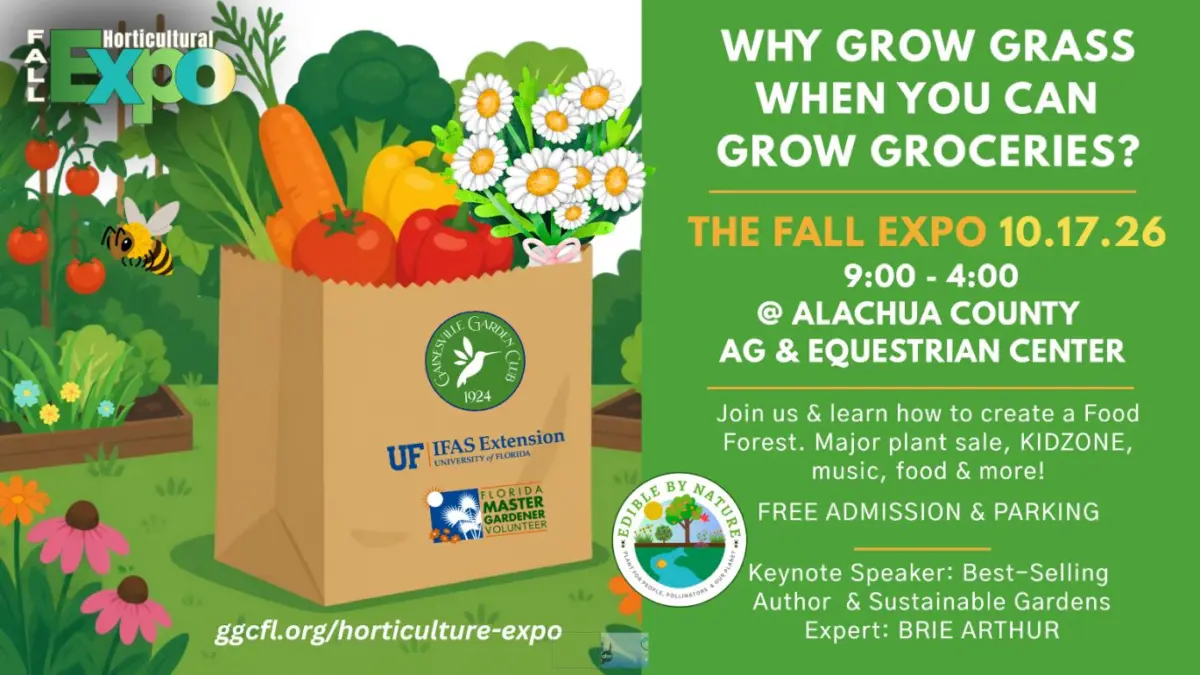
To champion this sustainable shift, the Gainesville Garden Club, in proud partnership with the UF/IFAS Extension Alachua County Master Gardener Volunteer Program, is preparing to host its flagship community event. The Fall Horticultural Expo & Plant Market 2026 is scheduled for Saturday, October 17, from 9:00 AM to 4:00 PM, at the Alachua County Agriculture & Equestrian Center located at 23100 W. Newberry Rd. in Newberry, Florida.
Operating under the resonant theme, "Edible by Nature: Plant for People, Pollinators & the Planet," this year’s free-to-attend expo challenges homeowners to rethink their outdoor spaces with a provocative yet practical question: Why grow grass when you can grow groceries?
Far beyond a traditional plant sale, the 2026 expo has evolved into an immersive educational symposium. It addresses some of the most pressing environmental challenges of our time, including biodiversity loss, urban heat island effects, sustainable food security, and water conservation. Supported in part by Visit Gainesville, Alachua County, the event brings together nationally recognized horticulturists, academic researchers, environmental advocates, and local families for a day dedicated to cultivating a healthier relationship with the natural world.
Detailed Chronology: What to Expect at the 2026 Fall Horticultural Expo
The 2026 Fall Horticultural Expo is meticulously structured to offer a full day of dynamic, interactive programming. Designed for seasoned horticulturists, absolute beginners, and families alike, the timeline is packed with keynote presentations, specialized workshops, hands-on children’s programming, and curated exhibitions.
Morning Session: Gates Open and Exploration Begins (9:00 AM – 12:00 PM)
- 9:00 AM: The gates officially open to the public at the Alachua County Agriculture & Equestrian Center. Early birds are encouraged to bring their trusty garden wagons to navigate the sprawling Fall Plant Market. Featuring a diverse array of specialized plant vendors from across the region, attendees can purchase everything from rare ornamentals to heirloom fruit trees directly from growers.
- Morning Exploration: Visitors can immediately dive into the morning’s specialized zones. Nature enthusiasts can wander through the expansive Insect, Birds, and Nature Displays to study local ecosystems and learn how to design habitats that attract beneficial wildlife. Concurrently, the Orchid Showcase—hosted in its exciting new venue at the expo by the Gainesville Orchid Society—opens its doors, offering breathtaking floral displays and specialized orchid vendors.
- The Plant Doctor Desk: The popular "Ask a Master Gardener" clinic opens its diagnostic windows bright and early. Local gardeners wrestling with drooping leaves, mysterious spots, or pest infestations can bring plant samples (properly sealed in plastic bags) to consult with UF/IFAS Master Gardeners regarding Florida-Friendly Landscaping™ techniques.
Midday Milestone: The Keynote Address (1:00 PM)
- 1:00 PM: The intellectual centerpiece of the expo takes place on the main stage. Nationally renowned horticulturist, author, and television personality Brie Arthur—widely known as "Brie the Plant Lady"—delivers her keynote address titled "Fabulous Fruitful Foodscapes." Arthur, a pioneer of the suburban foodscaping movement and author of the groundbreaking book The Foodscape Revolution, will outline how to weave high-yield edible crops seamlessly into traditional foundation plantings, entirely eliminating the visual friction between "vegetable gardens" and "front-yard aesthetics."
Afternoon Programming: Specialized Workshops and New Features (1:15 PM – 4:00 PM)
- Food Forest Education: Following the keynote, horticultural sessions dive deep into the mechanics of Food Forests. Experts will break down the multi-tiered architecture of sustainable, perennial edible landscapes—demonstrating how canopy trees, understory fruit bushes, herbaceous layers, and root crops can mimic natural forest ecosystems while providing a bountiful, low-maintenance harvest.
- Fang Fest (New for 2026): In a brand-new addition to the expo lineup, the UF/IFAS snake experts present "Fang Fest." This specialized educational track is designed to demystify Florida’s native serpent population, equipping attendees with the identification skills and ecological understanding necessary to peacefully and safely coexist with local reptiles.
- All-Day Family & Youth Engagement: Throughout the day, the Kids Zone offers continuous screen-free engagement. Designed to trade "screen time for green time," the area features hands-on nature crafts and agricultural games. A highlight of the youth program features a special reading by Miss Florida 2025, who will read her acclaimed children’s book to inspire the next generation of environmental stewards.
- 4:00 PM: The event officially concludes, leaving participants armed with plants, knowledge, and actionable blueprints for transforming their landscapes.
(Note for attendees: While the event is profoundly family-friendly, organizers politely request that pets remain at home; only certified service animals are permitted on the grounds.)
Supporting Context & Metrics: The Science and Economics of Foodscaping
To understand the urgency behind the Gainesville Garden Club’s 2026 theme, one must examine the hidden ecological and economic costs of the traditional American lawn. According to data from the National Aeronautics and Space Administration (NASA) and turfgrass researchers, turfgrass covers more than 40 million acres of land in the United States, making it the single largest irrigated crop by surface area—surpassing corn and wheat combined.
The Environmental Toll of Conventional Turf
- Chemical Runoff: Traditional turfgrass maintenance relies heavily on synthetic nitrogen and phosphorus fertilizers, alongside broad-spectrum herbicides and insecticides. When it rains, these chemicals wash into local municipal storm drains, ultimately disrupting fragile aquatic ecosystems, contributing to toxic algae blooms, and threatening Florida’s delicate aquifer systems.
- Water Consumption: Residential irrigation accounts for a staggering percentage of municipal water use during peak summer months. Unlike deep-rooted food forests, perennial fruit bushes, and native pollinator plants, shallow-rooted turfgrass requires constant watering to survive dry spells, straining municipal water supplies.
- Carbon Footprint: The constant mowing, leaf blowing, and chemical manufacturing associated with lawn maintenance burn massive quantities of fossil fuels, compounding urban carbon footprints.
The Foodscape Solution: Metrics That Matter
Foodscaping and Florida-Friendly Landscaping™ offer a direct, scientifically proven antidote to these systemic issues. By replacing high-maintenance turf with functional polycultures, homeowners can achieve striking metrics of sustainability:
- Biodiversity Amplification: Landscapes integrated with native blooming perennials and fruit-bearing shrubs experience exponential increases in native pollinator populations, including honeybees, native bumblebees, butterflies, and insectivorous birds.
- Stormwater Mitigation: Multi-tiered food forests act as living sponges. Their deep root systems and organic mulch layers drastically improve soil porosity, allowing rainwater to infiltrate the ground naturally rather than rushing off paved driveways and compacted lawns.
- Household Economic Resilience: As inflation impacts grocery store aisles, integrating high-yield, nutrient-dense crops—such as blueberries, figs, citrus, herbs, and perennial greens—directly into domestic architecture reduces household food expenditures while dramatically improving dietary freshness.
Official Statements and Organizational Vision
The collaborative framework behind the Fall Horticultural Expo underscores the deep institutional commitment to environmental education in Alachua County.
"The modern homeowner is increasingly looking for ways to align their personal values with their property management," notes a representative of the Gainesville Garden Club. "For decades, the cultural expectation was an immaculate, green, sterile carpet of grass. But today, people are waking up to the reality that our yards can—and should—be active participants in ecological health and food security. Through our partnership with UF/IFAS, we are providing tangible, research-backed tools to help people make that transition seamlessly."
The UF/IFAS Extension Alachua County Master Gardener Volunteer Program echoes this sentiment, emphasizing the science of regional adaptability. Florida presents a unique set of horticultural challenges, from sandy, nutrient-deficient soils to intense humidity and tropical weather patterns.
"Our Master Gardeners are uniquely positioned to bridge academic research and practical backyard application," said an extension spokesperson. "Events like the Fall Expo allow us to meet thousands of residents face-to-face. Whether we are diagnosing a diseased tomato plant, explaining how to cultivate an orchid, or teaching residents how to live alongside local wildlife through programs like Fang Fest, our goal is to foster ecological literacy that empowers the community."
Lead sponsorship from Visit Gainesville, Alachua County further highlights the event’s regional economic and cultural significance. By drawing horticultural enthusiasts from across the state, the Expo positions Alachua County as a progressive hub for sustainable agriculture, ecotourism, and community-driven environmental stewardship.
Future Outlook: Cultivating a Greener Tomorrow
As urban expansion continues to fragment natural habitats, the choices made by individual property owners carry monumental weight. The 2026 Fall Horticultural Expo & Plant Market is not merely a localized garden sale; it is a vanguard event pointing toward the future of sustainable municipal and residential planning.
The integration of food forests, pollinator corridors, and Florida-Friendly Landscaping™ represents a fundamental shift in how humanity interacts with the earth. When front yards transition from ornamental dead-zones to vibrant, life-sustaining ecosystems, neighborhoods become resilient networks of biodiversity and local food production.
Organizers hope that every attendee leaves the Alachua County Agriculture & Equestrian Center on October 17 not just with a new plant or a bag of organic fertilizer, but with a fundamentally transformed perspective. By trading high-input grass for high-yield groceries, communities can heal local watersheds, support plummeting pollinator populations, and secure a more resilient, edible future.
Event Quick Reference:
- What: Fall Horticultural Expo & Plant Market 2026
- Theme: Edible by Nature: Plant for People, Pollinators & the Planet
- When: Saturday, October 17, 2026 | 9:00 AM – 4:00 PM
- Where: Alachua County Agriculture & Equestrian Center, 23100 W. Newberry Rd, Newberry, FL
- Cost: Free Admission & Free Parking
- Contact & Info: Visit www.ggcfl.org/FallExpo, call (352) 331-0426, or email [email protected].

0 Comments