

Executive Overview
For more than four decades, American criminal history has been defined by two separate, deeply unsettling enigmas. The first was a chilling wave of domestic terror that unfolded in late September 1982, when an unknown perpetrator laced Tylenol capsules with lethal potassium cyanide across the Chicago metropolitan area, claiming the lives of seven innocent victims, including a 12-year-old girl. The second was the quiet, baffling death of an anonymous man who ingested cyanide inside the Sacred Heart Catholic Church in Boise, Idaho, on December 4, 1982—carrying no identification, a wallet filled with unassigned cash, and a ring of roughly 30 keys that refused to yield their secrets.
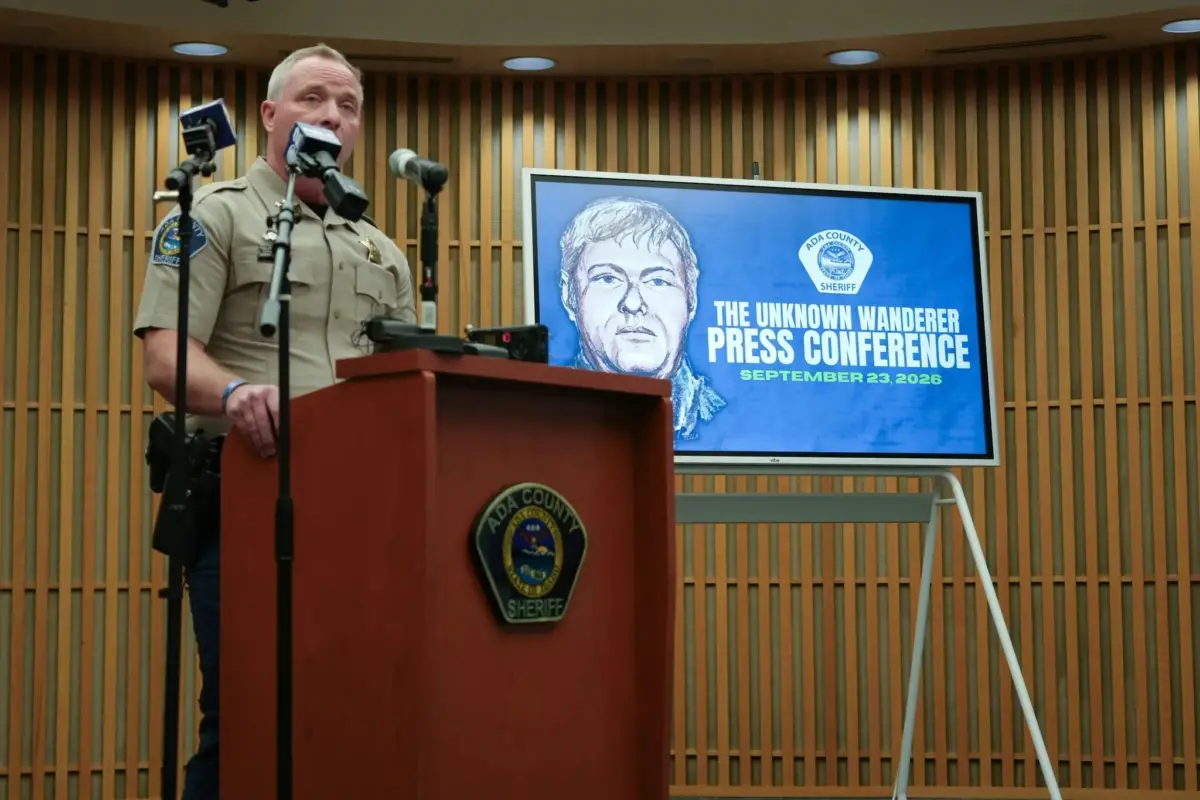
Now, following a painstaking multi-year cold case investigation, the Ada County Sheriff’s Office has bridged these two timelines. Authorities announced Wednesday that the man historically designated as the "Unknown Wanderer" has been positively identified as Dr. Mathew Francis Betkowski. An organic chemist by training with a documented history of severe mental illness, Betkowski possessed both a deep fascination with cyanide and a lifestyle characterized by transient instability.
While Idaho investigators have clarified that they do not possess jurisdiction to formally designate Betkowski as the Chicago Tylenol killer—referring that evaluation to law enforcement agencies in Illinois—the convergence of his specialized chemical background, his psychological profile, his nomadic movements in the fall of 1982, and expert forensic profiling has thrust this long-dormant mystery back into the national spotlight. The breakthrough not only puts a name and a face to a decades-old Idaho headstone but also introduces a profoundly compelling person of interest to one of the most pursued unsolved crimes in American criminology.
Detailed Chronology
To understand the scope of the investigation that led to Betkowski’s identification, one must trace a timeline spanning across multiple states, psychiatric institutions, and corporate laboratories over half a century.
The Roots of Instability: Jacksonville and California (1975–1979)
Dr. Mathew Francis Betkowski earned a Ph.D. in organic chemistry, acquiring the technical knowledge necessary to handle and synthesize deadly compounds. By the mid-1970s, he was employed by a flavors and fragrances company in Jacksonville, Florida. However, red flags regarding his mental health emerged almost immediately. Coworkers grew deeply alarmed as Betkowski openly discussed conceptualizing "the perfect crime" and mused that cyanide could serve as "a less messy means of taking one’s life." He exhibited signs of paranoia, frequently talking to himself and expressing unfounded fears that he was under surveillance.
Recognizing the severity of his decline, those around him intervened. In 1978, Betkowski spent approximately two and a half months undergoing both inpatient and outpatient psychiatric care at the UCLA Neuropsychiatric Institute in Los Angeles. Upon returning to Florida, his employers determined that his condition remained a liability and terminated his contract.
Following the death of his mother in 1979, Betkowski sought additional psychiatric treatment at a Florida state hospital. Personal journals and notes recovered later revealed that he was actively grappling with schizophrenia and depression during this period, even documenting his theory that imagining acts of violence could induce feelings of euphoria.
New Mexico, Lockheed, and Escalating Red Flags (1979–1982)
Betkowski relocated to New Mexico in late 1979 after securing a position with aerospace contractor Lockheed, where he worked on a NASA-related initiative at the White Sands Test Facility near Las Cruces.
His employment at White Sands abruptly ended in March 1982. The termination followed two major incidents: a reported disturbance at a local pharmacy where Betkowski allegedly requested pills or capsules under the guise of an "experiment," and internal discoveries that he had been removing unauthorized materials from the laboratory.
Compounding these red flags, the Las Cruces Police Department had previously recorded an unsolved cyanide poisoning death in May 1982. While investigators emphasize that Betkowski was never formally named a suspect in that local death, the occurrence of a cyanide-related fatality in his immediate vicinity months before the Chicago Tylenol murders drew intense scrutiny from detectives reviewing his movements.
Following his dismissal from White Sands and the subsequent death of his father in April 1982, Betkowski’s life grew increasingly erratic. Archived personal writings from 1980 and 1981 indicated a growing curiosity about Chicago, a city he noted he had never thoroughly visited. Photographic evidence later confirmed that he did travel to the Chicago area, though subsequent analysis dated those specific images to December 1981 rather than the autumn of 1982.
The Fall of 1982 and the Boise Incident
On October 15, 1982—roughly two weeks after the final Chicago Tylenol victim succumbed to potassium cyanide poisoning—Betkowski permanently departed his residence in Las Cruces. Investigators believe he drove south, ultimately selling his automobile near the border town of Brownsville, Texas.
Seven weeks later, on the evening of December 4, 1982, a man whose hair had been artificially dyed and whose appearance was deliberately altered entered Sacred Heart Catholic Church in Boise, Idaho. He ingested a lethal dose of cyanide. When authorities arrived, they found him dead inside the sanctuary.
His person yielded no identification:
- Two key rings containing nearly 30 distinct keys.
- A wallet completely devoid of standard identification or credit cards.
- An envelope containing 19 one-hundred-dollar bills ($1,900) and a typed note signed with a pseudonym.
Fingerprint comparisons against local and FBI databases yielded zero matches. With no name, no relatives stepping forward, and no missing persons reports matching his description, the man was officially categorized as the "Unknown Wanderer," and his personal effects were placed into an Ada County evidence locker.
Supporting Context & Metrics
The breakthrough in identifying Betkowski was not the result of a sudden electronic database match, but rather the product of meticulous, old-fashioned detective work driven by modern forensic genealogical methods.
The Evidence Room Key
In 2019, Ada County Sheriff’s Office Detective Tim Cooper was approached in a parking lot by a member of Sacred Heart Church who expressed a lingering curiosity about the cold case. Intrigued, Cooper pulled the physical case file—which had sat dormant for decades—and cross-referenced the parameters against a national database containing more than 17,000 missing persons files. Still, no matches emerged.
Turning his attention back to the physical evidence, Cooper used a magnifying glass to inspect the keys recovered from the church. Local key experts in Boise identified a specific manufacturer’s hallmark stamped onto one of the brass keys, tracing its origin directly to a hardware store in Jacksonville, Florida. Furthermore, an etching on the keys—previously misread by investigators decades prior—pointed toward a specific residential street in Jacksonville: Mills Court.
Tracing the Trail to a Brother
Cooper contacted the former law enforcement officers who had owned the Jacksonville hardware store during the early 1980s. They directed him to local cold case investigators in Florida.
Working collaboratively, the agencies pulled historical property deeds for Mills Court dating from the late 1970s and early 1980s. By systematically investigating every name on those documents, detectives identified a man whose death had been officially recorded in 1989, verifying he was alive in 1982. Tracking down his surviving family, Cooper located a sole surviving brother residing in the Los Angeles area.
A familial DNA sample was acquired from the brother and compared against DNA extracted from the Unknown Wanderer’s preserved wallet. The scientific verdict was conclusive: the two men shared the same father with an extremely high statistical probability, finally giving a true identity to the Unknown Wanderer—Dr. Mathew Francis Betkowski.
Official Statements
The identification of Betkowski prompted a joint press conference held by the Ada County Sheriff’s Office, featuring statements from law enforcement leadership, the lead investigator, and one of the nation’s most prominent forensic psychiatrists.
Ada County Sheriff Matt Clifford underscored the collaborative nature of the multi-decade investigation while maintaining institutional boundaries regarding the Chicago Tylenol case:
"We’ve sent all our information over to the Chicago area… It’s not our job to name him as a suspect. This is not an Idaho case."
Detective Tim Cooper reflected on the sheer difficulty of piecing together a life deliberately obscured by its owner:
"It’s believed that Dr. Betkowski took intentional steps to conceal his identity, his cause of death, and the reason for his death… I cannot put his shoes in a pharmacy store aisle 44 years ago, but I also can’t dismiss his statements, his actions, his changing his appearance, going to the border, coming here—because I can’t find a store receipt or something like that. So it’s all created some cause for concern, and that’s really what we’re reporting here today."
Dr. Park Dietz, a renowned forensic psychiatrist who has previously consulted on high-profile investigations involving Jeffrey Dahmer, Ted Kaczynski, and the D.C. snipers, offered an expert evaluation of Betkowski’s profile after reviewing Cooper’s comprehensive investigative files:
"The information developed about Dr. Betkowski is extraordinary… His interest in cyanide, his access to cyanide, his comments about cyanide, his interest in explosives—these two phenomena have in common the ability to conduct violence against multiple victims simultaneously in a manner that allows the killer to escape undetected."
Dietz classified individuals of this behavioral type as "set and run" killers—perpetrators who execute mass casualty events and subsequently flee or self-destruct before law enforcement can intervene. Dietz noted that when he presented Betkowski’s case anonymously to professional groups of forensic psychiatrists and later to criminal profilers at the FBI Academy without mentioning Boise or the Tylenol murders, the consensus was unanimous:
"Overwhelmingly, they regarded him as a viable suspect… everyone agreed this was a viable suspect and even more were as convinced as I that Detective Cooper had solved the most important unsolved murder of my lifetime, the Chicago Tylenol murders."
Future Outlook
While the resolution of the "Unknown Wanderer" identity closes a nearly 40-year-old local mystery in Ada County, Idaho, it opens a sprawling new chapter for federal and municipal investigators in Illinois, New Mexico, Florida, and Texas.
Principal among the immediate next steps is the formal review of Betkowski’s movements between October 15, 1982, and December 4, 1982, by agencies holding jurisdiction over the Chicago Tylenol murders, including the Arlington Heights Police Department. Although chemical analysis of the sodium cyanide found in Betkowski’s childhood California home post-mortem did not match the potassium cyanide used in the Chicago poisonings, investigators emphasize that chemical sources can vary, and a definitive link or exclusion remains dependent on further archival analysis.
Furthermore, the Ada County Sheriff’s Office is appealing to the public for information regarding:
- Unexplained activities or sightings of Dr. Mathew Francis Betkowski during his transcontinental travel in the fall of 1982.
- Unsolved cold cases involving cyanide poisoning or suspicious, medication-related fatalities spanning the late 1970s and early 1980s across California, Texas, New Mexico, Ohio, and Florida.
The re-emergence of the case is scheduled to reach a broader global audience through upcoming true-crime media features, including an Unsolved Mysteries documentary titled Unmasking the Tylenol Killer, set to stream on October 9.
Tips and relevant historical information pertaining to Dr. Betkowski’s timeline can be directed to the Ada County Sheriff’s Office at [email protected]. While the absolute truth of what happened in those fateful autumn weeks of 1982 may never be fully illuminated, the unveiling of the Unknown Wanderer ensures that one of the most puzzling specters of American criminal lore has finally stepped out of the shadows.

0 Comments