
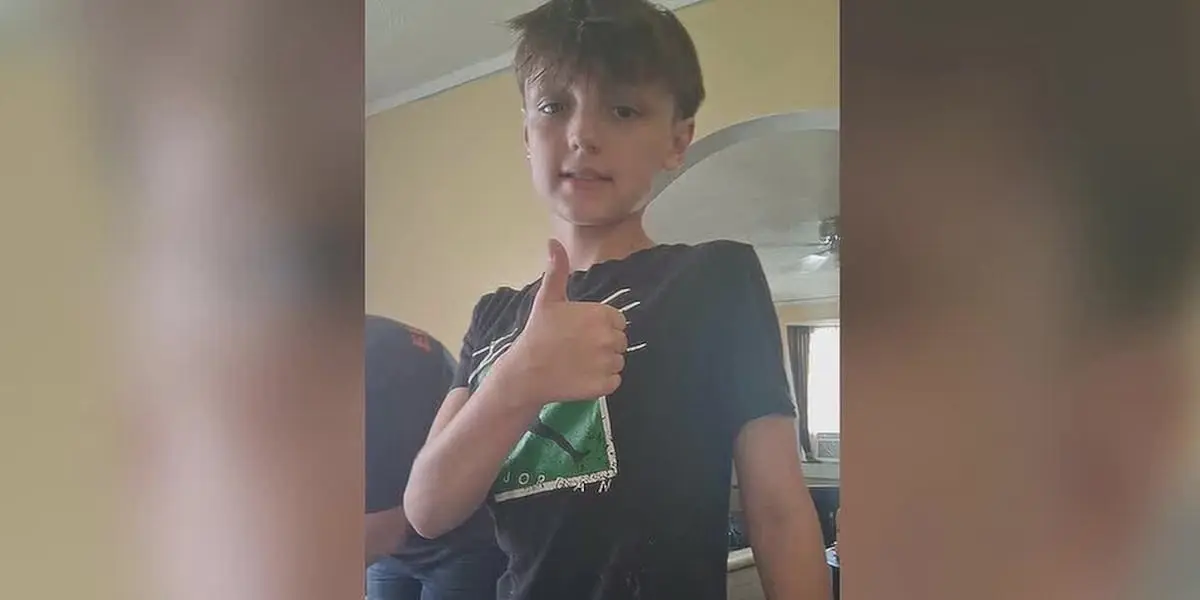

Executive Overview
The tight-knit community of South Charleston, West Virginia, is enveloped in grief following the tragic and untimely death of 12-year-old Hunter Combs. The vibrant sixth grader at Dunbar Middle School was struck and killed by a motor vehicle while attempting to cross a local intersection with a group of friends. The fatal collision occurred during the early evening hours, transforming an ordinary Monday outing into an unimaginable nightmare for the victim’s family, peers, and the wider municipal community.
As local law enforcement continues its rigorous investigation—utilizing recovered surveillance footage to piece together the exact sequence of events—the tragedy has laid bare deep-seated anxieties regarding pedestrian safety, municipal infrastructure, and vehicular speeds in the area. Local residents, neighbors, and grieving family members are no longer remaining silent about the long-standing hazards posed by poorly lit roadways and speeding traffic. In the wake of Hunter’s passing, a chorus of voices is demanding immediate, tangible safety interventions from city leaders and state transportation departments.
This comprehensive report examines the timeline of the fatal crash, the outpouring of grief from a devastated community, the infrastructural and systemic concerns raised by local residents, and the subsequent responses from municipal and state authorities as they grapple with how to prevent such a heartbreaking loss from ever happening again.
Detailed Chronology of Events
The Fateful Evening
The sequence of events that culminated in the tragedy began around 7:30 p.m. on a Monday evening. Hunter Combs was out enjoying the late-day weather, walking alongside a group of friends near a familiar intersection in South Charleston. According to preliminary reports released by the South Charleston Police Department, the young boys were attempting to cross the street when the incident occurred.
For reasons still under active investigation by local authorities, a vehicle traveling through the intersection struck the 12-year-old. The impact was severe, leaving Hunter with critical injuries. Emergency services were dispatched to the scene swiftly, and first responders rushed the young boy to a nearby hospital. Despite the aggressive life-saving efforts of medical professionals, Hunter succumbed to his injuries, plunging his family and the community into profound mourning.
Immediate Aftermath and Witness Accounts
The chaotic and devastating aftermath of the crash left an indelible mark on those who witnessed the emergency response. Jason Cribbs, a local worker who happened upon the scene as police and medical personnel arrived, described the harrowing atmosphere to reporters.
"It was the most traumatic thing I’ve ever seen in my life," Cribbs recalled, capturing the horror shared by bystanders who realized a child’s life hung in the balance.
Law enforcement officers immediately secured the area to conduct a preliminary crash reconstruction and gather evidence. Among the key pieces of evidence secured by investigators is local surveillance footage capturing the lead-up to and the moments of the collision. South Charleston Police have confirmed that they are actively reviewing this video footage to determine the vehicle’s speed, lighting conditions, driver visibility, and whether any traffic laws were violated. While the investigation remains ongoing, the community anxiously awaits formal conclusions regarding fault and whether charges will be brought against the driver.
Supporting Context & Metrics: The Danger of Suburban Intersections
Pedestrian Vulnerability After Dark
The intersection where Hunter lost his life is situated within a heavily utilized commercial and residential corridor—a place where children, bicyclists, and pedestrians frequently traverse to visit local parks, convenience stores, and neighborhoods. However, as local testimonies highlight, the transition from late afternoon to evening twilight creates severe visibility challenges.
According to national traffic safety data, a disproportionate number of pedestrian fatalities occur during dusk and nighttime hours when lighting is inadequate and driver reaction times are compromised. In South Charleston, this national trend manifests as a localized hazard. Residents note that despite the presence of nearby commercial establishments, the immediate pedestrian crossings lack the high-visibility infrastructure necessary to protect vulnerable road users.
The Voices of the Neighborhood
In the days following the crash, neighbors and frequent passersby came forward to paint a picture of an intersection long known to be perilous. Howard Waldron, a four-year resident of the area, emphasized that the fundamental issue lies in infrastructural neglect.
"Especially in the evenings, it’s hard to see sometimes. The intersection is very unlit. The crosswalk isn’t lit up very well," Waldron stated, pointing out that existing illumination from a nearby gas station and a veterinary clinic is entirely insufficient for casting adequate light across the asphalt. "The few lights they have don’t work… to make this a safe area."
Furthermore, residents have repeatedly raised concerns about chronic speeding. Motorists frequently treat the roadway as a throughway without accounting for the residential neighborhoods and schools branching off from it. Jason Cribbs issued an emotional plea to drivers operating vehicles in pedestrian-heavy zones: "Even if there are no lights, turn your low beams on. There’s kids, there’s people that still cross these roads."
Official Statements and Community Mourning
Remembering Hunter Combs
Amid the demands for structural reform, the human cost of this tragedy remains at the forefront. Hunter Combs was much more than a statistic; he was a beloved son, brother, classmate, and friend whose infectious personality left a lasting impression on everyone he met.
At Dunbar Middle School, where Hunter was in the sixth grade, the atmosphere is heavy with sorrow. In a formal statement released on Tuesday afternoon, school administration and staff expressed their collective grief:
"Our school community is grieving the sudden loss of a classmate. Our hearts are with the student’s family, friends, and classmates."
To support grieving students, the school district arranged for crisis intervention teams and grief counselors to be stationed on-site, providing a safe space for children to process their emotions, share memories, and cope with the sudden loss of their peer.
William Smith, a neighbor who watched Hunter grow, remembered the young boy with immense fondness, describing him as "a nice kid" who was "smart, intelligent, knew a lot of things, [and was] very open-minded." Smith added, "I hope he’s remembered… as a funny person, someone that always had a good personality."
Hunter’s mother, Lisa Combs, captured the profound heartbreak of her family in a heartfelt message shared on a GoFundMe page established to help cover funeral expenses:
"Hunter loved to spend time scrolling TikTok and Snapchat. He loved being outside with his brothers and friends, taking walks, going to the park, or, more days than not, just hanging around at home. My boy was taken from us way too soon… He brought so much happiness into our family."
The outpouring of financial and emotional support from across West Virginia underscores how deeply Hunter’s death has resonated with strangers and acquaintances alike.
Future Outlook: Accountability and Infrastructure Reform
Municipal and State Response
The overwhelming public outcry demanding increased safety measures has forced local and state officials to address the intersection’s design and maintenance.
South Charleston Mayor Frank Mullens addressed the public concerns, noting that while the area has seen commercial development—such as the addition of a nearby Speedway gas station—the city is fully committed to reviewing the corridor for potential safety enhancements. However, Mayor Mullens clarified jurisdictional boundaries, noting that the roadway operates under a West Virginia Department of Highways right-of-way rather than a municipal one.
Nevertheless, the mayor emphasized that jurisdictional lines will not prevent the city from advocating for improvements: "I don’t know if there’s anything else that can be done from a safety standpoint, but anything we can look at, we will… That doesn’t mean we can’t have influence on how things are done there."
In response to the mounting pressure, the West Virginia Department of Transportation deployed work crews to the scene to conduct rigorous testing of the streetlights and traffic signals along the corridor. Initial findings from the transportation department indicated that all traffic lights are correctly timed and fully operational. Furthermore, department representatives noted that the streetlights along the stretch had recently been upgraded to modern LED fixtures.
Path Forward: Will It Be Enough?
Despite state assertions that infrastructure is currently functional, local residents argue that "functional" is far from "safe." Upgraded LED bulbs do little to solve the problem if pole placements leave critical pedestrian crosswalks in shadow, or if traffic calming measures like speed bumps, flashing beacon signs, and narrowed lanes are absent.
As the investigation into the driver’s actions proceeds and police finalize their reports, Hunter Combs’ legacy is poised to become a catalyst for legislative and municipal safety reform in South Charleston. Community advocates, grieving family members, and concerned neighbors are vowing to keep up the pressure until tangible changes are implemented—ensuring that no other family has to endure the unimaginable agony of losing a child on the way home.

0 Comments