
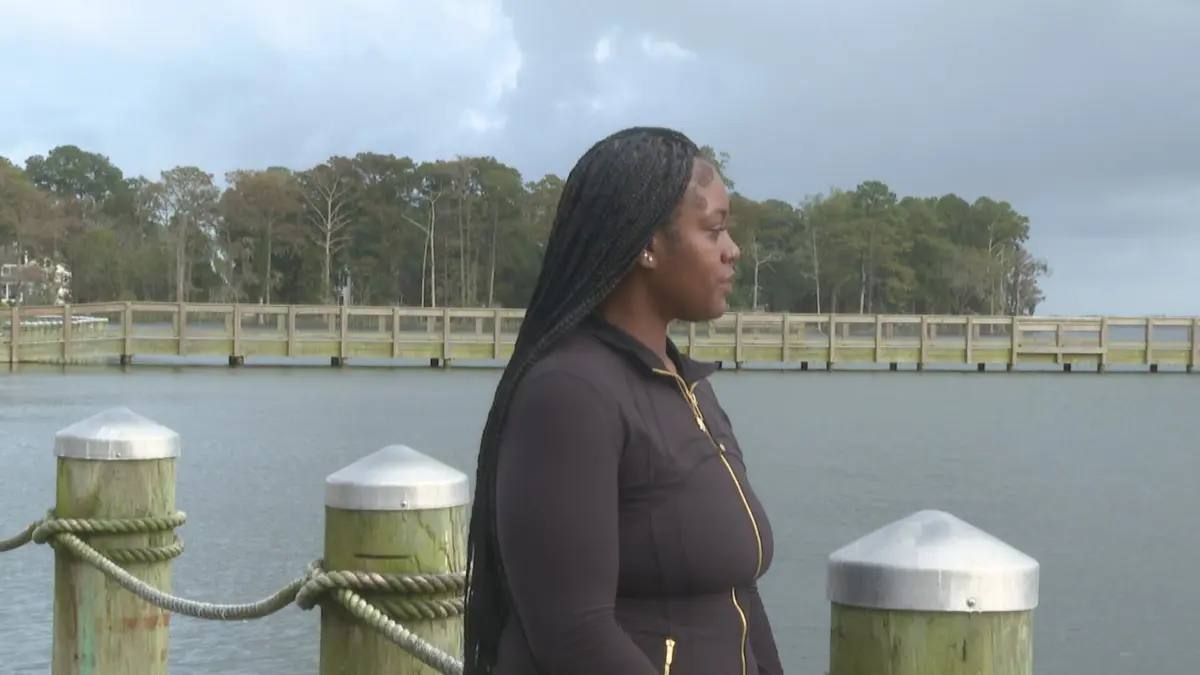

WASHINGTON, N.C. — In the service sector, frontline workers are routinely promised safe environments, structured training, and institutional backing when things go wrong. However, the reality on the ground often tells a starkly different story. For 17-year-old Ja’Neice Shamble, a high school senior working part-time to navigate her final year of secondary education, an ordinary evening shift at Whistle Express Car Wash in Washington, North Carolina, morphed into a nightmare of physical violence, institutional abandonment, and sudden job termination.
What began as a lighthearted moment between colleagues on September 14 quickly degenerated into a violent confrontation involving an outside aggressor. Yet, rather than finding refuge or support from her employer, Shamble found herself facing the dual trauma of being battered at her workplace and subsequently fired less than 24 hours later.
This comprehensive report examines the sequence of events that transpired on that fateful September evening, the legal and procedural hurdles faced by the victim, the ethical and operational questions surrounding corporate zero-tolerance policies, and the broader implications for young workers navigating the hazardous terrain of customer-facing industries.
Executive Overview
The incident at Whistle Express Car Wash highlights a growing tension in modern labor dynamics: the friction between rigid corporate safety protocols and the chaotic, unpredictable nature of real-world emergencies.
- The Incident: On the evening of September 14, Ja’Neice Shamble and a coworker were dancing while on duty. A woman sitting on a nearby residential porch misinterpreted the harmless display as a personal mockery, escalating the situation into verbal harassment and, ultimately, physical assault.
- The Fallout: After enduring physical blows and having her personal property stolen, Shamble pursued the assailant to retrieve her phone. Local police responded to the scene but directed Shamble to the magistrate’s office to file misdemeanor charges.
- The Termination: On September 15—just one day after the attack—Whistle Express management terminated Shamble’s employment. The company cited a violation of internal protocols, alleging she should have called 911 instead of pursuing the suspect. Shamble counters that the business landlines were non-functional at the time and that she was left to fend for herself and customers without employer intervention.
- Current Status: Shamble has filed criminal charges for simple assault and injury to personal property against the alleged assailant, who is scheduled to appear in court on October 12. Meanwhile, Whistle Express maintains that the termination followed a thorough internal review, though it declined to provide specific details due to personnel privacy policies.
Detailed Chronology of Events
To fully understand the gravity of the situation, it is necessary to examine the timeline of September 14 and the subsequent administrative fallout.
The Buildup: September 14, Evening Shift
For teenage service workers, finding small ways to pass the time during slow periods is a common coping mechanism against the monotony of manual labor. On the evening of September 14, Ja’Neice Shamble and a fellow employee were engaged in lighthearted dancing while working their shift at the Whistle Express facility in Washington, North Carolina.
According to Shamble, the atmosphere was entirely benign until a local resident, sitting on a porch directly across the street, perceived the dancing as an intentional slight directed at her. What could have remained an ignored misunderstanding quickly escalated. The individual crossed the public thoroughfare, entered the car wash premises, and began verbally harassing the teenage employees.
The Escalation and Physical Assault
What started as verbal abuse rapidly turned physical. Witnesses and statements indicate that the situation deteriorated when the aggressor initiated physical contact, striking Shamble multiple times.
Faced with sudden, unprovoked violence, Shamble initially attempted to de-escalate the situation by absorbing the blows. However, as the attack intensified and the assailant attempted to drag her to the ground, Shamble fought back in self-defense.
During the scuffle, Shamble’s cellular telephone—her primary lifeline and personal property—was knocked to the ground. Seizing the opportunity, the assailant grabbed the device and fled the premises. Driven by panic, adrenaline, and the need to recover her stolen property before the suspect vanished completely, Shamble pursued the fleeing individual down the street.
The physical toll of the encounter was immediate. Shamble sustained painful scrapes and abrasions to her knees and limbs. More significantly, she experienced profound emotional distress, left shaken, crying, and vulnerable on the pavement.
Law Enforcement Response and Legal Action
A bystander eventually intervened to contact emergency services. When local law enforcement arrived at the scene, they assessed the situation and informed Shamble of the limitations regarding misdemeanor offenses. Because the alleged crime was a misdemeanor that had not been committed directly in the presence of an officer, police could not make an immediate arrest on-site. Instead, they instructed Shamble on the proper administrative protocol: she would need to visit the local magistrate’s office independently to officially file charges.
Demonstrating remarkable resolve for a 17-year-old high school senior, Shamble followed through. On September 15, court documents confirm she successfully filed charges against her assailant for simple assault and injury to personal property.
The Firing: September 15
The administrative victory of filing charges was immediately overshadowed by corporate retaliation. On the very same day she initiated legal proceedings against her attacker, Shamble received notification from Whistle Express that her employment had been terminated.
Management defended the decision by pointing to Shamble’s actions following the assault—specifically, her decision to pursue the fleeing suspect rather than immediately calling 911. However, Shamble vigorously contests the realism of this expectation. She points out a critical operational failure on the part of the employer: the facility’s business phones were non-functional at the time of the incident. Furthermore, she argues that management failed to provide any physical security infrastructure or direct assistance to protect either its employees or its customers during the crisis.
"I didn’t ask to be in that situation," Shamble remarked during an interview with local media. "I was on your guys’ premises, and you guys didn’t do anything to help me, save me, or any of the customers. Like I was there, basically saving other people and myself on your premises."
Supporting Context & Metrics: The Vulnerability of Young Workers
The incident at Whistle Express Car Wash does not occur in a vacuum; it touches upon critical, systemic issues regarding workplace safety, the rights of teenage laborers, and the legal obligations of employers in the retail and service sectors.
Workplace Violence in the Service Sector
According to data from the Occupational Safety and Health Administration (OSHA) and the Bureau of Labor Statistics (BLS), service-industry workers—particularly those in cash-handling, automotive services, and retail environments—face disproportionate risks of workplace violence. Frontline employees are frequently the first and only line of defense when members of the public cross boundaries.
When employers implement rigid "zero-tolerance" or procedural policies that penalize workers for spontaneous defensive actions, they often create a perverse incentive structure. Workers are placed in an impossible bind: adhere strictly to corporate policies that may require passive endurance of violence, or protect their physical safety and property at the risk of losing their livelihoods.
The Minor Workforce Dilemma
The employment of minors (individuals under the age of 18) introduces an additional layer of legal and ethical responsibility. High school students working part-time jobs are generally less equipped to navigate complex corporate liability structures, crisis management, and legal negotiations.
When a 17-year-old is terminated immediately after being the victim of a violent crime on company property, it raises serious questions about corporate duty of care. Legal experts often look at whether an employer maintained a safe premises, whether training was provided for de-escalating public confrontations, and whether the employer exercised good faith when evaluating post-incident employee conduct.
Official Statements and Institutional Responses
As this case has garnered public attention, the primary stakeholders have released statements outlining their positions. The disparity between the corporate response and the victim’s narrative underscores the ongoing public relations and legal battle.
Whistle Express Car Wash Corporate Statement
In response to inquiries from media outlets regarding Shamble’s termination, Whistle Express issued a carefully worded statement emphasizing its commitment to safety while maintaining strict confidentiality regarding personnel decisions:
"Whistle Express is committed to providing a safe and respectful environment for our team members and the public. Workplace violence of any kind is contrary to our values and our policies. The individual referenced is no longer employed by the company. Because this concerns a personnel matter, we are not able to discuss the specifics of the decision, other than to confirm it was made following a review of the incident and in accordance with our established policies."
While the statement affirms the company’s aversion to workplace violence, it notably omits any acknowledgment of the physical attack sustained by its employee on its property, nor does it address the operational status of the facility’s communication systems during the emergency.
Law Enforcement Perspective
Representatives from the Washington Police Department noted that they were limited in what they could publicly discuss regarding the ongoing investigation. However, they clarified the legal constraints that governed their response on the evening of September 14.
Under North Carolina law, law enforcement officers generally cannot execute warrantless arrests for misdemeanors unless the offense is committed in the officer’s presence or specific statutory exceptions apply. This legal nuance necessitated Shamble’s trip to the magistrate’s office—a bureaucratic hurdle that added further stress to an already traumatized teenager.
Future Outlook and Legal Proceedings
As the case moves toward its next legal milestones, several developments warrant close observation:
- The Court Date: The woman accused of assaulting Shamble and damaging her property is scheduled to appear in court on October 12. Shamble has expressed hope that a formal conviction will deter the individual from harming others in the community.
- Potential Labor and Civil Actions: While Shamble has pursued criminal charges for the assault, legal advocates are watching to see whether wrongful termination or premises liability civil suits will follow. The central question remains whether Whistle Express fulfilled its legal duty of care to provide a safe working environment and whether the termination constitutes retaliatory or unfair employment practices.
- Corporate Policy Review: Incidents of this nature frequently prompt regional or national chains to re-evaluate their crisis response training. For Whistle Express, the public relations fallout may serve as a catalyst to examine how frontline employees are supported when external disputes spill onto company grounds.
Conclusion
Ja’Neice Shamble’s experience at the Whistle Express Car Wash serves as a sobering reminder of the vulnerabilities faced by young workers in the modern service economy. What should have been a straightforward response of corporate empathy and support transformed into an ordeal of victim-blaming and sudden job loss. As the October 12 court date approaches, the broader community watches to see how justice will be served—not only in the courtroom regarding the physical assault, but in the court of public opinion regarding corporate accountability and worker protection.

0 Comments