

Executive Overview
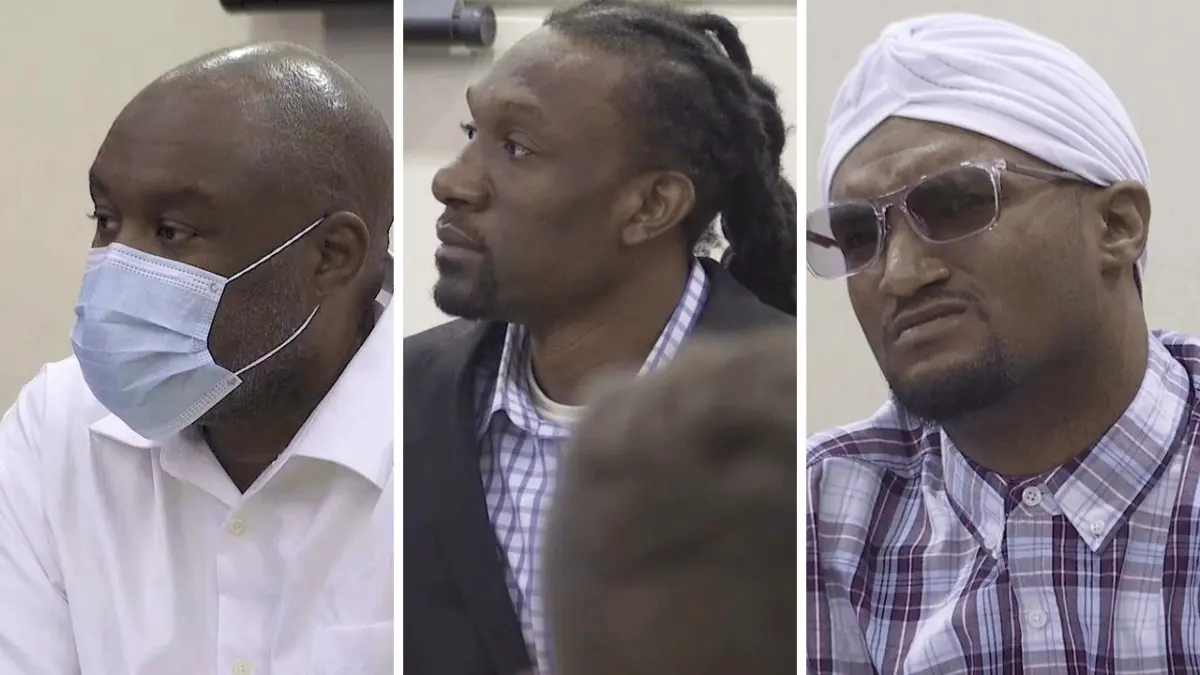
GAINESVILLE, Fla. — The high-profile first-degree murder trial surrounding the tragic 2017 slaying of Christin Cassels reached a dramatic inflection point on Thursday during its third day of proceedings in a Gainesville courtroom. The joint trial—which brings together three co-defendants, Keneth Altidor, Blake Jackson, and Nikenson Perin—has gripped Alachua County as it untangles a seven-year-old homicide investigation revitalized by modern digital forensics.
What began as a dormant cold case following Cassels’ fatal shooting in Hawthorne, Florida, has transformed into a complex evidentiary battle involving cutting-edge cell phone geofencing data, international language translation disputes, contested jailhouse confessions, and mounting emotional strain on the courtroom participants.
Thursday’s session was defined by high tension, underscored by the unexpected removal of a seated juror who actively blocked her view of graphic crime scene evidence, extensive technical testimony from crime scene investigators and digital forensics experts, and protracted legal debates over the admissibility of a high-profile prison informant. As the prosecution systematically builds its case through an expanding roster of witnesses—totaling 15 as of Thursday afternoon—the defense teams continue to mount rigorous challenges to digital methodologies and evidentiary boundaries. The trial, presided over by an attentive judiciary, moves steadily toward its anticipated continuation through the end of the week, forcing a grieving family and a deeply impacted community to relive the devastating final moments of a young woman’s life.
Detailed Chronology of Day Three Proceedings
Morning Session Opens with Graphic Crime Scene Evidence
The third day of the trial commenced promptly at 8:50 a.m. on Thursday, immediately plunging the courtroom into the grim physical realities of the 2017 shooting. The prosecution called retired crime scene investigator Robert Filer to the stand. Filer presented photographic evidence meticulously documented at the Hawthorne residence where Cassels was killed.
Filer’s testimony walked the jury through the physical layout of the crime scene, detailing multiple bullet trajectories. According to the investigator, four shell casings were recovered at the scene, with corresponding bullet holes puncturing a front window. Two additional bullet holes were discovered in a rear window, though investigators located only a single shell casing in that area.
Anticipating the distressing nature of the visual evidence, the court issued a standard advisory warning prior to the presentation of the photographs. True to the heavy emotional toll this trial has extracted, members of Christin Cassels’ family chose to step out of the courtroom during the display of the most graphic images depicting the interior of the home and the victim’s body.
Testimony of Re’Shard Munnerlyn and Family Ties
Following the forensic presentation, the state called Re’Shard Munnerlyn, the older brother of Cassels’ boyfriend at the time of the murder. Munnerlyn’s testimony served a dual purpose: establishing his close, familial bond with the victim—testifying without hesitation that he viewed her "without a doubt" as a sister—and addressing a critical piece of physical evidence.
Under questioning, Munnerlyn acknowledged that shell casings originating from one of his personal firearms had been recovered at the murder scene. He detailed his active cooperation with law enforcement immediately following the 2017 incident, explaining to the court that he and his family frequently used the weapon for recreational target shooting, thereby contextualizing the presence of the forensic material.
Digital Forensics and the Anatomy of a Geofence Search
The technical core of Thursday morning’s proceedings centered on the testimony of Detective Jeremy York, who provided the jury with an exhaustive breakdown of the digital dragnet used to crack the seven-year-old cold case. York detailed the application of Google geofencing data—a powerful investigative tool that allows law enforcement to query tech giants for all mobile devices present within a specified geographic coordinate grid during a designated time frame.
Detective York explained that investigators established a digital perimeter around the crime scene, searching for any devices active in the area approximately 30 minutes before the shooting and tracking which devices departed the vicinity within the 30 minutes immediately following the gunfire.
Because modern geofence queries routinely yield hundreds of anonymous device logs, the investigative process required meticulous filtering. In Cassels’ case, the initial spatial query did not return a human name, but rather a Gmail account identifier. Investigators subsequently secured a judicial search warrant compelling Google to surrender subscriber data linked to the account, which ultimately unmasked Nikenson Perin as the registered owner.
Complementing the geofence data, prosecutors introduced separate digital breadcrumbs to track co-defendant Keneth Altidor. This included transactional records from a debit card purchase made at a Gainesville Burger King on the exact day of Cassels’ murder, effectively placing him within the geographic orbit of the crime.
Supporting Context & Metrics: The Investigation and Trial Timeline
The prosecution’s methodical approach on Thursday builds directly upon foundational testimony introduced during the opening days of the trial. Understanding the scale of the state’s case requires examining the chronological framework of the proceedings and the underlying investigation:
- The 2017 Incident & Cold Case Period: Christin Cassels was shot and killed in Hawthorne, Florida, in 2017. Despite initial investigative efforts, the trail went cold, leaving the family without answers for seven agonizing years until advanced digital forensics revived the inquiry in 2024.
- Arrests and Charges: Following the breakthrough in digital tracking, law enforcement arrested three men—Keneth Altidor, Blake Jackson, and Nikenson Perin. All three are being tried together on joint charges of first-degree murder.
- Jury Selection (Tuesday): A jury comprising nine men and three women was seated, alongside two alternates (one man and one woman), setting the stage for an intense multi-day trial.
- Day Two Highlights (Wednesday): The prosecution called eight witnesses to the stand. Among them was Cassels’ boyfriend, who delivered poignant and chilling testimony recounting the victim’s final words, in which she expressed a prophetic fear that she was going to die shortly before the bullets struck.
- Day Three Metrics (Thursday): By the conclusion of Thursday’s proceedings, the state had advanced its case through a total of 15 prosecution witnesses. Thursday alone featured five distinct testimonies, including a crime scene investigator, a firearms examiner, Detective Jeremy York, Re’Shard Munnerlyn, and foundational evidentiary arguments.
Courtroom Friction: Juror Dismissal, Translation Disputes, and the Prison Informant Debate
The Juror Removal Incident
The integrity of the jury pool became an immediate point of concern on Thursday morning when the presiding judge intervened regarding the behavior of a seated juror. Court observations revealed that the juror had actively utilized a water bottle to physically block her line of sight to the courtroom television monitor during the presentation of graphic video evidence showing Cassels’ body.
Upon questioning by the court, the juror confessed that she was grappling with severe personal issues that rendered her psychologically unable to confront the graphic visual evidence. Recognizing the imperative that jurors must review all admitted evidence impartially and thoroughly, the judge formally excused her from service. Her departure reduced the primary jury pool, leaving 13 total jurors, which includes the remaining alternate who was seamlessly elevated to maintain the panel’s structure.
The difficulty of viewing the evidence was not confined to the jury box. Friends and family members of the victim have visibly struggled throughout the graphic presentations. However, some have chosen to endure the trauma to secure closure. Laci Minter, Cassels’ longtime best friend and one of the first individuals to arrive at the scene on the night of the murder, explained her decision to remain in the courtroom.
"I wanted to know. I was one of the first people there that night when it happened. It’s never set right with me not knowing the whole thing. I wanted to know. I wanted to see the details. As bad as it hurt, I wanted to know everything she went through," Minter stated.
The Lance Martin Testimony Controversy
A major procedural battle erupted over whether the jury will hear testimony from Lance Martin, an incarcerated individual currently serving a 20-year prison sentence. Martin claims to possess vital insider knowledge regarding the murder, asserting that he spent time housed in separate holding cells with both Perin and Jackson, during which time the co-defendants allegedly made incriminating statements regarding their involvement in the 2017 shooting.
The defense teams vehemently opposed Martin’s inclusion on the witness stand. Adding a twist to the legal wrangling, the attorney representing Keneth Altidor disclosed to the court that he, too, had previously shared a cell with Martin, raising complex questions regarding credibility, motive, and potential testimony contamination.
The state, defense counsel, and the judge engaged in a rigorous, 30-minute bench conference to debate the admissibility and reliability of Martin’s prospective testimony. Ultimately, the judge delayed a definitive ruling, instructing court officials to keep Martin localized within the jurisdiction while the court weighs whether to summon him to the stand later in the week.
Language Barrier and Translation Challenges
Evidentiary disputes extended beyond physical and testimonial evidence into linguistic territory. Much of Thursday afternoon was consumed by legal arguments concerning an intercepted or recorded phone conversation featuring two individuals conversing in Haitian Creole.
The defense raised formal objections regarding the audio file, questioning the absolute accuracy of the translation and challenging whether the transcript was certified and completed by a court-approved translator. The resolution of this evidentiary motion remains pending as the court carefully scrutinizes the protocols used to translate foreign-language audio for an English-speaking jury.
Official Statements and Human Impact
The profound psychological weight of a cold case trial spanning seven years has reverberated deeply through the Alachua County community, heavily impacting the individuals closest to the victim. For Brenda Cassels, Christin’s mother, walking through the courthouse doors each day means reopening deep psychological wounds.
In an emotional statement provided to regional media, Brenda Cassels articulated the exhausting reality of pursuing justice after years of uncertainty:
"I’m just having to stick through this unbearable pain again, but I know God’s gonna get me through this and I know my family is behind us."
The sentiment was echoed by supporters and childhood friends like Laci Minter, who embody the community’s collective resolve. The persistence of those who loved Cassels stands in sharp contrast to the cold, calculated mechanics of the digital forensics and legal maneuvers unfolding in the courtroom. While algorithms, geofence coordinates, and cell tower pings are being used by the state to bridge a seven-year evidentiary gap, the human element—rooted in grief, memory, and the desire for final accountability—remains the beating heart of the trial.
Future Outlook
As the sun sets on day three, the trajectory of the Christin Cassels murder trial points toward a rigorous conclusion heading into Friday.
The immediate priorities for the court on Friday morning will involve resolving the outstanding legal hurdles:
- The Lance Martin Ruling: The judge is expected to render a final decision on whether the incarcerated informant will be permitted to testify before the jury regarding his conversations with the defendants.
- Creole Audio Admissibility: The court must rule on the defense’s objections regarding the translation and playback of the Haitian Creole phone call.
- Continuation of the Prosecution’s Case: With 15 witnesses already having taken the stand, the state anticipates calling additional technical and civilian witnesses to solidify its chain of circumstantial and digital evidence against Altidor, Jackson, and Perin.
Legal analysts are closely monitoring how the jury will receive the complex amalgamation of digital geofencing data—a relatively novel mechanism in trials originating from crimes committed in 2017—balanced against traditional testimonial evidence. With the defense aggressively cross-examining every digital footprint and challenging every translation, the final phases of this trial promise high legal drama.
As the proceedings extend into Friday, the judicial system moves one step closer to delivering a definitive verdict in a case that languished in darkness for nearly a decade before modern technology dragged the truth into the light.

0 Comments