

Executive Overview
Nearly a year after the implementation of a fragile ceasefire following the devastating Israel-Hamas war, the geopolitical architecture governing the future of the Gaza Strip remains intensely contested. At the epicenter of this diplomatic and humanitarian friction is the United Nations Relief and Works Agency for Palestine Refugees in the Near East (UNRWA). Publicly, the newly formed, U.S.-backed "Board of Peace" and its designated Palestinian technocratic governing bodies insist that the historic U.N. agency has no place in the future administration of the enclave. Israel, which has long campaigned for the dissolution of UNRWA, continues to level severe accusations against the organization, alleging deep infiltration by Hamas militants—claims that the International Court of Justice has noted remain unsubstantiated.
However, a profound dichotomy exists between public rhetoric and private diplomacy. Behind closed doors, key architects of Gaza’s prospective reconstruction—including members of the transitional Palestinian governance committee and international partners—have quietly acknowledged that an immediate, total removal of UNRWA is practically impossible without triggering total humanitarian collapse. According to outgoing and current U.N. officials, high-level meetings have repeatedly taken place this year to coordinate how UNRWA’s vast operational infrastructure can be leveraged, absorbed, or restructured.
While the Board of Peace maintains an official public stance that "UNRWA’s days are over," internal documents and confidential testimonies reveal a deep reliance on the agency’s 11,000-strong local workforce. These workers continue to manage foundational health clinics, education programs, and vital water and sanitation services across the battered strip. This comprehensive report examines the complex interplay between political posturing and humanitarian realities, tracing the behind-the-scenes negotiations, the metrics of UNRWA’s continued footprint, and the personal toll experienced by its leadership.
Detailed Chronology: From Wartime Crisis to Post-Ceasefire Negotiations
The current standoff is the culmination of years of escalating friction, dramatically accelerated by the outbreak of war following the Hamas-led attacks on southern Israel on October 7, 2023.
The Outbreak of War and UNRWA’s Expanded Mandate (Late 2023)
In the immediate aftermath of October 7, UNRWA stepped into an expanded, high-risk role, coordinating the critical entry and distribution of humanitarian aid into a completely besieged Gaza Strip. While the agency struggled against immense logistical hurdles and security threats, its vast network on the ground made it the central lifeline for millions of displaced Palestinians.
The Allegations and International Fallout (Early 2024)
In January 2024, the crisis deepened when Israel alleged that hundreds of Palestinian militants were employed by UNRWA, claiming specifically that over a dozen staff members participated in the October 7 attacks. In response to these severe charges—and in the interest of safeguarding the agency’s overarching mission—then-Commissioner-General Philippe Lazzarini swiftly terminated the accused employees. Despite repeated requests from UNRWA and various U.N. member states, Lazzarini later noted that Israel never provided formal written evidence to substantiate the broader infiltration claims. Nevertheless, the allegations triggered a wave of donor suspensions, severe Israeli legislative bans preventing international staff and humanitarian convoys from entering Gaza, and intense international debate.
The Ceasefire and the Rise of the Board of Peace (2025)
Following the declaration of a ceasefire, international diplomacy pivoted toward long-term reconstruction. The U.S.-led Board of Peace was established to oversee Gaza’s transition, supported by a Palestinian technocratic committee led by former Palestinian Authority Deputy Minister Ali Shaath. However, reconstruction stalled for months; Israel blocked the physical entry of the transitional committee into Gaza, conditioning its deployment on the complete disarmament of Hamas.
Left in a governance vacuum, UNRWA’s core humanitarian and institutional programs remained operational by default. During this period, confidential meetings began between the Palestinian technocratic committee, international partners like the Tony Blair Institute, and UNRWA officials. Internal U.N. meeting minutes from January 2025 reveal that committee leadership recognized the sheer impossibility of succeeding without drawing upon UNRWA’s data, institutional memory, and personnel. Lazzarini’s tenure concluded on March 31, 2025, culminating in a final wave of diplomatic consultations before handing over responsibilities to acting chief Christian Saunders.

Supporting Context & Metrics: UNRWA’s Indispensable Footprint on the Ground
Despite facing a barrage of political opposition, legal bans on international personnel, and severe funding pressures, UNRWA remains by far the largest operational humanitarian actor inside the Gaza Strip. The scale of its local workforce dwarfs that of any other U.N. agency or international non-governmental organization.
Key Operational Metrics in Gaza:
- Workforce: Approximately 11,000 Palestinian employees remain actively on the ground, carrying out essential civil, medical, and educational services.
- Healthcare Delivery: UNRWA personnel facilitate roughly 14,000 medical consultations daily, effectively propping up approximately half of Gaza’s crippled public health system.
- Infrastructure and Sanitation: The agency maintains vital water, sanitation, and waste management systems serving over one million displaced and resident Palestinians.
- Education and Youth Support: Digital literacy, math, and foundational education programs reach over 280,000 children, while specialized temporary learning spaces accommodate an additional 60,000 students.
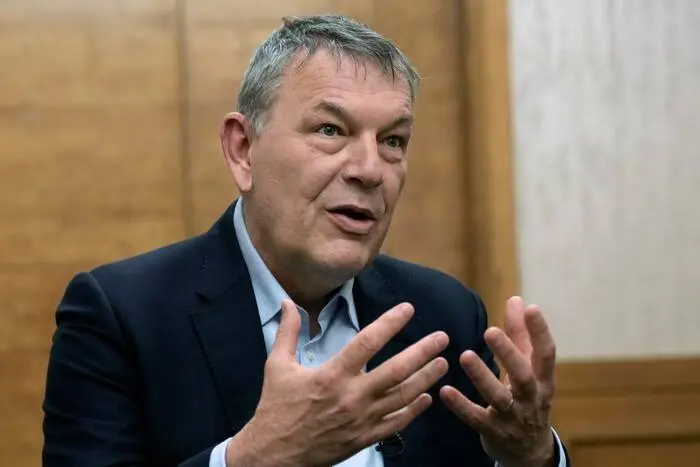
Philippe Lazzarini underscored this reality during interviews following his departure, pointing out the stark absurdity of political demands to dissolve the agency while simultaneously expecting it to deliver basic survival needs. "If you want the vaccine to end up in the mouths of the children, you still need the workforce, the presence of an agency like ours," Lazzarini emphasized. Jordan’s Foreign Minister Ayman Safadi echoed this sentiment at a high-level ministerial conference involving over 50 countries, declaring unequivocally, "We continue to emphasize that UNRWA is indispensable."
Official Statements and Divergent Perspectives
The discourse surrounding UNRWA is sharply polarized between public rhetoric aimed at political restructuring and private acknowledgments of operational necessity.
The Board of Peace and Transitional Committee Stance
Publicly, the U.S.-created Board of Peace has consistently sidelined UNRWA in its official briefings, naming other U.N. entities as partners for reconstruction while ignoring the Palestinian refugee agency. However, behind closed doors, a different narrative has emerged.

A senior Board of Peace official, speaking strictly on condition of anonymity, admitted that board members and the Palestinian technocratic committee have held multiple closed-door meetings with UNRWA officials throughout the year. The official asserted that while UNRWA as an institutional brand faces extinction, its underlying programs and personnel could potentially survive:
"UNRWA’s days are over. But its programs may persist if they are serving Gazans well… Its employees will remain if they pass vetting and are delivering on their mandate and not advancing ideology or Hamas interests."
This position aligns with private remarks made by Ali Shaath, head of the Palestinian governance committee. According to internal U.N. records from a Cairo meeting, Shaath praised UNRWA’s foundational systems, explicitly stating that the committee’s governance framework would largely need to build upon the agency’s pre-existing work because success would otherwise be unattainable.
UNRWA Leadership and International Backing
Acting UNRWA chief Christian Saunders reinforced the agency’s vital positioning during a pledging conference, describing it as indispensable to executing the terms of the ceasefire. Meanwhile, Lazzarini characterized the current political climate as an "absurd contradiction" where regional and international bodies rely entirely on UNRWA’s delivery mechanisms while political actors outwardly reject its mandate.

Reflecting on his tenure, Lazzarini also opened up about the intense personal toll he endured. He described facing "extraordinary vicious, heinous attacks on social media" and being physically accosted and shouted at in public spaces in Geneva and New York by pro-Israeli groups. Despite the immense pressure, Lazzarini defended his decision to terminate employees accused of involvement in the October 7 attacks, stating it was done decisively to protect the integrity of the agency and the millions of civilians relying on its aid. He plans to detail these turbulent experiences in an upcoming book, A Witness to Gaza: What Cannot Be Erased, scheduled for publication in French in October, with an English edition to follow.
Future Outlook: A Transition at a Crossroads
As the international community grapples with the monumental task of rebuilding the Gaza Strip, the ultimate fate of UNRWA remains one of the most contentious hurdles in the peace and reconstruction process.
The central dilemma facing the Board of Peace and the Palestinian technocratic committee is fundamentally logistical: dismantling UNRWA entirely before an alternative, equally massive administrative and service-delivery apparatus can be established risks precipitating an even deeper humanitarian catastrophe. Consequently, a pragmatic, albeit unacknowledged, transition model is taking shape. Through rigorous vetting processes, ideological screening, and structural absorption, elements of UNRWA’s workforce and programmatic infrastructure are expected to be funneled into the new governance framework.
Whether these back-room compromises can satisfy the stringent political demands of Israel and the Board of Peace—while preserving the dignity, employment, and human rights of the millions of Palestinian refugees who have relied on UNRWA for generations—will define the success or failure of Gaza’s post-war transition. For now, the agency remains an indispensable ghost in the machine: publicly ostracized by the architects of the new order, yet privately recognized as the only force standing between survival and total collapse on the ground.

0 Comments