

Executive Overview
The geopolitical landscape of the Middle East remains fraught with multi-layered tensions, punctuated by renewed military friction on the Arabian Peninsula, high-stakes diplomatic maneuvering at the United Nations, and escalating resource conflicts in the occupied West Bank. In a stark reminder of the region’s fragile security architecture, Saudi Arabia’s military announced the successful interception of a ballistic missile targeting the southwestern city of Khamis Mushait, an attack attributed to Iran-backed Houthi forces in Yemen.
Concurrently, Iranian President Masoud Pezeshkian departed New York following a consequential, high-intensity week at the 81st session of the United Nations General Assembly. Pezeshkian’s tenure at the UN featured high-profile rhetoric, indirect diplomatic channels with the United States, and bold proposals regarding the vital Strait of Hormuz.
Meanwhile, on the ground in the West Bank, a quieter yet deeply disruptive crisis continues to unfold. Israeli settlers have aggressively accelerated efforts to seize vital natural water sources and historical heritage sites, further squeezing the local Palestinian population and exacerbating long-standing resource insecurities. This comprehensive report breaks down these interconnected developments, providing a thorough analysis of military escalations, diplomatic breakthroughs, and humanitarian concerns across the region.
Detailed Chronology of Recent Events
Military Escalations on the Southern Front
The latest military flare-up along the Saudi-Yemeni frontier underscores the persistent threat posed by ballistic and drone technologies possessed by regional non-state actors.
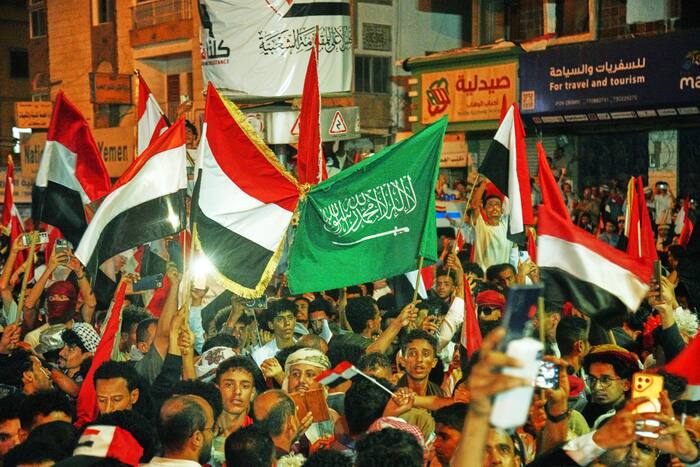
- Early Saturday, Saudi Arabia: Maj. Gen. Turki al-Maliki, spokesperson for the Saudi-led coalition, released an official statement confirming that military air defenses successfully intercepted and destroyed an incoming ballistic missile.
- Target Location: The projectile was trajectory-mapped toward Khamis Mushait, a strategic urban center in southwestern Saudi Arabia that houses critical military and civilian infrastructure.
- Attribution & Response: While Riyadh immediately pointed the finger at the Houthi movement—citing ongoing military support and supply lines from Tehran—formal claims of responsibility from the Houthi leadership often take several days to materialize.
- Regional Condemnation: The Gulf Cooperation Council (GCC) swiftly issued a severe rebuke of the attack. Secretary-general and member states categorized the strike as a grave escalation and an intolerable direct threat to regional stability, calling upon the international community to formulate a unified deterrent response.
Diplomatic Dynamics at the United Nations
Half a world away in New York City, Iranian leadership engaged in a week of intense multilateral diplomacy and backdoor negotiations during the UN General Assembly.
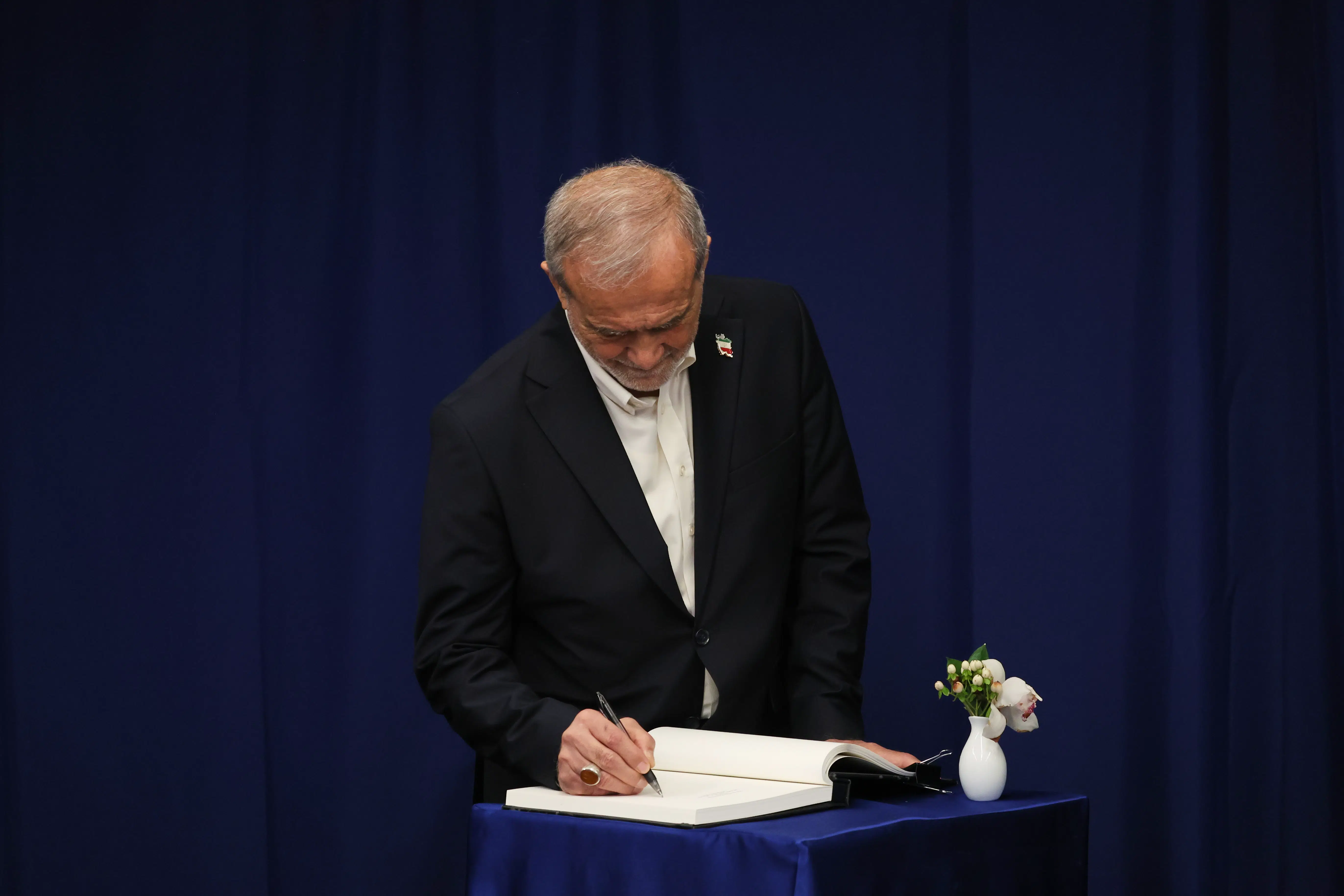
- Presidential Departure: Semiofficial Iranian news agencies confirmed that President Masoud Pezeshkian boarded a flight back to Tehran after completing a demanding schedule of addresses, bilateral meetings, and mediated discussions.
- The UN Address: Pezeshkian’s speech before the General Assembly served as a direct counter-narrative to Washington, specifically pushing back against threats from U.S. President Donald Trump regarding the potential total annihilation of the Islamic Republic. Despite the combative rhetoric, Pezeshkian concluded his address by reiterating that Tehran remains structurally open to diplomatic pathways.
- Indirect U.S.-Iran Talks: Operating through international mediators, American and Iranian delegations engaged in hours of confidential indirect negotiations.
- The Seven-Day Proposal: In a major diplomatic disclosure on Friday night, Iranian Foreign Minister Abbas Araghchi outlined a comprehensive Iranian proposal. Tehran offered to immediately reopen the critical Strait of Hormuz and resume stalled negotiations regarding its contentious nuclear program within seven days, provided specific prerequisites are met by Washington. These conditions include the lifting of the U.S. naval blockade on Iranian ports, the waiving of crippling economic sanctions on Iranian oil sales, and the strict observance of a broader regional ceasefire encompassing Lebanon.
Resource Contests in the Occupied West Bank
While international headlines fixate on ballistic missiles and UN speeches, a daily struggle for survival and sovereignty continues in the West Bank.
- Escalated Settler Actions: Over recent weeks, Israeli settler groups have intensified coordinated campaigns to take control of natural springs, water reservoirs, and historical heritage sites scattered throughout the occupied West Bank.
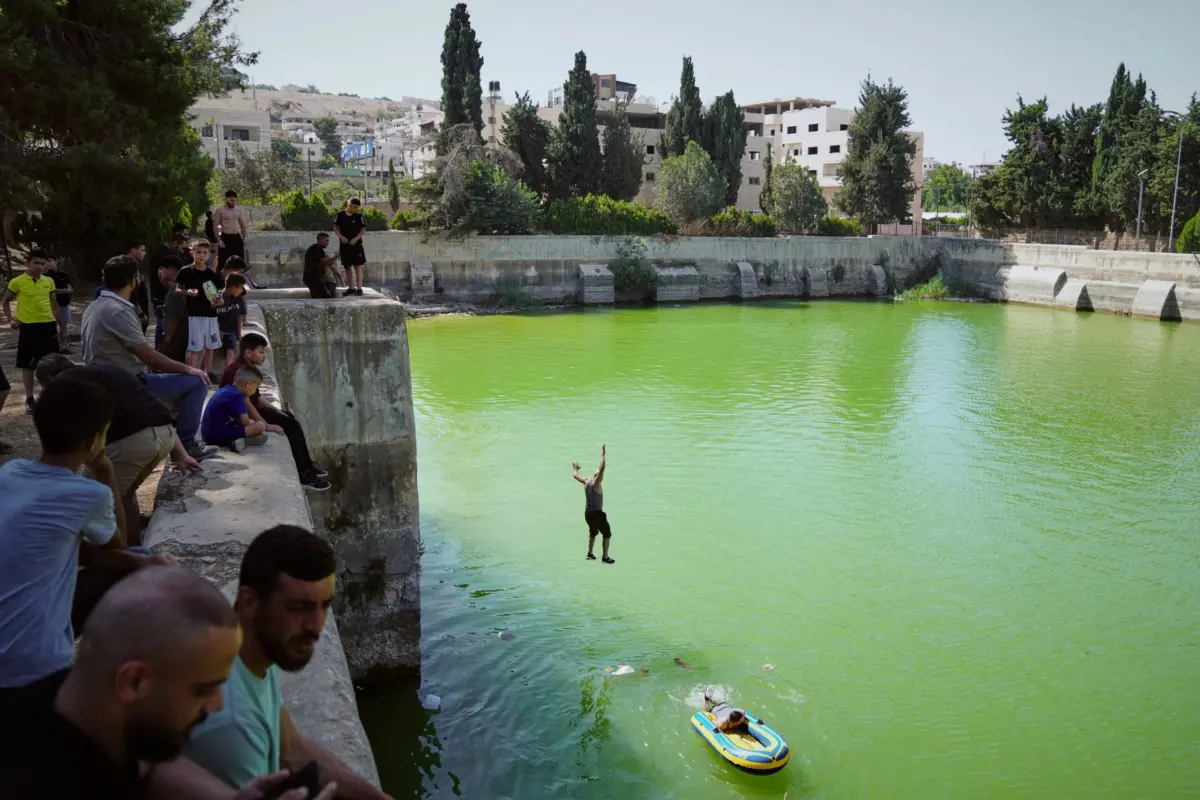
- The Jordan Valley Incident: In a particularly egregious case documented in the Jordan Valley, settlers deliberately severed a vital municipal water pipeline servicing a Palestinian village. The water flow was illegally redirected to fill a recreational and historical pool christened after Herod, the Roman-appointed king of Judea.
- Humanitarian Impact: Human rights organizations emphasize that these actions are part of a systematic, long-term strategy to dispossess Palestinians of their ancestral lands. With over 2.8 million Palestinians residing in the West Bank, access to clean, reliable water—already artificially restricted since 1967—has reached critical, life-threatening lows.
Supporting Context & Strategic Metrics
To fully comprehend the gravity of these concurrent crises, one must examine the underlying structural metrics governing energy markets, military hardware, and demographic pressures.
The Strategic Value of the Strait of Hormuz
The Strait of Hormuz remains the world’s most critical oil choke point, through which roughly a fifth of the globe’s petroleum consumption passes daily. Any threat to close or militarize this waterway—whether via naval blockades, maritime mines, or Houthi anti-ship missiles—sends immediate shockwaves through global energy markets.
- Daily Transit Volume: Approximately 20 million barrels of oil pass through the strait daily.
- Economic Impact: Even minor disruptions yield immediate spikes in Brent Crude futures, directly inflating global inflation rates and straining Western economies.
- The Nuclear Nexus: Iran’s linkage of the Strait of Hormuz’s status to its nuclear program negotiations demonstrates Tehran’s willingness to leverage global economic stability as a primary diplomatic bargaining chip.
Water Insecurity in the West Bank
Water is not merely a utility in the West Bank; it is a primary geopolitical weapon of control.
- Historic Deficit: Since the 1967 Six-Day War, Palestinian water consumption has been heavily capped by military orders, while adjacent Israeli settlements enjoy continuous, high-pressure infrastructure.
- Agricultural and Economic Losses: Natural springs like those near Bethlehem and Solomon’s Pools—historically used for sustainable agriculture and local tourism—are increasingly fenced off, guarded by private security or military forces, and rendered entirely inaccessible to indigenous Palestinian farmers and families.
Official Statements and Global Reactions
The international community has responded to these cascading events with a mixture of alarm, guarded optimism, and diplomatic posturing.
"This latest ballistic missile launch is not merely an attack on Saudi infrastructure; it is a deliberate attempt to sabotage regional peace initiatives and an unacceptable escalation that threatens international security."
— Official Statement from the Gulf Cooperation Council (GCC)
Foreign Minister Abbas Araghchi’s Friday night press briefing in New York provided critical insight into Tehran’s calculus. Araghchi framed the Iranian concessions not as capitulation, but as a reciprocal roadmap:
"We have placed a clear, verifiable plan on the table via our mediators. If the United States ceases its economic warfare through the illegal blockade of our ports and oil, and if it respects regional ceasefires, we are prepared to act within seven days to secure the Strait of Hormuz and re-engage on the nuclear file."
Meanwhile, Palestinian civil society organizations and international humanitarian agencies have issued urgent appeals regarding the weaponization of water resources in the West Bank, condemning the complicity or active facilitation of settler land grabs by occupying authorities.
Future Outlook: What Lies Ahead?
As the dust settles from another tumultuous week at the United Nations and the Middle East absorbs the shock of ongoing localized conflicts, several key trajectories will define the coming months:
- The Fate of Indirect U.S.-Iran Talks: The viability of Foreign Minister Araghchi’s seven-day proposal hinges entirely on Washington’s willingness to make unilateral concessions on sanctions and naval deployments—a prospect considered politically volatile within the United States. Should the proposal stall, expect a sharp hardening of Iranian postures and an increase in regional proxy friction.
- Yemeni Fragility and Coalition Response: Despite ongoing peace talks between Riyadh and the Houthi movement, Saturday’s missile interception demonstrates that the truce remains deeply precarious. Saudi military planners are expected to maintain high-alert defensive postures, while international pressure on the Houthis to halt cross-border attacks will likely intensify.
- Humanitarian Crises on the Ground: In the West Bank, the aggressive expropriation of water sources threatens to spark localized civil unrest. Human rights monitors warn that unless international bodies intervene to protect Palestinian water infrastructure, the humanitarian crisis in rural farming communities will reach an irreversible tipping point.
The coming days will test the resilience of international mediators, the responsiveness of global energy markets, and the fundamental human rights of vulnerable populations caught in the crossfire of unyielding geopolitical ambitions.

0 Comments