

WASHINGTON — In what is shaping up to be one of the most politically charged and consequential legislative weeks on Capitol Hill in recent memory, senators have returned for their final session before the looming midterm elections. Lawmakers are confronting a packed, high-stakes agenda that bridges the worlds of multi-billion-dollar collegiate athletics and razor-thin partisan political survival.
At the center of the legislative docket is the Protect College Sports Act, a bipartisan measure poised to fundamentally rewrite the legal, financial, and structural landscape of collegiate athletics across the United States. Simultaneously, the political arena outside the beltway is reaching a boiling point. Former President Donald Trump is launching an aggressive end-of-campaign swing through the heartland and the Deep South, aiming to shore up his political base even as cracks begin to show within his own party over contentious foreign policy disputes.
With the balance of power in Congress hanging in the balance, the convergence of sweeping collegiate sports reform, high-stakes legislative maneuvering, and volatile midterm campaigning underscores a pivotal moment in American public life.
Executive Overview
The final legislative work period before Election Day has opened with an unusual pairing of issues dominating the nation’s capital: the commercialization and governance of American college sports, and the defense of congressional majorities ahead of a turbulent national election.
The headline legislative item, the Protect College Sports Act, represents the most comprehensive attempt by federal lawmakers to bring order to the chaotic, decentralized universe of Name, Image, and Likeness (NIL) monetization, transfer portals, and athlete compensation. For years, the National Collegiate Athletic Association (NCAA), athletic conferences, and universities have grappled with a patchwork of state-level laws, antitrust lawsuits, and shifting judicial rulings. This bipartisan bill seeks to establish a unified federal standard, enshrining NIL rights into law while introducing structural guardrails designed to stabilize the collegiate ecosystem.
Having successfully cleared a critical procedural hurdle late last week, the legislation is slated for a high-stakes final vote on the Senate floor. Its passage would send a clear signal that Congress is willing to intervene directly in the business of collegiate athletics—a domain historically governed by autonomous academic institutions and athletic associations.
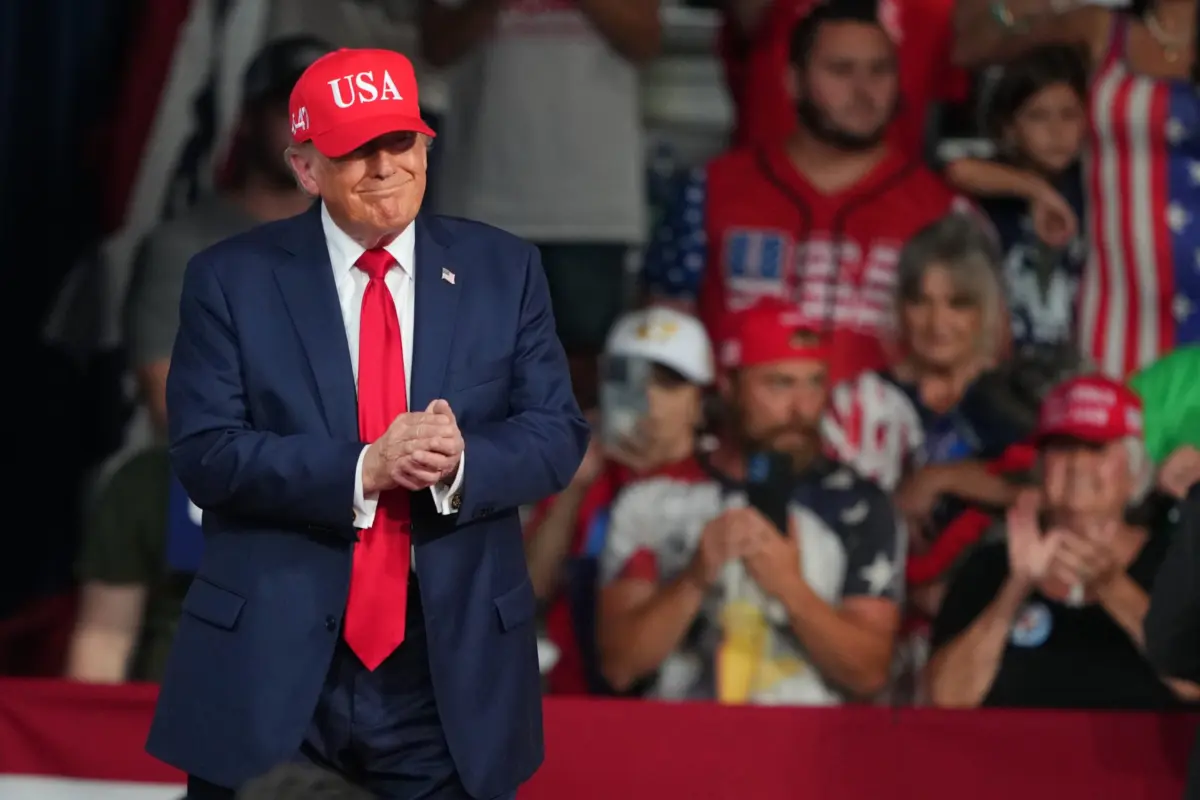
However, the shadow of the upcoming midterm elections looms large over every debate on Capitol Hill. While senators grapple with the future of student-athletes, campaigns nationwide are entering their final, frantic weeks. Control of both chambers of Congress is up for grabs, and the political map is fraught with danger for incumbents. Former President Donald Trump’s planned rallies in Oklahoma and Alabama highlight the Republican Party’s ongoing struggle to galvanize its base while managing intra-party friction over deeply polarizing foreign policy issues, most notably the ongoing conflict with Iran.
As lawmakers balance the demands of institutional reform with the raw imperatives of electoral survival, this week on Capitol Hill will leave a lasting imprint on both American sports and national politics.
Detailed Chronology: The Path to the Senate Floor
The trajectory of the Protect College Sports Act reflects months of behind-the-scenes negotiations, frantic lobbying by collegiate stakeholders, and a growing bipartisan consensus that the judicial and state-by-state dismantling of amateurism had reached an unsustainable tipping point.
The Rise of the NIL Era and Legislative Urgency
Since the Supreme Court’s landmark 2021 ruling in National Collegiate Athletic Association v. Alston, which struck down limits on education-related benefits for student-athletes, the legal foundation of college sports has eroded rapidly. State legislatures rushed to pass their own conflicting NIL laws, creating an uneven playing field where universities in states with permissive statutes enjoyed a massive recruiting advantage over those bound by stricter state laws or traditional institutional values.
Recognizing the impending chaos, athletic directors, conference commissioners, and university presidents repeatedly petitioned Congress for a federal legislative fix. They warned that without a uniform national standard, the collegiate model would fracture irrevocably, pitting deep-pocketed booster collectives against institutions unable to compete in an unregulated open market.
Drafting the Protect College Sports Act
Drafted through intensive bipartisan collaboration, the Protect College Sports Act emerged as a compromise vehicle designed to address the primary pain points of modern collegiate athletics:
- Federal NIL Codification: The bill formally legalizes and standardizes name, image, and likeness compensation for all student-athletes nationwide, preempting the confusing patchwork of state laws.
- Eligibility Protections: To mitigate the physical and academic toll of modern competition, the legislation guarantees all college athletes a standardized fifth year of athletic eligibility.
- Transfer Portal Guardrails: In an effort to curb rampant roster tampering and the perceived erosion of institutional loyalty, the bill establishes federal frameworks limiting unrestricted player transfers.
The Procedural Breakthrough
Last week, the legislation cleared its most formidable institutional hurdle. Despite conventional gridlock and the short legislative runway ahead of the elections, Senate leadership managed to secure the requisite votes to break procedural resistance. The vote demonstrated that while polarization defines much of modern governance, a critical mass of lawmakers from both sides of the aisle view the stabilization of college sports as a matter of national economic and cultural importance.
With procedural roadblocks cleared, the stage is set for a decisive floor vote on Monday night. Capitol Hill insiders anticipate intense floor debate, though the broad bipartisan coalition backing the bill is widely expected to carry it across the finish line, sending the measure forward in the legislative process.
Supporting Context & Metrics: The Stakes of Reform
To understand the urgency behind the Protect College Sports Act, one must examine the staggering economic engine that modern college sports has become, alongside the complex socio-political dynamics of the current midterm electoral map.
The Economic Realities of Collegiate Athletics
Collegiate sports is no longer merely an extracurricular collegiate pursuit; it is a multi-billion-dollar commercial enterprise that rivals professional sports leagues in revenue generation, media rights valuations, and corporate sponsorship.
- Media Rights Valuations: Major conference media rights agreements—such as those negotiated by the Southeastern Conference (SEC), the Big Ten, and the Atlantic Coast Conference (ACC)—are worth billions of dollars annually, distributing immense capital to member institutions.
- The NIL Economy: Since 2021, the NIL marketplace has exploded into a multi-hundred-million-dollar industry. High-profile athletes at major universities routinely command six- and seven-figure endorsement deals facilitated by third-party collective organizations.
- The Transfer Landscape: In the most recent academic cycles, tens of thousands of student-athletes entered the NCAA transfer portal, seeking better athletic opportunities or more lucrative NIL packages. This unprecedented mobility has strained athletic department budgets and roster management strategies alike.
The Midterm Electoral Landscape
Concurrently, the political landscape is defined by intense volatility. Control of Congress hangs in a delicate balance. The Republican Party faces a challenging defensive map as it attempts to retain its legislative majorities against a backdrop of voter anxiety regarding inflation, economic stability, and foreign policy entanglements.
Public opinion polling indicates that voters in competitive swing districts are increasingly focused on bread-and-butter economic issues, while also expressing deep skepticism toward foreign military interventions. This dynamic has placed vulnerable Republican incumbents in an unenviable bind: publicly aligning with the executive branch’s past or present foreign policy positions risks alienating independent and moderate voters, while distancing themselves too far from the party base risks depressing crucial voter turnout.
Official Statements and Stakeholder Reactions
As the Senate prepares for Monday night’s vote, key stakeholders across the political, academic, and athletic spectrum have weighed in on the profound implications of the legislative week ahead.
Congressional Perspectives
Proponents of the Protect College Sports Act have framed the legislation as an essential act of legislative stewardship.
"For too long, the landscape of collegiate athletics has been governed by a chaotic patchwork of state laws and courtroom rulings that threaten the integrity, fairness, and long-term viability of college sports," said a senior congressional aide familiar with the bill’s drafting. "This legislation provides certainty for student-athletes, universities, and fans alike, ensuring that the dream of collegiate athletics can endure and thrive in the modern era."
Conversely, critics and progressive legal scholars have expressed reservations regarding provisions that seek to limit student-athlete mobility. Some labor advocates argue that restricting the transfer portal infringes upon basic free-market principles and worker mobility rights, setting up potential constitutional and antitrust challenges down the road regardless of federal enactment.
Athletic and Institutional Responses
Leadership within the collegiate athletic community has largely welcomed federal intervention, viewing congressional action as the only viable alternative to perpetual litigation. Conference commissioners have issued joint statements emphasizing the need for a unified regulatory authority to oversee compliance, tax implications, and disclosure requirements within the NIL marketplace.
The Campaign Trail Narrative
Away from the capital, political surrogates and campaign headquarters have seized upon the contrasting narratives of the week. While legislative leaders focus on institutional stabilization, campaign operatives are laser-focused on the ground game in Oklahoma and Alabama, where former President Trump’s rallies are designed to project strength and energy into the final stretch of the midterm cycle.
Future Outlook: What Lies Beyond the Vote
The consequences of this week’s legislative and political developments will reverberate far beyond the immediate conclusion of the Senate session and the impending midterm elections.
The Immediate Aftermath on Capitol Hill
Should the Protect College Sports Act successfully pass the Senate on Monday night, its path to enactment will depend heavily on the legislative calendar and the willingness of the House of Representatives to take up the measure before the current congressional session concludes. Even if the bill requires further negotiation in a conference committee, the Senate vote establishes a foundational federal framework that will shape all future sports law debates.
Implications for the NCAA and Higher Education
For universities and athletic departments, passage of the act would mark the beginning of a new era of compliance and administration. Athletic directors will be forced to adapt to standardized federal regulations regarding compensation disclosures, while student-athletes gain permanent legal protections for their commercial rights alongside guaranteed educational windows. However, legal experts warn that the legislative battle may merely shift from statehouses and courtrooms to federal appellate courts, where antitrust challenges to transfer restrictions are widely anticipated.
The Midterm Endgame and National Governance
Ultimately, the events of this week serve as a microcosm of contemporary American governance: a high-wire act balancing institutional modernization with raw political survival. As senators cast their votes on college sports reform and politicians take to the stump in the South and the Midwest, the nation watches closely. The outcomes decided in Washington and on the campaign trail this week will set the trajectory for American sports, public policy, and legislative power for years to come.

0 Comments