

Executive Overview
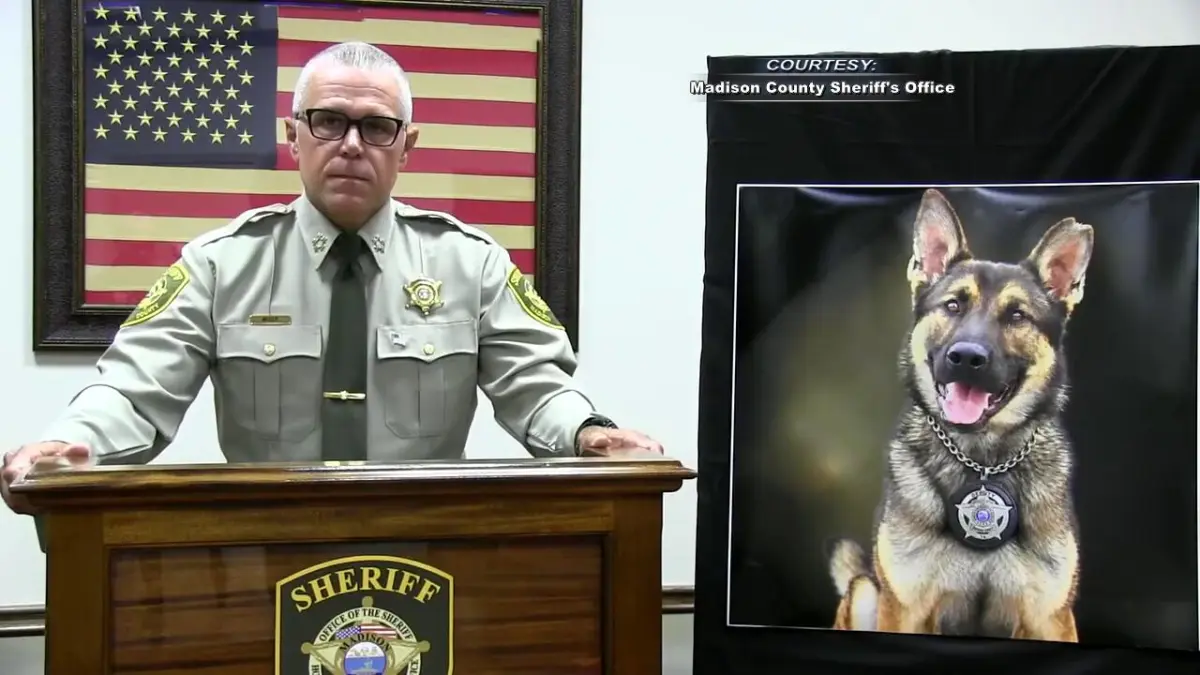
JACKSON, Tenn. — In a heartbreaking and entirely preventable incident that has sent shockwaves through the law enforcement community and animal advocacy circles alike, authorities in Madison County, Tennessee, are conducting a rigorous dual investigation into the death of a young police service dog. K-9 Bart, a dedicated 2-year-old German shepherd serving as a dual-purpose patrol and detection asset for the Madison County Sheriff’s Office, was discovered dead on September 19, 2026.
Preliminary findings from a comprehensive veterinary necropsy revealed that Bart succumbed to acute heatstroke brought on by severe, prolonged dehydration. Investigators assert that the canine was left confined to an outdoor kennel without access to fresh water for approximately 36 hours. During this period of abandonment, local ambient temperatures soared to a lethal 101 degrees Fahrenheit.
The handler responsible for Bart’s daily care, housing, and operational readiness has faced immediate administrative suspension and subsequently submitted a resignation. While internal affairs investigators and criminal detectives execute search warrants to gather comprehensive evidence, the Madison County Sheriff’s Office has withheld the handler’s identity pending the formal filing of criminal charges.
This tragic event has renewed intense scrutiny regarding the oversight, welfare standards, and accountability mechanisms governing working police dogs across the United States. As law enforcement agencies increasingly rely on K-9 units for critical public safety missions—ranging from narcotics interdiction to high-risk tracking—the standards of care required to protect these four-legged officers are under the microscope. Sheriff Julian Wiser, drawing on his own extensive background as a former K-9 handler and unit supervisor, has vowed complete transparency and accountability as the investigation unfolds.
Detailed Chronology: The Final Days of K-9 Bart
To fully comprehend the systemic and operational failures that led to K-9 Bart’s untimely death, investigators have reconstructed a meticulous timeline of the days leading up to September 19, 2026. While the parallel internal and criminal investigations continue to unearth specific details, the established timeline highlights a critical breakdown in basic animal husbandry and professional responsibility.
Deployment and Routine Care
K-9 Bart was not merely a pet; he was an active-duty law enforcement professional. At just over two years of age, the young German shepherd was at the peak of his physical conditioning and early working career. Trained extensively in criminal apprehension, suspect tracking, evidence recovery (article searches), and narcotics detection, Bart represented a significant investment of taxpayer resources, specialized training hours, and emotional bonding by the Madison County Sheriff’s Office.
Like most law enforcement working dogs assigned to patrol deputies, Bart lived with his assigned handler when off duty. This arrangement is standard industry practice, designed to foster a tight bond, pack mentality, and heightened obedience between the handler and the dog. However, this model places absolute trust in the individual handler to provide 24-hour care, environmental shelter, nutritional support, and hydration, regardless of whether the deputy is on or off duty.
The 36-Hour Window
According to preliminary findings released by the Madison County Sheriff’s Office, the sequence of fatal events began roughly a day and a half before Bart’s discovery. Investigators established that the handler had not been home for approximately 36 hours prior to the canine’s death.
During this extended absence, Bart was left confined within an outdoor kennel situated at the handler’s residence. September in West Tennessee is notoriously unforgiving, characterized by high humidity and oppressive ambient heat. Meteorological records for the region confirm that during the window of Bart’s abandonment, temperatures climbed to an oppressive 101 degrees Fahrenheit.
Without human intervention to replenish water bowls, adjust for shade, or monitor heat stress indices, the outdoor enclosure transformed into a thermal trap. Dogs, unlike humans, do not possess sweat glands distributed across their bodies; they rely primarily on panting and limited perspiration through their paw pads to regulate their internal body temperature. Confined in high-heat conditions without hydration, a canine’s core body temperature rapidly spikes, leading to multi-organ failure, cerebral edema, and death.
Discovery and Veterinary Confirmation
On September 19, 2026, the handler returned to the residence and discovered Bart unresponsive inside the outdoor kennel. Emergency notifications were triggered, and the canine was rushed for professional veterinary evaluation.
A formal veterinary necropsy was promptly ordered to establish the definitive cause of death. The medical findings were unequivocal: Bart died of severe heatstroke directly precipitated by acute dehydration. The biological evidence matched the investigative timeline, confirming that the young German shepherd had suffered immensely during his final hours due to a complete absence of basic life-sustaining resources.
Supporting Context & Metrics: The Vulnerability of Working Canines
The death of K-9 Bart underscores a persistent, hazardous vulnerability within modern policing: the hidden dangers faced by working dogs when human oversight fails. While much public discourse focuses on K-9 injuries sustained during tactical deployments or high-risk apprehensions, statistical data reveals that environmental neglect and heat-related illnesses represent a disproportionate threat to police canines nationwide.
The Physics and Biology of Canine Heatstroke
Canine physiology makes working dogs exceptionally susceptible to heat-related injuries. When ambient temperatures exceed 85 degrees Fahrenheit, the efficiency of a dog’s primary cooling mechanism—panting—drops dramatically, especially in high-humidity environments common to the American South.
- Dehydration Spiral: Without fresh water, blood volume decreases, impairing the cardiovascular system’s ability to circulate blood to the skin and respiratory tract for cooling.
- Rapid Escalation: A dog’s normal body temperature ranges between 100.5°F and 102.5°F. When core temperatures breach 106°F, cellular damage begins. At 109°F and above, protein denaturation occurs, leading to irreversible brain damage, disseminated intravascular coagulation (DIC), and death within minutes.
- Environmental Factors: Outdoor kennels, if not properly shaded, cross-ventilated, and equipped with automatic watering systems or monitored micro-climates, can easily trap radiant heat, elevating internal kennel temperatures significantly higher than the ambient air temperature reported by weather stations.
Statistical Overview of K-9 Casualties
Organizations that track law enforcement animal welfare note that heatstroke remains one of the leading non-combat causes of death for police K-9s.
+------------------------------------------------------------+
|        ESTIMATED CAUSES OF NON-TACTICAL K-9 MORTALITY      |
+------------------------------------------------------------+
| Environmental Heat / Dehydration       [ 45% ]             |
| Preventable Vehicular Confinement      [ 30% ]             |
| Medical / Age-Related Conditions       [ 15% ]             |
| Training Accidents                     [ 10% ]             |
+------------------------------------------------------------+
While high-profile incidents frequently involve police officers leaving dogs in hot patrol vehicles equipped with failed or unmonitored climate control systems, cases involving prolonged outdoor abandonment at a handler’s residence highlight a critical blind spot in institutional oversight. Unlike police cruisers—many of which now feature automated heat-alarm systems, window drops, and cooling fans—residential kennels often lack mandatory telemetry, remote temperature sensors, or mandatory check-in protocols for off-duty handlers.
The Investment in K-9 Assets
From an institutional perspective, the loss of K-9 Bart is also a substantial operational blow. A fully trained, dual-purpose patrol and narcotics detection dog represents a significant financial and time investment:
- Acquisition Costs: European-imported green dogs or fully trained K-9s typically range from $8,500 to $15,000 before specialized training.
- Training Hours: Specialized academies require between 400 to 800 hours of rigorous instruction for both the dog and the handler, translating to tens of thousands of dollars in staff hours and trainer fees.
- Operational Value: A proficient K-9 unit saves countless hours of manpower during tracking operations, acts as a non-lethal deterrent in violent confrontations, and removes millions of dollars in illicit narcotics from circulation.
Official Statements: Accountability and Institutional Response
The response from the leadership of the Madison County Sheriff’s Office has been swift, characterized by public candor and a stated commitment to absolute accountability. Sheriff Julian Wiser addressed the media and the community, expressing deep personal and professional grief over the loss of K-9 Bart.
Sheriff Julian Wiser’s Perspective
Sheriff Wiser’s comments carried unique emotional weight, given his personal history within the law enforcement canine community. Having served as both a working K-9 handler and a supervisor of a specialized K-9 unit earlier in his career, Wiser understands the intricate bond and immense responsibility required of handlers.
"This is a very sad and unfortunate incident," Sheriff Wiser stated during his press briefing on Friday. "We depend on our K-9s to help keep our community safe and our law enforcement officers safe, but our K-9s depend on us to take care of them. When that fundamental duty of care is breached, it is not only a tragedy—it is unacceptable."
Describing the death as explicitly "unfortunate and preventable," Wiser emphasized that no member of the agency, regardless of rank or assignment, is above scrutiny or the rule of law.
Internal and Criminal Actions Taken
In the immediate aftermath of the veterinary necropsy results, the Madison County Sheriff’s Office initiated a multi-layered response protocol:
- Administrative Leave and Resignation: The unnamed handler was immediately stripped of police powers and placed on administrative leave. Recognizing the gravity of the internal findings, the handler subsequently tendered their resignation from the department.
- Internal Affairs Investigation: A comprehensive internal review is underway to determine whether departmental policies regarding off-duty canine care, housing standards, and supervisory inspections were violated. Investigators are examining whether the handler filed required wellness logs or if supervisory checks failed to identify the deputy’s absence.
- Criminal Investigation and Search Warrants: Operating in parallel with the internal probe, criminal investigators are actively executing search warrants at the handler’s residence. These warrants are designed to secure forensic evidence, verify timeline assertions, and establish the exact environmental conditions of the kennel during the 36-hour window.
- Pending Criminal Charges: While the handler’s name has been withheld from public release, agency officials confirmed that criminal charges are actively being weighed in consultation with local prosecutors. Under Tennessee law, animal cruelty statutes and provisions protecting law enforcement animals outline severe penalties for individuals who intentionally, knowingly, or through gross negligence cause the death of a police service animal.
Future Outlook: Reforming K-9 Care and Oversight
The tragic death of K-9 Bart has ignited urgent conversations regarding systemic reforms within the Madison County Sheriff’s Office and has broader implications for police departments across the state of Tennessee and the nation. As the legal process moves forward, agency leadership and community advocates are focusing on preventative measures to ensure such a catastrophe never happens again.
Policy Overhauls and Mandatory Welfare Checks
Law enforcement administrators are re-evaluating the traditional "take-home" model for police canines. Experts suggest that modernizing K-9 management requires a shift toward institutional transparency and automated oversight:
- Mandatory Telemetry Systems: Expanding the use of remote monitoring technology—already common in patrol vehicles—to residential kennels. Wireless temperature sensors, humidity monitors, and automatic water level indicators can transmit real-time data to agency dispatchers or supervisors.
- Unannounced Welfare Inspections: Establishing routine, unannounced supervisory checks of off-duty K-9 housing facilities by unit commanders or designated internal affairs personnel.
- Strict Chain of Custody for Off-Duty Care: Implementing rigid logging requirements where handlers must document daily feeding, hydration, and exercise regimens, even during scheduled days off or approved leave.
Community Reaction and Advocacy
The local community in Jackson, Tennessee, alongside regional animal welfare organizations, has expressed deep outrage over Bart’s death. Calls for justice have flooded social media channels and local government offices, with citizens demanding full criminal prosecution to set a definitive precedent that animal neglect within the ranks of law enforcement will be met with the full force of the law.
Animal rights advocates are using this tragedy to push for legislative enhancements, advocating for mandatory statewide standards for police K-9 housing and care, with severe mandatory minimum sentences for handlers found grossly negligent in the care of service animals.
Honoring K-9 Bart
As the investigation progresses toward potential criminal indictments, plans are reportedly underway within the Madison County Sheriff’s Office to honor K-9 Bart’s dedicated service. Memorializing fallen working dogs serves not only as a tribute to their service and sacrifice but also as a solemn reminder to the law enforcement community of the sacred trust placed in human handlers.
K-9 Bart gave his life in service to the citizens of Madison County, not on the field of tactical engagement, but through the profound betrayal of the very person entrusted with his protection. As Sheriff Julian Wiser and investigators work to bring closure to this dark chapter, the legacy of K-9 Bart will undoubtedly serve as a catalyst for sweeping reforms designed to safeguard the lives of police canines across the nation.

0 Comments