
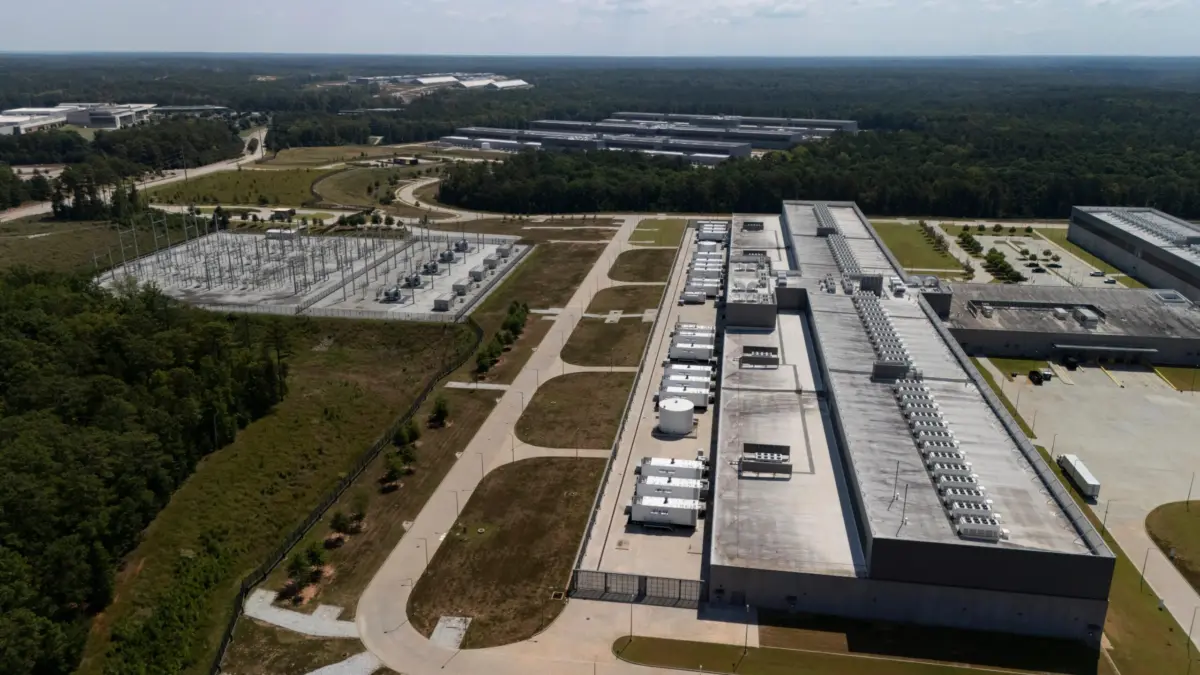

Executive Overview: The High-Stakes Collision of AI Infrastructure and Midterm Politics
WASHINGTON — In a calculated maneuvering of legislative calendar and electoral strategy, Senate Republicans have teed up one of the final votes before the upcoming midterm elections: a high-profile, highly contentious bill addressing the explosive growth of data centers and their mounting toll on local energy grids and consumer electricity bills.
The legislative push underscores a profound national anxiety. As the artificial intelligence boom accelerates, massive data centers—sprawling facilities packed with servers humming around the clock—are multiplying across the American landscape, from the rolling plains of Nebraska to the tech-heavy corridors of Georgia and Ohio. While these epicenters of digital infrastructure enjoy backing from the highest levels of the executive branch, including President Donald Trump, they have simultaneously stoked a populist backlash. Recent polling reveals that roughly 60% of Americans support capping the growth of new data centers, driven by acute worries over skyrocketing utility bills and strain on local water supplies.
For Senate Republicans, bringing a data center bill to the floor serves a dual purpose: it offers vulnerable incumbents a chance to go on offense over a pressing kitchen-table issue while painting obstructionist Democrats into a corner. At the center of this legislative storm is Ohio Republican Senator Jon Husted. Locked in a fierce, dead-heat reelection battle, Husted has been branded by his Democratic challenger—former Senator Sherrod Brown—as the "face of data centers" due to his prior support for the industry during his tenure as lieutenant governor.
Yet, the bill itself has exposed a deep ideological chasm in Congress. While the measure breezed through the House of Representatives by an overwhelmingly bipartisan 417-3 margin, it faces an uphill, politically volatile path in the Senate. Democrats have dismissed the legislation as a toothless "fraud," arguing that its voluntary frameworks do nothing to protect everyday ratepayers from subsidizing the energy-guzzling needs of Big Tech.
With both chambers set to recess for the entire month of October as lawmakers scatter to campaign trails ahead of the midterms, this week’s procedural showdown represents the final legislative battleground for both parties to define where they stand on an issue reshaping the American economy.
Detailed Chronology: From State-Level Backlash to Capitol Hill Showdown
The journey of data center reform from a localized utility grievance to a national campaign flashpoint has been rapid and politically volatile.
The Grassroots Pressure Cooker
Over the past twenty-four months, communities adjacent to major data center hubs—particularly in states like Ohio, Georgia, and Virginia—began experiencing unexpected turbulence in their municipal utilities. As facilities operated by tech giants like Meta, alongside massive crypto-mining and AI server farms managed by firms like Core Scientific, drew unprecedented gigawatts of power from regional grids, local residents watched their monthly electric bills climb.
By mid-2026, the issue crossed the threshold from a localized zoning dispute into a national political liability. In Ohio, a primary battleground for control of the United States Senate, the National Republican Senatorial Committee issued an internal memo warning that Husted was acutely vulnerable. Because Husted had actively courted tech investments and data center developers as lieutenant governor, Democrats seized the narrative, flooding the airwaves with ads framing him as an architect of rising household utility costs.
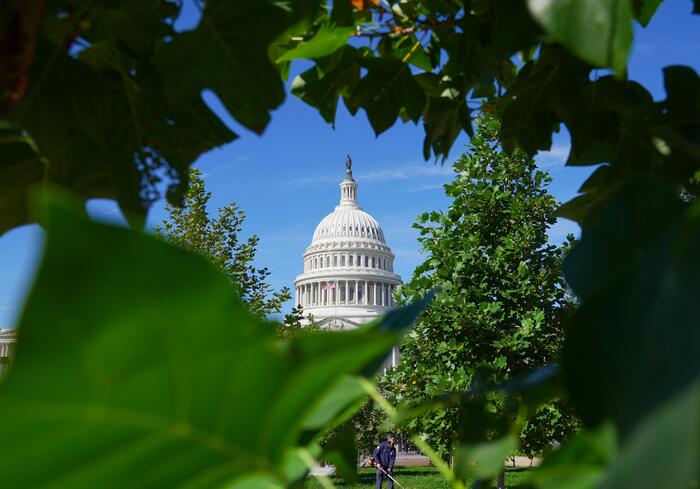
The House Breakthrough and Senate Stalling
Sensing the political peril, congressional Republicans sought a legislative vehicle to neutralize the issue. The resulting bill, championed by Husted in the Senate, was designed to signal responsiveness to voter outrage. It mandates that state utility regulators consider adopting a federal standard ensuring that large power consumers—specifically massive commercial data centers—pay a rate reflecting the true cost of the grid upgrades required to service them.
The measure initially appeared destined for easy consensus. In the House of Representatives, where members are acutely sensitive to district-level polling, the bill sailed through on a 417-3 vote.
However, the political calculus shifted dramatically once the bill arrived in the Senate. Democratic leadership recognized the trap: passing the bill could hand Husted and vulnerable GOP incumbents a crucial legislative win right before voters cast their ballots. Consequently, Senate Democratic Leader Chuck Schumer and his caucus drew a hard line, condemning the House-passed bill as an empty gesture and blocking its path forward without mandatory provisions.
The Procedural Bottleneck
To force the issue, Senate Republican leadership teed up the data center bill alongside another populist-leaning measure sponsored by Senator Pete Ricketts (R-Neb.) which would ban members of Congress from purchasing individual stocks. However, the Ricketts bill includes strict voter identification requirements that Democrats have denounced as a poison pill.
With Senate Majority Whip John Thune pushing for a 60-vote threshold to break procedural filibusters, the stage is set for a dramatic showdown that will force senators to go on record regarding utility accountability and ethics reform just weeks before the electorate decides the balance of power in Washington.
Supporting Context & Metrics: The Scale of the Crisis
To understand why a seemingly arcane utility regulation bill has hijacked the congressional agenda, one must examine the staggering macroeconomic and infrastructural realities of the artificial intelligence boom.
The Energy Demand Surge
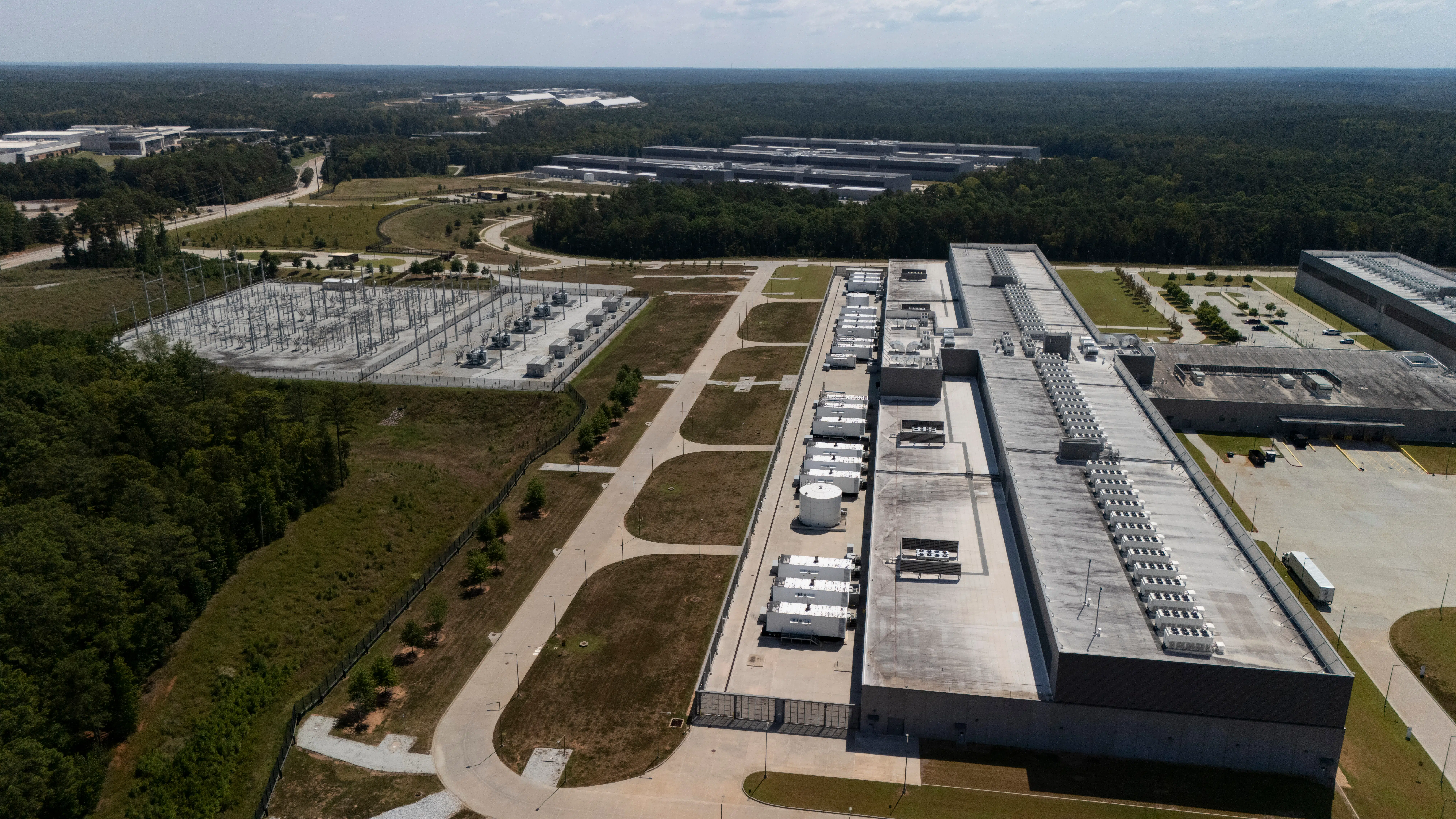
Data centers are among the most resource-intensive industrial facilities ever constructed. Unlike traditional manufacturing plants, modern AI data centers operate continuously at maximum capacity, requiring massive, uninterrupted streams of electricity to power and cool arrays of specialized graphics processing units (GPUs).
- The Power Footprint: Industry analysts estimate that data center electricity consumption in the United States will more than double by the end of the decade, consuming a percentage of the national grid equivalent to powering millions of average American homes.
- Infrastructure Strain: Upgrading transmission lines, building new substations, and expanding generation capacity to support these facilities typically costs billions of dollars. Under traditional regulatory frameworks, these capital expenditures are often amortized across the entire customer base—meaning residential and small business ratepayers frequently subsidize the grid enhancements required by trillion-dollar technology conglomerates.
Public Sentiment and Voter Wariness
Polling data leading up to the midterms highlights a rare area of intense bipartisan agreement among the American electorate: deep skepticism toward unregulated tech expansion.
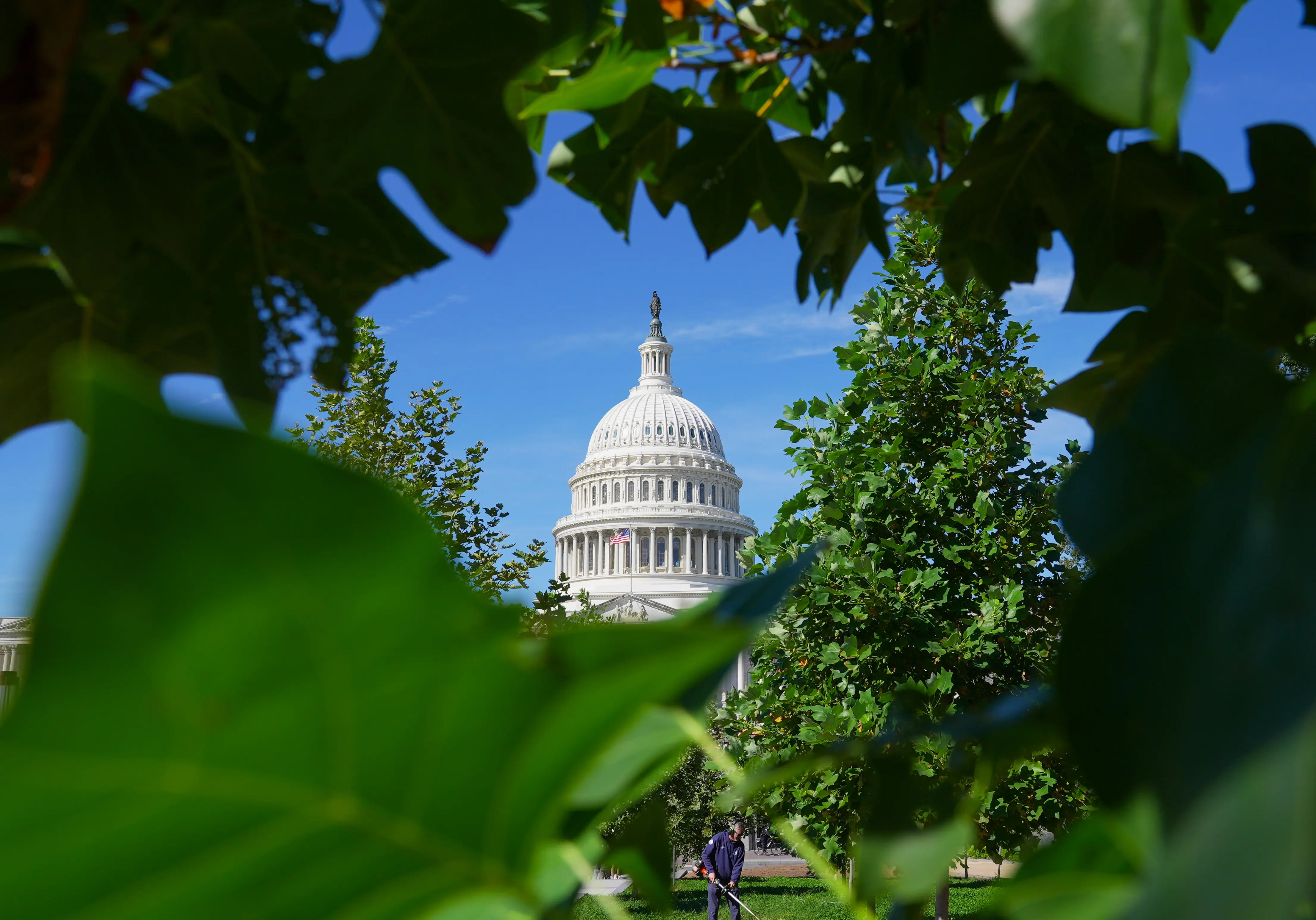
- 6 in 10 Americans support placing strict legislative or municipal limits on the number of new data centers built within their states or regions.
- An overwhelming majority of voters report being "extremely" or "very" concerned about two specific vulnerabilities: the direct inflation of their monthly electricity prices and the depletion or contamination of local water supplies utilized for server cooling systems.
The Battleground State Dynamics
The legislative gridlock in Washington cannot be separated from the map of the 2026 midterm elections. Ohio stands as the epicenter of this political friction. As a critical swing state with multiple high-stakes contests—including the gubernatorial race and the marquee U.S. Senate showdown between Husted and former Senator Sherrod Brown—the political fallout of data center development has become a proxy referendum on economic stewardship. When national committees issue urgent internal memos warning that local utility complaints could swing a Senate seat, legislative priorities in Washington instantly pivot to address the threat.
Official Statements & Political Posturing
As the clock ticks down toward the October recess, Capitol Hill has become a theater of dueling press conferences, stark accusations, and competing legislative blueprints.
Proponent Arguments: Signaling Action and Accountability
Republicans argue that doing something—even through a federal standard that encourages rather than mandates state-level compliance—is infinitely superior to the legislative paralysis favored by their opponents.
"You all know this is the only game in town," Senator Jon Husted declared to reporters during a passionate defense of his legislation. "This bill passing is the only way to get a chance to prove to the American people before the midterm elections whose side you’re on."
Republicans frame their measure as a pragmatic first step that respects the traditional jurisdiction of state public utility commissions while establishing a clear federal expectation that large tech firms must pay their fair share.
Senate leadership has doubled down on this framing, arguing that Democrats are prioritizing political obstruction over immediate relief for ratepayers.
"Both pieces of legislation strike at the very heart of issues that the American people care deeply about, passionately about, and we’ll see if the Democrats are willing to take yes for an answer," stated Senate leadership during floor preparations.
Detractor Arguments: Labeling the Measure a "Fraud"
Senate Democrats, led by Minority Leader Chuck Schumer, have rejected the Republican framing entirely, asserting that the Husted bill is designed merely to provide political cover to endangered incumbents without delivering substantive consumer protections.
"The bill is a fraud, plain and simple," Schumer stated bluntly on the Senate floor.
Democrats point to the bill’s reliance on state-level regulatory discretion as a fatal flaw. To counter the Republican narrative, Democratic lawmakers have introduced alternative legislation—spearheaded by Senator Martin Heinrich of New Mexico—that bypasses voluntary guidelines entirely. The Heinrich proposal would grant the Federal Energy Regulatory Commission (FERC) direct authority to issue mandatory rules compelling large electricity consumers to fully fund necessary grid upgrades before plugging into local systems.
"They want it optional, which means zero. We want it mandatory," Schumer emphasized, drawing a sharp contrast between the two parties’ legislative philosophies.
Future Outlook: What Lies Ahead After the Midterms
As lawmakers prepare to abandon Capitol Hill for a grueling month of full-time campaigning through October, the immediate fate of the data center bill hangs in precarious balance.
The Procedural Deadlock
Without the requisite Democratic support to clear the 60-vote threshold in the Senate, the Husted bill appears destined to stall in procedural limbo. For Republicans, the tactical objective may have already been achieved: establishing a legislative record that allows them to campaign on having attempted to lower energy bills, while casting Democrats as protectors of Big Tech loopholes. Conversely, Democrats believe they have successfully unmasked the bill as an empty gesture, keeping the pressure squarely on Husted in the Ohio Senate race.
Long-Term Regulatory Horizons
Regardless of which party captures the majority in the next Congress, the underlying crisis of grid capacity and data center expansion will not dissipate. State utility commissions across the country are already independently grappling with how to structure rate cases for hyperscale computing facilities.
- The Regulatory Shift: Pressure is mounting on federal bodies like FERC to assert broader authority over interstate transmission planning, regardless of congressional gridlock.
- Industry Adaptation: Facing mounting public backlash and the threat of punitive local ordinances, major technology companies are increasingly exploring direct investments in dedicated clean energy sources—such as co-locating nuclear, solar, and geothermal power plants directly adjacent to data center campuses—to bypass public utility grid congestion entirely.
When Congress returns to Washington after the midterm elections, the intersection of artificial intelligence infrastructure, national energy security, and consumer protection will undoubtedly reclaim its spot at the top of the legislative agenda. Whether the next session yields toothless posturing or robust, mandatory federal oversight remains one of the defining questions for the future of the American economy.

0 Comments