

Executive Overview
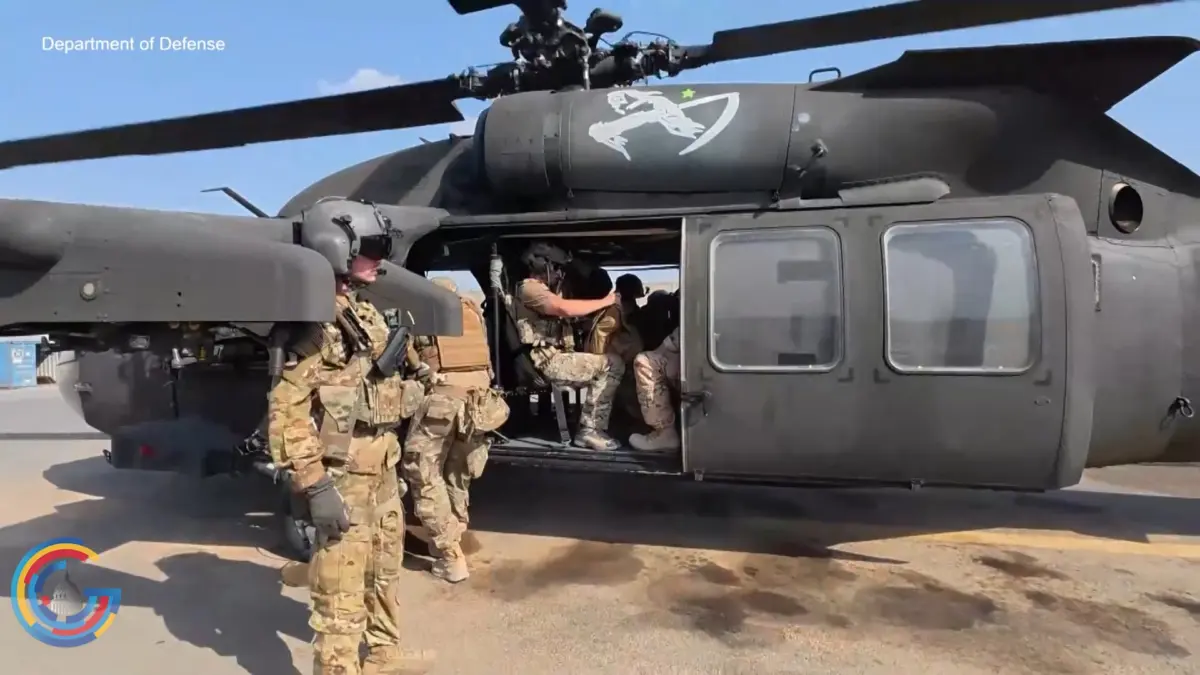
WASHINGTON — In a landmark geopolitical development that closes another chapter in over two decades of deep American military entanglement in the Middle East, the United States has formally concluded its combat and support mission against the Islamic State (ISIS) in Iraq. U.S. Central Command (CENTCOM) announced Wednesday that the final echelon of American and international coalition personnel, alongside all remaining military equipment, has successfully departed from Erbil Air Base in northern Iraq.
This definitive departure marks the final milestone of a phased withdrawal plan orchestrated jointly by Washington and Baghdad in September 2024. It brings a definitive end to Operation Inherent Resolve (OIR) on Iraqi soil—a 12-year multinational campaign launched in 2014 to reverse the apocalyptic territorial gains of a terrorist organization that had briefly established a self-declared caliphate spanning large swathes of Iraq and Syria.
The exit from Erbil Air Base, which served as the primary operational nerve center for the Combined Joint Task Force, impacts roughly 1,500 American and allied troops stationed across the country to advise, assist, and enable partner forces. With this final logistical maneuver completed, responsibility for internal security, counter-terrorism operations, and the long-term containment of dormant insurgent cells shifts entirely to the sovereign hands of Iraqi Security Forces and the Kurdish Peshmerga.
While the wartime coalition mission inside federal Iraq has officially dissolved, U.S. defense officials emphasize that this is not an abandonment of the region, nor is it the total cessation of counter-ISIS operations globally. Instead, the military-centric partnership is rapidly morphing into a traditional bilateral defense relationship between Washington and Baghdad. Simultaneously, Operation Inherent Resolve is repositioning its regional command architecture to Jordan, while U.S. forces continue targeted operations in neighboring Syria in cooperation with regional partners and the newly evolved security landscape.
The closure of this campaign was hailed by senior military leaders and political figures alike as a testament to the tactical success of coalition arms and the maturation of Iraqi military capabilities. Yet, it also raises critical questions regarding the future stability of a volatile region fraught with complex proxy conflicts, lingering sectarian tensions, and the persistent, low-level threat of asymmetrical warfare.
Detailed Chronology: From the 2003 Invasion to the Erbil Departure
To fully understand the weight of Wednesday’s announcement, the withdrawal must be viewed through the long, turbulent lens of modern American military history in Iraq—a timeline defined by sweeping interventions, abrupt pullouts, and cyclical returns.
[2003: Operation Iraqi Freedom] ──> [2011: U.S. Withdrawal] ──> [2014: Rise of ISIS & OIR Launch]
                                                                        │
[2026: Final Erbil Departure]    <── [Sep 2024: U.S.-Iraq Plan] <── [2017: Territorial Victory]
1. The Genesis: Operation Iraqi Freedom (2003–2011)
The foundational roots of modern U.S. military presence in Iraq were planted in March 2003, when American and coalition forces launched Operation Iraqi Freedom, culminating in the swift overthrow of Saddam Hussein’s Ba’athist regime. What followed was nearly a decade of brutal counter-insurgency warfare, sectarian bloodshed, and state-building efforts. In late 2011, under the administration of President Barack Obama, the United States completed a full military withdrawal from Iraq, formally ending combat operations and leaving behind a sovereign Iraqi government tasked with securing its own borders.
2. The Resurgence and the Birth of OIR (2014)
The vacuum left in the wake of regional political instability and the civil war in neighboring Syria proved fertile ground for the resurrection of extremist militancy. Emerging from the remnants of al-Qaeda in Iraq, ISIS swept across the Syrian border in 2014, capturing vital urban centers including Mosul and Tikrit, executing mass atrocities, and threatening the outskirts of Baghdad.
Facing an existential crisis, the Iraqi government formally requested international assistance. In response, CENTCOM established the Combined Joint Task Force-Operation Inherent Resolve in the summer of 2014. The mission was clear: assemble a global coalition to advise, assist, and enable Iraqi security forces, utilizing precision air power, logistical support, and intelligence-sharing to systematically dismantle the terror group’s operational capacity.
3. Territorial Defeat and Asymmetrical Adaptation (2017–2024)
Through years of grinding urban combat, fierce resistance by the Kurdish Peshmerga, and relentless coalition air support, Iraqi forces steadily reclaimed captured territory. In 2017, then-Prime Minister Haider al-Abadi formally declared territorial victory over ISIS, noting that the group no longer held physical dominion over towns and cities in Iraq.
However, the military mission did not end there. Recognizing that a physical caliphate could easily devolve into a persistent underground insurgency, U.S. and coalition forces maintained their footprint. For the next seven years, OIR operated primarily in an advisory and supportive capacity, helping local forces hunt down sleeper cells, secure porous borders, and prevent the operational regeneration of the terror network.
4. The Transition and Final Pullout (September 2024–February 2026)
By late 2024, both Washington and Baghdad concluded that Iraqi security forces had evolved sufficiently to independently manage domestic security threats. In September 2024, the two governments formally agreed upon a structured, phased transition plan.
The execution phase began in earnest in October 2025, with American and coalition personnel systematically drawing down forces from bases across federal Iraq. The final phase of this monumental logistical undertaking culminated on Wednesday, as the last remaining personnel and tactical equipment rolled out of Erbil Air Base, bringing a definitive close to 12 years of continuous OIR operations in the country.
Supporting Context & Metrics
The closure of Erbil Air Base as a coalition hub represents the termination of one of the most technologically advanced and logistically complex counter-terrorism campaigns of the 21st century.
Force Footprint and Operational Scale
At its peak during the height of the anti-ISIS campaign, the coalition involved contributions from dozens of nations providing specialized training, intelligence, medical support, and combat aircraft. In the final years leading up to the withdrawal, the American and coalition footprint in Iraq hovered around 1,500 personnel. These troops were primarily concentrated at strategic installations, notably Erbil Air Base in the semi-autonomous Kurdistan Region, and previously at Ain al-Asad Airbase in western Anbar province.
The logistical challenge of extracting these forces—alongside millions of dollars worth of communications gear, force-protection systems, and military vehicles—required months of meticulous planning. Moving such heavy equipment out of landlocked operational areas while managing the continuous threat of drone and rocket attacks from regional militias underscored the inherent risks managed by CENTCOM logistics officers throughout the withdrawal window.
Financial and Human Toll
Over the span of 12 years, Operation Inherent Resolve incurred significant financial costs and heartbreaking human sacrifices. While the primary burden of combat was borne by Iraqi security forces and Kurdish fighters—who suffered tens of thousands of casualties—dozens of American and coalition service members lost their lives or sustained severe injuries during OIR operations, falling victim to combat engagements, operational accidents, and hostile proxy strikes.
Official Statements and Political Reactions
The conclusion of the mission elicited strong reactions from military commanders, Pentagon officials, and the White House, highlighting both the pride of a mission accomplished and the pragmatic realities of a shifting strategic landscape.
Pentagon and CENTCOM Perspectives
Chief Pentagon Spokesman Sean Parnell addressed the media on Wednesday, framing the withdrawal not as a retreat, but as the natural culmination of a successfully executed strategy.
"The orderly departure of Coalition forces and equipment from Erbil Air Base marks the successful conclusion of the military mission that defeated ISIS in Iraq," Parnell stated. "This milestone reflects the success of a 12-year campaign that dismantled ISIS as an organized military threat and successfully shifted total responsibility for the country’s security to capable Iraqi forces."
Echoing these sentiments, CENTCOM Commander Adm. Brad Cooper emphasized that the tactical reality on the ground has fundamentally shifted since 2014.
"ISIS no longer poses a systemic threat to Iraq’s national security," Adm. Cooper noted, affirming that Iraqi security forces and the Kurdish Peshmerga have achieved the operational independence required to manage internal threats without foreign boots on the ground.
Presidential Endorsement
In Washington, President Donald Trump weighed in on the development via social media, framing the complete pullout as a decisive fulfillment of his vision for American foreign policy in the Middle East. Writing on Truth Social, Trump declared the withdrawal a "decisive victory" and explained his rationale for greenlighting the final departure:
"I had a choice to stay or to leave, and felt, without question, that it was time for America to go home!" Trump wrote.
Future Outlook: A New Bilateral Era and Regional Realities
While the departure from Erbil Air Base terminates the wartime coalition mission inside Iraq, defense analysts and geopolitical experts caution that the security dynamic in the Middle East remains fraught with complexity. The end of Operation Inherent Resolve in Iraq does not mean the complete eradication of the threat, nor does it signal a total diplomatic or military decoupling between Washington and Baghdad.
Transition to Bilateral Defense Relations
Moving forward, the relationship between the United States and Iraq will transition from a wartime coalition framework to a traditional, bilateral defense partnership. This shift encompasses military-to-military cooperation, foreign military sales, intelligence-sharing agreements, and ongoing training programs designed to enhance the long-term institutional capacity of the Iraqi military.
The Threat of Iran-Aligned Militias and Regional Instability
One of the most delicate challenges facing the Iraqi government in the wake of the U.S. departure is managing other domestic security risks—most notably, the pervasive influence and operational autonomy of Iran-aligned militias operating within its borders. Historically, the presence of U.S. forces acted as both a deterrent and a target for these armed groups, which frequently launched rocket and drone attacks against coalition installations.
With American combat troops now gone, the primary responsibility for containing, integrating, or neutralizing these non-state actors rests squarely on the shoulders of Prime Minister Mohammed Shia’ al-Sudani’s administration. Maintaining domestic stability without triggering internal conflict will be a supreme test for Iraqi statecraft.
The Global Fight Continues: Syria and Jordan
Crucially, U.S. counter-terrorism operations against ISIS are far from finished; they have simply been geographically and structurally recalibrated.
- Jordan: The joint task force headquarters for Operation Inherent Resolve has officially relocated to Jordan, ensuring that regional command, control, and intelligence coordination can continue uninterrupted.
- Syria: U.S. forces remain active in eastern Syria, operating alongside local partners such as the Syrian Democratic Forces (SDF) and coordinating with regional actors to prevent the resurgence of ISIS remnants operating in the lawless expanses of the Syrian desert.
As the last transport aircraft lifted off from Erbil Air Base, a monumental chapter in modern military history came to a close. Whether this transition ushers in a durable era of self-reliant Iraqi stability or gives rise to new regional security vacuums remains one of the defining questions for the future of the Middle East.

0 Comments