In the evolving landscape of modern American cuisine, few chefs have bridged cultural divides as seamlessly as Meherwan Irani. Best known as the culinary force behind Asheville’s acclaimed Chai Pani, Irani has continually challenged the boundaries of regional cooking by introducing the vibrant, unapologetic spices of his Parsi heritage to American palates. Now, in his anticipated release, No. 1 Best Indian Cookbook in the World: At-Home Recipes from the Streets, Truck Stops, Villages, and Palaces of India (published by Ten Speed Press), Irani takes on a beloved Southern staple: the thick-cut pork chop.
By marrying the nostalgic flavors of his youth—specifically a caramelized ginger-garlic paste and vibrant Kashmiri chili—with time-tested Southern culinary philosophies, Irani has crafted a cross-cultural masterpiece. This piece explores the deeply personal history behind the recipe, the fascinating geopolitical and culinary history of pork in India, and the precise, pitmaster-approved techniques required to elevate a humble chop into a transcendent dining experience. Through an investigative culinary lens, we examine how Irani’s unique perspective redefines what it means to cook regionally in the American South.
Detailed Chronology: From Parsi Roots to Asheville Innovation
To understand Irani’s modern interpretation of the pork chop, one must trace a chronological thread from the dusty, segmented butcher shops of mid-20th-century India to the high-heat kitchens of contemporary Western North Carolina.
The Multi-Room Butcher Shops of India
Irani’s culinary identity was forged within the Parsi community—a distinct, ethnically Persian Zoroastrian group that migrated to the Indian subcontinent over a millennium ago. Unlike many of their Hindu, Jain, and strictly observant neighbors, Parsi dietary traditions are unburdened by religious prohibitions against meat consumption.
In Irani’s youth, the local meat supply was governed by a unique structural geography. Butcher shops were solitary buildings erected in dusty fields on the outskirts of town, purposefully distanced from other commerce to respect the sensibilities of Hindu vegetarians. These municipal structures were rigidly compartmentalized into four distinct rooms, each with an independent exterior entrance:
The Christian Room: Dedicated entirely to the sale of pork.
The Muslim Room: Specialized in beef.
The Hindu-Run Room: Handled goat meat for non-vegetarian patrons.
The Poultry Room: Supplied chickens and fresh eggs.
This architectural segregation tells a profound historical story. The introduction of pork into the local Goan and regional Indian diet dates back to the early 1600s, when Portuguese missionaries arrived in Goa. As they converted local populations to Christianity, the missionaries strategically incorporated pork into the diet. In doing so, they created a dietary line of demarcation; consuming pork effectively ensured that these new converts could not easily return to Hinduism or subsequently assimilate into the local Jewish or Islamic faiths, which strictly forbid the meat. Centuries later, these historical ripples directly fed the multicultural foodways that nourished a young Meherwan Irani.
The Bed-and-Breakfast Blueprint
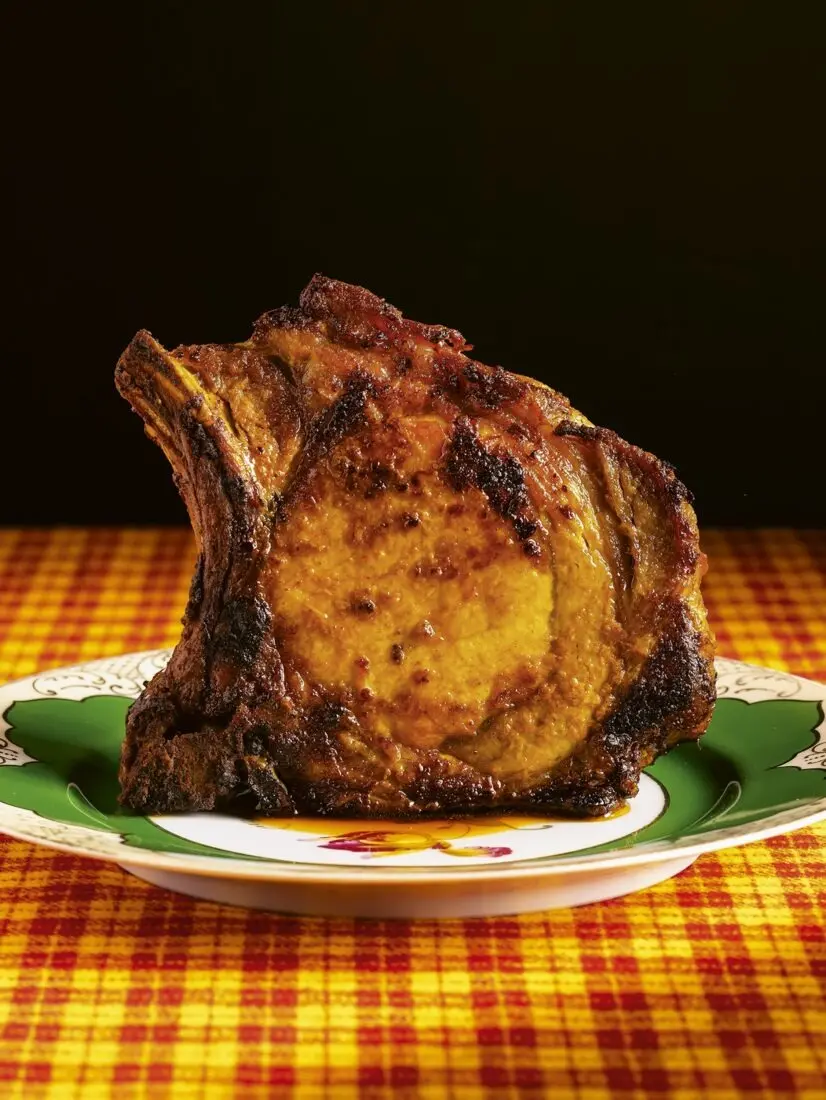
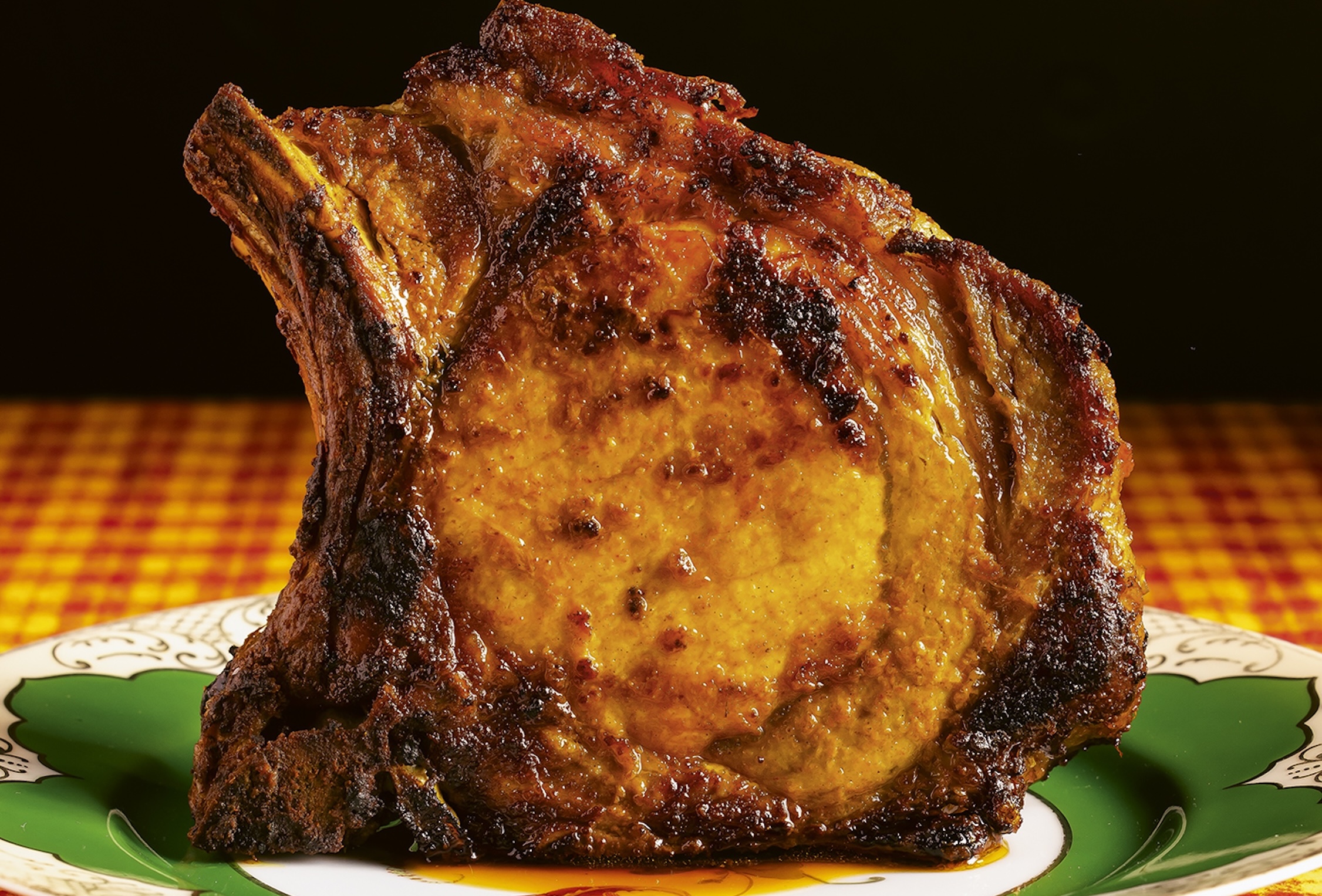
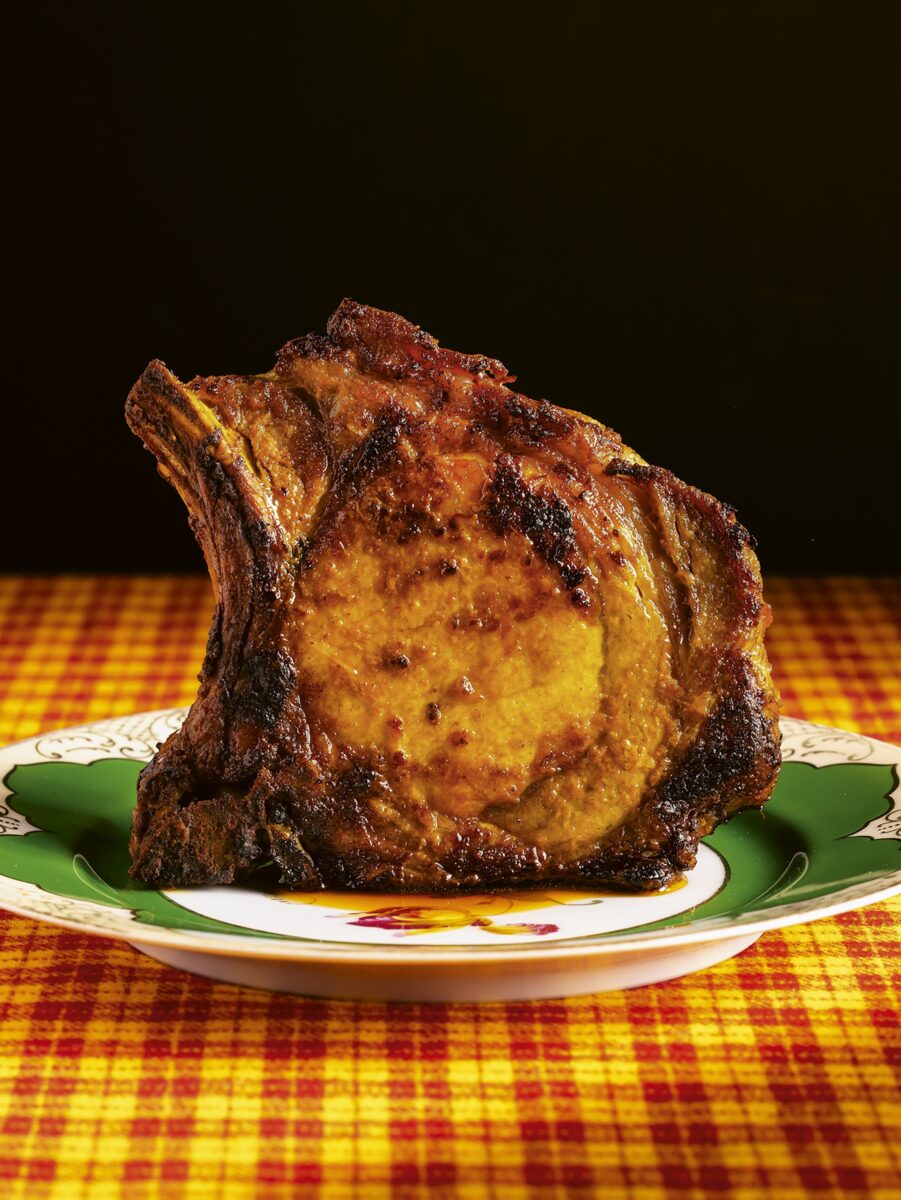
The foundational sensory memory for Irani’s pork chop recipe traces back to the cook at his grandparents’ bed-and-breakfast in India. Operating within a household that celebrated meat "with abandon," the property’s cook mastered a rustic, direct marinade composed of turmeric, ground red chili, salt, and a pungent ginger-garlic paste.
It was a dish of unpretentious luxury. Irani recalls consuming so many of these spiced chops in a single sitting that he literally broke out in "meat sweats"—a visceral testament to the addictive, warming properties of the spice profile.
The Evolution in Asheville
Decades later, upon establishing his culinary footprint in Asheville, North Carolina—a burgeoning epicenter of Appalachian food culture—Irani found himself naturally drawing parallels between Southern comfort food and Indian home cooking. Both culinary traditions rely heavily on cast-iron execution, slow-cooked tenderness, and bold, foundational seasoning.
Rather than merely replicating his grandparents’ recipe, Irani "cheffed it up." He integrated modern culinary science—such as low-and-slow roasting temperatures and wire-rack elevation—to optimize the texture of the meat, resulting in the Masala Pork Chop featured in his new literary work.
Supporting Context & Metrics: The Science of the Chop
Irani’s approach to the pork chop is not just a cultural exercise; it is rooted in rigorous culinary physics. In his cookbook, he explicitly warns against the most common pitfall in American home cooking: high-heat shock.
As any seasoned barbecue pitmaster in the American South will attest, treating thick cuts of meat with aggressive, high-heat directly from the start is a recipe for disaster. When muscle fibers are subjected to intense, immediate heat, they rapidly shrink and tighten. This mechanical constriction acts like a sponge being wrung out, forcefully expelling the natural juices and rendering the meat dry and fibrous.
Irani borrows the foundational tenets of Southern pit-cooking, adapting them for the domestic kitchen. By cooking thick-cut pork chops "low and slow," the muscle proteins relax rather than seize, retaining their natural moisture profile while allowing the exterior spices to caramelize without burning.
The Wire-Rack Innovation
Another critical technical recommendation in Irani’s recipe is the deployment of a wire cooling rack fitted neatly inside a rimmed sheet pan.
Thermal Circulation: Elevating the meat allows ambient oven heat to circulate completely around the chop—top, bottom, and sides.
Avoiding the "Soggy Bottom": When meat rests flat against the bottom of a hot metal pan, the lower surface traps moisture and stews in its own released fats, resulting in a soggy, uneven texture. The wire rack guarantees a uniform, beautifully browned crust across the entire surface of the chop.
Official Statements & Excerpts
In his own words, Meherwan Irani contextualizes the philosophy of the Parsi palate and the unique genesis of his recipes within No. 1 Best Indian Cookbook in the World:
"What are pork chops doing in an Indian cookbook, you ask? The answer is simple: nostalgia. As Parsis we are carnivores, unfettered by the various religion-based dietary restraints Hindus, Jews, Muslims, and others navigate. Not only can we eat meat with abandon, we can eat ALL the meats—chicken, goat, lamb, beef, pork, fish, shellfish. If it flies, walks, or swims, it’s (literally) fair game."
— Meherwan Irani
Reflecting on his technical framework for cooking meat to perfection, Irani notes:
"I like to cook these thick pork chops low and slow, a time-tested method for juicy, tender meat, as any BBQ pitmaster will tell you… I also like to roast these chops (and most other cuts of meat or fish) on a wire rack that fits perfectly into a sheet pan; the rack elevates the meat and allows heat to circulate all around it."
Future Outlook: The Intersection of Southern and South Asian Cuisines
The release of No. 1 Best Indian Cookbook in the World signals a broader, accelerating shift in American gastronomy. For generations, regional American cooking—particularly Southern food—was viewed through a static, insular lens. Ingredients like pork chops, collard greens, and cornbread were siloed into traditional European-American or African-American culinary histories.
However, chefs like Meherwan Irani are demonstrating that regional comfort food is inherently porous. The Appalachian mountains of North Carolina and the rural villages of India share parallel values: resourcefulness, bold seasoning, a deep respect for animal proteins, and a reliance on community-centric foodways.
What’s Next for Cross-Cultural Fusion?
As home cooks and professional chefs alike embrace books like Irani’s—alongside his companion recipes like the refreshing Desi Salad and comforting Dal Makhani—we can expect to see a permanent evolution in American kitchens. The strict boundaries separating "ethnic" cooking from "traditional" Southern fare are dissolving.
The success of dishes like the Masala Pork Chop proves that flavor knows no borders. By honoring historical roots while applying modern, cross-pollinated techniques, innovators like Irani are not just rewriting cookbooks—they are writing the future of American food.



0 Comments