

Executive Overview
In the realm of criminal investigations, time is rarely an ally to law enforcement. As days bleed into years and years fade into decades, evidence degrades, witnesses relocate or pass away, and cold cases risk slipping permanently into obscurity. Yet, every so often, an unexpected convergence of modern communication, public vigilance, and relentless police work breaks through the decades-long silence.
Nearly 30 years after a horrific hit-and-run collision claimed the life of a beloved 64-year-old grandfather, retiree, and Korean War veteran in Des Moines, Iowa, local authorities have announced a monumental breakthrough. The Des Moines Police Department revealed that an arrest has finally been made in the September 29, 1997, death of Leslie Ruby.
The catalyst for this long-overdue development was not a newly discovered fingerprint or a sophisticated DNA phenotyping breakthrough, but rather a quintessential piece of broadcast history: a rerun of the landmark true-crime television program America’s Most Wanted. A viewer watching a rebroadcast of an episode originally produced in the late 1990s recognized a familiar face, prompting a crucial tip to Crime Stoppers. This single act of civic engagement pointed detectives toward New Jersey, where federal authorities ultimately took the fugitive into custody.
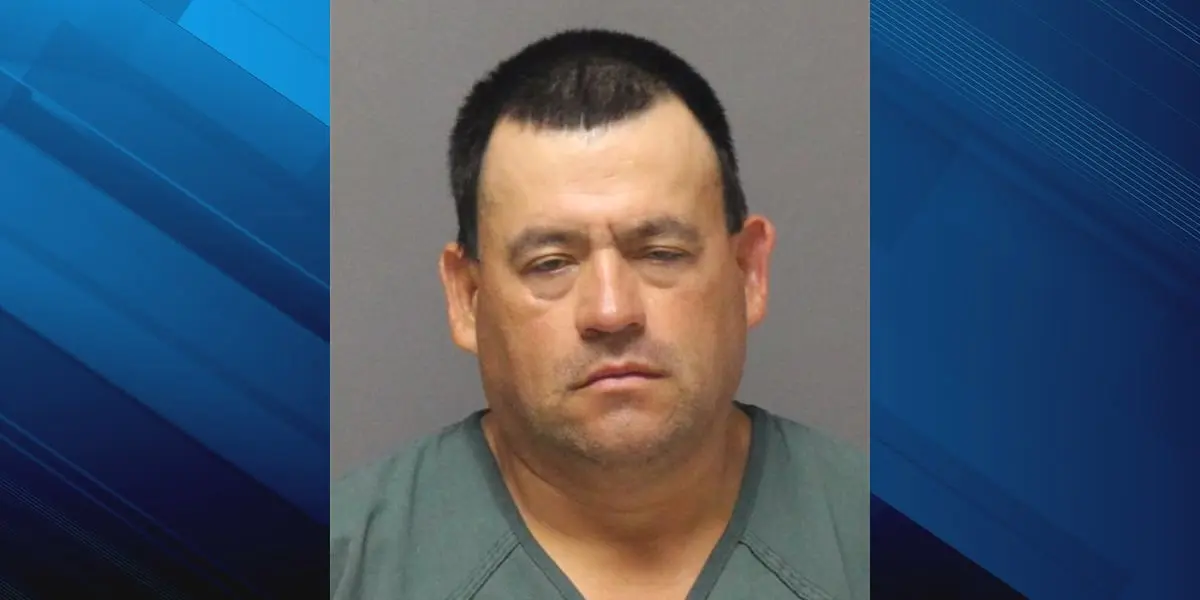
The suspect, identified by investigators as Gerardo Garcia-Michel—who was 28 years old at the time of the alleged incident—now faces extradition back to Iowa to confront charges that have remained unaddressed for almost three decades. For the family of Leslie Ruby, the arrest represents a profound emotional milestone, proving that the passage of time does not diminish the commitment of law enforcement to pursue accountability. As Des Moines Police Department Sergeant Paul Parizek remarked following the announcement, "It doesn’t matter if it’s 29 minutes or 29 days or 29 years after a crime. Getting answers for the family is one of the most important things that we can do."
Detailed Chronology: From Tragic Event to Transcontinental Arrest
To fully grasp the magnitude of the recent arrest, it is essential to retrace the timeline of events that began on a quiet autumn evening in Des Moines, Iowa, and culminated half a country away in New Jersey nearly three decades later.
September 29, 1997: The Tragedy Outside the Ruby Home
The sequence of events began on the evening of September 29, 1997. Leslie Ruby, a 64-year-old resident of Des Moines, was just outside his family home. By all accounts, Ruby was a pillar of his family and community. Having served his country honorably as a veteran of the Korean War, he had transitioned into a peaceful retirement, dedicating his golden years to his children and grandchildren.
Without warning, routine suburban tranquility was shattered. Ruby was struck by a vehicle in a devastating hit-and-run collision right outside his residence. The impact was catastrophic, and the motorist responsible did not stop to render aid, call emergency services, or face the consequences of their driving. Instead, the driver accelerated away into the night, leaving a dying man in the street and a grieving family searching for answers that would remain elusive for a generation.
The Initial Investigation and the 1998 Media Blitz
In the immediate aftermath of the tragedy, investigators with the Des Moines Police Department launched an aggressive manhunt. Witnesses were interviewed, physical debris left at the scene was cataloged, and public appeals for information were disseminated through local news outlets.
Through these early investigative steps, detectives successfully identified a primary suspect: Gerardo Garcia-Michel, who was 28 years old at the time. However, before law enforcement could secure an arrest warrant and take him into custody, Garcia-Michel fled the jurisdiction, successfully crossing state lines and evading local law enforcement.
Realizing that the suspect had likely left Iowa, investigators turned to broader public-awareness platforms. In 1998, the high-profile true-crime television show America’s Most Wanted—hosted by John Walsh and renowned for its nationwide reach—featured the Leslie Ruby hit-and-run case. The national broadcast detailed the circumstances of Ruby’s death and showcased information regarding Garcia-Michel. Despite generating widespread national attention and numerous viewer inquiries at the time, the specific lead required to pinpoint Garcia-Michel’s exact whereabouts failed to materialize, and the trail ultimately went cold.
The Decades-Long Stalemate
As the calendar turned from the 20th century to the 21st, the Ruby case transitioned into the dreaded category of an unsolved cold case. Investigators rotated through the department, file cabinets were reorganized, and digital databases were updated, but active leads dried up.
For the family of Leslie Ruby, the passing years brought a painful limbo. Birthdays, holidays, and family milestones were perpetually marked by the unresolved nature of their patriarch’s violent death. While local detectives periodically reviewed the case file, the lack of actionable intelligence meant that justice remained stalled.
The Breakthrough: A Modern Rerun and a Crucial Tip
The paradigm shifted nearly 29 years after the fatal collision, propelled by the enduring footprint of archival television programming and modern tip networks. A rerun of the vintage 1998 America’s Most Wanted segment featuring Leslie Ruby’s case was broadcast, catching the eye of a viewer who happened to be watching.
Recognizing elements from the decades-old broadcast, the viewer realized that a person matching the suspect’s description and profile was living right next door. Acting on this realization, the observant citizen submitted an anonymous tip via Crime Stoppers, directly connecting the dots between the fugitive sought by Iowa authorities and a contemporary New Jersey neighbor named Gerardo Garcia-Michel.
The Arrest in New Jersey and Pending Extradition
Armed with the fresh intelligence provided by the Crime Stoppers tip, Des Moines detectives verified the information and coordinated across state lines. Federal law enforcement resources were mobilized, and U.S. Marshals executed an operation to apprehend Garcia-Michel in New Jersey.
With the suspect now in custody, the legal apparatus is working to bring him back to the jurisdiction where the crime occurred. The Des Moines Police Department is actively coordinating the extradition process, ensuring that Garcia-Michel will face the Iowa judicial system to answer for allegations that have lingered unresolved for close to thirty years.
Supporting Context & Metrics: The Mechanics of Cold Case Resolution
The breakthrough in the Leslie Ruby case provides a compelling lens through which to examine the dynamics of cold case investigations, fugitive apprehension, and the evolving role of public media partnerships in law enforcement.
The Persistence of Cold Cases in American Jurisprudence
Law enforcement agencies across the United States grapple with tens of thousands of unsolved homicides and violent vehicular felonies. A "cold case" is traditionally defined as any criminal investigation that has not been solved and does not currently have active leads, often due to a lack of physical evidence, uncooperative witnesses, or the elusiveness of a suspect.
Vehicular homicides involving hit-and-run drivers present unique challenges. Unlike premeditated crimes, which often involve complex webs of motive and interpersonal conflict, hit-and-run incidents frequently occur in transient environments where the perpetrator and victim are absolute strangers. If a suspect manages to immediately clean their vehicle, conceal structural damage, and flee the state—as Garcia-Michel allegedly did in 1997—local police departments can quickly exhaust their geographical reach.
The Evolution of Public-Assistance Programs
The success of the Ruby investigation highlights the enduring power of collaborative public-safety initiatives:
- Crime Stoppers: Established as a community-oriented program that guarantees anonymity to tipsters, Crime Stoppers networks bypass the fear of retaliation that often deters witnesses from coming forward. In this case, a neighbor felt safe enough to report suspicious circumstances without exposing themselves to direct community friction.
- National Media and Archival Reach: In the late 1990s, programs like America’s Most Wanted revolutionized fugitive apprehension by broadcasting suspect profiles directly into millions of living rooms. In the digital age, these archival pieces continue to circulate via streaming platforms, YouTube, and cable television syndication, effectively granting old cases an indefinite shelf life.
| Factor | 1997 Investigation Environment | Modern Investigation Environment |
|---|---|---|
| Information Sharing | Analog phone lines, physical flyers, local news broadcasts. | Instantaneous digital databases, national social media networks, viral video sharing. |
| Tip Submission | Direct phone calls to police switchboards, mail-in letters. | Encrypted web forms, anonymous text lines, Crime Stoppers apps. |
| Fugitive Tracking | Regional bulletins, physical descriptions, paper warrants. | Automated license plate readers, national fingerprint databases, federal U.S. Marshals task forces. |
Official Statements and Community Impact
The resolution of a decades-old mystery reverberates far beyond the courtroom, touching the core of law enforcement ethics and community trust.
Law Enforcement Perspective
Speaking on behalf of the Des Moines Police Department, Sergeant Paul Parizek emphasized the philosophical underpinnings that keep cold case units operational even when years turn into decades. Parizek noted that the commitment to victims’ families has an expiration date, and it is set far beyond the constraints of standard investigative frustration.
"It doesn’t matter if it’s 29 minutes or 29 days or 29 years after a crime. Getting answers for the family is one of the most important things that we can do," Parizek stated during the department’s public briefing.
This sentiment underscores an unwritten professional standard among homicide and violent crime detectives: an unsolved case remains an open wound for both the victim’s family and the institution of law enforcement itself. The ability to utilize federal partners—such as the U.S. Marshals—demonstrates how inter-agency cooperation bridges geographical divides that once allowed suspects to slip through the cracks.
The Human Element: Remembering Leslie Ruby
Behind the legal filings, extradition paperwork, and media headlines lies the profound human cost borne by the Ruby family. Leslie Ruby was not merely a statistic in an accident ledger; he was a husband, father, grandfather, and a veteran who survived the perils of the Korean War only to have his life abruptly cut short on a Des Moines street.
Family members who mourned him in 1997 did so with the agonizing uncertainty of whether the person responsible would ever face accountability. While an arrest cannot undo the trauma of the past three decades, it provides an essential validation of their loss. It signals to the community that a life taken—no matter how much time has elapsed—will not be forgotten by the institutions sworn to protect them.
Future Outlook: The Road Ahead in the Legal Proceedings
As this nearly 30-year-old case transitions from the investigative phase to the judicial phase, several critical steps lie ahead:
- Extradition Proceedings: Gerardo Garcia-Michel must complete the legal extradition process from the State of New Jersey back to the State of Iowa. While extradition is standard procedure, defense attorneys can sometimes challenge the process, though successful blocks are rare when proper interstate warrants are issued.
- Arraignment and Formal Charges: Upon his return to Des Moines, Garcia-Michel will be booked into the county jail, formally arraigned, and presented with the specific criminal charges stemming from the 1997 incident.
- Judicial Challenges and Evidentiary Scrutiny: Defense counsel will inevitably scrutinize the integrity of evidence preserved over nearly three decades. Prosecutors will need to demonstrate that witness recollections, physical documentation from 1997, and the chain of custody remain legally viable for trial.
- Trial or Plea Resolution: The case will proceed through pre-trial hearings, depositions, and motions, ultimately culminating either in a plea agreement or a jury trial where the State of Iowa will present its case before a modern court of law.
For now, the arrest of Gerardo Garcia-Michel stands as a testament to the fact that justice, though frequently delayed, is not always permanently denied. In the words of local investigators, the pursuit of truth recognizes no statute of limitations on dedication.

0 Comments