

Executive Overview
Ninety-three years after the formal repeal of the 18th Amendment closed the curtain on America’s notorious Prohibition era, the concept of the "speakeasy" has undergone a profound metamorphosis. No longer driven by the clandestine necessity of evading federal agents, dodging padlock raids, or choking down bathtub gin to beat the sunset, today’s iteration of the hidden bar is an exercise in theatrical hospitality and immersive design.
In the modern landscape, the modern speakeasy serves as a counter-cultural retreat from the bright, digitized noise of everyday dining. These establishments utilize unassuming facades, hidden entryways, coded passwords, and labyrinthine back-hallways to evoke a sense of historic intrigue. Yet, behind every nondescript sliding bookcase, disguised "maintenance" door, or heavy steel vault lies a sanctuary dedicated to the serious appreciation of fine whiskey.
Across the American South and Midwest, hospitality pioneers are pairing this cloak-and-dagger architecture with world-class, carefully curated brown-water programs. Far from being mere parlor tricks, these secret dens boast backbars featuring the rarest unicorn bourbons, allocated single-barrel picks, and master-crafted cocktails. This comprehensive report explores six of the nation’s most compelling, carefully concealed whiskey dens, examining how they merge the thrill of the illicit past with the exacting standards of the contemporary golden age of spirits.
Detailed Chronology: The Evolution from Blind Tigers to Hidden Lounges
To understand the cultural resonance of today’s concealed bars, one must contextualize the long arc of American drinking culture, tracing its steps from open-air saloons to federal crackdowns, and finally into the experiential hospitality of the twenty-first century.
1920–1933: The Underground Imperative
During the dry years of the Volstead Act, thousands of underground establishments—often called "blind pigs" or "speakeasies"—flourished in urban alleyways and rural basements alike. Operating under the constant threat of federal "G-men" and corrupt local authorities, these venues relied heavily on whispered passwords, insider maps, and secret knocks. The quality of the spirits consumed was secondary to the sheer act of defiance; patrons drank raw, un-aged white lightning or bootlegged Canadian whisky cut with industrial solvents.
December 5, 1933: Repeal and the Return to the Open
The ratification of the 21st Amendment brought a sudden end to constitutional prohibition. Legitimate, street-facing saloons, hotel bars, and cocktail lounges reclaimed the cultural spotlight. For decades, the notion of hiding a bar seemed antithetical to the progressive commercial goals of the post-war American hospitality industry, which favored bright neon signs, wide-open floor plans, and accessible roadside visibility.
The 2000s–Present: The Experiential Renaissance
The modern speakeasy revival began in earnest in the early 2000s, spearheaded by pioneering cocktail dens in New York City and San Francisco that revived pre-Prohibition mixology. However, as the American bourbon boom reached unprecedented economic heights over the last decade, operators recognized an opportunity to merge mixology revivalism with the dramatic architecture of the past. Today’s concealed bars are no longer just about selling liquor; they are immersive destinations designed to slow down the frantic pace of modern life, offering guests an exclusive gateway into rare, allocated whiskey portfolios that cannot be found on standard menus.
Supporting Context & Metrics: The Intersection of Design, Architecture, and Bourbon Culture
The proliferation of hidden whiskey dens is not merely a design whim; it aligns directly with broader economic and consumer trends within the American craft spirits and luxury hospitality sectors.
The Bourbon Boom and Allocation Economics
According to data from the Distilled Spirits Council of the United States (DISCUS), American whiskey sales have experienced meteoric growth over the past two decades, with super-premium and high-end bourbons driving the expansion. As consumer demand for rare expressions—such as Buffalo Trace Antique Collection, Pappy Van Winkle, and exclusive single-barrel private selections—outstrips supply, bars must compete aggressively for allocation.
Hidden lounges provide operators with a strategic advantage: by sequestering their rarest bottles behind secret doors, they create an exclusive environment where patrons are willing to pay top dollar for a curated pour. The physical journey of finding the bar matches the psychological journey of gaining access to scarce liquid assets.
Architectural Transformations of Historic Spaces
Many of the nation’s most successful concealed bars occupy historic structures that naturally lend themselves to subdivision and security. Banks, turn-of-the-century hotels, and 19th-century limestone cellars are being retrofitted by visionary hoteliers and restaurateurs. These adaptive reuse projects preserve local architectural heritage while injecting new economic vitality into downtown districts and residential neighborhoods alike.
Spotlight on Six Secretive Whiskey Sanctuaries
1. Eleven After Three (Frankfort, Kentucky)
- Location: Frankfort, Kentucky
- The Entrance: Tucked behind a plain gray door in a back hallway of the St. Clair Hotel, cagily marked with a mundane "MAINTENANCE" sign. Access requires navigating a scavenger hunt through the lively street-level Howser Tavern to secure the day’s code from local merchants or hotel staff.
- The Experience: Upon stepping through the utility door, guests emerge into a clubby, sophisticated second bar. The room features backlit shelving that showcases the royalty of the local Buffalo Trace portfolio, alongside visiting luminaries hailing from the distilling capitals of Louisville, Lexington, Lawrenceburg, and Loretto. It serves as an authentic homage to Kentucky’s deep-rooted distilling heritage, hidden in plain sight within the state’s capital.
2. The Vault (Oklahoma City, Oklahoma)
- Location: Oklahoma City, Oklahoma
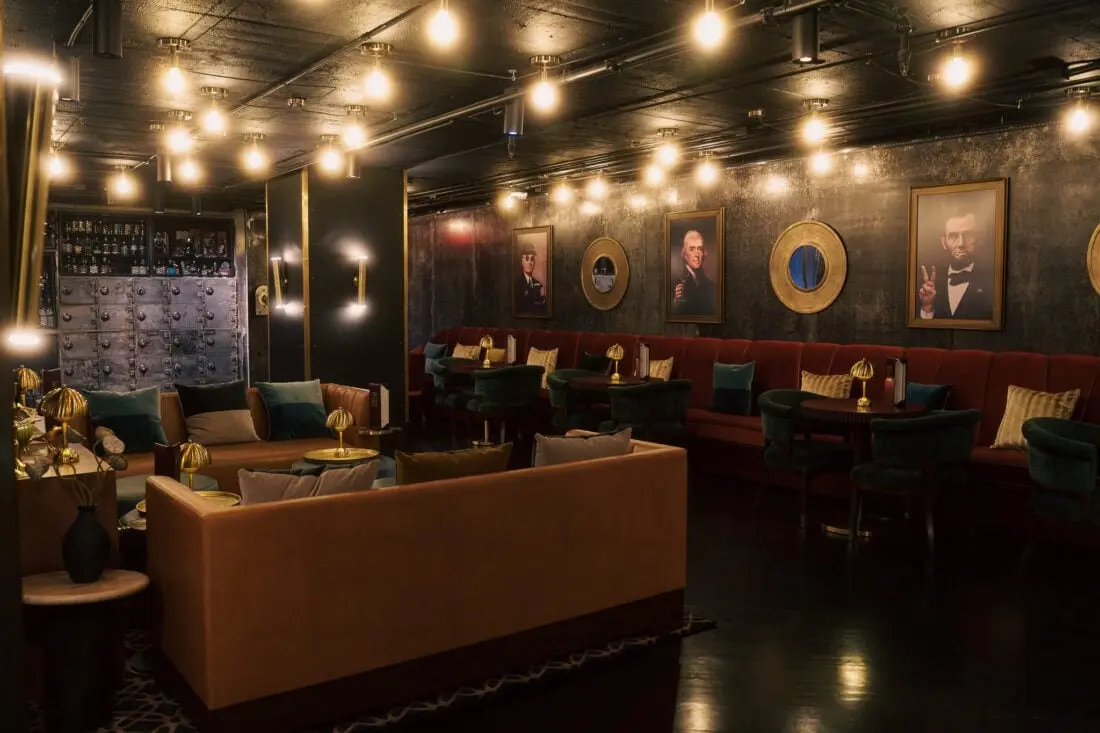
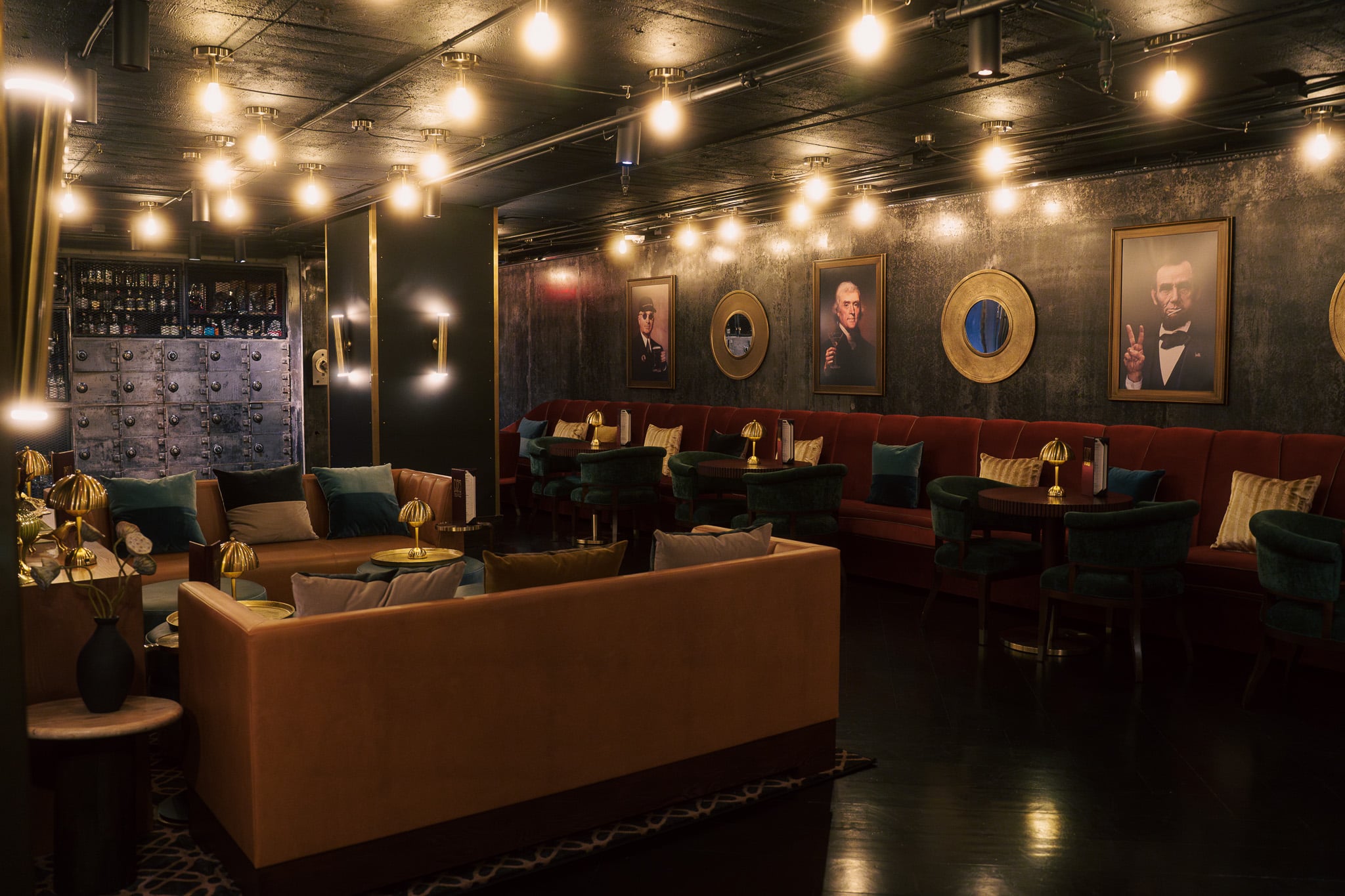
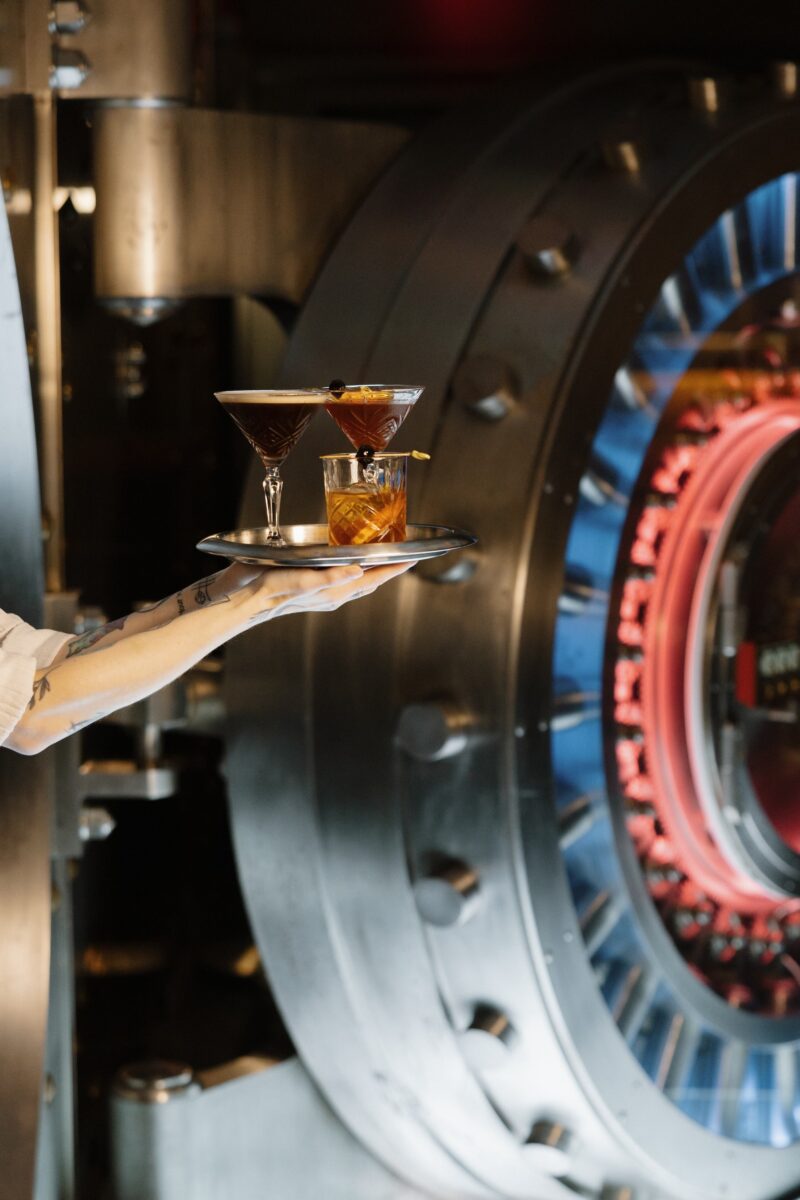
- The Entrance: Located deep within the sub-grade infrastructure of a meticulously converted 1931 bank office tower now operating as The National (Autograph Collection). Guests bypass the need for master-thief skills, accessing the space through the original, massive steel bank vault door.
- The Experience: The journey begins upstairs at Stock & Bond steakhouse, where diners can order a specialized tasting flight of Booker’s bourbons served alongside a numbered card. Patrons then carry this combination down to the Vault, where they use it to unlock an authentic safety deposit box containing a decadent house dessert. The lounge pairs high-security historical architecture with indulgent post-dinner pairings, creating a memorable tactile experience.
3. The 1933 Society (Louisville, Kentucky)
- Location: Louisville, Kentucky
- The Entrance: Situated beneath Hotel Distil along Louisville’s historic Whiskey Row. While the hotel’s Repeal steakhouse is well-known for its bourbon selection, seekers must locate a discreet street entrance leading down into a subterranean lounge.
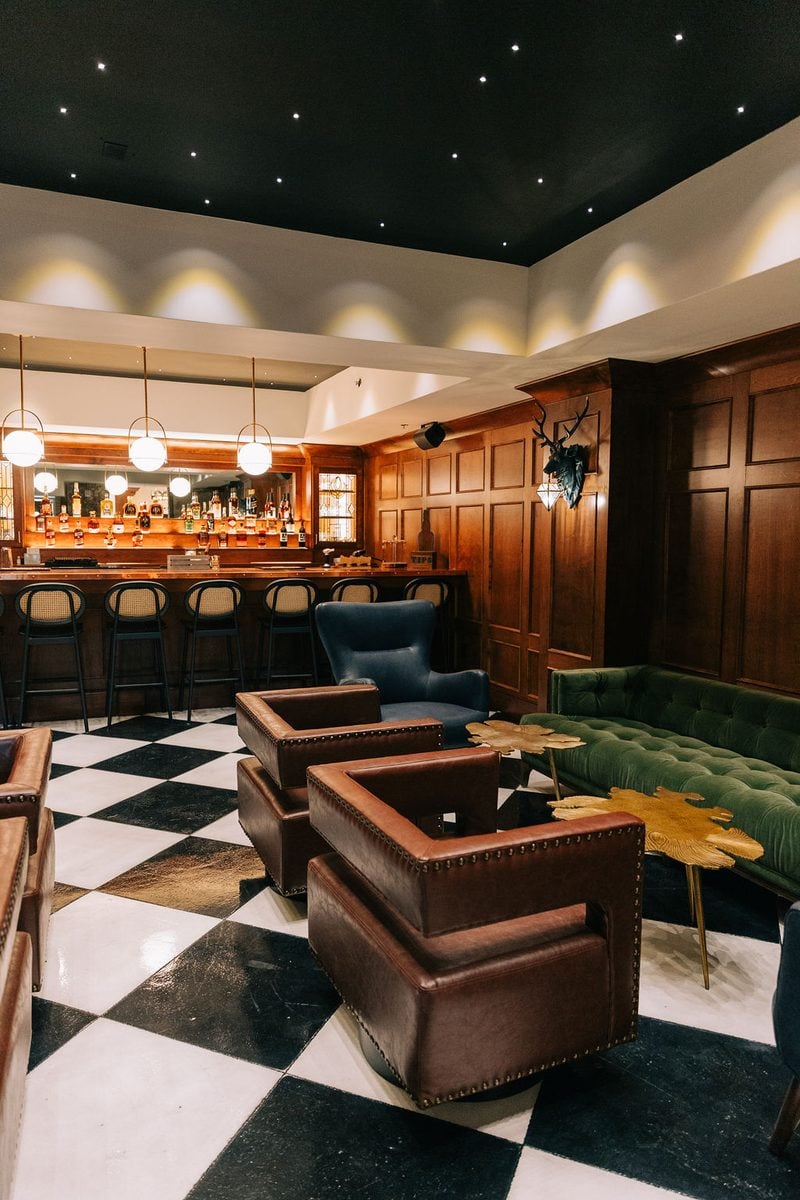
- The Experience: Named explicitly for the year of Prohibition’s repeal, the space leans heavily into classic underground aesthetics. Rich red velvet curtains, supple leather couches, dark wood paneling, and low mood lighting set the stage. The bar’s drink menu aims for the absolute summit of the contemporary whiskey scene, featuring cutting-edge craft cocktails, single-barrel private selections, and highly sought-after "unicorn" bourbon pours.
4. Kinfolk (Austin, Texas)
- Location: Austin, Texas
- The Entrance: Patrons enter through the upstairs Moonshine Grill restaurant before descending underground into a historic, 170-year-old limestone-walled cellar.
- The Experience: Kinfolk transforms an ancient structural space into a luxurious, intimate cocktail retreat. The centerpiece for whiskey aficionados is the venue’s extraordinary "spirits library"—a ten-seat communal table flanked by an astonishing collection of 900 rare and allocated bottles. Every single bottle in the library is available to be enjoyed by the pure ounce pour or incorporated into a bespoke cocktail crafted by expert mixologists.
5. Black Rabbit Speakeasy (Louisville, Kentucky)
- Location: Louisville, Kentucky
- The Entrance: Set away from the bustling downtown core within the residential St. Matthews neighborhood, Black Rabbit provides a double layer of camouflage. Visitors can enter from the rear through a nondescript office lobby, where they encounter a bookcase equipped with a working peephole. A knock on the wood swings the shelf open into a warren of connected rooms.
- The Experience: Inside, guests discover the Jack Bourbon Lounge, which offers an expansive whiskey pricing structure scaling from approachable everyday pours to indulgent, ultra-rare collectors’ items. To complete the classic speakeasy atmosphere, the venue hosts live jazz performances every weekend, drawing crowds seeking both auditory and sensory immersion.
6. Magnum Speakeasy (Rogers, Arkansas)
- Location: Rogers, Arkansas
- The Entrance: Concealed within the newly opened Hotel Vin Rogers, the Magnum Speakeasy offers an atmosphere far more intimate than the property’s rooftop lounge or primary restaurant bar. Entry requires solving a localized riddle provided by staff or signage, the answer to which serves as the verbal password required to open the hidden door.
- The Experience: Lit by dramatic, classic chandeliers, the interior offers an elevated whiskey program featuring heavy-hitting pours such as Stagg, Woodford Reserve Double Oaked, and Four Roses Small Batch. Beyond traditional neat pours, the bar features creative house signatures, including an artisanal old-fashioned crafted with rich espresso liqueur and toasted almond bitters.
Future Outlook: Where the Hidden Lounge Industry Is Heading
As the hospitality sector continues to innovate in the post-pandemic era, industry analysts project that the appetite for experiential, story-driven dining will only intensify. The modern speakeasy is no longer a fleeting restaurant trend; it has solidified its place as a permanent fixture in high-end culinary tourism.
1. Hyper-Personalization and Digital Integration
Looking ahead, hidden bars are expected to experiment further with interactive entry mechanisms. While physical riddles, secret knock panels, and scavenger hunts remain popular, forward-thinking operators are exploring dynamic digital keys, reservation-only algorithmic door codes, and personalized member apps that deepen the sense of exclusivity.
2. Deepening Distiller Partnerships
As competition among craft distillers and heritage brands escalates, secret whiskey lounges will increasingly serve as primary incubators for exclusive single-barrel releases. Distilleries are recognizing that placing limited-edition barrels within hidden, high-end environments elevates brand equity and provides connoisseurs with a story worth traveling across the country to experience.
3. The Preservation of Architectural Heritage
Finally, the trend of converting defunct industrial, financial, and historic spaces into subterranean cocktail sanctuaries ensures that urban revitalization projects will continue to incorporate hidden hospitality venues. By turning old vaults, limestone cellars, and utility corridors into temples of fine whiskey, modern operators are successfully preserving local architectural history—one secret door at a time.

0 Comments